
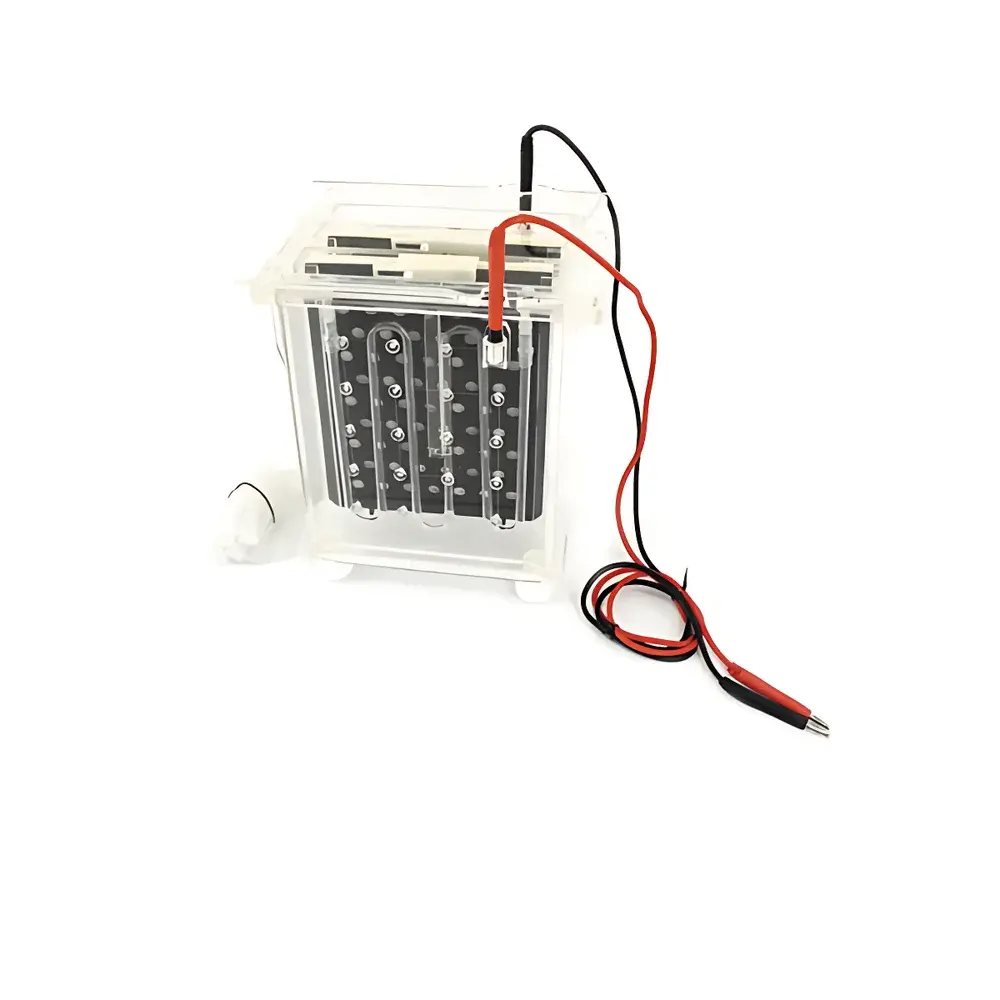
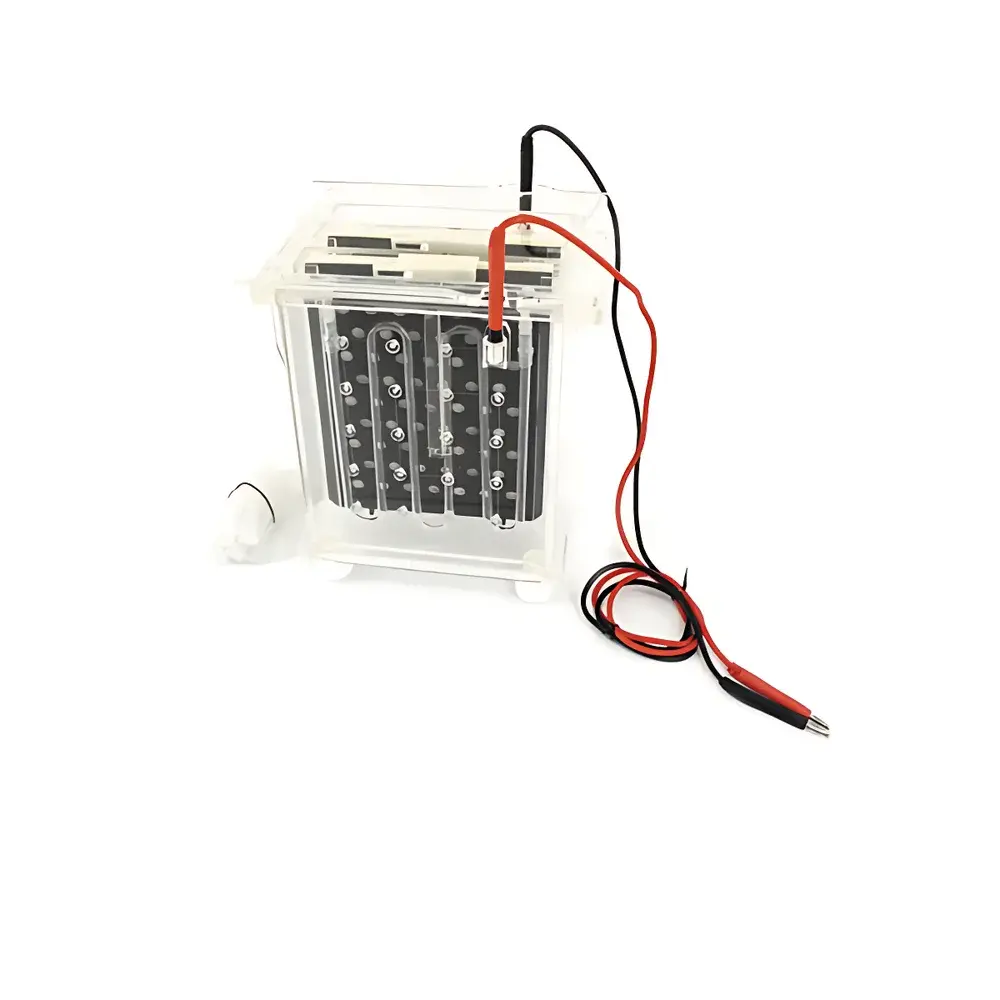
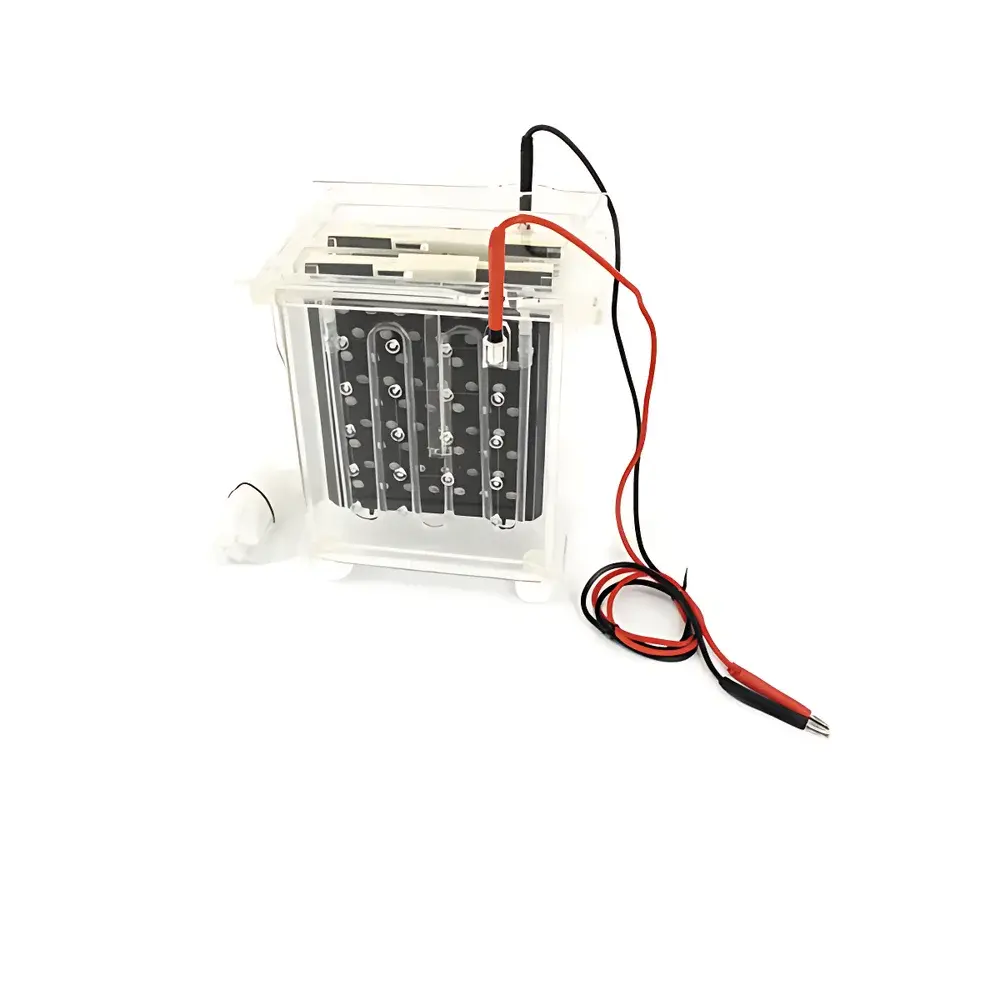
LY DYCZ-40A Large-Format Semi-Dry Electrophoretic Transfer Apparatus
| Brand | LY |
|---|---|
| Origin | Beijing, China |
| Manufacturer Type | Authorized Distributor |
| Country of Origin | China |
| Model | DYCZ-40A |
| Instrument Type | Semi-Dry Electrophoretic Transfer System |
| Primary Unit | Electrophoresis Transfer Unit with Dual-Plate Cassette |
| Gel/Transfer Plate Dimensions | 180 × 165 mm |
| External Dimensions (L×W×H) | 250 × 205 × 255 mm |
| Net Weight | 3 kg |
| Buffer Capacity | 4500 mL |
| Cooling System | Integrated Aluminum Cooling Rack |
Overview
The LY DYCZ-40A is a large-format semi-dry electrophoretic transfer apparatus engineered for high-efficiency protein and nucleic acid blotting in molecular biology laboratories. It operates on the principle of electrophoretic mobility-driven transfer—applying a controlled direct current across a sandwich assembly comprising SDS-PAGE gel, transfer membrane (e.g., nitrocellulose or PVDF), and conductive filter pads saturated with low-ionic-strength transfer buffer. Unlike wet transfer systems, the DYCZ-40A utilizes minimal buffer volume and optimized electrode spacing to achieve rapid, uniform transfer in 15–60 minutes, significantly reducing power consumption and thermal buildup while maintaining high retention of high-Mr proteins and preserving epitope integrity for downstream immunodetection.
Key Features
- Large-capacity dual-plate cassette design accommodates two 180 × 165 mm gels simultaneously—ideal for comparative Western blot experiments or replicate validation.
- Integrated aluminum cooling rack dissipates Joule heat during high-voltage operation, preventing membrane drying and protein denaturation—critical for reproducible transfer of >100 kDa proteins.
- Robust modular construction: detachable upper lid, precision-machined acrylic main body, and corrosion-resistant stainless-steel electrodes ensure long-term dimensional stability and electrical consistency.
- Optimized buffer reservoir geometry supports uniform ion migration across the full transfer area—minimizing edge effects and band distortion observed in poorly designed semi-dry systems.
- Standardized accessory interface compatible with LY’s full ecosystem of electrophoresis consumables—including pre-cut fiber pads, transfer membranes, and low-resistance tubing sets.
Sample Compatibility & Compliance
The DYCZ-40A is validated for use with standard polyacrylamide gels (8–20% T), agarose gels (0.7–2.0%), and both nitrocellulose (0.2–0.45 µm pore) and PVDF membranes. Its voltage range (10–150 V DC) and current capacity (0–500 mA) align with widely adopted protocols described in Current Protocols in Molecular Biology and referenced in ISO/IEC 17025-accredited laboratory SOPs for immunoassay development. While not certified to IEC 61010-1 as a standalone power supply, the unit complies with general safety requirements for Class II laboratory equipment when operated within specified ambient conditions (10–30°C, ≤80% RH). All plastic components meet UL94 HB flammability standards; no hazardous substances are used per RoHS Directive 2011/65/EU.
Software & Data Management
The DYCZ-40A is a hardware-only transfer platform without embedded microprocessor control or digital interface. Voltage, current, and time parameters are manually set via external DC power supply units (e.g., LY EPS-300 series or third-party programmable sources compliant with ASTM D257 for insulation resistance). Users record experimental conditions—including buffer composition (25 mM Tris, 192 mM glycine, 20% methanol), transfer duration, and measured current drift—in paper-based or LIMS-integrated electronic lab notebooks. For GLP/GMP-aligned workflows, traceability is maintained through instrument logbooks and periodic calibration verification of connected power supplies per ISO/IEC 17025 Clause 6.5.
Applications
- Western blotting of complex lysates from mammalian, plant, or microbial sources—particularly where preservation of post-translational modifications (e.g., phosphorylation, ubiquitination) is essential.
- Southern and Northern blotting of genomic DNA or total RNA following restriction digestion or electrophoretic separation.
- High-throughput validation of CRISPR-Cas9 editing efficiency via parallel transfer of multiple gel lanes onto a single membrane.
- Quality control testing of recombinant therapeutic proteins, including identity confirmation by antigen-antibody binding and purity assessment via Coomassie-stained transfer efficiency controls.
- Academic teaching labs requiring robust, serviceable instrumentation for undergraduate biochemistry and molecular genetics curricula.
FAQ
What buffer systems are recommended for optimal transfer efficiency with the DYCZ-40A?
Standard Towbin buffer (25 mM Tris, 192 mM glycine, 20% v/v methanol) is recommended for most protein transfers. For high-Mr proteins (>150 kDa), addition of 0.1% SDS or substitution with CAPS buffer (10 mM CAPS, 10% methanol, pH 11.0) improves mobility without compromising membrane binding.
Can the DYCZ-40A be used for wet transfer protocols?
No—the unit is mechanically and thermally optimized for semi-dry operation only. Its 4500 mL buffer capacity and lack of submerged electrode chambers preclude conventional wet tank configurations.
Is the cooling rack compatible with external recirculating chillers?
The aluminum cooling rack is passively conductive and designed for ambient-air convection. It does not feature inlet/outlet ports for chiller integration; active cooling requires external temperature-controlled room environments or benchtop chillers placed adjacent to the unit.
How often should the electrode surfaces be cleaned, and what cleaning agents are safe?
Electrodes should be wiped with deionized water and lint-free wipes after each use. For mineral deposit removal, soak in 10% acetic acid for 5 minutes, rinse thoroughly with DI water, and air-dry. Avoid abrasive cleaners or chloride-containing solutions to prevent pitting corrosion.
Does LY provide calibration certificates or metrological traceability documentation?
LY supplies factory verification reports confirming mechanical tolerances and electrical continuity at time of shipment. Full metrological calibration (voltage/current accuracy, timer deviation) must be performed by an accredited third-party laboratory using NIST-traceable standards.



