
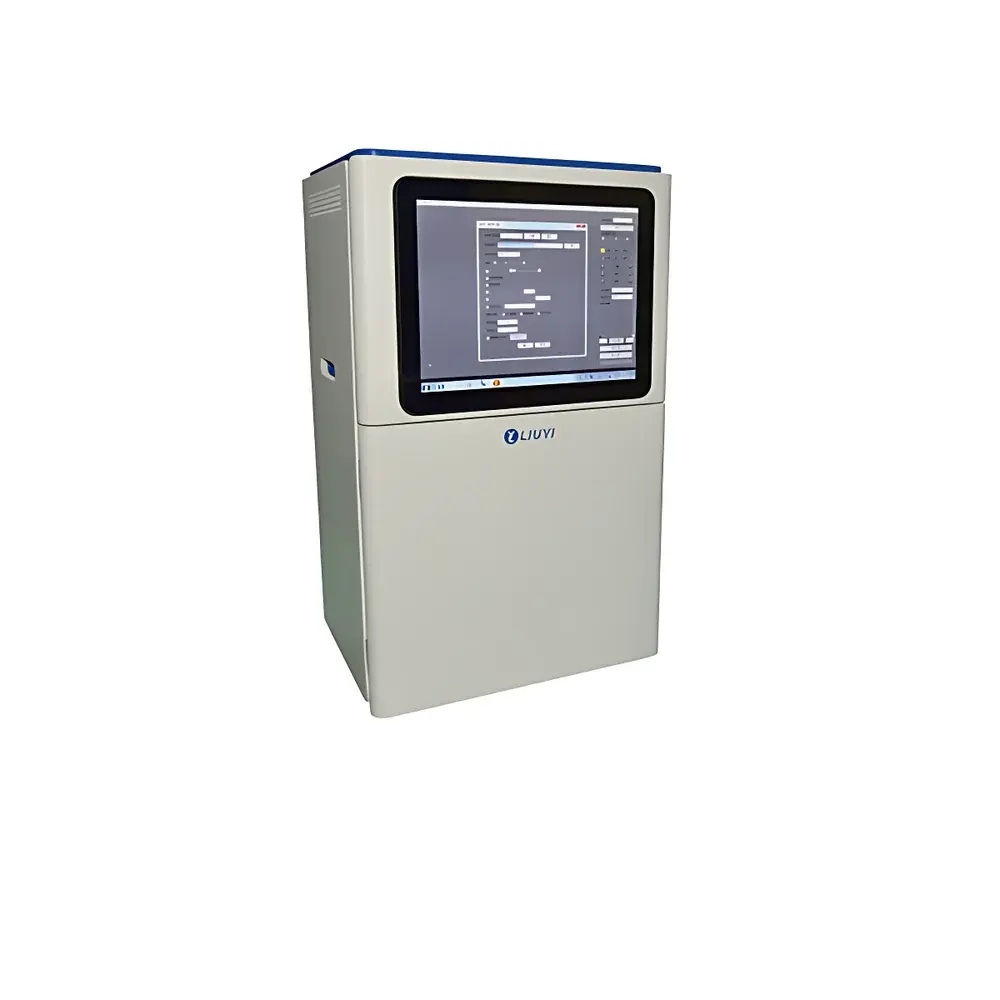
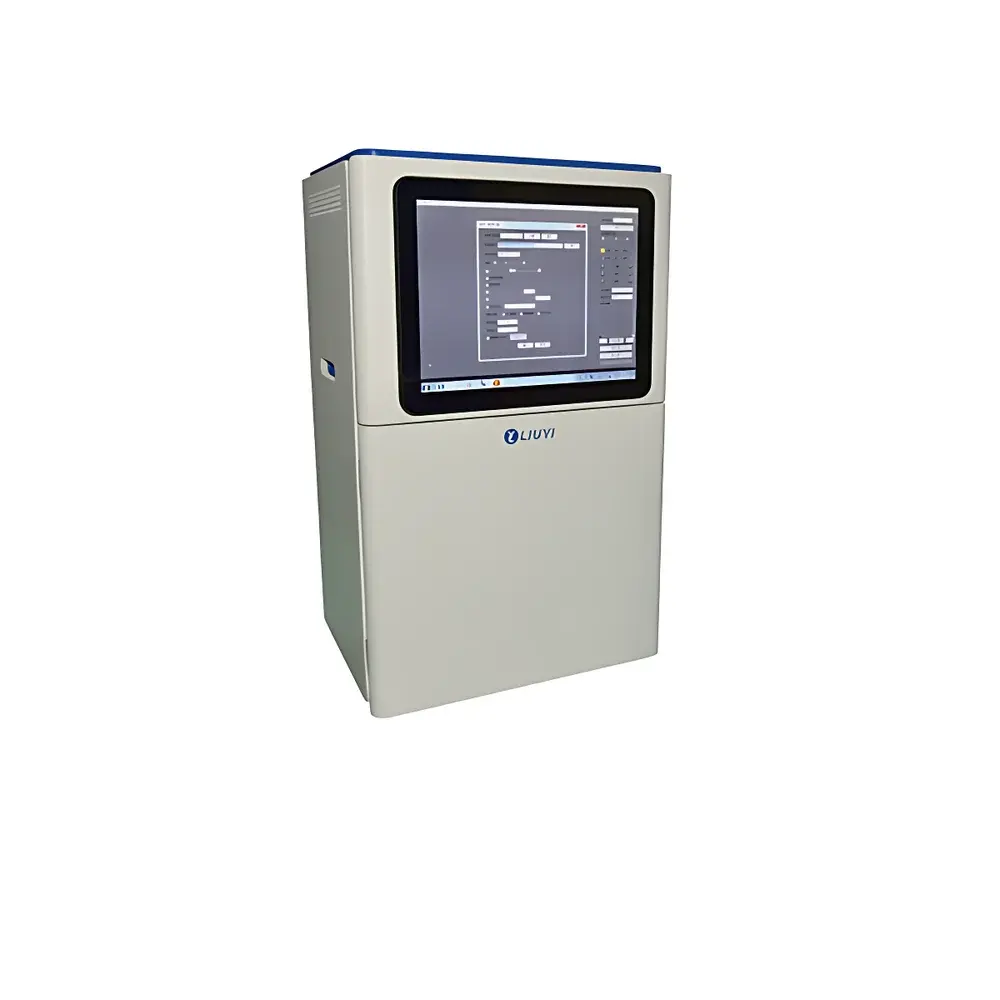
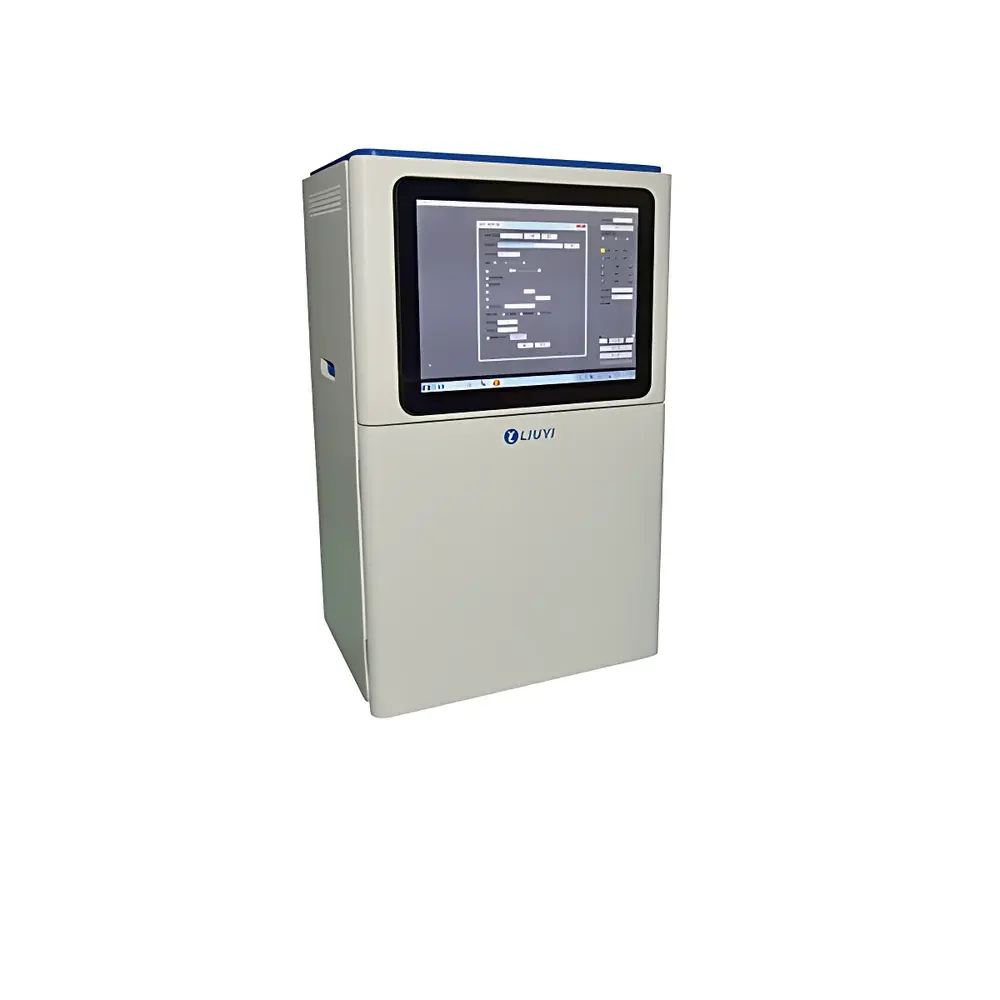
LY WD-9413D All-in-One Gel Documentation System
| Brand | LY |
|---|---|
| Origin | Beijing, China |
| Model | WD-9413D |
| Instrument Type | Standard Gel Imaging System |
| CCD Resolution | 5 MP |
| Bit Depth | 16-bit |
| Detection Sensitivity | 20 pg dsDNA stained with ethidium bromide (EB) |
| Optical Lens | Imported 6× motorized zoom lens with electric tri-variable aperture and high-transmission optics (parameters synchronized in software) |
| UV Transillumination Area | 220 × 250 mm (302 nm) |
| Visible Light Transillumination Area | 190 × 270 mm |
| UV Reflectance Wavelengths | 254 nm & 365 nm |
| White Light Reflection | Dual-side high-intensity LED |
| Filter | 590 nm coated bandpass filter for nucleic acid gels |
| Exposure Time Range | 1 ms – 180 s |
| Pixel Binning Options | 1×1, 2×2, 4×4 |
| Frame Rate | 35 fps |
| Image Resolution | 600 DPI (horizontal/vertical) |
| Interface | USB 3.0 |
| Safety Features | UV door interlock shutdown, retractable drawer design with light-tight enclosure |
| Software | Integrated gel acquisition and analysis suite with auto-exposure, image stacking, and background subtraction algorithms |
Overview
The LY WD-9413D All-in-One Gel Documentation System is a compact, fully integrated benchtop imaging platform engineered for reproducible visualization, documentation, and quantitative analysis of nucleic acid and protein electrophoresis gels. It employs high-sensitivity monochrome CCD imaging coupled with precisely calibrated UV transillumination (302 nm), dual-wavelength UV reflectance (254 nm / 365 nm), and uniform white-light transillumination (fiber-optic cold-light panel) to support routine detection of ethidium bromide–, SYBR® Safe–, Coomassie–, and silver-stained samples. The system operates on the principle of fluorescence excitation and emission capture under controlled dark-box conditions, ensuring minimal ambient interference and consistent signal-to-noise ratios across repeated acquisitions. Designed for compliance with standard molecular biology laboratory workflows, it meets foundational requirements for GLP-aligned documentation where traceability, exposure repeatability, and hardware-based safety interlocks are essential.
Key Features
- 5-megapixel monochrome CCD sensor with true 16-bit digitization, enabling wide dynamic range (up to 65,536 intensity levels) for accurate quantification of faint and saturated bands within a single exposure.
- Imported 6× motorized optical zoom lens with electric tri-variable aperture (F1.2 maximum), supporting real-time focal length, focus, and iris adjustment directly from the acquisition software interface.
- Retractable drawer-style UV transilluminator (220 × 250 mm active area, 302 nm) with integrated safety interlock—automatically de-energizes UV lamps upon drawer opening.
- Fiber-optic white-light transilluminator (190 × 270 mm, 12 V DC) delivering uniform illumination without thermal load or hotspots; complemented by dual-side high-efficiency LED reflectance lighting.
- 590 nm hard-coated bandpass emission filter optimized for ethidium bromide and analogous DNA dyes, minimizing spectral crosstalk and enhancing contrast.
- Industrial-grade 10.1-inch capacitive touchscreen with glove-compatible responsiveness, eliminating external peripherals and streamlining workflow navigation.
- Modular sealed electronics architecture minimizes dust ingress and thermal drift, contributing to long-term calibration stability and reduced maintenance intervals.
Sample Compatibility & Compliance
The WD-9413D accommodates standard agarose and polyacrylamide gels (up to 25 cm × 25 cm), as well as mini-gels, blot membranes (nitrocellulose/PVDF), and stained tissue sections. It supports common fluorescent, chromogenic, and chemiluminescent detection methods—including EB, GelRed®, SYPRO Ruby®, and alkaline phosphatase–based substrates—without hardware modification. While not certified to ISO/IEC 17025 or FDA 21 CFR Part 11 out-of-the-box, its software includes audit-trail-enabled acquisition logs (timestamped exposure parameters, user ID, lens settings), image metadata embedding (EXIF-compliant), and non-destructive TIFF/PNG export—facilitating internal validation under GLP or GMP-aligned quality systems. UV lamp output conforms to IEC 62471 photobiological safety guidelines for Class 1 LED/UV equipment.
Software & Data Management
The bundled GelAnalysis Pro software provides a unified environment for image acquisition, annotation, molecular weight estimation, relative quantification, and publication-ready report generation. Key capabilities include auto-exposure optimization, multi-frame image stacking (with user-defined weighting), background subtraction using rolling-ball or polynomial models, lane/profile tracing with adjustable sensitivity thresholds, and comparative densitometry across multiple gels via normalization to internal standards. All acquisition parameters—including binning mode, exposure duration, lens F-stop, and gain—are automatically embedded in exported images and retained in project files (.gap). Data exports comply with MIAME/MIAPE metadata conventions and support direct import into ImageJ/Fiji, GraphPad Prism, and LabArchives ELN platforms.
Applications
- Quantitative analysis of PCR products, restriction digests, and DNA ladders in teaching and core facility laboratories.
- Verification of cloning efficiency and plasmid integrity through fragment sizing and band intensity correlation.
- Western blot documentation with enhanced sensitivity for low-abundance proteins using chemiluminescent substrates (via extended exposure mode).
- Quality control of RNA integrity (RIN assessment) via denaturing agarose gel electrophoresis.
- Documentation of SDS-PAGE gels for protein expression profiling and purification monitoring.
- Teaching laboratory use—integrated safety features (UV interlock, shielded drawer, low-voltage lighting) align with undergraduate biosafety protocols.
FAQ
Does the WD-9413D support chemiluminescence imaging?
Yes—using extended exposure times (up to 180 s) and pixel binning (2×2 or 4×4), the system captures low-light signals from HRP- or AP-conjugated detection systems. A dedicated “chemi mode” in software enables automatic gain adjustment and noise reduction.
Is the software compatible with Windows 11 and macOS?
The GelAnalysis Pro software is validated for Windows 10/11 (64-bit) and requires .NET Framework 4.8. Native macOS support is not provided; however, virtualized environments (e.g., Parallels Desktop with Windows) are routinely used in academic labs.
Can exposure parameters be saved as reusable presets?
Yes—users may define and name unlimited acquisition profiles (e.g., “EB-Agarose-1.5%”, “Coomassie-SDS-PAGE”) including lens position, exposure time, binning, and filter selection.
What is the expected lifetime of the UV lamps?
The 302 nm transilluminator uses high-output UVA LEDs rated for ≥15,000 hours at nominal drive current. The 254/365 nm reflectance modules employ mercury-vapor lamps with typical lifespans of 1,000–2,000 hours; replacement kits are available directly from LY authorized distributors.
Is remote operation supported?
The system does not include built-in Ethernet/Wi-Fi connectivity. However, USB 3.0 tethering enables full remote control via RDP or VNC when the host PC is network-accessible—commonly deployed in shared core facilities.





