
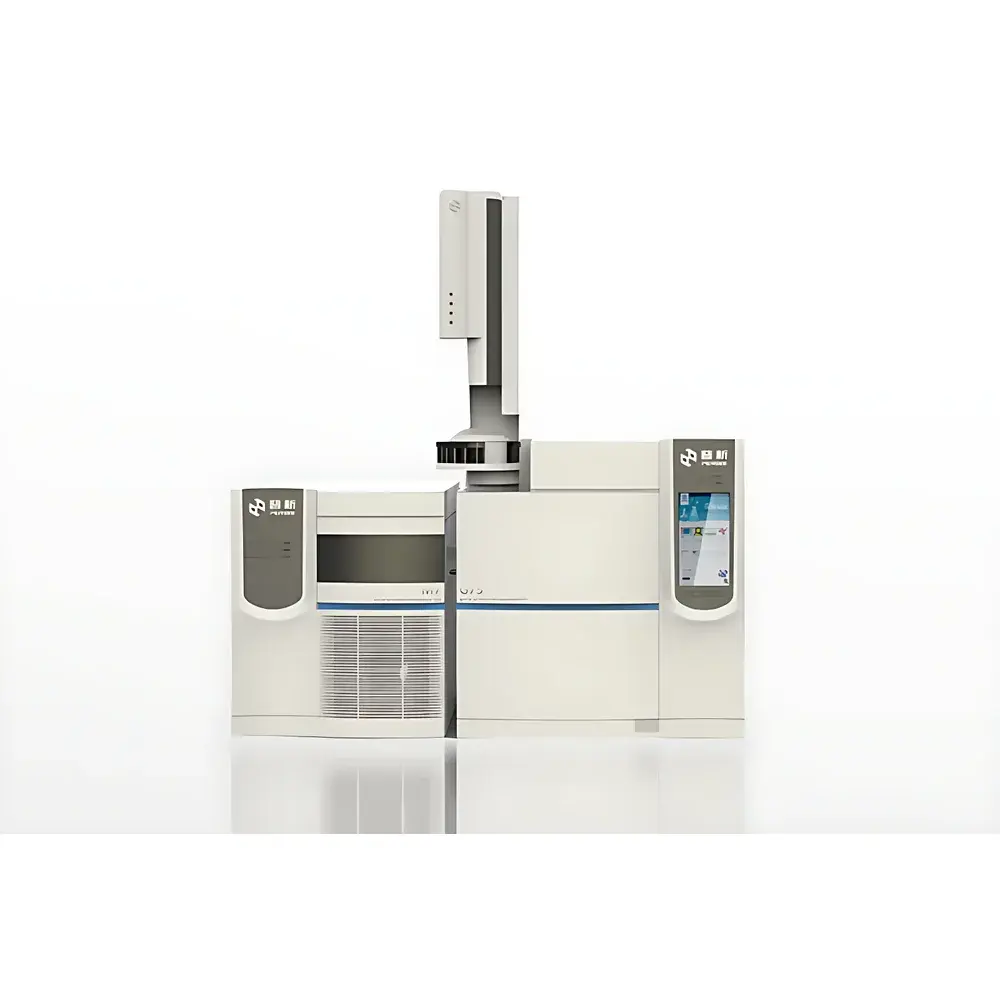
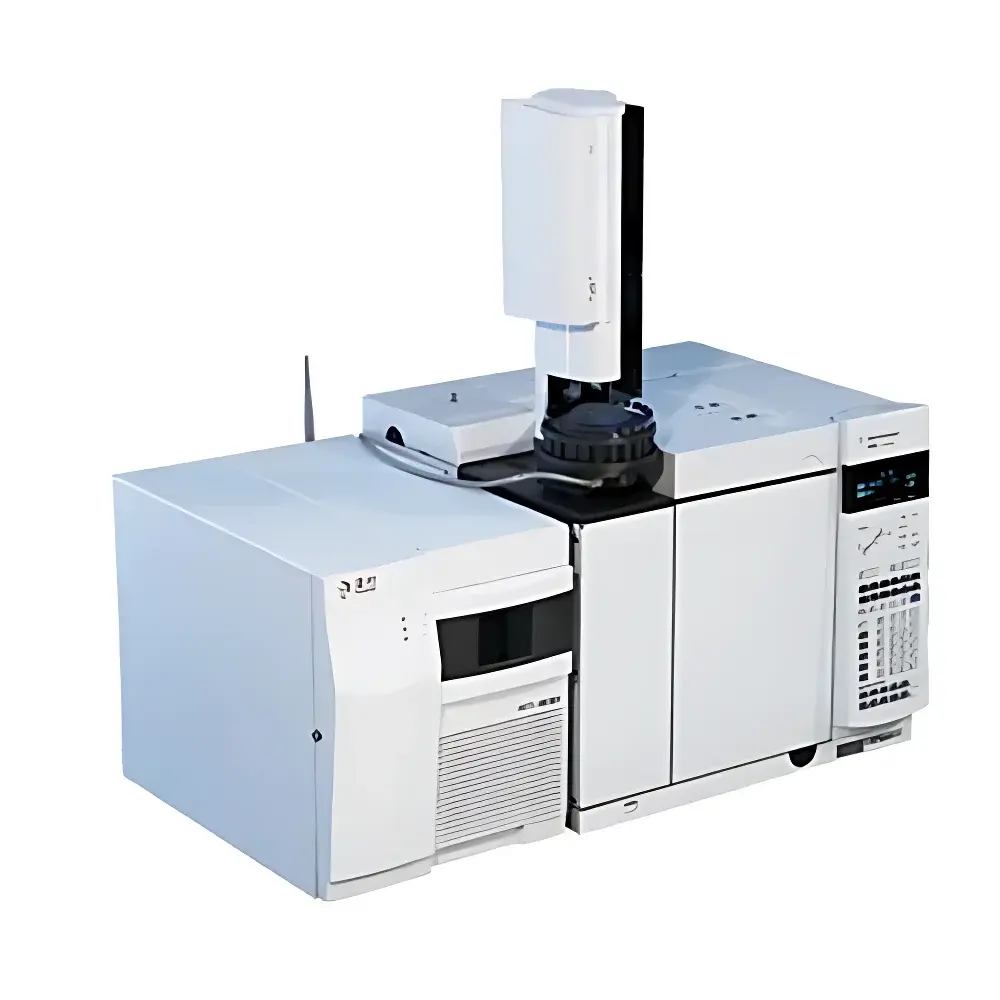
M7 Single Quadrupole Gas Chromatography Mass Spectrometer
| Origin | Beijing, China |
|---|---|
| Manufacturer Type | Authorized Distributor |
| Origin Category | Domestic (PRC) |
| Model | M7 |
| Price Range | USD 42,000 – 70,000 |
| Instrument Type | Single Quadrupole Mass Spectrometer |
| GC Configuration | Standalone GC-MS Platform |
| Mass Range | 1.5–1050 Da |
| Resolution | Unit Mass Resolution (UMR) |
| Mass Stability | ±0.1 Da over 48 h |
| Repeatability | RSD ≤9% for 10 ng Hexachlorobenzene (m/z 284) |
| Ion Source | Dual-Filament Electron Impact (EI) Source |
| Vacuum System | Pfeiffer Turbo Molecular Pump (60 L/s) |
| Interface | LAN-enabled Remote Operation |
| Software | Graphical User Interface (GUI) with Embedded Method Library |
Overview
The M7 Single Quadrupole Gas Chromatography Mass Spectrometer (GC-MS) is a purpose-engineered analytical platform designed for routine qualitative and quantitative analysis of volatile and semi-volatile organic compounds in environmental, pharmaceutical, food safety, and forensic laboratories. Operating on the principle of electron ionization (EI) coupled with quadrupole mass filtering, the system separates analytes via capillary gas chromatography and performs mass-selective detection based on mass-to-charge ratio (m/z). Its robust architecture integrates a high-efficiency dual-filament EI ion source and a Pfeiffer turbo molecular pump to maintain stable high vacuum (<5×10⁻⁵ Pa) across extended acquisition cycles—critical for signal stability and detector longevity. The M7 conforms to fundamental operational requirements outlined in ASTM D5845, ISO 17025-compliant method validation frameworks, and supports audit-ready workflows aligned with GLP and GMP environments.
Key Features
- Dual-filament EI ion source engineered for extended operational uptime—effectively doubling filament service life without compromising ionization efficiency or spectral fidelity.
- Pfeiffer 60 L/s turbo molecular pump ensures rapid pump-down (<15 min to operating vacuum) and sustained vacuum integrity under variable inlet flow conditions, minimizing downtime between analyses.
- Graphical workstation software featuring drag-and-drop method building, real-time spectral preview, and integrated calibration management—designed for minimal training overhead and consistent operator performance.
- Leverages standard Ethernet (LAN) connectivity for full remote instrument control, data retrieval, and system diagnostics—enabling secure off-site monitoring and multi-user access within institutional networks.
- Built-in method library containing pre-validated methods for common target analytes (e.g., PAHs, PCBs, organochlorine pesticides), accelerating method transfer and reducing development time by up to 40% in comparative lab studies.
Sample Compatibility & Compliance
The M7 accepts standard 0.25–0.53 mm ID fused-silica capillary columns and interfaces seamlessly with all major GC ovens supporting split/splitless injection and programmable temperature vaporization (PTV). It supports derivatized and underivatized samples across matrices including water extracts, soil leachates, essential oils, and residual solvent preparations. All hardware and firmware components comply with IEC 61000-6-3 (EMC emissions) and IEC 61010-1 (electrical safety). Data acquisition and processing meet traceability requirements for 21 CFR Part 11 when deployed with validated software configurations—including electronic signatures, audit trails, and user role-based permissions.
Software & Data Management
The native GC-MS software provides full control of acquisition parameters (scan range, dwell time, ion source temperature, electron energy), real-time base peak chromatograms, and library search against NIST MS Search 2.4g (with optional Wiley Registry integration). Raw data files are stored in vendor-neutral ANDI/NetCDF format, ensuring long-term archival compatibility. Batch processing supports automated peak integration, calibration curve generation (linear/non-linear), and report export in PDF, CSV, and XML formats. Audit trail logs record every parameter change, user login/logout, and data modification event—with timestamps and operator IDs—for regulatory review.
Applications
- Environmental monitoring: Quantification of chlorinated hydrocarbons (e.g., HCB, DDT), polycyclic aromatic hydrocarbons (PAHs), and phthalate esters in soil and aqueous samples per EPA Methods 8270D and 8082A.
- Pharmaceutical impurity profiling: Detection and quantitation of genotoxic impurities (GTIs) at sub-ppm levels in drug substance batches, compliant with ICH Q3A(R2) and Q3B(R2).
- Food safety screening: Residue analysis of organophosphate and carbamate pesticides in fruits, vegetables, and grains following QuEChERS extraction protocols.
- Forensic toxicology: Confirmation of controlled substances (e.g., cannabinoids, amphetamines, benzodiazepines) in biological fluids using SIM mode with deuterated internal standards.
- Essential oil fingerprinting: Characterization of monoterpenes, sesquiterpenes, and oxygenated derivatives for botanical authentication and adulteration detection.
FAQ
What is the typical maintenance interval for the dual-filament ion source?
Under normal operation (≤8 h/day, 5 days/week), filament replacement is required every 12–18 months; the backup filament allows uninterrupted analysis during hot-swap procedures.
Does the M7 support selected ion monitoring (SIM) mode?
Yes—SIM mode is fully implemented with configurable dwell times, ion grouping, and automatic tuning for maximum sensitivity and duty cycle optimization.
Can the system be integrated into an existing LIMS environment?
Yes—via ODBC-compliant database export and HL7-compatible result transmission modules, enabling seamless bidirectional data exchange with major LIMS platforms.
Is method validation documentation available for regulatory submissions?
Comprehensive IQ/OQ/PQ protocols, system suitability test templates, and raw data integrity reports are provided as part of the installation qualification package.
What GC brands are compatible with the M7 interface?
The M7 features universal GC interface hardware and driver support for Agilent, Thermo Fisher, Shimadzu, and PerkinElmer GC systems—requiring only standard analog/digital I/O and RS-232 or Ethernet handshaking.




