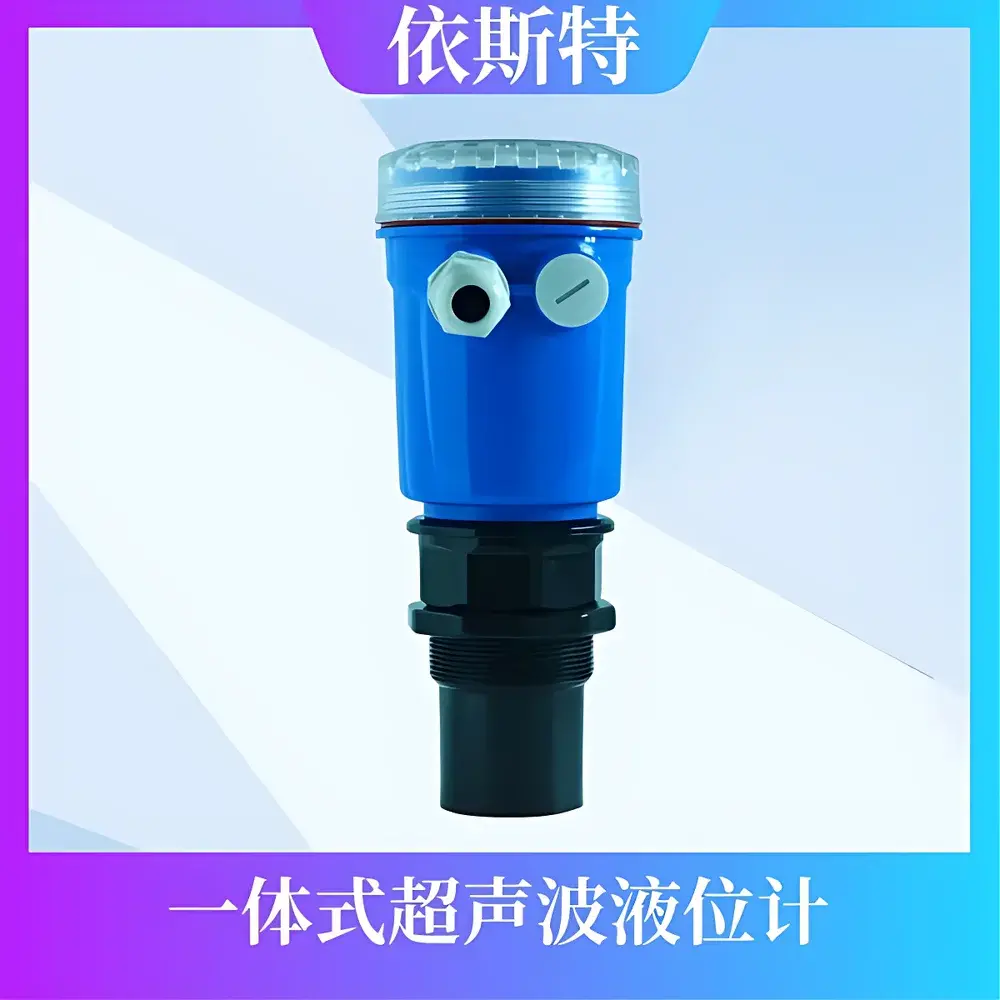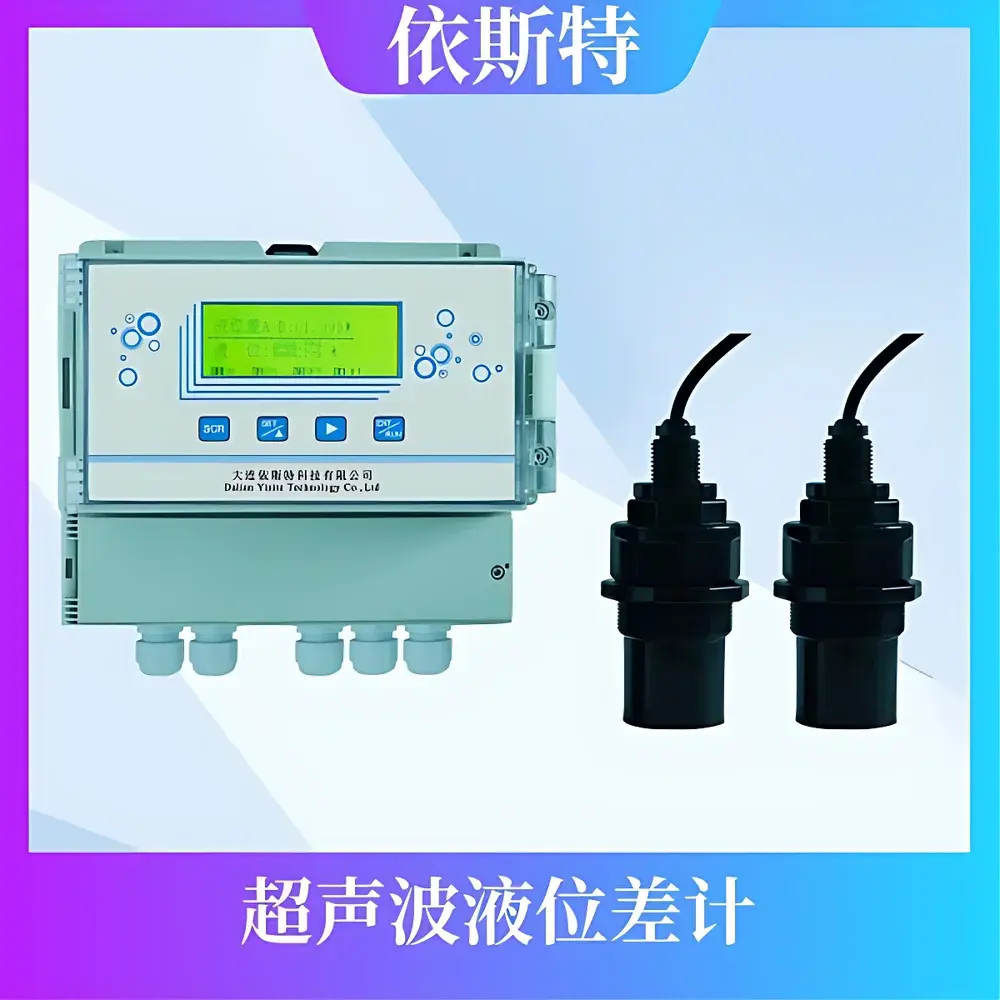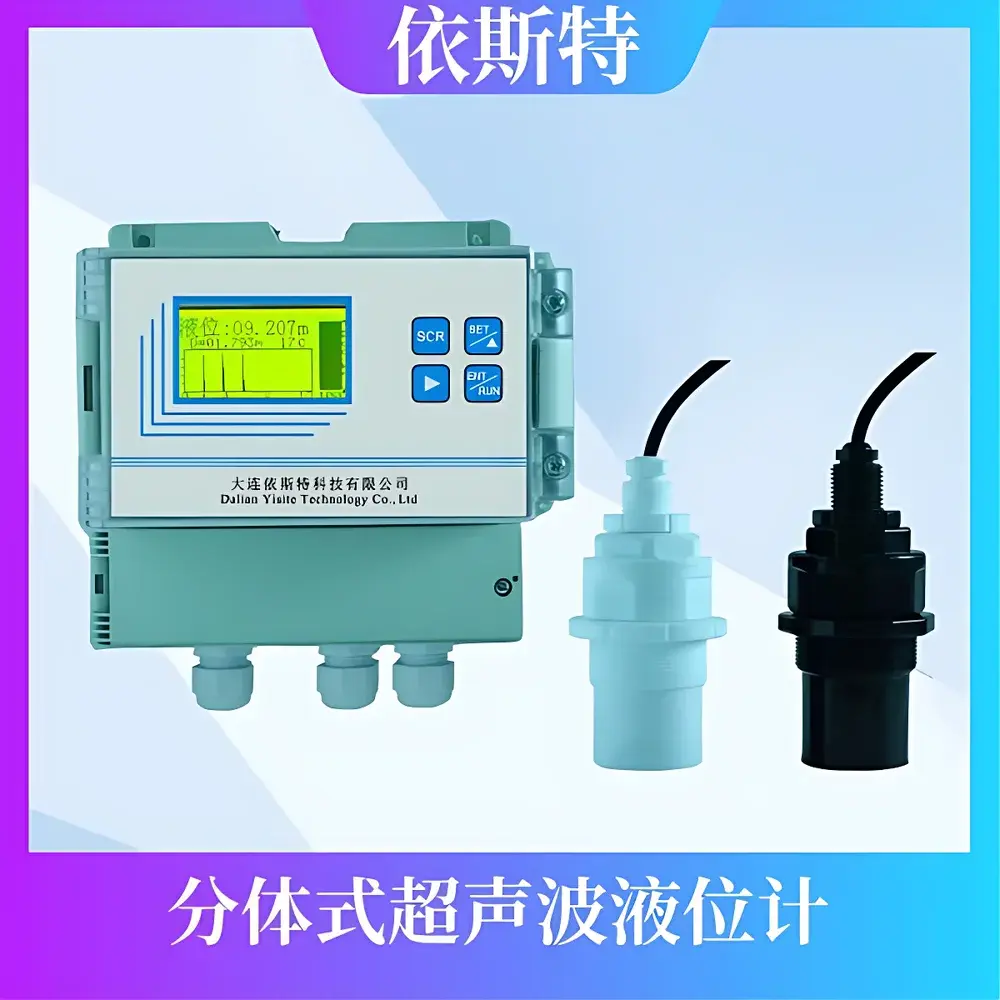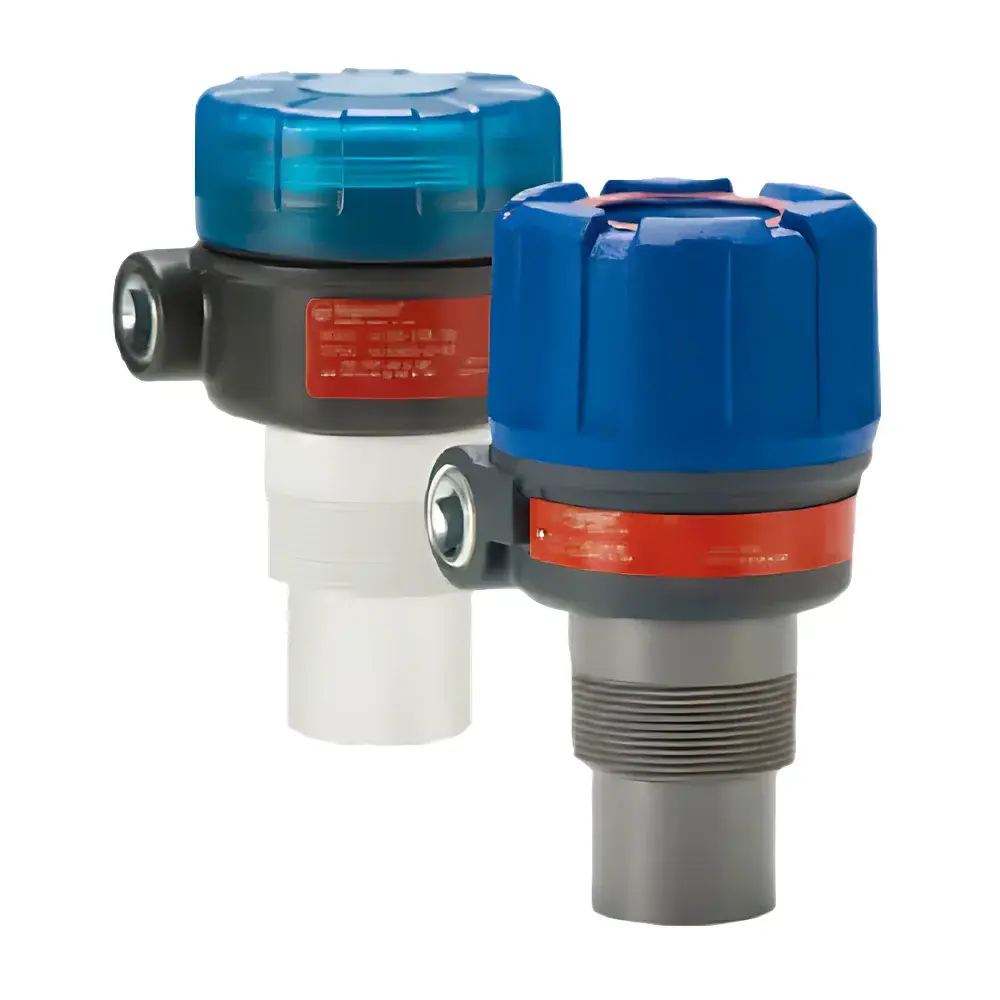
MAGNETROL Echotel® 355 Series Ultrasonic Level Transmitter
| Brand | MAGNETROL |
|---|---|
| Model | Echotel® 355 Series |
| Measurement Principle | Non-contact ultrasonic (60 kHz) |
| Power Supply | 2-wire loop-powered (4–20 mA/HART®) |
| Max. Range | 6 m |
| Output Signal | 4–20 mA with HART® v7 protocol |
| Temperature Compensation | Built-in |
| Echo Processing | Dynamic baseline noise suppression, false echo rejection |
| Flow Calculation | Integrated standard open-channel flow algorithms (e.g., Palmer-Bowlus, Parshall, Palmer-Bowlus, Trapezoidal) |
| Accumulation Options | Resettable and non-resettable flow totalizers |
| Housing Materials | Cast aluminum or Lexan® polymer enclosure |
| Sensor Materials | Polypropylene or Kynar® (PVDF) transducer housing |
| Software Configuration | PACTware-compatible via USB/4–20 mA loop |
| Compliance | Designed for industrial environments per IEC 61000-6-2/-6-4 (EMC), IP66/IP67 ingress protection, SIL 2 capable per IEC 61508 (when used in safety loops with appropriate logic solver) |
Overview
The MAGNETROL Echotel® 355 Series Ultrasonic Level Transmitter is a loop-powered, two-wire instrument engineered for reliable non-contact level measurement in industrial process applications. Operating at a fixed frequency of 60 kHz, it emits ultrasonic pulses toward the surface of a liquid or slurry and precisely measures the time-of-flight of the reflected echo to calculate distance. This time-of-flight principle—combined with on-board temperature compensation—ensures stable performance across ambient temperature fluctuations common in outdoor or unconditioned plant environments. The transmitter is optimized for use in open-channel flow measurement (e.g., flumes and weirs), as well as simple tank-level monitoring where vapor, foam, turbulence, or surface agitation are minimal. Its compact, integrated design eliminates the need for separate electronics housings, reducing installation complexity and field wiring requirements.
Key Features
- Two-wire, loop-powered architecture (4–20 mA with HART® v7 digital communication) minimizes cabling and simplifies integration into existing DCS or PLC systems.
- Dynamic baseline noise compensation continuously adapts to changing acoustic background conditions, improving measurement stability in variable ambient noise environments.
- Advanced false echo rejection algorithms distinguish between true liquid surface returns and spurious reflections from tank walls, ladders, or internal structures.
- Built-in open-channel flow calculation supports industry-standard equations—including Palmer-Bowlus, Parshall, Palmer-Bowlus, and trapezoidal—enabling direct volumetric flow output without external flow computers.
- Selectable accumulation modes include both resettable and non-resettable flow totalizers, supporting operational reporting, batch tracking, and regulatory recordkeeping.
- Configurable via PACTware using standard FDT/DTM technology over USB or through the 4–20 mA loop—no proprietary hardware required.
Sample Compatibility & Compliance
The Echotel® 355 is suitable for clean to mildly abrasive liquids with consistent acoustic reflectivity, including water, wastewater, chemical solutions, and light hydrocarbons. It is not recommended for highly foaming, strongly absorbing, or vacuum applications where ultrasonic energy attenuation exceeds system sensitivity. Sensor materials—polypropylene or Kynar® (PVDF)—provide chemical resistance for aggressive media, while cast aluminum or Lexan® enclosures meet mechanical durability requirements in corrosive or UV-exposed installations. The device complies with IEC 61000-6-2 (immunity) and IEC 61000-6-4 (emissions) for electromagnetic compatibility and achieves IP66/IP67 ingress protection. When deployed within a certified safety instrumented system (SIS), it supports SIL 2 functionality per IEC 61508 when paired with an appropriate logic solver and verification methodology.
Software & Data Management
Configuration, calibration, and diagnostics are performed using PACTware—a standardized FDT-based engineering tool compliant with FDT/DTM specifications. Users can access real-time diagnostics, signal strength monitoring, echo curve visualization, and sensor health status directly from the engineering workstation or handheld communicator. All configuration changes are timestamped and logged, supporting auditability requirements under GLP and GMP frameworks. While the transmitter does not store historical data internally, its HART® interface enables periodic polling of diagnostic variables by asset management systems for predictive maintenance trending.
Applications
- Wastewater treatment plants: Level monitoring in primary clarifiers, aeration basins, and open-channel flow measurement in Parshall or Palmer-Bowlus flumes.
- Chemical dosing systems: Tank level control for sodium hypochlorite, sulfuric acid, or caustic soda storage—where corrosion resistance and non-contact operation are critical.
- Food & beverage processing: Monitoring of rinse tanks, CIP solution reservoirs, and surge tanks under sanitary but non-sterile conditions.
- Industrial cooling towers: Sump level control with immunity to mild mist and ambient temperature variation.
- Power generation auxiliary systems: Condensate tank and demineralized water storage level indication.
FAQ
What is the maximum measurable distance for the Echotel® 355 Series?
The standard maximum range is 6 meters under typical atmospheric conditions with a reflective liquid surface.
Can this transmitter be used in pressurized or vacuum vessels?
No—it is designed exclusively for open-air or vented applications; pressure differentials affect sound velocity and invalidate time-of-flight calculations.
Does the device support Modbus or Foundation Fieldbus protocols?
No—only HART® v7 communication is supported via the 4–20 mA analog channel.
Is third-party calibration traceable to NIST required for regulatory compliance?
Yes—field verification using certified reference targets or laboratory calibration against NIST-traceable standards is recommended prior to commissioning in regulated environments.
How is temperature compensation implemented?
An integrated RTD sensor measures ambient transducer temperature and adjusts the speed-of-sound calculation in real time to maintain ranging accuracy across –40°C to +70°C operating range.