
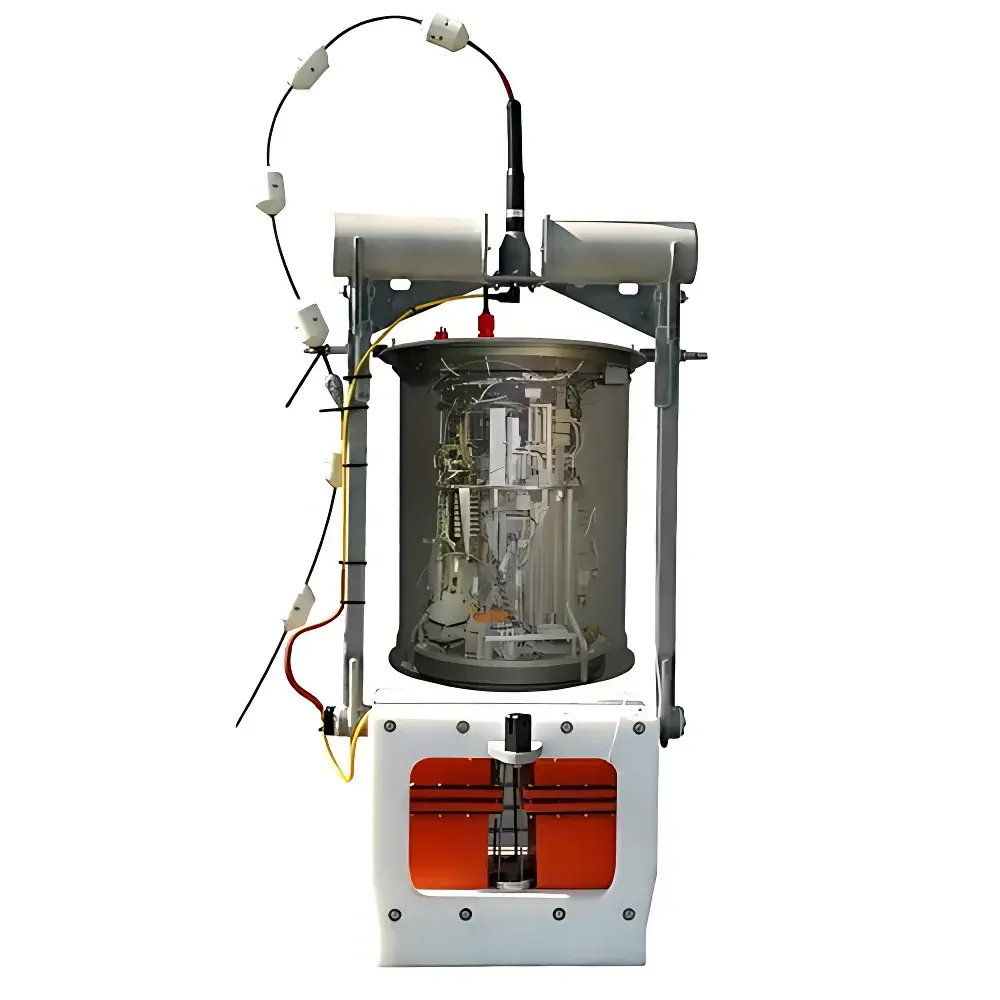
MBARI ESP (Environmental Sample Processor) – In Situ Molecular Monitoring System for Toxic Algal Blooms and Cyanotoxins
| Origin | USA |
|---|---|
| Manufacturer Type | Authorized Distributor |
| Origin Category | Imported |
| Model | ESP |
| Pricing | Available Upon Request |
Overview
The MBARI Environmental Sample Processor (ESP) is a fully autonomous, submersible molecular biology platform engineered for long-term, in situ detection and quantification of toxigenic phytoplankton and their associated algal toxins in aquatic environments. Unlike conventional grab-sampling or lab-based analytical workflows, the ESP functions as an “underwater molecular laboratory” — performing sequential operations including water filtration, cell concentration, lysis, nucleic acid or protein extraction, target-specific molecular assays (sandwich hybridization assay or competitive ELISA), chemiluminescent signal detection, digital imaging, and secure telemetry-based data transmission — all without human intervention. Developed over two decades by scientists at the Monterey Bay Aquarium Research Institute (MBARI), the ESP enables real-time, early-warning monitoring by detecting toxin-producing gene expression or toxin presence *before* harmful algal blooms (HABs) reach visible or ecologically disruptive thresholds. Its operational principle integrates environmental microbiology, microfluidics, and molecular diagnostics to deliver high-reproducibility, field-deployable biomolecular data aligned with ecological risk assessment frameworks.
Key Features
- Submersible design rated for continuous operation at depths up to 50 meters, with pressure-compensated fluidics and corrosion-resistant titanium housing
- Automated sample processing cycle: filtration → concentration → cell lysis → nucleic acid/protein extraction → molecular assay → signal detection → image capture → data compression and transmission
- Modular assay architecture supporting both sandwich hybridization assay (SHA) for ribosomal RNA or mRNA targets and competitive enzyme-linked immunosorbent assay (cELISA) for small-molecule toxins
- Remote command-and-control via satellite or cellular telemetry; encrypted data transfer compliant with ITAR and NIST SP 800-53 security baselines
- Onboard sample preservation capability: filtered biomass can be stored at −20 °C for later laboratory validation or sequencing
- Open assay development environment: users may deploy custom oligonucleotide probes or antibody conjugates without hardware modification
- Power-efficient operation (average <15 W during active sampling); compatible with solar-battery or shore-powered monitoring platforms
Sample Compatibility & Compliance
The ESP has been validated for detection of phytoplankton taxa across marine and freshwater systems, including *Alexandrium catenella*, *A. tamarense*, *Pseudo-nitzschia multiseries*, *Karenia brevis*, *Microcystis aeruginosa*, and *K. mikimotoi*, among others. Toxin detection includes domoic acid (DA), microcystin-LR/RR, saxitoxins (PSP), brevetoxins (NSP), and okadaic acid (DSP) — with probe kits undergoing ongoing EPA Method 544 and ISO/IEC 17025 validation. The system complies with ASTM D8079–17 (Standard Guide for Molecular Biological Methods in Water Quality Assessment) and supports GLP-aligned audit trails for regulatory reporting. All onboard reagents are CE-marked and meet IATA Class 9 hazardous material transport standards when deployed from research vessels.
Software & Data Management
ESP operation is managed through MBARI’s proprietary ESP Control Software (v5.2+), which provides scheduled sampling protocols, real-time diagnostic telemetry, assay calibration tracking, and raw image/data export in HDF5 and NetCDF-4 formats. Integrated metadata tagging includes GPS coordinates, depth, temperature, salinity (when interfaced with CTD), and time-stamped assay parameters. Data ingestion pipelines support direct integration into NOAA’s HAB Forecast Systems, USGS NWIS, and EU Copernicus Marine Environment Monitoring Service (CMEMS). For regulated environments, optional 21 CFR Part 11-compliant electronic signatures and full audit logs are available via licensed add-on modules.
Applications
- Early warning of toxic cyanobacterial blooms in drinking water reservoirs and intake zones
- Real-time monitoring of PSP, ASP, NSP, and DSP risks in shellfish-growing areas for FDA and EFSA compliance
- Long-term ecological studies of phytoplankton community dynamics under climate-driven nutrient regimes
- Validation of satellite-derived HAB indices (e.g., NOAA Harmful Algal Bloom Bulletin) with ground-truth molecular data
- Regulatory monitoring programs requiring trace-level toxin detection in compliance with WHO Guidelines for Drinking-water Quality and EU Bathing Water Directive (2006/7/EC)
- Baseline characterization of microbial eukaryote diversity in deep-sea vents, oxygen minimum zones, and coastal upwelling systems
FAQ
What molecular detection methods does the ESP support?
The ESP natively supports sandwich hybridization assay (SHA) for rRNA/mRNA targets and competitive ELISA (cELISA) for low-molecular-weight toxins. New assay chemistries — including CRISPR-based detection and aptamer-based biosensors — are integrated via firmware updates and user-developed cartridge modules.
Can the ESP operate autonomously for extended deployments?
Yes. Field deployments exceeding 6 months have been documented in the Gulf of Maine and Monterey Bay using lithium-thionyl chloride battery packs and passive thermal management. System health telemetry includes pump cycles, filter clogging metrics, reagent volume tracking, and memory integrity checks.
Is the ESP compliant with U.S. EPA or EU regulatory requirements?
While the ESP itself is not an EPA-certified instrument, its generated data support compliance with EPA Method 544 (for microcystins and cylindrospermopsin) and ISO 20179 (for quantitative PCR of *Microcystis*). Data outputs meet traceability and chain-of-custody requirements for GLP/GMP audits when used within validated SOPs.
How is assay specificity ensured across diverse phytoplankton communities?
Probe specificity is validated against reference cultures and environmental metatranscriptomes using BLASTn and secondary structure modeling. Cross-reactivity testing follows ISO/IEC 17025 Annex B guidelines, with false-positive rates consistently below 0.8% across >1,200 field samples analyzed by WHOI and NOAA laboratories.







