
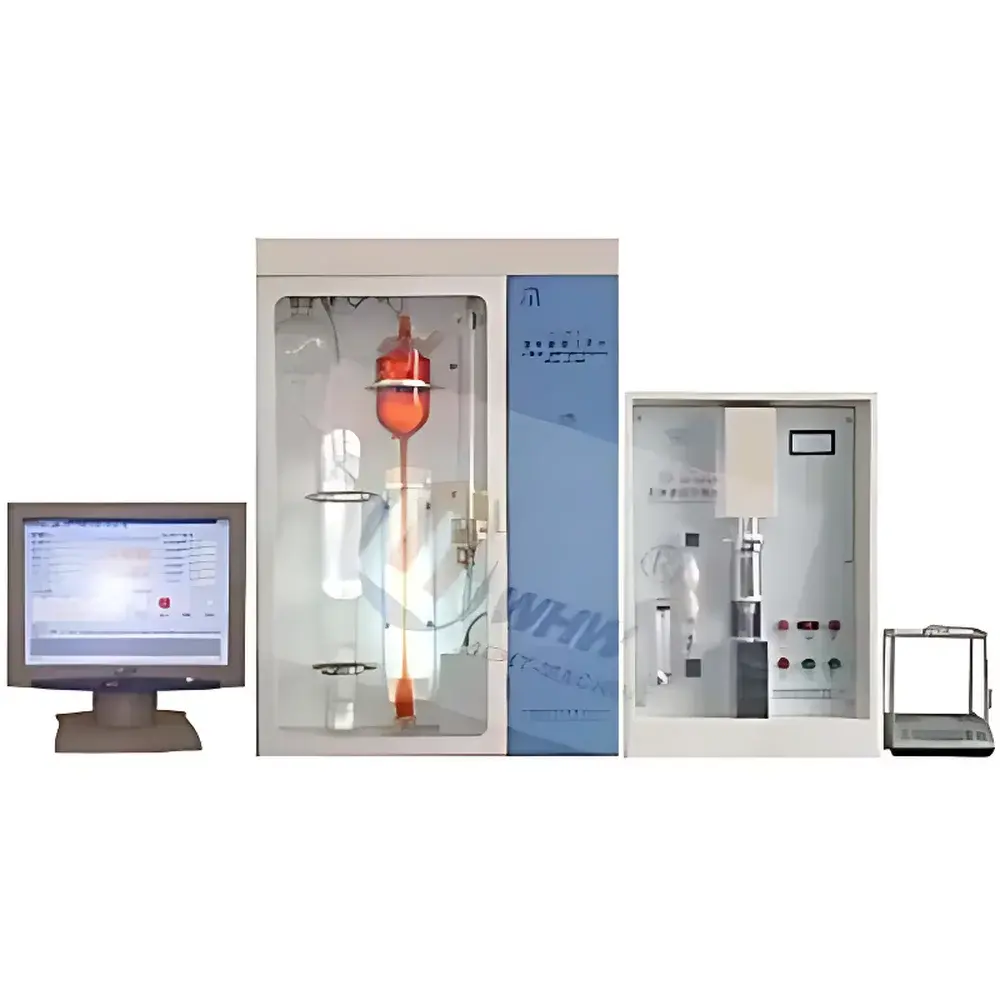
MC017-CS-H60D High-Intelligence Conductometric Carbon-Sulfur Analyzer
| Origin | Shanghai, China |
|---|---|
| Manufacturer Type | Authorized Distributor |
| Origin Category | Domestic (PRC) |
| Model | MC017-CS-H60D |
| Pricing | Available Upon Request |
Overview
The MC017-CS-H60D High-Intelligence Conductometric Carbon-Sulfur Analyzer is a dedicated elemental combustion analyzer engineered for precise quantification of total carbon (C) and sulfur (S) mass fractions in solid metallic and non-metallic materials. It operates on classical wet chemical combustion principles: sample combustion in a high-frequency induction or resistance-heated furnace under controlled oxygen flow generates CO₂ and SO₂ gases, which are subsequently absorbed in standardized aqueous reagents. Carbon concentration is determined via gas volumetric measurement (gasometric method), while sulfur is quantified through iodometric titration—both methods fully compliant with ISO 4935:1989 (steel — determination of carbon content — gas-volumetric method) and ISO 4936:1989 (steel — determination of sulfur content — iodometric method). Designed specifically for low-concentration analysis, the instrument delivers trace-level sensitivity with robust repeatability across heterogeneous matrices including ferrous alloys, non-ferrous metals, ores, refractory ceramics, and sintered carbides.
Key Features
- Microprocessor-controlled automation with standalone operation capability—analysis sequence, gas absorption timing, endpoint detection, and calculation are fully managed without continuous PC connection.
- Windows-based native Chinese GUI (localized for lab personnel in PRC markets), optimized for rapid workflow navigation, real-time signal visualization, and intuitive calibration management.
- High-stability conductometric detection system: dual-channel electrochemical transducers continuously monitor conductivity changes in absorptive solutions during CO₂ and SO₂ absorption, enabling dynamic baseline correction and drift compensation.
- Fully digital auto-zeroing and auto-span adjustment—eliminates manual potentiometer tuning and ensures consistent detector response across extended operational cycles.
- Electromagnetic interference (EMI)-hardened architecture with shielded gas lines, grounded combustion chamber, and optically isolated signal paths—guarantees measurement integrity in industrial laboratory environments with variable power quality and RF noise.
- Integrated data retention engine supporting >100,000 result records with timestamp, operator ID, sample ID, calibration batch, and raw absorbance/conductivity traces—enabling full traceability per GLP requirements.
- Native TCP/IP and RS-232 interfaces support bidirectional data exchange with LIMS, ERP, or centralized QA databases; configurable polling intervals and secure FTP upload options available.
Sample Compatibility & Compliance
The MC017-CS-H60D accommodates solid samples ranging from 0.25 g to 1.0 g, with programmable weighing range selection to optimize detection limits for varying C/S concentrations. Compatible matrices include carbon steels, stainless steels, cast irons, aluminum alloys, copper-based alloys, manganese nodules, limestone fluxes, silicon carbide ceramics, and graphite electrodes. All analytical protocols adhere to national standards GB/T 223.69–1997 (equivalent to ISO 4935) and GB/T 223.68–1997 (equivalent to ISO 4936), with certified reference materials (CRMs) such as GBW01301–GBW01312 used for daily verification. Instrument design conforms to IEC 61010-1:2010 safety requirements for electrical equipment in laboratory use.
Software & Data Management
The embedded firmware and host software provide full audit trail functionality—including user login history, method version control, parameter change logs, and electronic signature capture—meeting FDA 21 CFR Part 11 readiness criteria when deployed with Windows domain authentication and encrypted database storage. Raw conductometric waveforms, volumetric displacement curves, and titration endpoints are archived in vendor-neutral CSV and XML formats. Optional add-ons include statistical process control (SPC) dashboards, trend analysis over time, and automated report generation compliant with ISO/IEC 17025 documentation templates.
Applications
- Quality assurance in steelmaking: monitoring residual carbon in ultra-low-carbon (ULC) steels and interstitial-free (IF) grades.
- Metallurgical R&D: evaluating desulfurization efficiency in ladle refining processes and slag-metal partitioning behavior.
- Foundry QC: rapid screening of sulfur segregation in ductile iron castings and graphite morphology correlation studies.
- Mineral processing labs: assaying sulfur content in pyritic ores and carbonaceous gold-bearing materials prior to cyanidation.
- Ceramic manufacturing: verifying stoichiometric purity of SiC, Al₂O₃, and ZrO₂ feedstocks where carbon residue affects sintering kinetics.
FAQ
What combustion method does the MC017-CS-H60D employ?
It uses high-temperature resistive or induction-assisted combustion in pure oxygen, followed by selective gas absorption and conductometric detection—no infrared or thermal conductivity sensors are involved.
Is the instrument compliant with international metrological standards?
Yes—its gasometric carbon determination aligns with ISO 4935, and its iodometric sulfur protocol complies with ISO 4936; all calibrations are traceable to NIM (National Institute of Metrology, China) CRMs.
Can the system operate without a connected computer?
Yes—the onboard microcontroller handles full cycle control, endpoint recognition, and result calculation independently; the PC is required only for advanced reporting and database synchronization.
What environmental conditions are required for stable operation?
Ambient temperature: 0–40 °C; atmospheric pressure: 90.658–106.658 kPa; relative humidity: ≤80% non-condensing; stable AC power supply with surge protection recommended.
How is data integrity ensured during long-term deployment?
All measurements are time-stamped, operator-authenticated, and stored with raw sensor outputs; database encryption, automatic backup scheduling, and exportable audit logs fulfill GLP/GMP record-keeping mandates.
Related Products






