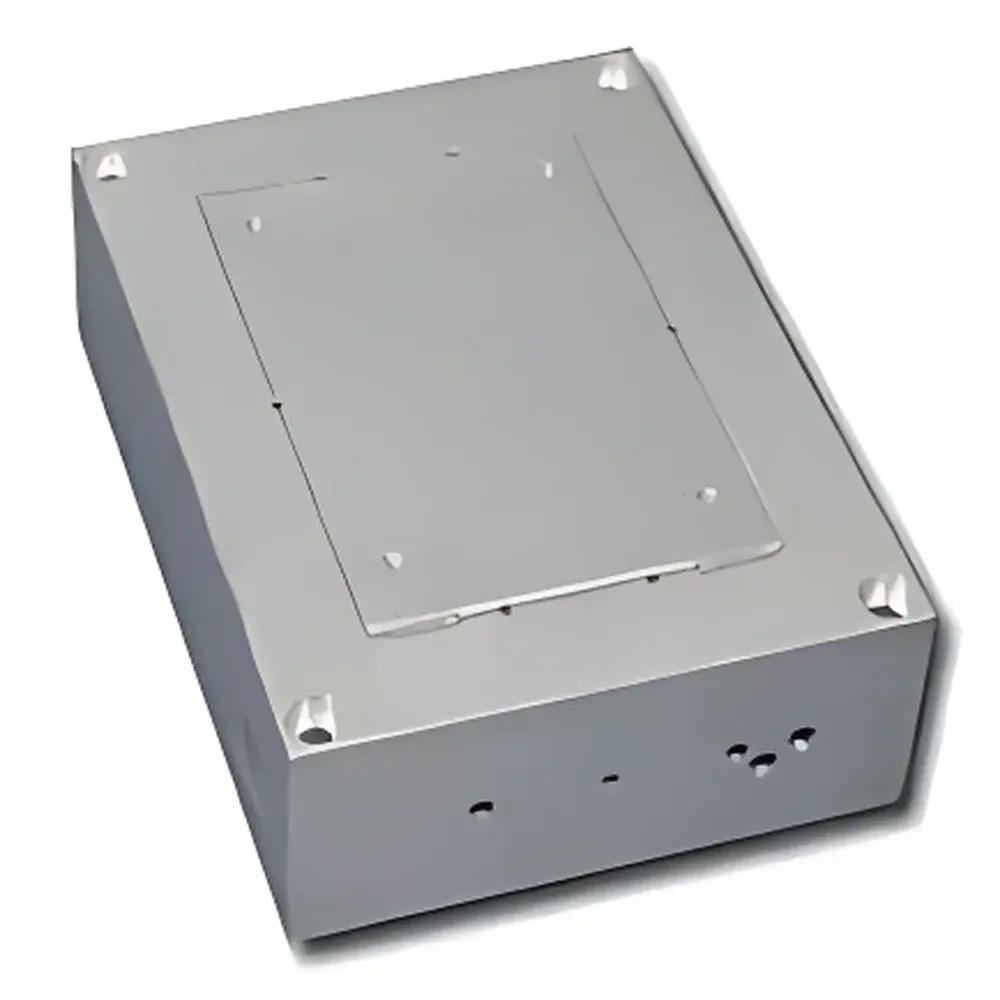
MCL Think Nano Nano-HL Series Heavy-Duty Nanometer-Resolution Linear Translation Stage

| Brand | MCL Think Nano |
|---|---|
| Origin | USA |
| Model | Nano-HL |
| Motion Axis | Single-Axis |
| Travel Range | 50/100/200 µm |
| Resolution | 0.1–0.4 nm (model-dependent) |
| Load Capacity | 10 kg (horizontal & vertical) |
| Control | Closed-loop with PicoQ® absolute position sensing |
| Body Material | Solid aluminum block (50 mm thick) |
| Resonant Frequency | 450 Hz ±20% |
| Stiffness | 1.0 N/µm |
| Controller | Nano-Drive® |
Ask about pricing, availability and specifications.
Overview
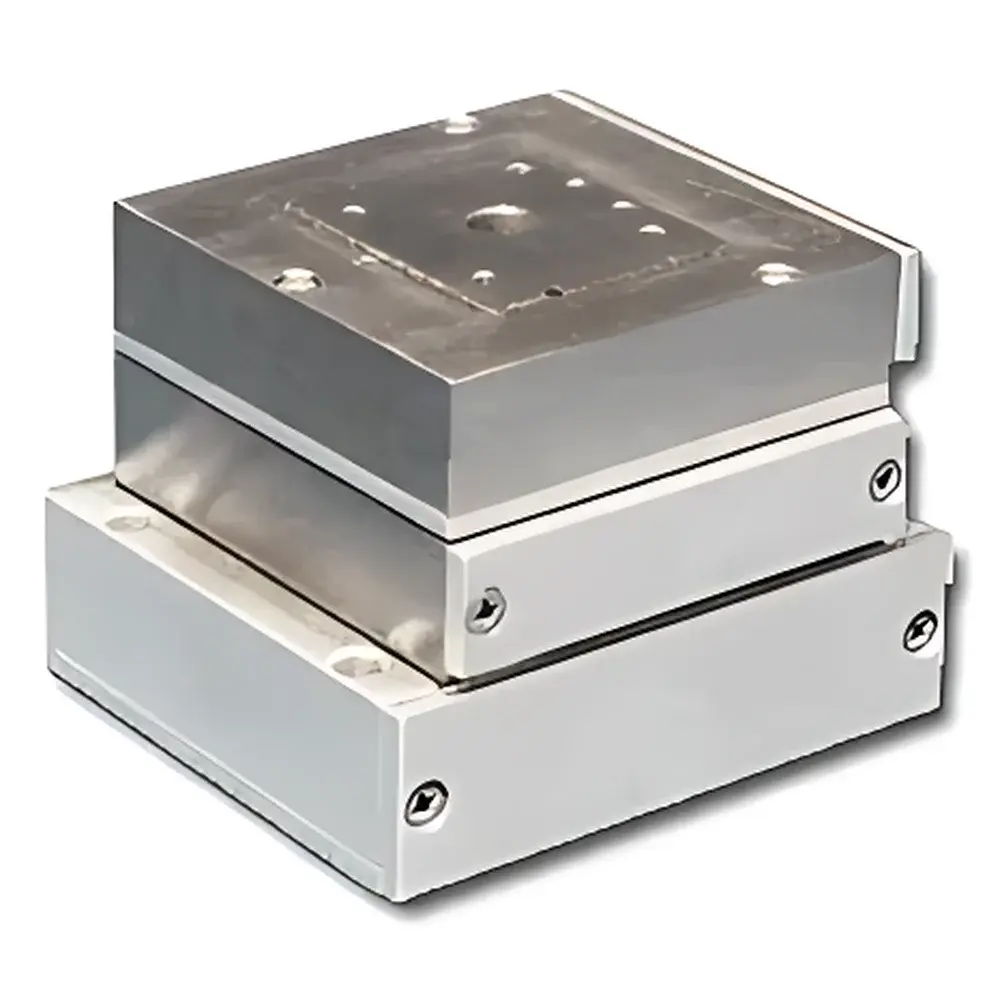
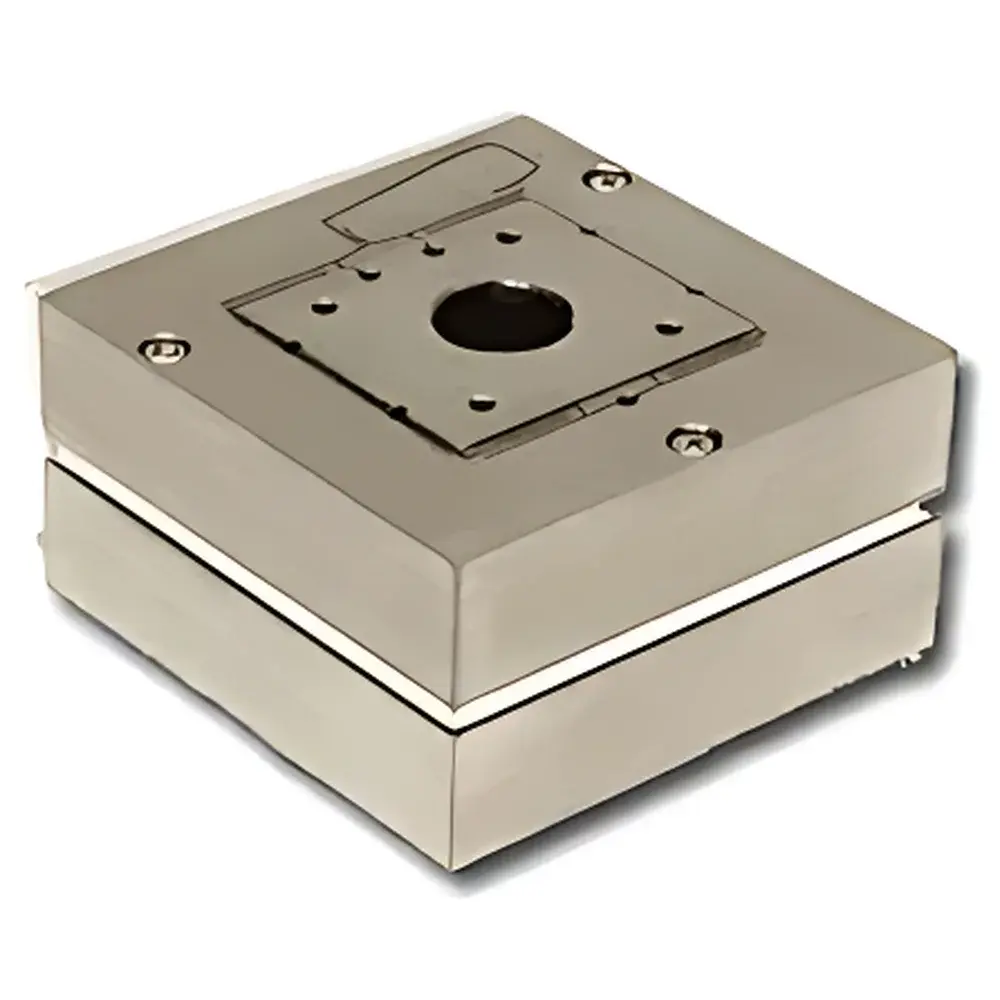
The MCL Think Nano Nano-HL Series is a high-performance, single-axis linear translation stage engineered for nanometer-precision positioning under demanding mechanical loads. Built on the foundational principle of piezoelectric actuation combined with proprietary capacitive position feedback, the Nano-HL delivers sub-nanometer resolution and exceptional positional stability in both horizontal and vertical orientations. Its monolithic aluminum construction—machined from a solid 50 mm-thick billet—provides structural rigidity critical for maintaining accuracy during off-axis loading, making it especially suitable for integrating heavy optical components (e.g., mirrors, lens mounts, or detector assemblies) into interferometric, spectroscopic, or quantum optics setups where thermal drift, hysteresis, and mechanical compliance must be minimized.
Key Features
- Monolithic aluminum body (50 mm thickness) ensures high stiffness (1.0 N/µm) and resistance to deformation under static and dynamic off-axis loads up to 10 kg
- Closed-loop operation with integrated PicoQ® absolute position sensors enabling real-time, drift-free displacement measurement with sub-nanometer resolution (0.1 nm for Nano-HL50; 0.2 nm for Nano-HL100; 0.4 nm for Nano-HL200)
- High resonant frequency (450 Hz ±20%) supports rapid settling times and enables stable operation in vibration-sensitive environments such as optical tables or ultra-high vacuum chambers
- Orientation-independent design allows mounting in any configuration—including inverted or side-mounted—without performance degradation
- Compatible with MCL’s Nano-Drive® controller, supporting analog voltage input (±10 V), digital USB/Ethernet communication, and programmable waveform generation for scanning or dithering applications
- Customizable mounting interfaces, cable routing options, and vacuum-compatible variants (upon request) facilitate integration into OEM instruments and research-grade optical platforms
Sample Compatibility & Compliance
The Nano-HL Series is designed for use with standard optical breadboards (e.g., 1/4″-20 or M6 threaded holes) and integrates seamlessly with common optomechanical hardware including kinematic mounts, cage systems, and lens tubes. All stages comply with RoHS directives and are manufactured under ISO 9001-certified processes. While not inherently certified for medical or aerospace applications, the Nano-HL meets mechanical and electrical requirements referenced in ASTM E2577 (Standard Practice for Calibration of Scanning Probe Microscopes) and supports traceable calibration protocols required for GLP-compliant metrology workflows. When operated with Nano-Drive® firmware v3.2+, the system supports audit-trail logging and user-access controls aligned with FDA 21 CFR Part 11 expectations for regulated laboratories.
Software & Data Management
Control and data acquisition are managed via MCL’s Nano-Drive® software suite, which provides cross-platform support (Windows, Linux, macOS) and native APIs for Python, MATLAB, LabVIEW, and C/C++. The software enables full access to closed-loop parameters—including PID tuning, velocity profiling, and step-and-settle optimization—as well as real-time plotting of position vs. time with timestamped data export in CSV or HDF5 formats. Firmware updates preserve backward compatibility, and all motion commands support synchronous triggering via TTL I/O lines, enabling precise coordination with cameras, lasers, or lock-in amplifiers. Data integrity is reinforced through cyclic redundancy checks (CRC) on all host-to-controller communications and non-volatile storage of user-defined calibration offsets.
Applications
- Precision alignment of high-mass optical elements in Michelson, Mach-Zehnder, or Fabry–Pérot interferometers
- Active stabilization of cavity mirrors in gravitational wave detection prototypes or narrow-linewidth laser cavities
- Positioning of cryogenic sensors or superconducting detectors where thermal contraction compensation and long-term repeatability are essential
- Integration into automated optical inspection systems requiring repeatable sub-10 nm placement accuracy over extended duty cycles
- Scanning probe microscopy (SPM) coarse approach mechanisms where load-bearing capability and minimal hysteresis are prerequisites
- Beam steering and focus adjustment in multi-wavelength adaptive optics testbeds
FAQ
What is the maximum recommended load for vertical orientation?
The Nano-HL Series supports up to 10 kg in vertical orientation without performance compromise, provided the mounting surface is rigid and properly aligned to avoid torsional stress on the actuator.
Is vacuum compatibility available?
Yes—vacuum-rated versions (UHV-compatible to 10⁻⁹ mbar) are available with modified materials, lubricants, and cabling; contact MCL engineering for configuration-specific validation reports.
Can multiple Nano-HL stages be synchronized?
Yes—using Nano-Drive®’s master-slave mode over Ethernet or shared clock distribution, up to eight axes can be coordinated with sub-microsecond timing precision.
Does the PicoQ® sensor require recalibration after power cycling?
No—the PicoQ® technology provides true absolute position feedback; zero-point reference is retained across power cycles without homing routines.
What documentation is included with shipment?
Each unit ships with a NIST-traceable calibration certificate, dimensional drawings (STEP and PDF), CE/UKCA declarations of conformity, and full API documentation for third-party integration.