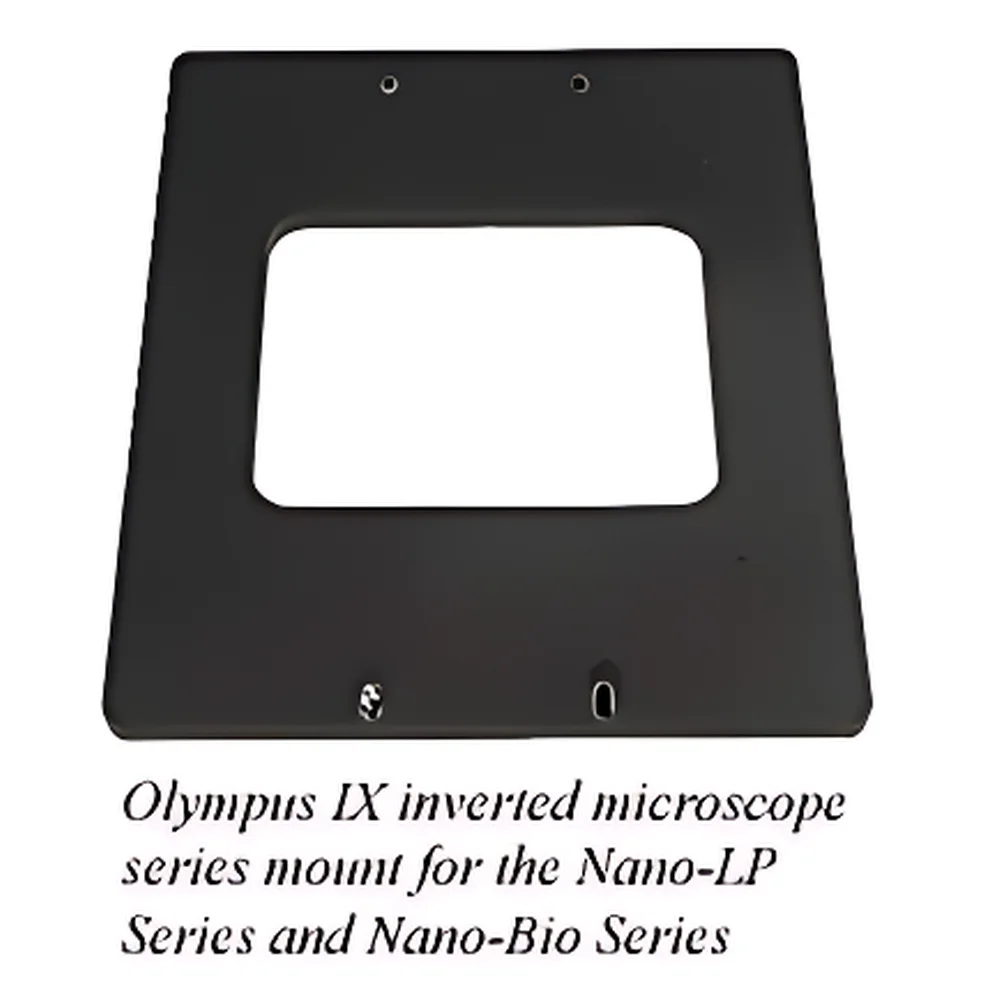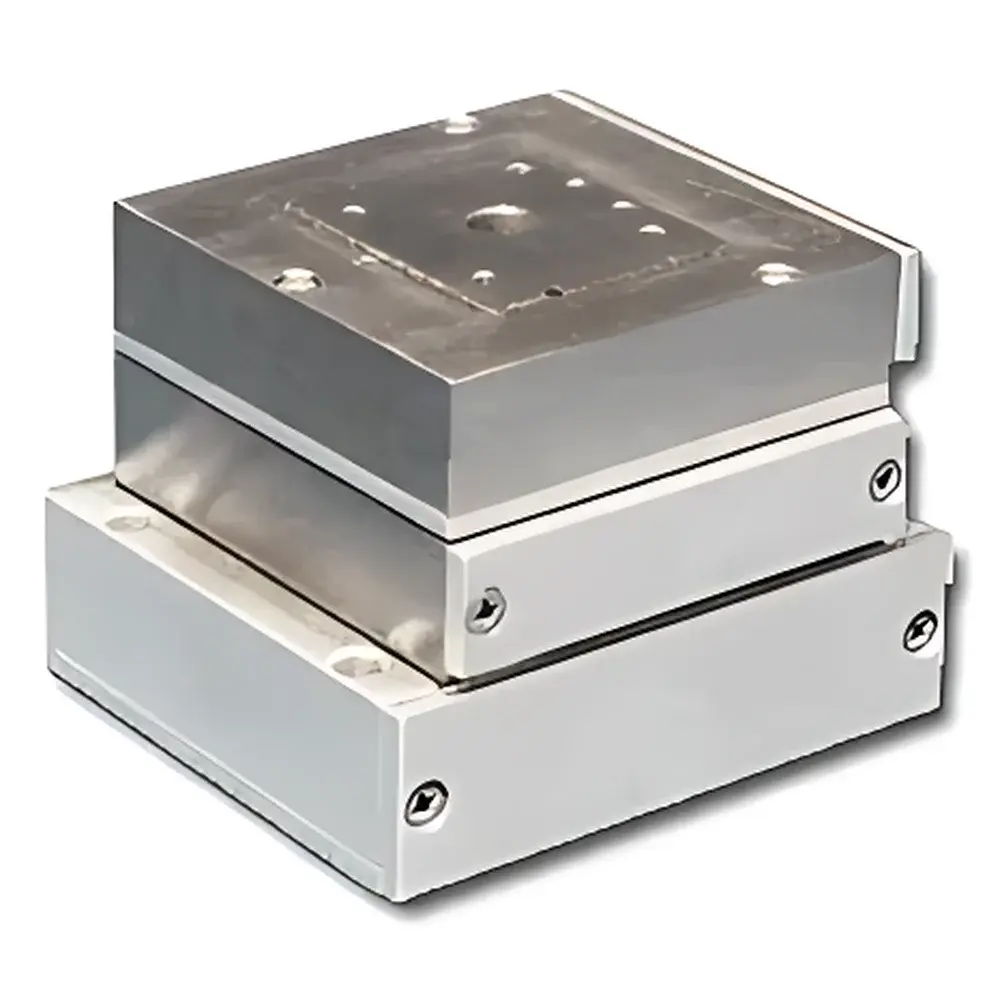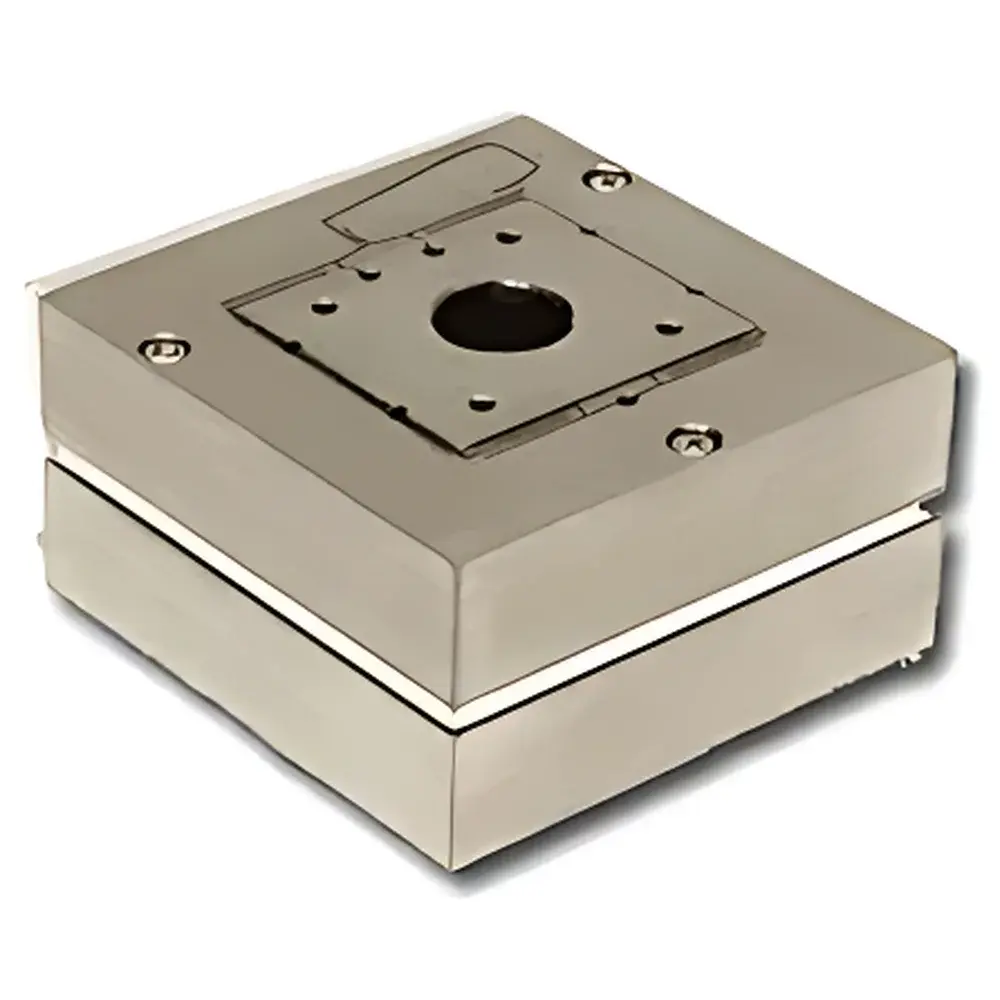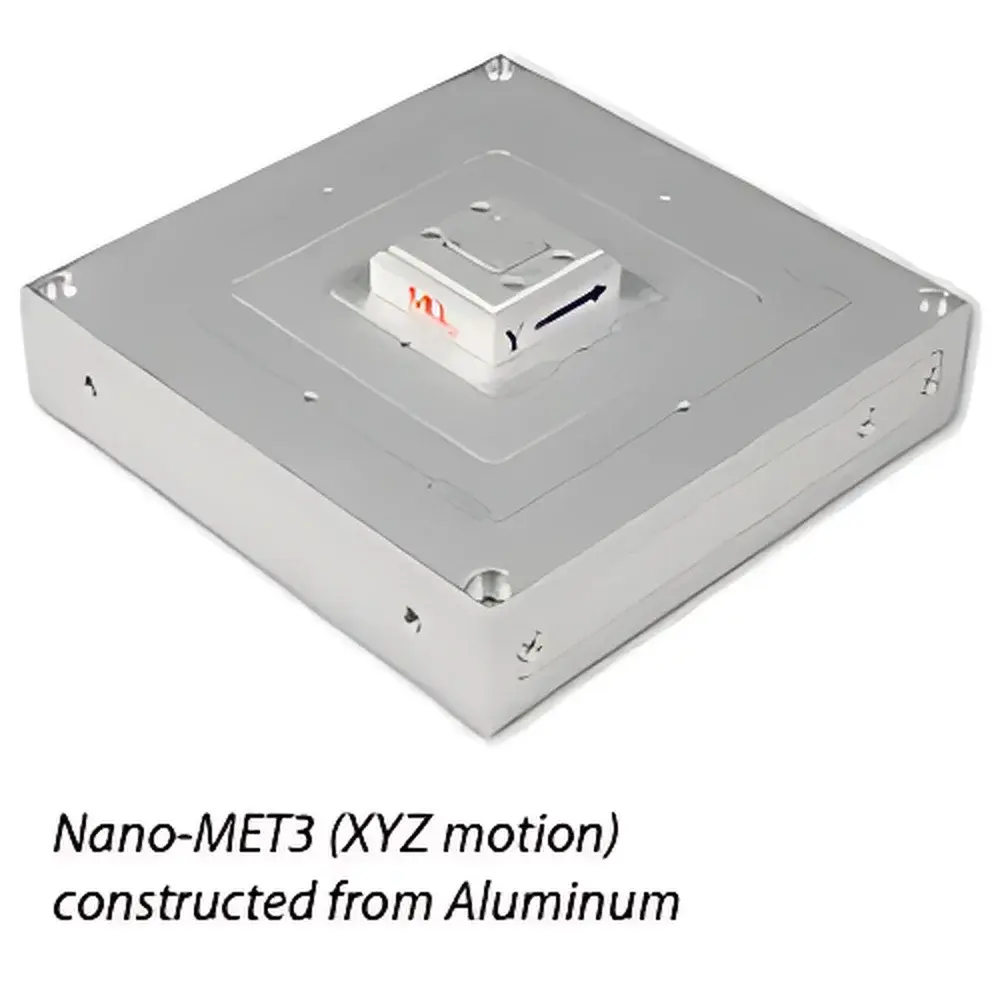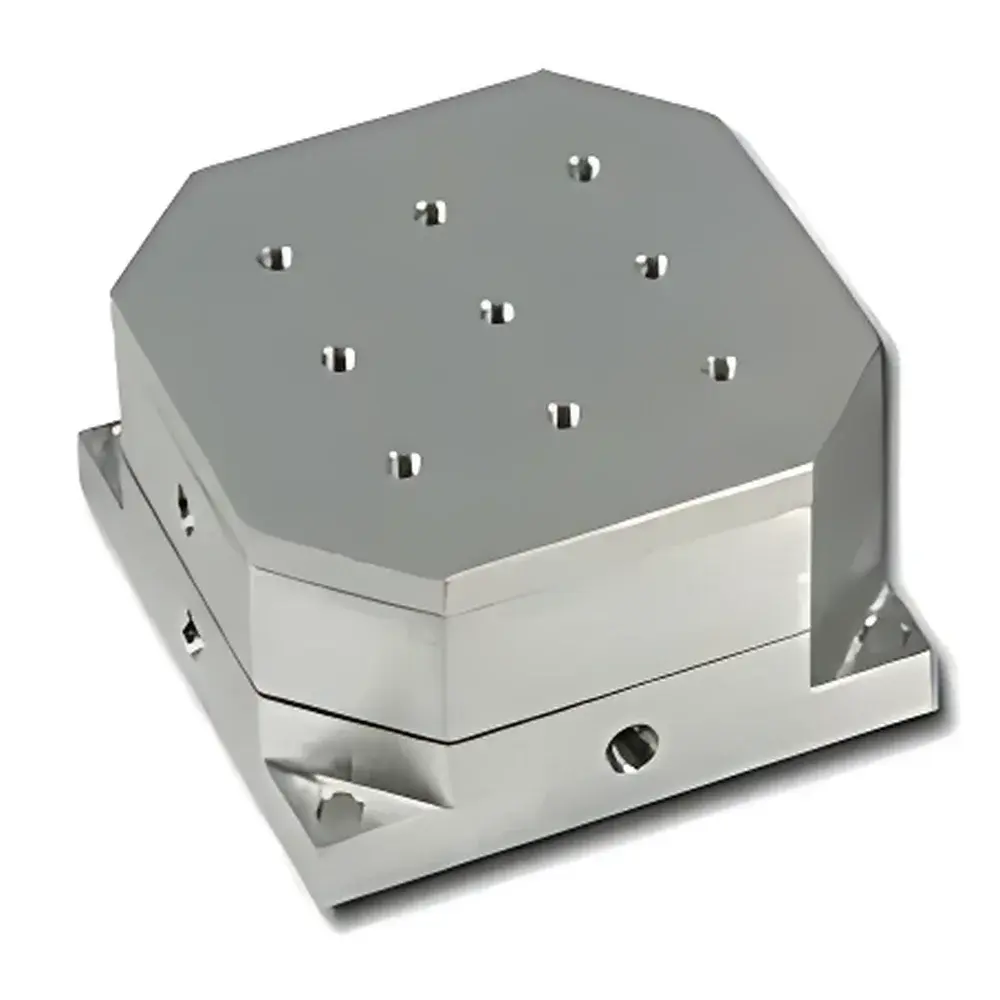
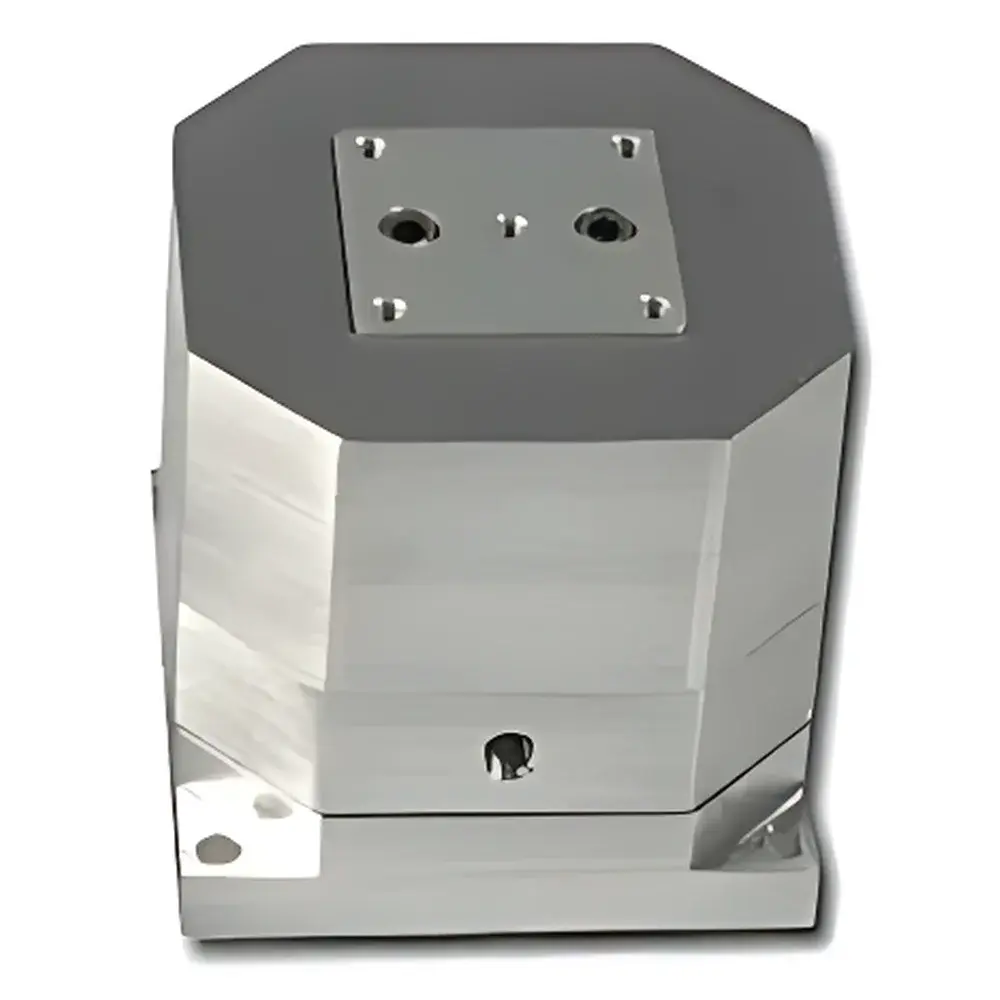
MCL Think Nano Nano-HS Series High-Speed Multi-Axis Piezoelectric Translation Stage

| Brand | MCL Think Nano |
|---|---|
| Origin | USA |
| Model | Nano-HS Series |
| Type | Motorized Piezoelectric Translation Stage |
| Motion Configurations | XY (Nano-HS2), XYZ (Nano-HS3, Nano-HS3M) |
| Positioning Resolution | 0.01 nm (10 pm) |
| Z-Axis Step Response Time | ≤2 ms |
| Z-Axis Resonant Frequency | 5.0 kHz ±20% |
| XY Resonant Frequency (HS2) | 1.5 kHz ±20% |
| XY Resonant Frequency (HS3) | 1.0 kHz ±20% |
| Max Scanning Frequency | 300 Hz |
| Stiffness (Z-axis) | 8 N/µm |
| Max Horizontal Load | 0.1 kg |
| Max Vertical Load | 0.1 kg |
| Body Materials | Aluminum, Invar, or Titanium |
| Position Noise | <2 pm RMS (all axes) |
| Control Architecture | Closed-loop with integrated PicoQ® absolute position sensors |
| Controller | Nano-Drive® |
Ask about pricing, availability and specifications.
Overview
The MCL Think Nano Nano-HS Series is a high-performance, multi-axis piezoelectric translation stage engineered for ultra-precise, high-bandwidth positioning in demanding optical and nanoscale metrology applications. Based on direct-drive piezoelectric actuation and proprietary PicoQ® capacitive sensing technology, the Nano-HS platform delivers true closed-loop control with absolute position feedback—eliminating hysteresis, drift, and thermal retrace errors common in open-loop systems. Its core architecture integrates monolithic flexure-guided motion with resonant-frequency-optimized mechanical design: the Z-axis achieves a 5.0 kHz resonant frequency and sub-2 ms step response, enabling dynamic scanning up to 300 Hz while maintaining sub-picometer positional stability. The compact, low-noise mechanical structure—available in aluminum, Invar, or titanium variants—ensures minimal thermal expansion and vibration coupling, making it suitable for integration into vacuum-compatible, low-vibration, or active isolation environments typical of atomic force microscopy (AFM), scanning probe microscopy (SPM), near-field optical microscopy (NSOM), and interferometric metrology setups.
Key Features
- True closed-loop operation with integrated PicoQ® absolute capacitive position sensors on all axes—no homing or referencing required
- Picometer-scale resolution (0.01 nm) and repeatability across XY and XYZ configurations
- Z-axis bandwidth optimized for high-speed scanning: ≤2 ms step response and sustained 300 Hz sinusoidal scanning
- Ultra-low position noise floor: <2 pm RMS on X, Y, and Z axes under standard lab conditions
- High mechanical stiffness (8 N/µm on Z-axis) ensures minimal deflection under load and improved dynamic tracking fidelity
- Modular configuration options: Nano-HS2 (high-speed XY), Nano-HS3 (balanced XYZ), and Nano-HS3M (enhanced Z-speed XYZ)
- Compatible with MCL’s Nano-Drive® controller, supporting analog/digital I/O, real-time waveform generation, and external trigger synchronization
Sample Compatibility & Compliance
The Nano-HS Series is designed for integration into research-grade and industrial metrology platforms where traceable, repeatable, and auditable positioning is required. Its mechanical construction adheres to standard cleanroom-compatible practices, and optional Invar or titanium body variants meet stringent coefficient-of-thermal-expansion (CTE) requirements for long-term dimensional stability. While not certified to specific ISO or ASTM standards as a standalone unit, the system supports compliance workflows when deployed in validated instruments—for example, AFM systems operating under GLP or GMP protocols may leverage its deterministic closed-loop behavior and controller audit-trail capabilities (via Nano-Drive® firmware logging) to satisfy FDA 21 CFR Part 11 data integrity expectations. All stages are RoHS-compliant and manufactured in the USA under controlled quality management procedures.
Software & Data Management
Control and integration are enabled through the Nano-Drive® controller suite, which provides native support for Windows and Linux environments via USB 2.0 and Ethernet interfaces. The SDK includes C/C++, Python, MATLAB, and LabVIEW APIs, allowing full programmatic access to waveform generation, position streaming (up to 100 kS/s per axis), and real-time feedback loop adjustment. Position data logs include timestamps, sensor raw values, commanded positions, and error signals—enabling post-acquisition analysis of tracking performance and thermal drift. For regulated environments, Nano-Drive® supports configurable user authentication, electronic signatures, and immutable log archiving—features aligned with instrument qualification requirements in pharmaceutical and semiconductor QA/QC labs.
Applications
- High-speed, high-resolution scanning in AFM and SPM systems—particularly for dynamic mode imaging, force spectroscopy, and multi-frequency excitations
- Near-field scanning optical microscopy (NSOM) requiring synchronized tip-sample positioning and laser modulation
- Interferometric calibration and displacement metrology where sub-picometer noise floors and linearity are critical
- Optical alignment and beam steering in ultra-stable laser cavities, quantum optics experiments, and adaptive optics testbeds
- Integration into custom-built nanomanipulation workstations using the SPM-M Kit or MadPLL® phase-locked loop instrumentation
- Dynamic testing of micro-electromechanical systems (MEMS) actuators and resonators
FAQ
What distinguishes the Nano-HS3 from the Nano-HS3M?
The Nano-HS3M features an enhanced Z-axis actuator design with higher bandwidth and reduced mechanical inertia, enabling faster Z-scanning—especially beneficial for topography-following modes in AFM.
Can the Nano-HS operate in vacuum?
Yes—when configured with Invar or titanium bodies and compatible cabling, the Nano-HS Series is rated for UHV-compatible operation down to 10⁻⁹ Torr; consult engineering for feedthrough and bake-out specifications.
Is third-party software integration supported?
Yes—the Nano-Drive® SDK provides documented APIs for Python, MATLAB, LabVIEW, and C/C++, including examples for synchronization with camera triggers, lock-in amplifiers, and DAQ systems.
What is the recommended maintenance schedule?
No routine maintenance is required; the monolithic flexure design is solid-state with no lubricants or wear-prone components. Long-term calibration verification is advised annually in metrology-critical applications.
How is positional linearity characterized and verified?
Linearity is validated using heterodyne laser interferometry traceable to NIST standards; full calibration reports—including residual nonlinearity maps and thermal drift coefficients—are available upon request for qualified applications.