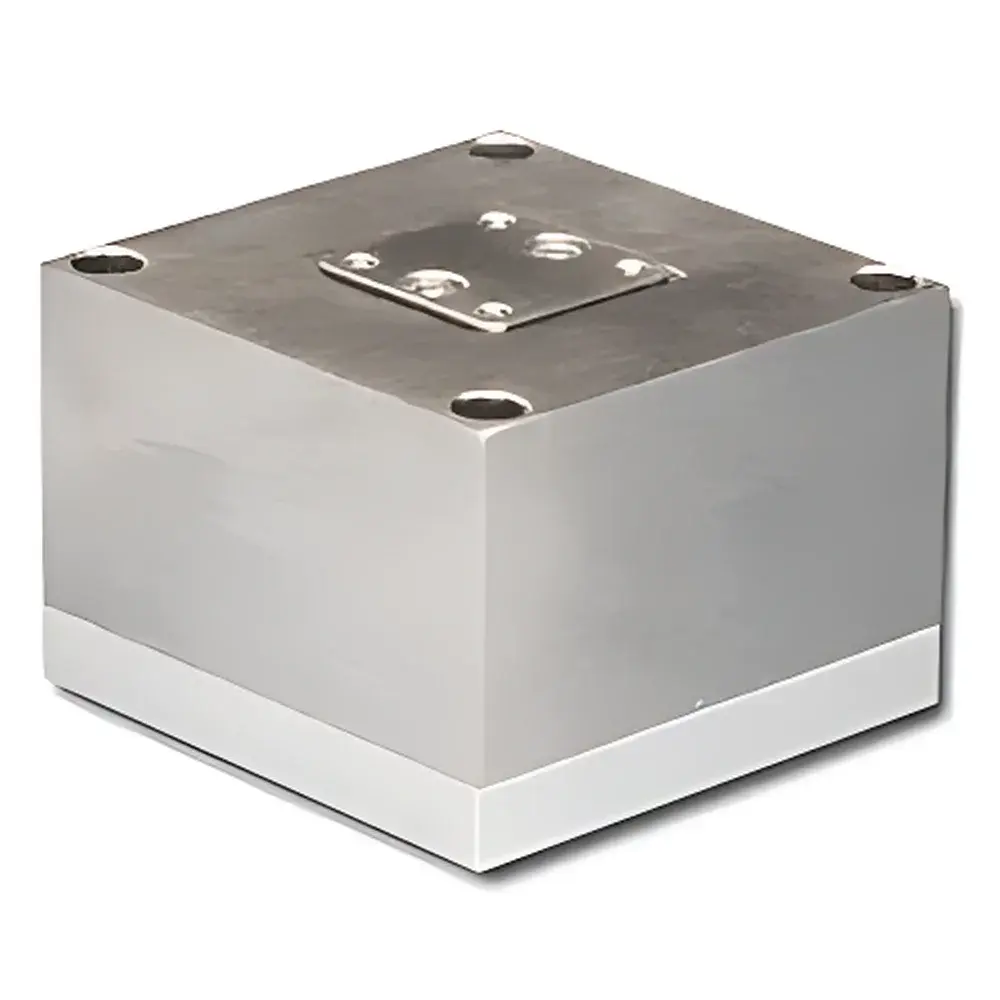
MCL Think Nano Nano-HSZ High-Speed Z-Axis Piezo Nanopositioning Stage

| Brand | MCL Think Nano |
|---|---|
| Origin | USA |
| Manufacturer Type | Authorized Distributor |
| Product Category | Imported |
| Model | Nano-HSZ |
| Product Type | Motorized Translation Stage |
| Motion Axis | Single-axis (Z) |
| Positioning Technology | Closed-loop piezoelectric actuation with PicoQ® absolute position sensing |
| Travel Range (Z) | 10 µm |
| Resolution | 0.01 nm |
| Resonant Frequency | 7.5 kHz ±20% |
| Step Response Time | <1 ms |
| Maximum Scan Frequency (full amplitude) | 500 Hz |
| Stiffness | 12 N/µm |
| Max Recommended Load (horizontal/vertical) | 0.1 kg |
| Body Materials | Aluminum, Invar, or Titanium |
| Controller | Nano-Drive® |
Ask about pricing, availability and specifications.
Overview
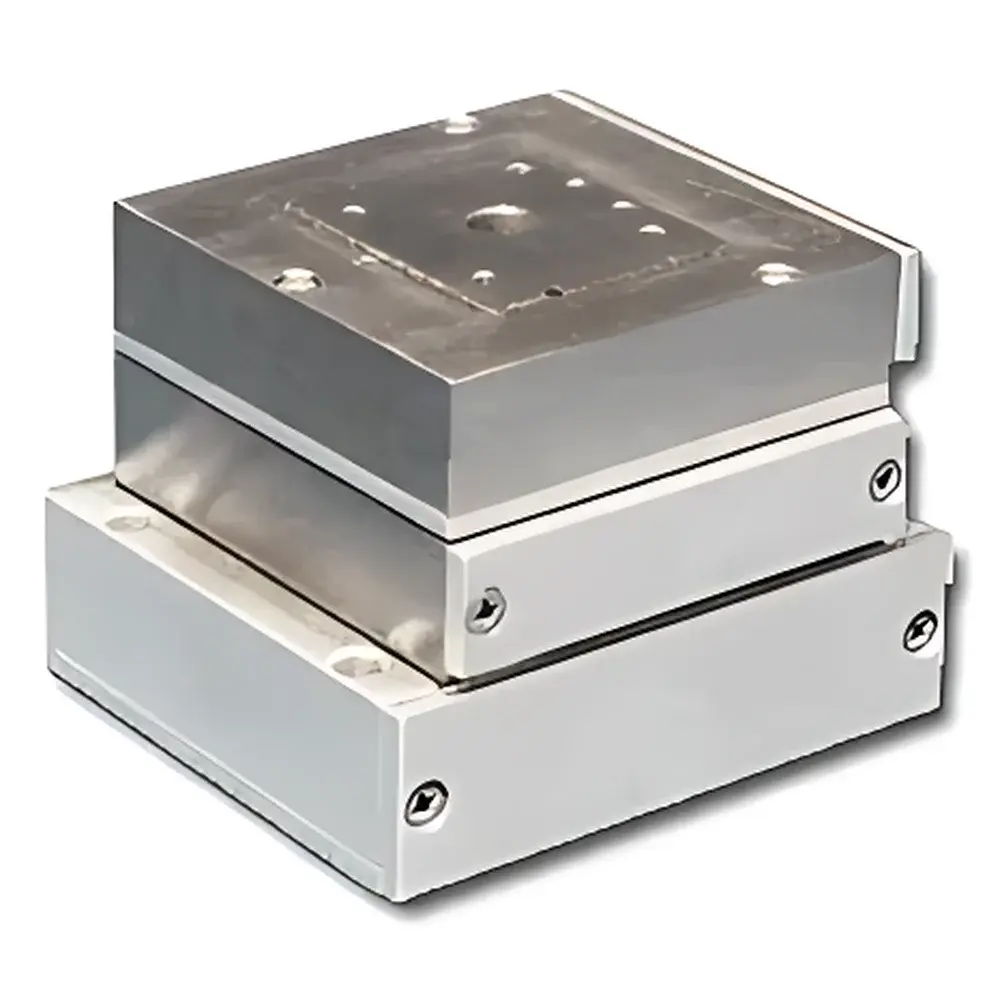
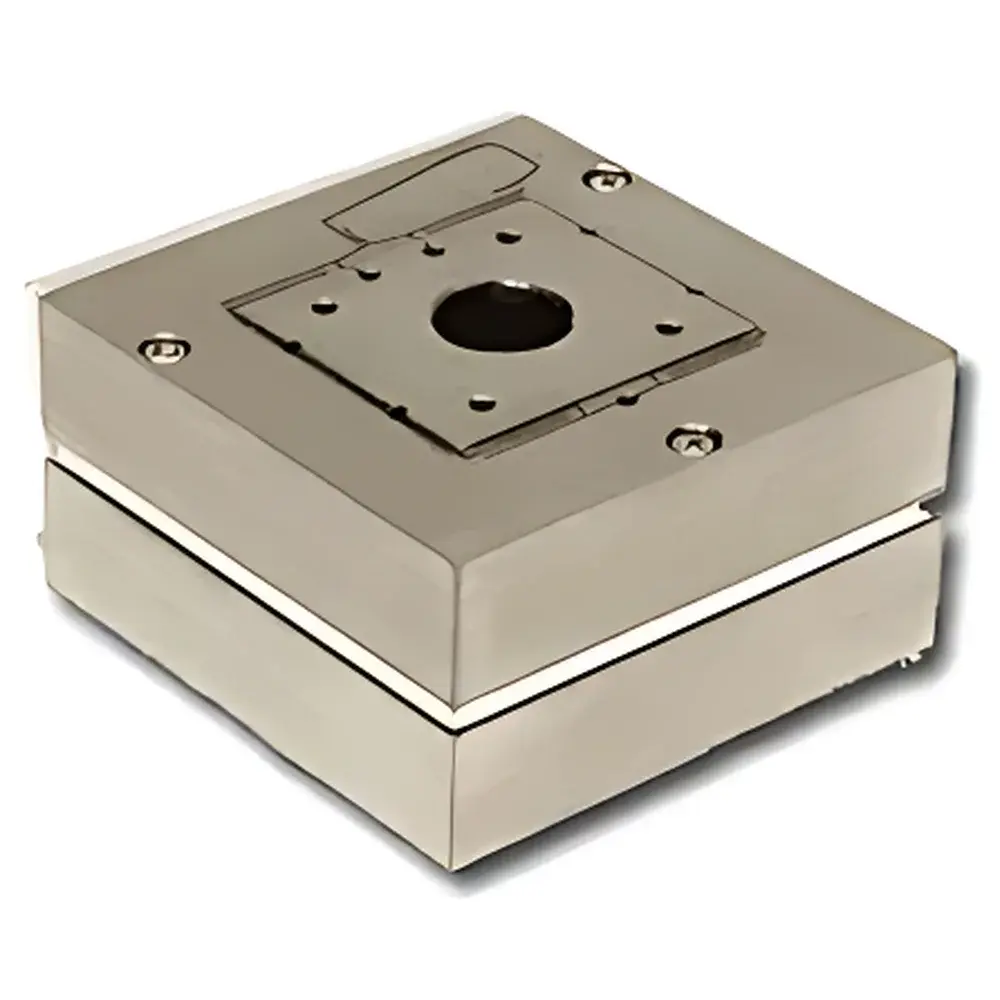
The MCL Think Nano Nano-HSZ is a high-performance, single-axis (Z-direction) nanopositioning stage engineered for ultra-precise vertical displacement in demanding optical and metrological applications. Built upon proprietary piezoelectric actuation and integrated PicoQ® absolute position sensing technology, the Nano-HSZ delivers true picometer-level resolution and repeatability under closed-loop control—without reliance on external interferometers or homodyne detection systems. Its core architecture leverages a monolithic flexure-guided design to eliminate mechanical backlash, hysteresis, and stick-slip artifacts commonly associated with screw-driven or stepper-motor-based stages. With a resonant frequency exceeding 7.5 kHz and sub-millisecond step response, the Nano-HSZ supports dynamic scanning protocols essential for real-time optical path length modulation, adaptive optics correction, and high-bandwidth interferometric feedback loops. The compact footprint (typical dimensions: 48 × 48 × 20 mm) and ultra-low intrinsic noise floor (<10 pm RMS in bandwidth-limited operation) make it suitable for integration into vacuum-compatible, vibration-isolated, or cryogenic optical benches.
Key Features
- True absolute positioning via embedded PicoQ® capacitive sensors—no homing or referencing required at power-up
- Closed-loop bandwidth >3 kHz enabling stable tracking of fast waveforms (e.g., sinusoidal, sawtooth, arbitrary profiles) up to 500 Hz at full 10 µm stroke
- Picometer-class resolution (0.01 nm) and <50 pm peak-to-peak positional noise in 1–100 Hz band
- High mechanical stiffness (12 N/µm) ensuring minimal thermal drift and load-induced deflection
- Modular compatibility with MCL’s Nano-OP series for seamless XY-Z multi-axis coordination without alignment overhead
- Body options in aluminum (lightweight), Invar (ultra-low CTE), or titanium (high strength-to-density ratio) for application-specific environmental stability
Sample Compatibility & Compliance
The Nano-HSZ is designed for direct integration into optical trains involving beam splitters, objective lenses, mirrors, and interferometric cavities. It accommodates standard Ø25.4 mm or Ø50.8 mm optical components mounted via kinematic or flexure-based adapters. While not classified as a medical or diagnostic device, its performance characteristics align with requirements for ISO 10110-7 (surface form tolerances), ISO 20957-4 (fitness equipment—used analogously for motion fidelity benchmarks), and ASTM E2556 (standard practice for calibration of nanoscale displacement sensors). When operated with the Nano-Drive® controller, the system supports audit-trail logging and configurable user-access levels compliant with GLP/GMP documentation workflows. No FDA 21 CFR Part 11 certification is claimed; however, raw position data export (CSV, HDF5) enables traceable post-processing per laboratory SOPs.
Software & Data Management
Control is executed via the Nano-Drive® software suite (Windows/Linux), offering native support for LabVIEW™ VI libraries, MATLAB® Instrument Control Toolbox drivers, and Python APIs (PyNanoDrive). Real-time streaming of position, voltage, and sensor feedback at up to 10 MS/s enables synchronization with oscilloscopes, lock-in amplifiers, or camera triggers via TTL/USB-CDC interfaces. All motion profiles—including trapezoidal, S-curve, and user-defined LUT-based trajectories—are stored with timestamped metadata. Firmware updates preserve calibration coefficients across sessions, and EEPROM-stored sensor linearity corrections ensure long-term measurement integrity without periodic recalibration.
Applications
- Active stabilization of Michelson or Fabry–Pérot interferometer cavities in gravitational wave precursor experiments
- Dynamic focus correction in confocal and multiphoton microscopy systems requiring axial dithering at >200 Hz
- Calibration reference stage for scanning probe microscope (SPM) z-scanners and AFM photodetector alignment
- Optical coherence tomography (OCT) reference arm modulation with sub-wavelength phase accuracy
- Ultrafast laser pulse compression via grating or prism translation in chirped-pulse amplification (CPA) setups
- Nanoscale surface profiling using white-light or laser Doppler vibrometry where Z-modulation defines measurement depth resolution
FAQ
What is the maximum recommended load when mounting optics vertically?
The Nano-HSZ is rated for up to 0.1 kg in vertical orientation. Loads exceeding this threshold require custom flexure redesign and should be evaluated by MCL engineering prior to integration.
Does the Nano-HSZ require periodic recalibration?
No—PicoQ® sensors are factory-calibrated and retain linearity over temperature ranges from 15 °C to 35 °C. Long-term drift is <0.05 nm/°C, and no field recalibration is needed under normal lab conditions.
Can multiple Nano-HSZ units be synchronized for coordinated Z-motion?
Yes—via master-slave configuration using Nano-Drive®’s deterministic trigger bus, achieving inter-stage timing jitter <100 ns across up to eight axes.
Is vacuum operation supported?
Standard units are rated for 10⁻⁴ mbar. Optional UHV versions (10⁻¹¹ mbar) with non-outgassing materials and ceramic feedthroughs are available upon request.
What file formats does the Nano-Drive® software export for position data?
Position logs are exportable as UTF-8 CSV (with header metadata), HDF5 (for MATLAB/Python analysis), and binary .bin files with IEEE 754-32-bit float encoding.