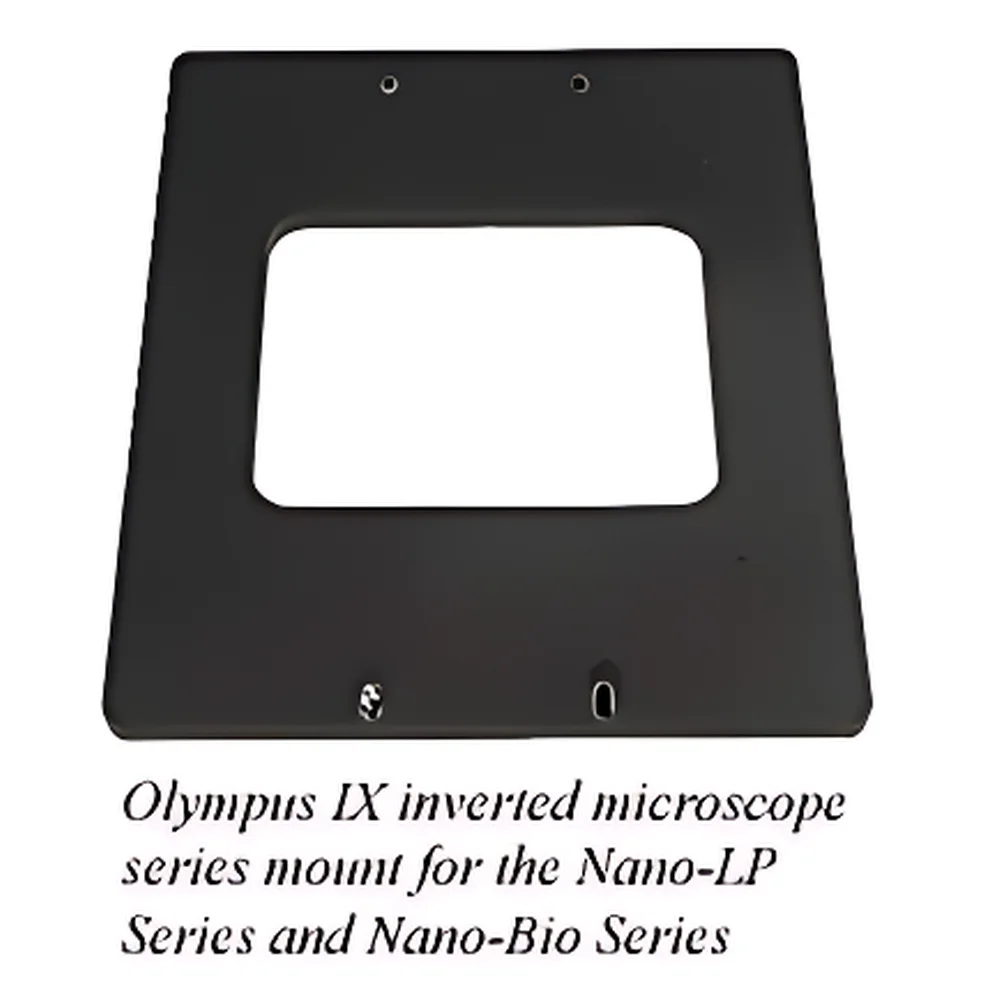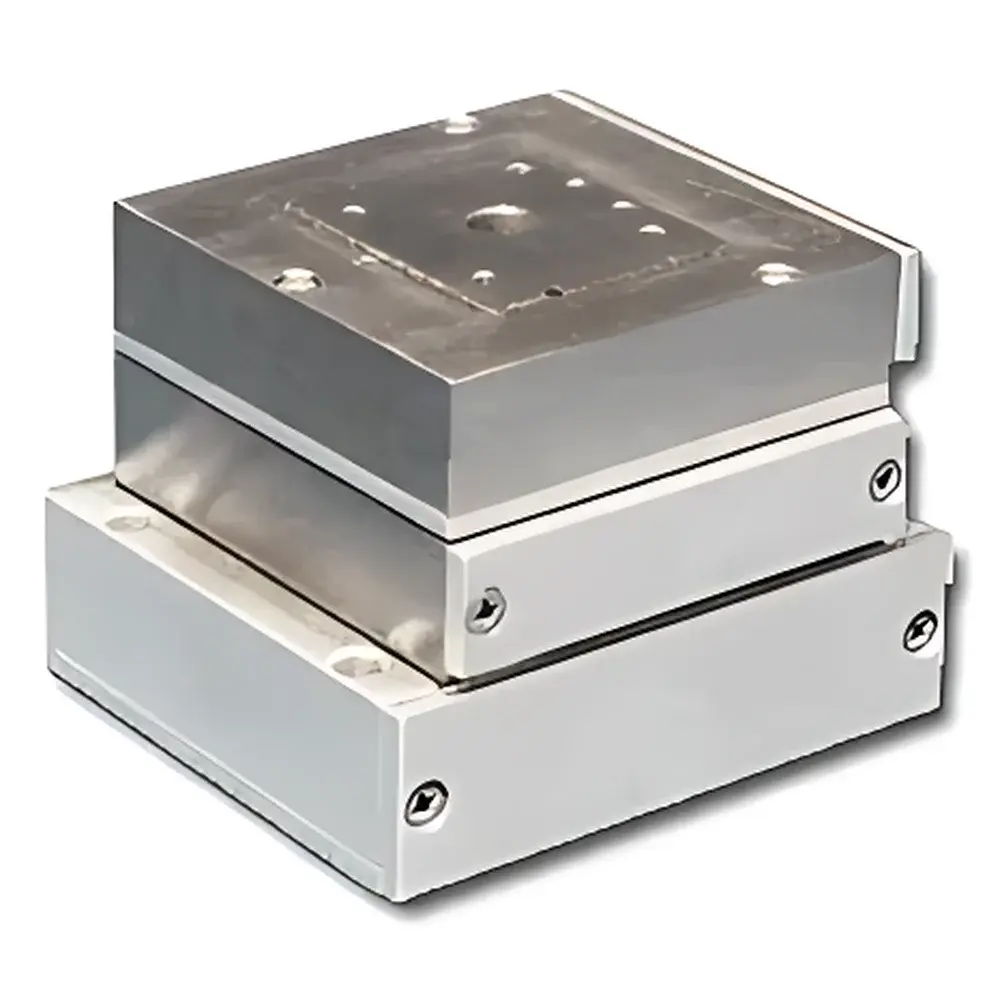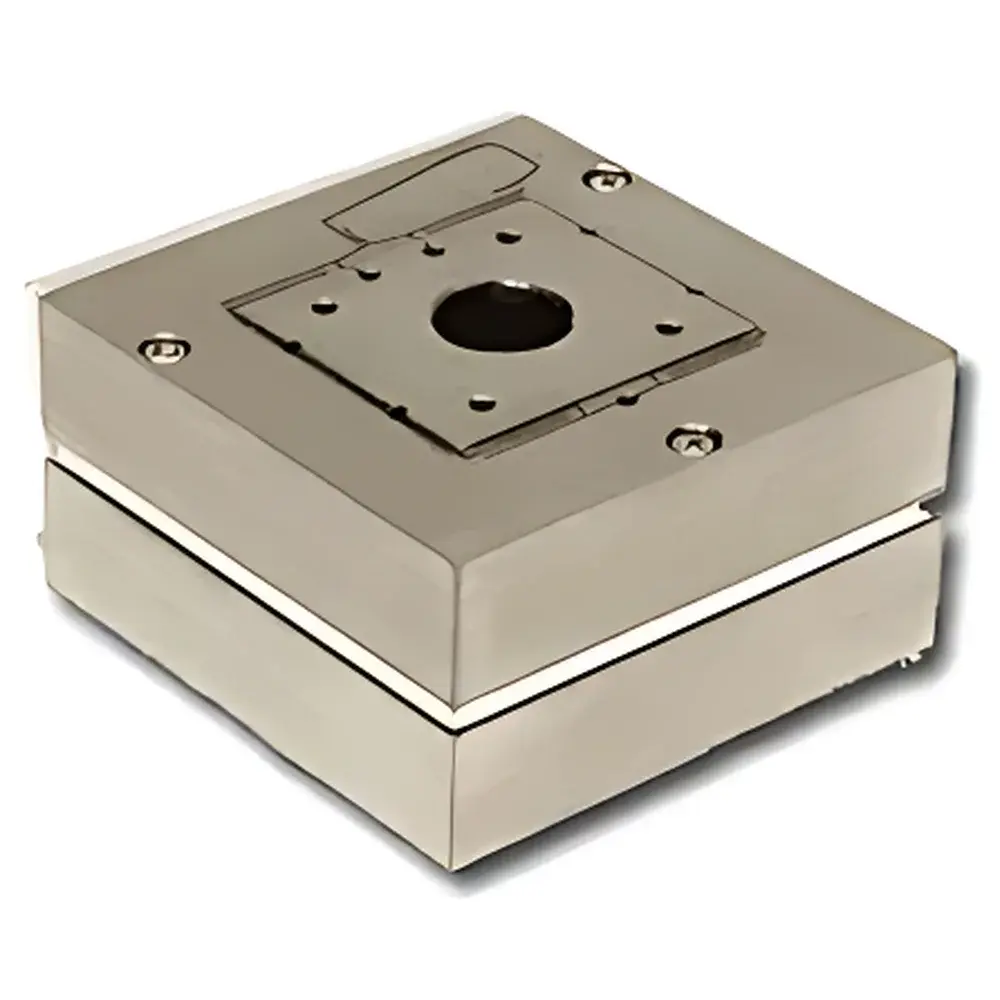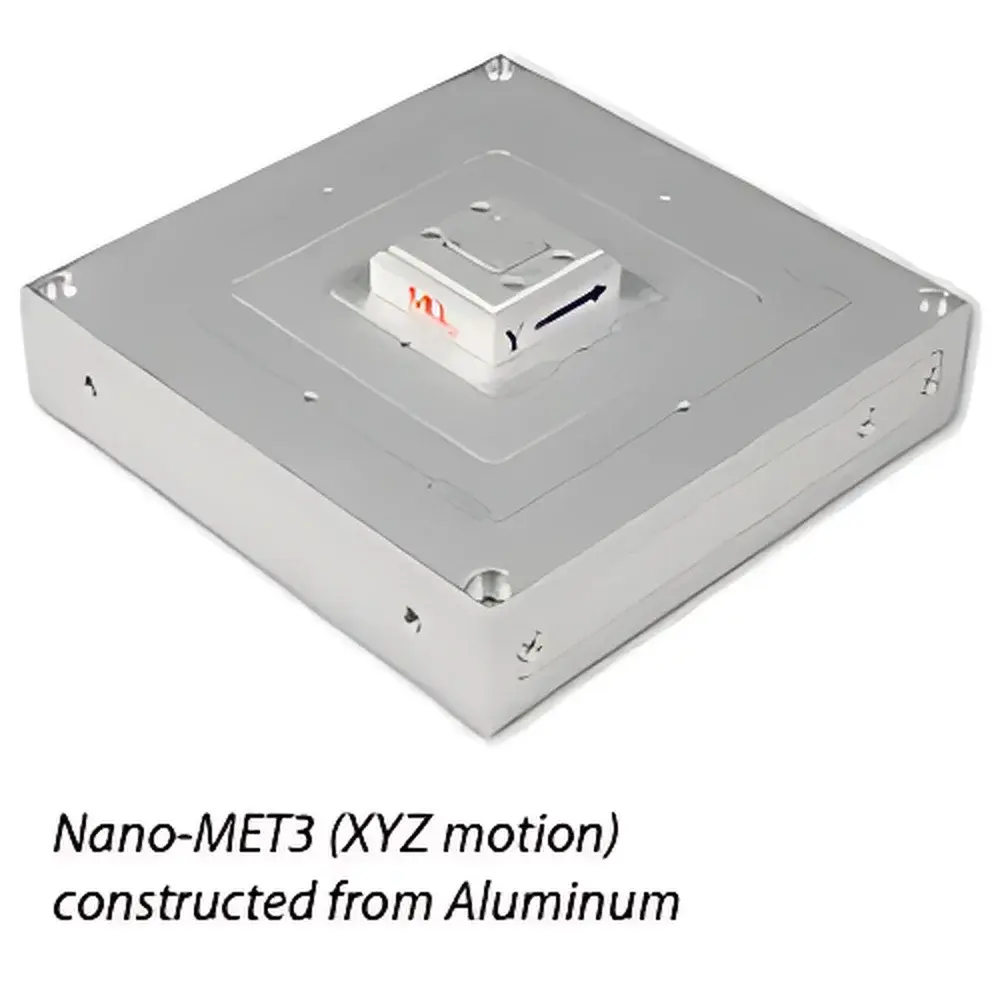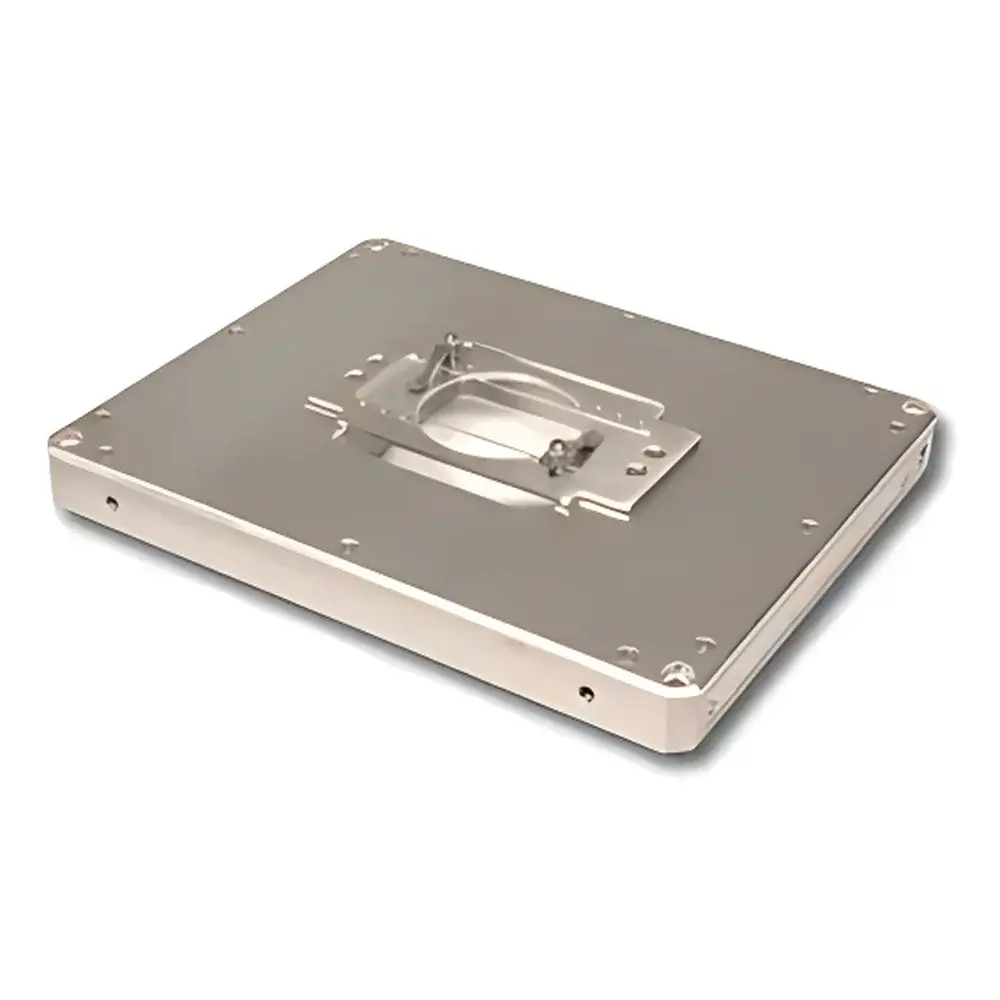
MCL Think Nano Nano-LPQ Three-Axis Low-Profile Nanopositioning Stage

| Brand | MCL Think Nano |
|---|---|
| Origin | USA |
| Model | Nano-LPQ |
| Product Type | Motorized Translation Stage |
| Travel Range (X/Y/Z) | 75 × 75 × 50 µm |
| Resolution (X/Y/Z) | 0.2 / 0.2 / 0.1 nm |
| Resonant Frequencies (X/Y/Z) | 1000 Hz ±20% |
| Stiffness | 1.0 N/µm |
| Angular Deviation (Roll/Pitch) | ≤1 µrad |
| Angular Deviation (Yaw) | ≤3 µrad |
| Max. Horizontal Load | 100 g |
| Max. Vertical Load | 100 g |
| Body Material | Aluminum |
| Controller | Nano-Drive®85 |
| Position Sensing Technology | PicoQ® Absolute Closed-Loop |
Ask about pricing, availability and specifications.
Overview
The MCL Think Nano Nano-LPQ is an ultra-low-profile, high-bandwidth, three-axis nanopositioning stage engineered for precision optical and biophysical instrumentation where minimal moving mass, sub-nanometer resolution, and matched dynamic response across all axes are critical. Based on a monolithic flexure-guided architecture with integrated piezoelectric actuators and proprietary PicoQ® capacitive position sensing, the Nano-LPQ operates on the principle of electro-mechanical displacement amplification combined with real-time closed-loop feedback. Its design eliminates traditional mechanical couplings—such as lead screws, stepper motors, or cross-roller bearings—thereby eliminating backlash, hysteresis, and wear-induced drift. The stage delivers 75 µm of travel in X and Y, and 50 µm in Z, with sub-atomic resolution (0.1 nm in Z, 0.2 nm in X/Y) and resonant frequencies of 1000 Hz ±20% across all three axes—enabling synchronous, jitter-free 3D scanning at speeds exceeding conventional piezo stages. This performance envelope makes it especially suitable for time-resolved optical experiments requiring tight synchronization between positioning and data acquisition.
Key Features
- Ultra-low mechanical profile: Total height under 12 mm enables integration into space-constrained optical paths, including inverted microscopes and custom optical traps.
- Matched axis dynamics: Identical resonant frequencies and step response times across X, Y, and Z ensure temporally aligned motion—essential for volumetric particle tracking and multiplane fluorescence imaging.
- Integrated lightweight sample holders: Precision-machined aluminum fixtures are part of the moving structure, reducing inertial load and enhancing bandwidth without external adapters.
- PicoQ® absolute position sensing: On-board capacitive sensors provide traceable, drift-free, absolute position measurement with no homing requirement—compliant with GLP/GMP workflows requiring audit-ready positional repeatability.
- Closed-loop control with Nano-Drive®85 controller: Supports analog voltage input (±10 V), digital command via USB/Ethernet, and programmable waveforms (sine, triangle, arbitrary). Firmware supports user-defined PID tuning and real-time trajectory buffering.
- High stiffness and angular stability: 1.0 N/µm lateral stiffness and angular deviations below 1 µrad (roll/pitch) and 3 µrad (yaw) ensure minimal coupling during high-speed raster scanning or force spectroscopy protocols.
Sample Compatibility & Compliance
The Nano-LPQ accommodates standard 25 mm × 75 mm microscope slides, 12 mm and 18 mm coverslips, and custom substrates up to 100 g horizontally or vertically loaded. Its aluminum body and non-magnetic construction are compatible with TEM, confocal, TIRF, and super-resolution platforms—including systems operating under vacuum or controlled environmental chambers (when specified with optional sealing). The stage meets electromagnetic compatibility (EMC) Class B requirements per FCC Part 15 and CE directives. All firmware and controller software support 21 CFR Part 11-compliant audit trails when deployed with validated Nano-Drive®85 configurations, enabling use in regulated QC laboratories performing ISO/IEC 17025–accredited measurements.
Software & Data Management
Native drivers are provided for MATLAB, Python (via PyNano), LabVIEW, and C/C++ SDKs, enabling deterministic timing control down to 10 µs loop intervals. The Nano-Drive®85 controller logs full position history with timestamps at up to 100 kHz sampling, exportable in HDF5 or CSV format for post-acquisition correlation with camera frames or photon-counting data. Batch scripting supports automated multi-point acquisition, z-stack alignment, and drift correction routines. Optional integration with third-party platforms—including Thorlabs Kinesis, National Instruments DAQmx, and Zeiss ZEN Blue—ensures seamless interoperability within existing instrument ecosystems.
Applications
- 3D single-particle tracking in live-cell fluorescence microscopy, where synchronized XYZ motion minimizes temporal aliasing in diffusion coefficient calculations.
- Optical trapping setups requiring nanometer-precision stage repositioning during force-clamp or position-clamp experiments.
- Multiplane structured illumination microscopy (SIM) and lattice light-sheet acquisition, where axial stepping must maintain sub-10 nm repeatability over thousands of cycles.
- Atomic force microscopy (AFM) coarse positioning stages used in hybrid optical-AFM correlative platforms.
- Quantum optics experiments involving precise alignment of nanophotonic devices, such as photonic crystal cavities or plasmonic nanoantennas.
- Calibration reference stages for interferometric metrology systems operating under ISO 5725 accuracy validation protocols.
FAQ
What is the thermal drift specification of the Nano-LPQ under ambient conditions?
Typical thermal drift is <0.5 nm/°C over 24 hours when operated within 20–25 °C stable environment; active temperature stabilization is recommended for sub-0.1 nm long-term stability.
Can the Nano-LPQ be operated in vacuum environments?
Standard units are rated for atmospheric operation; vacuum-compatible versions (10⁻⁶ Torr) are available with modified materials and outgassing-tested components—contact engineering support for configuration details.
Is the PicoQ® sensor calibrated traceable to NIST standards?
Yes—each sensor undergoes factory calibration against NIST-traceable interferometric references; calibration certificates are supplied with every unit and archived in the controller’s onboard memory.
Does the Nano-Drive®85 support synchronized triggering with external cameras or lasers?
Yes—dedicated TTL I/O ports support hardware-triggered move-start, position-latch, and frame-sync signals with <100 ns jitter, fully configurable via the Nano-Drive GUI or API.
How is mechanical hysteresis mitigated in closed-loop operation?
Hysteresis is suppressed to <0.02% F.S. through real-time feedforward compensation embedded in the Nano-Drive®85 firmware, trained per-unit during final calibration using multi-sine excitation and least-squares inverse modeling.