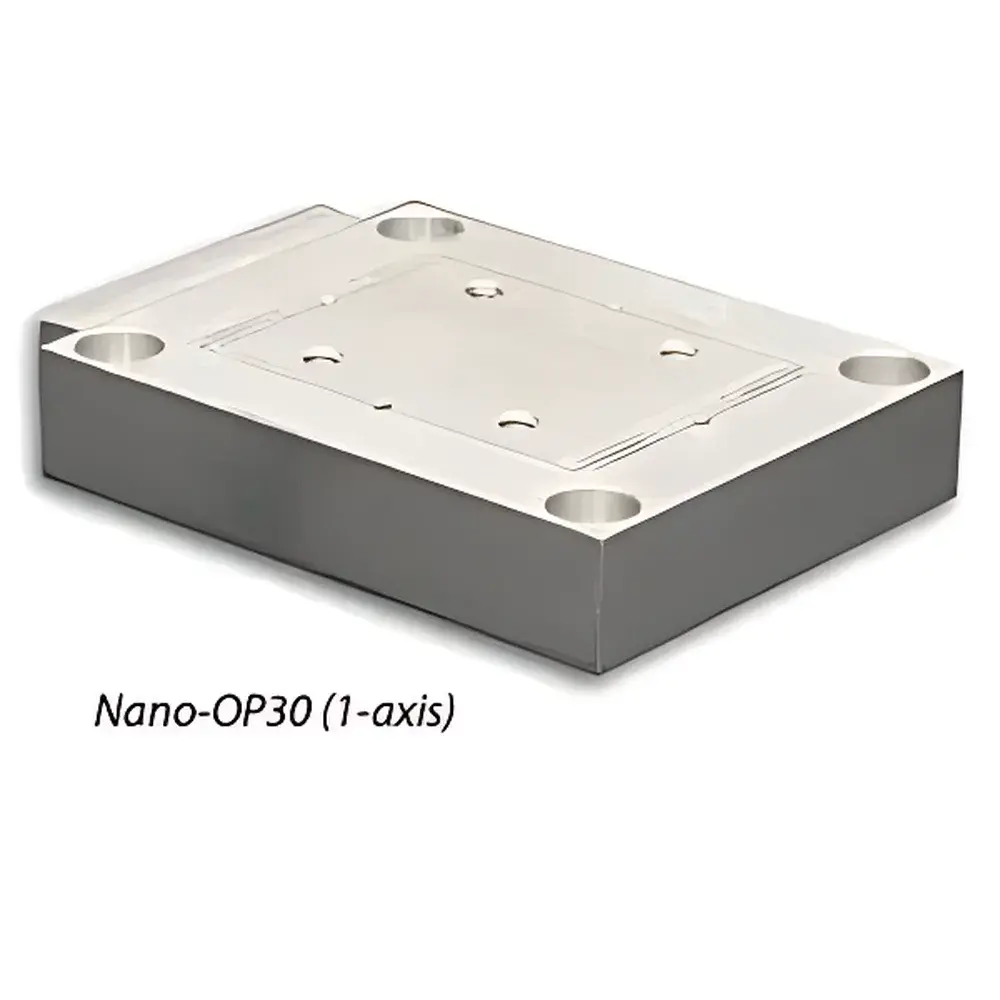
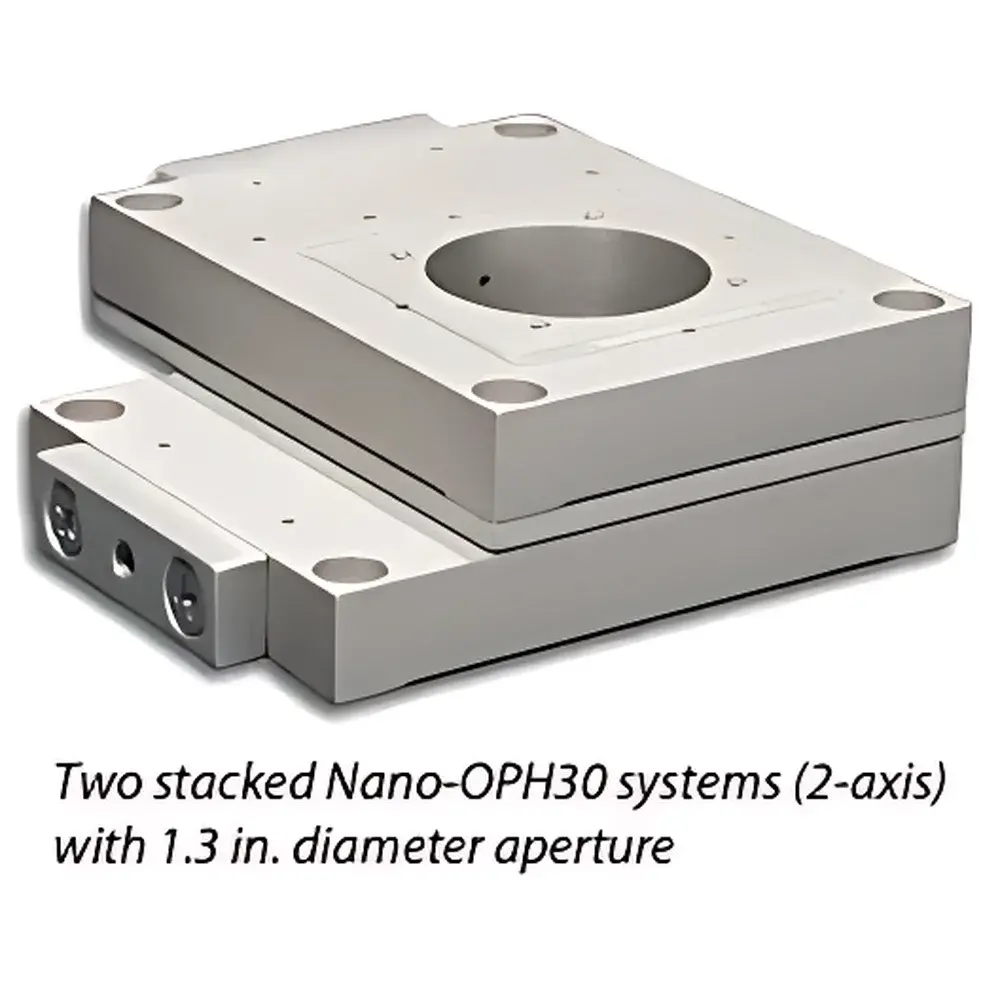
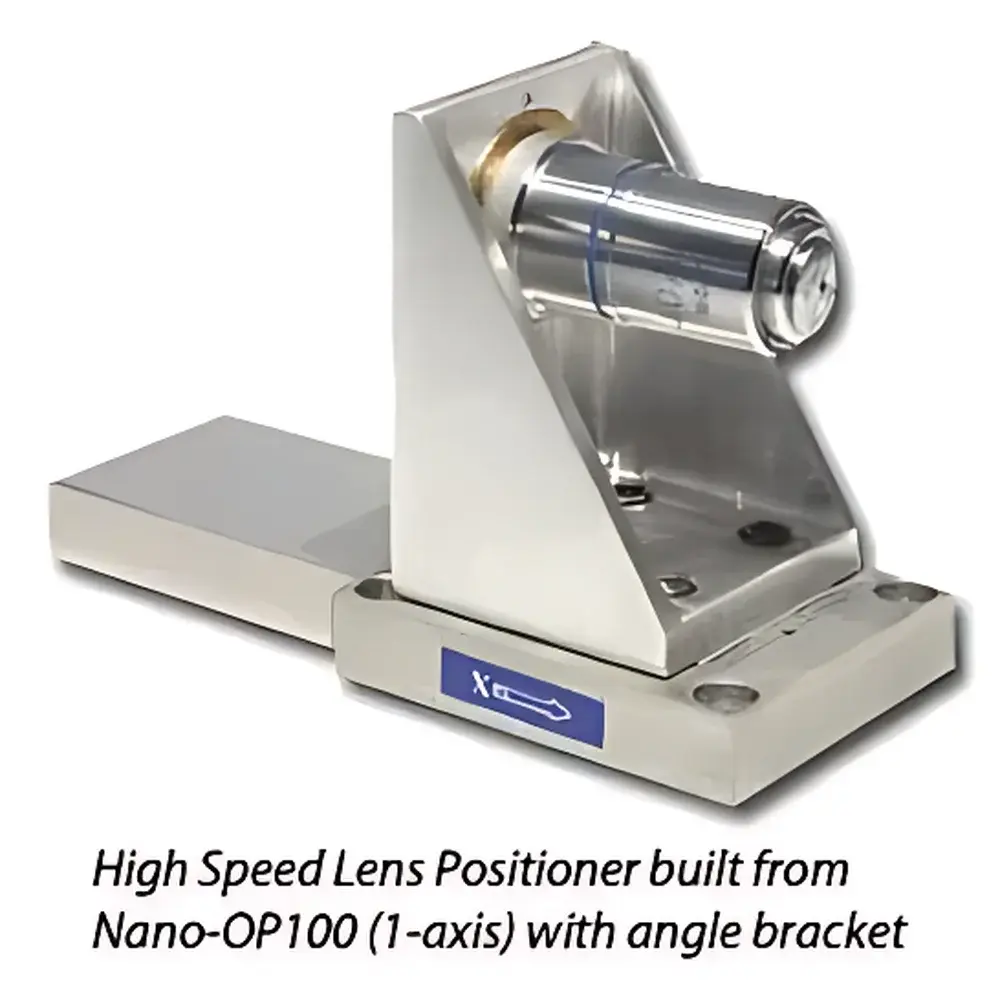
MCL Think Nano Nano-OP Series Nanometer Linear Translation Stage

| Brand | MCL Think Nano |
|---|---|
| Origin | USA |
| Model | Nano-OP Series |
| Motion Range | 30 μm / 65 μm / 100 μm |
| Resolution | 0.06 nm / 0.13 nm / 0.2 nm |
| Resonant Frequency | 4 kHz (±20%) / 2 kHz (under 100 g load) |
| Stiffness | 3.0 N/μm (±20%) |
| Angular Deviation (Roll/Pitch) | ≤1 μrad |
| Angular Deviation (Yaw) | ≤2 μrad |
| Max Load (Horizontal) | 1.0 kg |
| Max Load (Vertical) | 0.5 kg |
| Body Material | Aluminum / Invar / Titanium |
| Control | Closed-loop with PicoQ® absolute position sensing |
| Controller | Nano-Drive® |
Ask about pricing, availability and specifications.
Overview
The MCL Think Nano Nano-OP Series is a high-precision, compact piezoelectric linear translation stage engineered for sub-nanometer positioning stability and dynamic responsiveness in demanding optical and nanoscale research environments. Based on direct-drive, frictionless flexure-guided motion architecture, the Nano-OP Series eliminates backlash, hysteresis, and mechanical wear—critical attributes for interferometric alignment, scanning probe microscopy (SPM), near-field optical microscopy (NSOM), and active optical path correction. Each stage integrates proprietary PicoQ® capacitive position sensing technology, enabling true absolute position feedback with picometer-level resolution and exceptional long-term repeatability without homing or reference calibration. The design adheres to fundamental principles of piezoelectric actuation combined with monolithic flexure mechanics, ensuring deterministic displacement response across its full travel range—whether 30 μm, 65 μm, or 100 μm.
Key Features
- Direct-drive piezoelectric actuation with no mechanical transmission elements, delivering high-speed step response and minimal settling time
- Closed-loop operation with integrated PicoQ® capacitive sensors providing absolute position measurement and real-time error correction
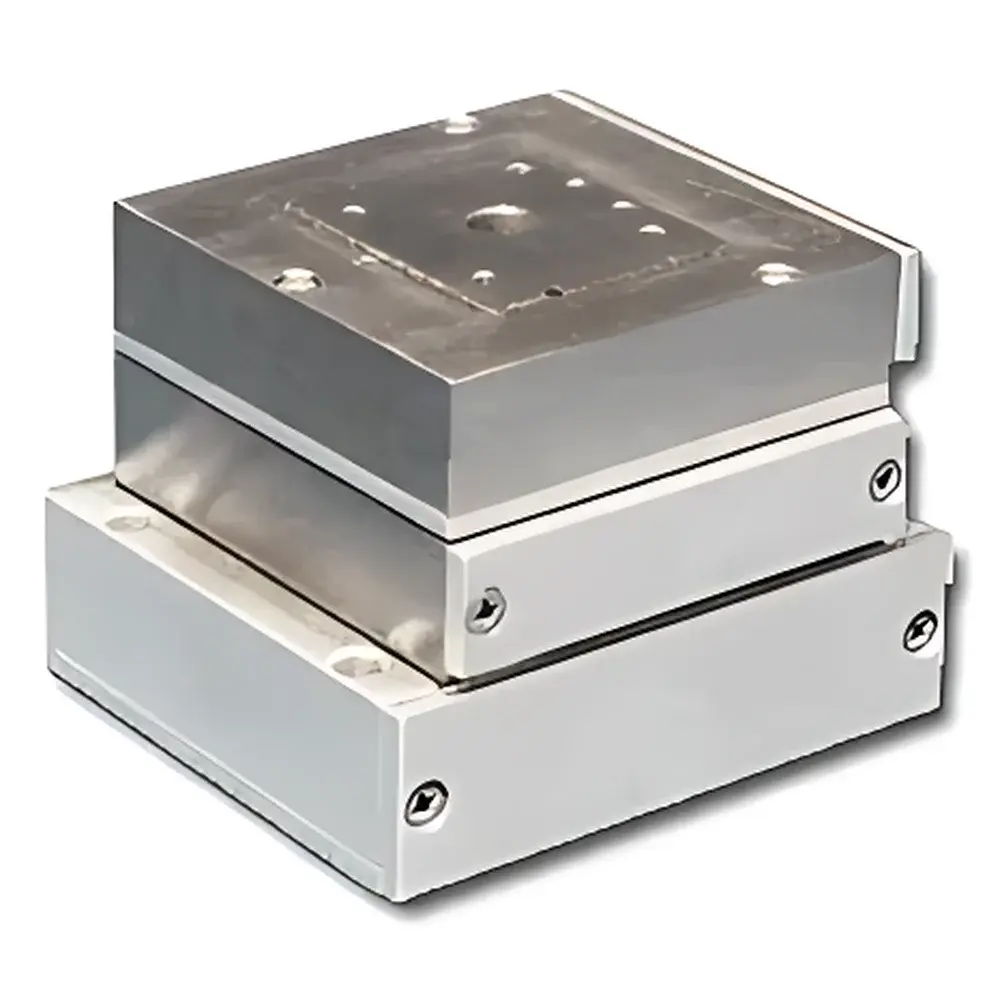
- Modular stackability: single-axis stages can be orthogonally assembled into 2D or 3D motion systems without performance compromise
- Three standard travel options (Nano-OP30, Nano-OP65, Nano-OP100) optimized for distinct application trade-offs between range, resolution, and resonant bandwidth
- Structural materials available in aluminum (lightweight, cost-effective), invar (ultra-low thermal expansion), or titanium (high strength-to-density ratio), supporting vacuum-compatible and cryogenic configurations
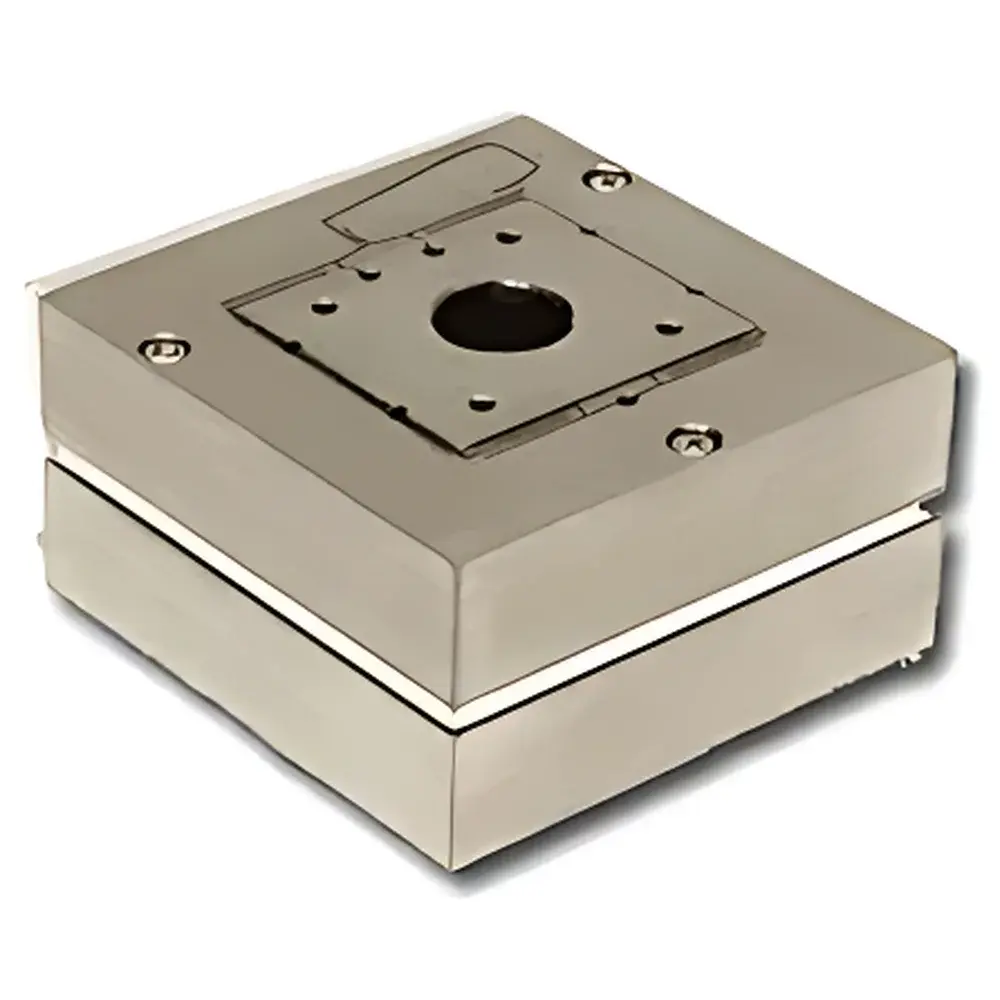
- Metric tapped hole patterns (Nano-OP-M variant) and through-hole configurations (Nano-OPH variant) for seamless integration into OEM optical breadboards and custom optomechanical assemblies
Sample Compatibility & Compliance
The Nano-OP Series is designed for compatibility with standard optical tables, kinematic mounts, and vacuum-rated environments up to 10⁻⁷ Torr when specified with appropriate material and coating options. All variants meet RoHS compliance and are manufactured under ISO 9001-certified quality management systems. While not inherently certified for medical or industrial safety standards, the stages support GLP- and GMP-aligned workflows when paired with Nano-Drive® controllers featuring audit-trail logging and user-access controls. For applications requiring traceable calibration, optional NIST-traceable position verification reports are available upon request. The mechanical design conforms to common dimensional standards used in photonics laboratories (e.g., Thorlabs, Newport mounting interfaces), facilitating interoperability with industry-standard optics carriers and sensor platforms.
Software & Data Management
Control is enabled via the Nano-Drive® digital controller, which supports USB 2.0, Ethernet, and analog voltage input interfaces. Firmware includes built-in waveform generators (sine, triangle, ramp, arbitrary), multi-channel synchronization, and programmable scan routines compliant with Python, LabVIEW, MATLAB, and C/C++ SDKs. Position data streams at up to 10 kHz sampling rate with timestamped metadata, enabling precise correlation with external detectors (e.g., photodiodes, lock-in amplifiers). The controller firmware implements non-volatile memory for user-defined profiles and supports 21 CFR Part 11-compliant electronic signatures and change logs when operated in validated mode—suitable for regulated R&D environments requiring documentation integrity. Optional MadPLL® instrumentation modules extend functionality for AFM/NSOM feedback loop integration and phase-locked positioning.
Applications
- Active stabilization in Michelson and Mach–Zehnder interferometers requiring <1 pm path-length control
- Nanomanipulation tasks in SEM/TEM sample positioning and probe-based lithography
- High-speed objective lens focusing in adaptive optics and confocal laser scanning microscopes
- Fiber optic coupling alignment where sub-microradian angular stability and <10 nm positional repeatability are essential
- Near-field scanning optical microscopy (NSOM) tip-sample distance regulation under closed-loop feedback
- Calibration reference stages for metrology-grade coordinate measuring machines and laser interferometer systems
FAQ
What is the difference between open-loop and closed-loop operation on the Nano-OP Series?
Closed-loop operation uses integrated PicoQ® capacitive sensors to provide real-time position feedback and correction, achieving picometer resolution and guaranteed repeatability. Open-loop mode (available via analog input) bypasses internal sensing and relies solely on commanded voltage—introducing hysteresis and drift typical of piezoelectric actuators.
Can the Nano-OP Series operate in vacuum or at cryogenic temperatures?
Yes—when constructed from invar or titanium and equipped with vacuum-compatible cabling and feedthroughs, the Nano-OP Series has been validated for operation in UHV environments down to 4 K. Custom thermal contraction compensation profiles can be embedded in the Nano-Drive® controller firmware.
Is there a version compatible with metric mounting hardware?
The Nano-OP-M Series features standardized M3 and M4 threaded holes on all mounting surfaces, aligned with ISO 8015 geometric tolerancing and DIN 912 fastener specifications.
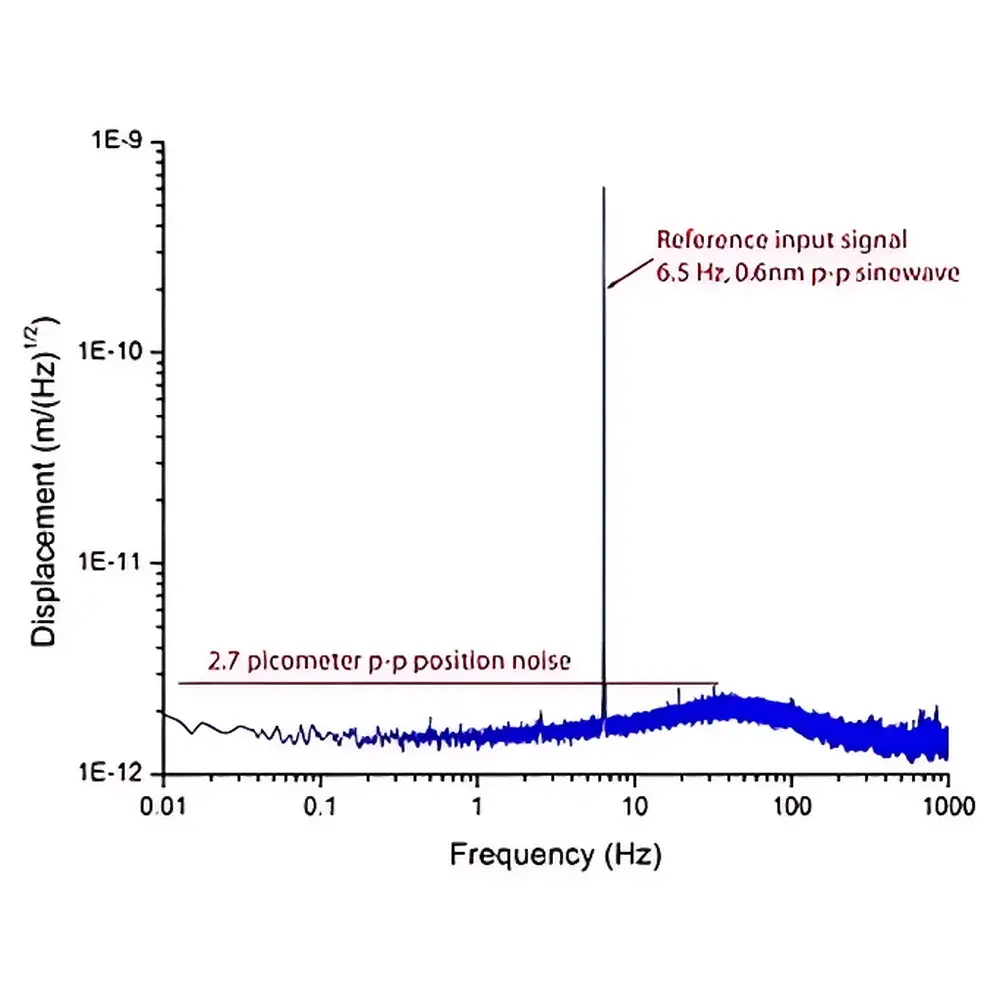
How is position noise characterized, and what contributes to it?
Position noise is measured as RMS deviation in the frequency domain (e.g., Nano-OP30 Position Noise Spectrum). Dominant contributors include electronic noise in the sensor readout chain, thermal drift in the flexure structure, and ambient acoustic coupling—mitigated via passive damping and rigid optical table mounting.
Does MCL Think Nano provide application-specific integration support?
Yes—engineering consultation is available for system-level integration, including mechanical interface design, thermal expansion modeling, multi-axis synchronization logic, and regulatory documentation packages for QA/QC validation.