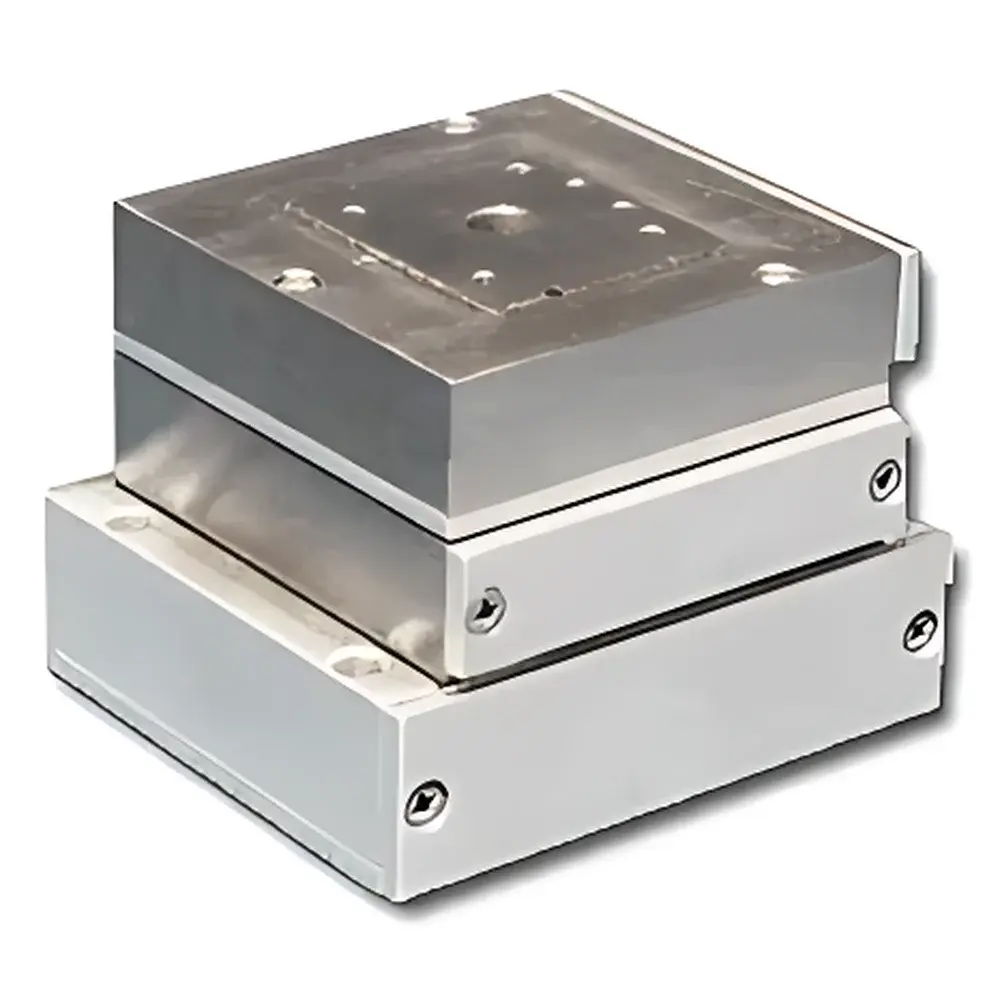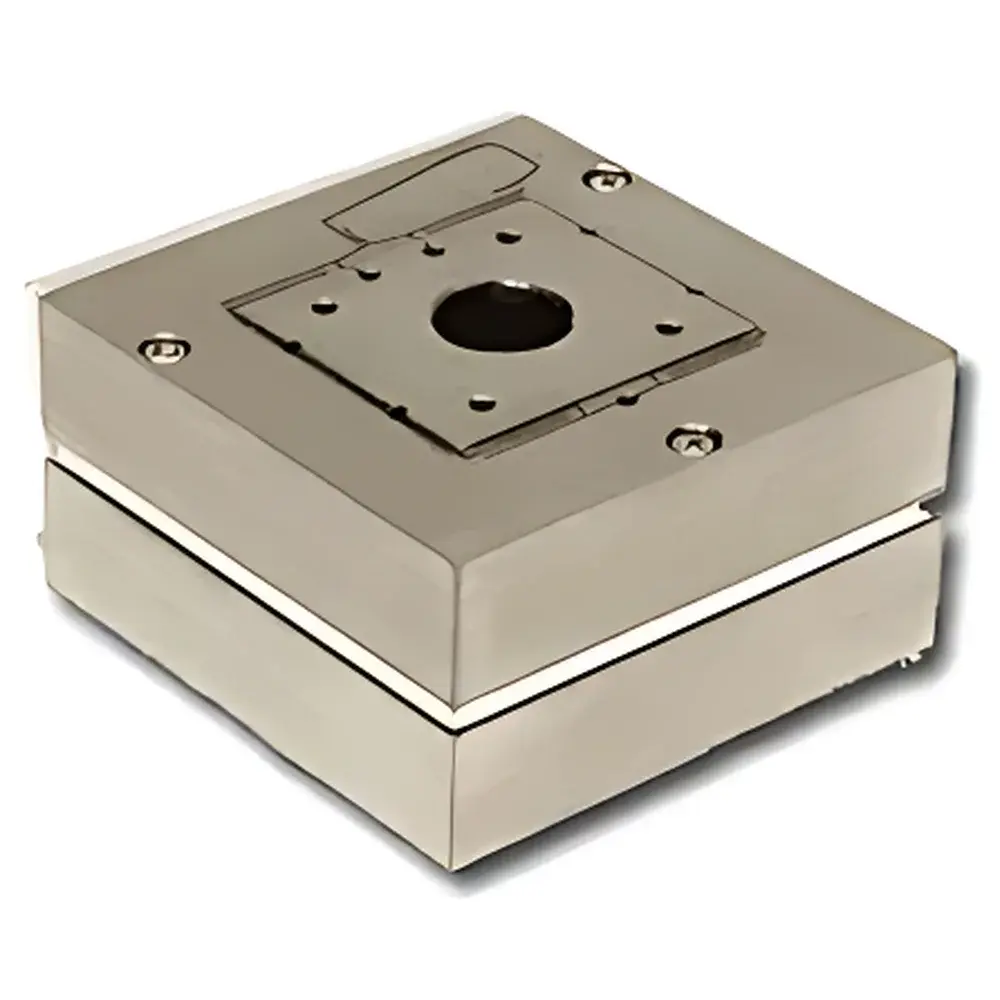
MCL Think Nano Nano-PDQ Series High-Speed Multi-Axis Piezo Nanopositioning Stage

| Brand | MCL Think Nano |
|---|---|
| Origin | USA |
| Model | Nano-PDQ Series |
| Type | Motorized Nanopositioning Stage |
| Motion Axes | 2 or 3 (X/Y or X/Y/Z) |
| Travel Range | 50 μm or 75 μm per axis |
| Resolution | 0.1 nm (50 μm range) / 0.15 nm (75 μm range) |
| Resonant Frequency (X) | 2.5 kHz ±20% |
| Resonant Frequency (Y) | 1.5 kHz ±20% |
| Resonant Frequency (Z) | 1.0 kHz ±20% |
| Max Scanning Speed | 400 Hz |
| Stiffness | 3.0 N/μm |
| Angular Deviation (Roll/Pitch) | ≤1 μrad |
| Angular Deviation (Yaw) | ≤3 μrad |
| Max Horizontal Load | 0.5 kg |
| Max Vertical Load | 0.2 kg |
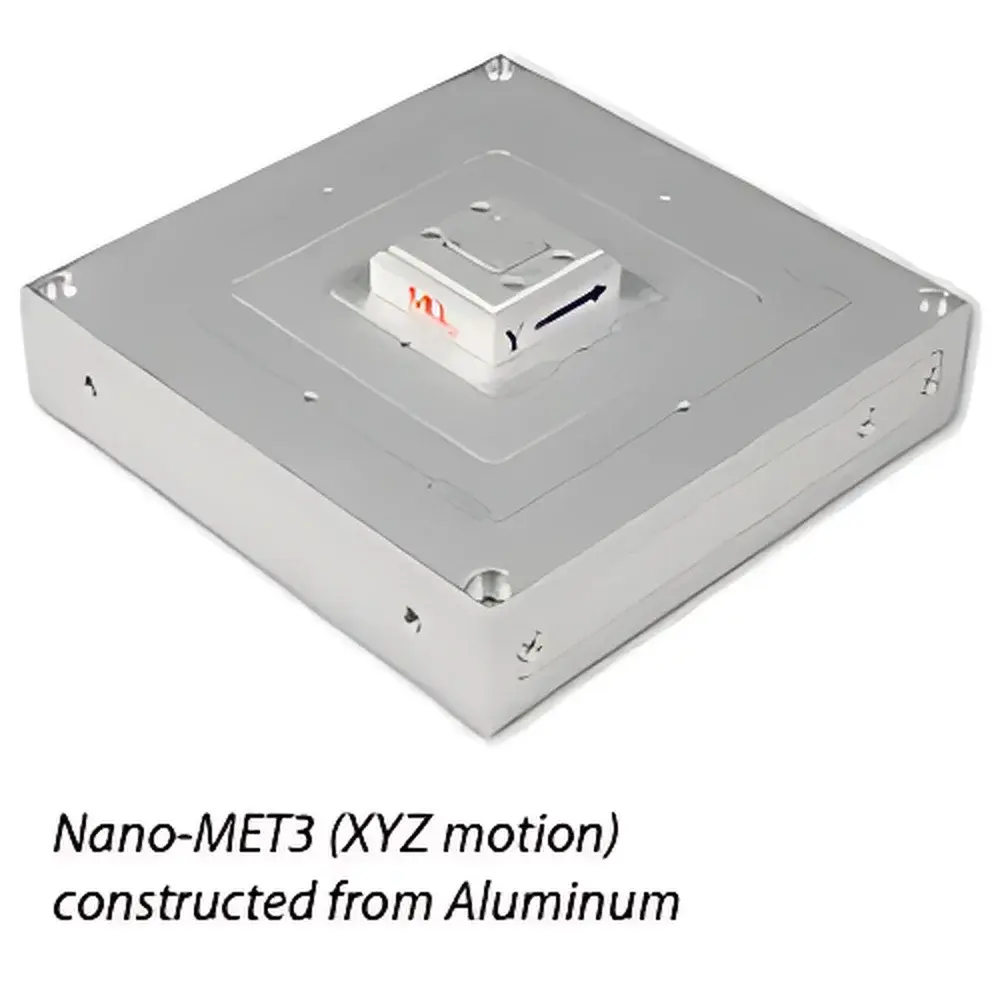
| Body Materials | Aluminum, Invar, or Titanium |
| Controller Compatibility | Nano-Drive®85 (HS models required for sub-2 ms step response) |
| Closed-Loop Technology | Integrated PicoQ® capacitive sensors |
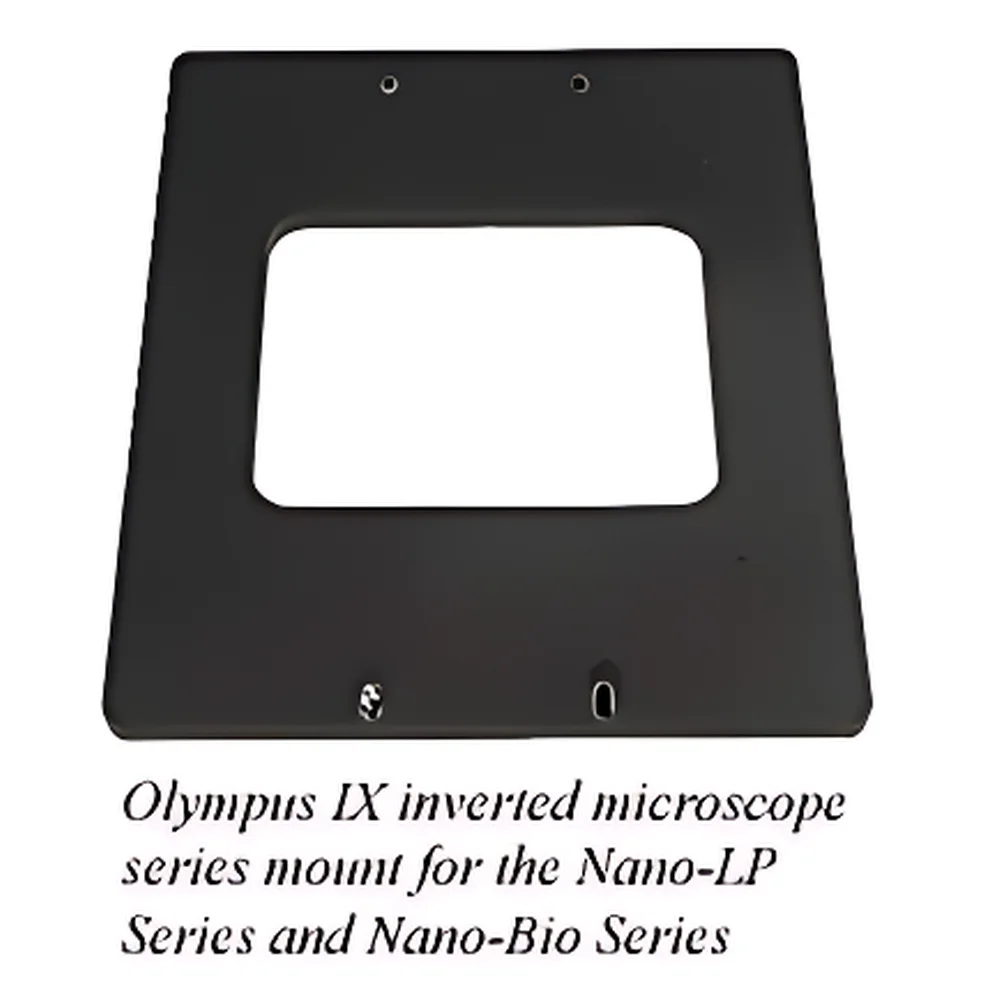
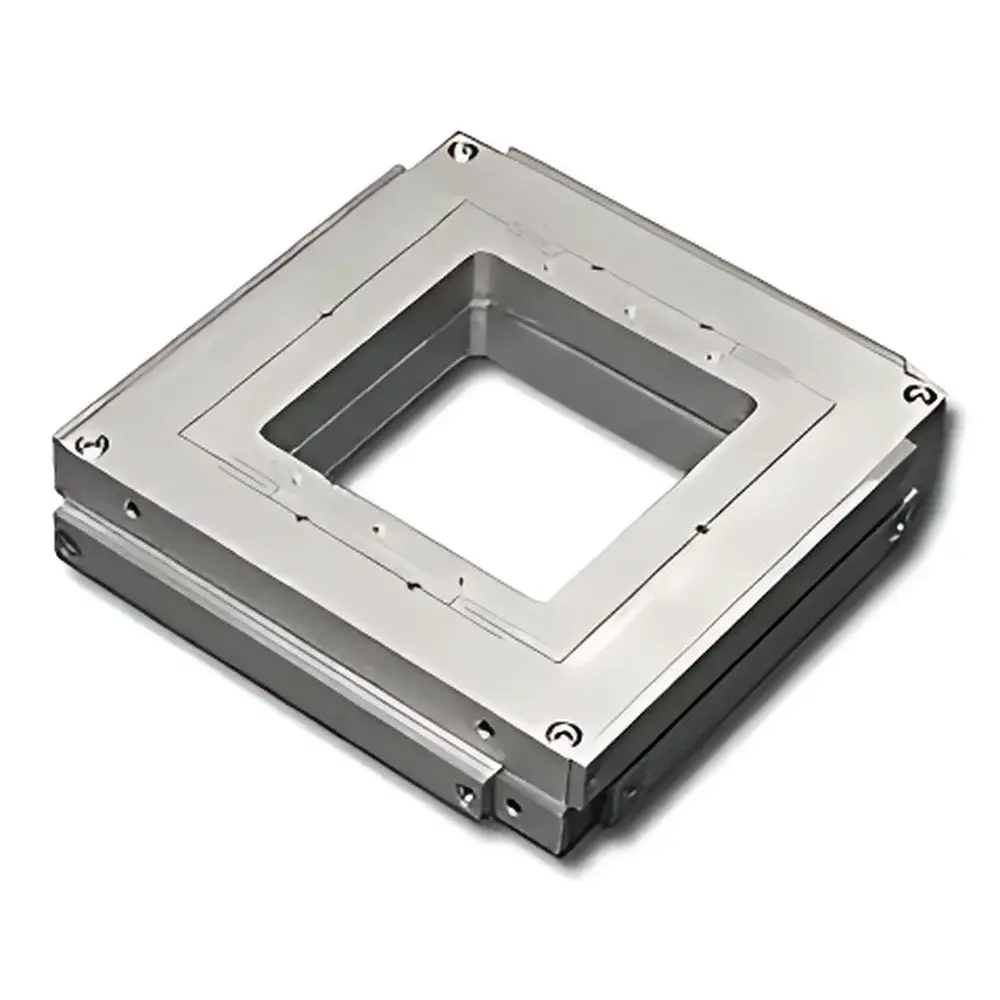
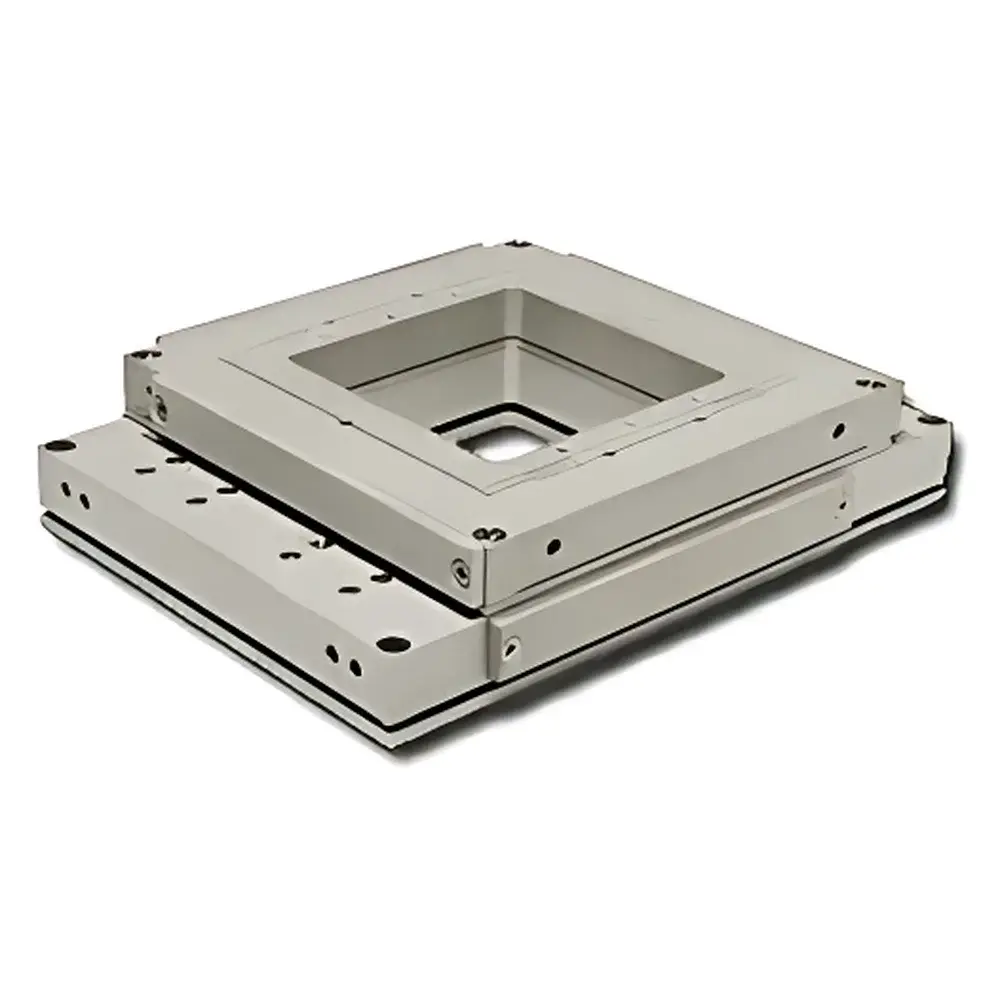
| Aperture | Large central aperture optimized for optical path integration |
Ask about pricing, availability and specifications.
Overview
The MCL Think Nano Nano-PDQ Series is a high-performance, multi-axis piezoelectric nanopositioning stage engineered for demanding optical and scanning applications requiring sub-nanometer resolution, high dynamic bandwidth, and mechanical stability. Based on direct-drive, flexure-guided piezo actuation, the Nano-PDQ operates on the principle of electrostrictive displacement amplification coupled with real-time closed-loop feedback via proprietary PicoQ® capacitive position sensing. This architecture enables absolute, drift-free positioning with picometer-level repeatability and eliminates hysteresis and creep commonly associated with open-loop piezoelectric systems. Designed specifically for integration into advanced optical setups—including inverted microscopes, optical tweezers, super-resolution imaging platforms, and interferometric metrology systems—the Nano-PDQ delivers parallel, uncoupled motion across two or three orthogonal axes (X/Y or X/Y/Z), maintaining minimal crosstalk (<0.02% typical) and exceptional orthogonality. Its compact form factor incorporates a large central aperture to accommodate laser beams, objective lenses, or fiber-optic paths without obstruction—making it particularly suited for through-objective illumination and detection geometries.
Key Features
- High-speed, direct-drive piezoelectric actuation with resonant frequencies up to 2.5 kHz (X-axis), enabling rapid step-and-settle positioning and high-frame-rate scanning
- True parallel-kinematic design ensures independent, uncoupled motion in all active axes—no mechanical linkage or serial stacking compromises positional fidelity
- Integrated PicoQ® capacitive sensors provide absolute, non-contact position measurement with <0.1 nm resolution and long-term stability under closed-loop control
- Large central aperture (standard configuration) facilitates unobstructed optical access for confocal, TIRF, STED, and holographic optical trapping configurations
- High stiffness (3.0 N/μm) and low angular deviation (≤1 μrad roll/pitch, ≤3 μrad yaw) ensure minimal parasitic motion during high-acceleration scans
- Modular body construction available in aluminum (lightweight), Invar (ultra-low thermal expansion), or titanium (high strength-to-weight ratio) to match environmental and performance requirements
- Sub-2 ms step response achievable when paired with the Nano-Drive®85 controller (HS-suffix models), supporting real-time feedback loops and adaptive optics synchronization
Sample Compatibility & Compliance
The Nano-PDQ Series is designed for laboratory and R&D environments where traceable, repeatable nanoscale positioning is critical. It complies with standard cleanroom-compatible material specifications (non-outgassing, RoHS-conformant finishes) and supports integration into ISO/IEC 17025-accredited metrology workflows. While not certified for medical device use per FDA 21 CFR Part 820, its closed-loop architecture, deterministic step response, and audit-ready controller logging (via Nano-Drive®85 firmware) align with GLP/GMP-aligned instrumentation validation protocols. The system meets electromagnetic compatibility (EMC) Class B requirements per FCC Part 15 and CE EN 61326-1 for laboratory equipment. Mechanical interfaces conform to standard SM1 (1.035″-40) and SM2 (2.035″-40) threading, enabling direct mounting to Thorlabs, Newport, and Sutter optical cages and breadboards.
Software & Data Management
The Nano-PDQ Series is fully supported by MCL’s Nano-Drive®85 controller firmware and accompanying software suite, including Nano-Control™ (Windows-based GUI) and programmable APIs for Python, MATLAB, LabVIEW, and C/C++. All controllers support IEEE-488 (GPIB), USB 2.0, and Ethernet (TCP/IP) communication protocols. The Nano-Drive®85 implements full audit-trail logging compliant with FDA 21 CFR Part 11 requirements—including user authentication, timestamped command history, sensor calibration metadata, and immutable event logs—enabling regulatory-compliant operation in QC laboratories and pharmaceutical development settings. Real-time data streaming at up to 10 MHz sample rate allows synchronous acquisition with external detectors (e.g., APDs, sCMOS cameras) for closed-loop particle tracking or adaptive wavefront correction. Firmware updates are digitally signed and version-controlled to ensure reproducibility across instrument fleets.
Applications
- High-speed, multi-point calibration of optical trapping potentials using back-focal-plane interferometry
- Multi-dimensional scanning in structured illumination microscopy (SIM) and lattice light-sheet microscopy
- Precision alignment of fiber couplers, photonic integrated circuits (PICs), and free-space optical interconnects
- Dynamic focus stabilization in live-cell time-lapse imaging and volumetric reconstruction
- Nanoscale raster scanning for near-field optical microscopy (NSOM) and scanning probe optical hybrid systems
- Active vibration cancellation and tip/tilt correction in interferometric gravitational-wave detector test masses (R&D scale)
FAQ
What controller is required to achieve the specified 2 ms step response?
The Nano-Drive®85 controller with “HS” (High-Speed) firmware and hardware revision is mandatory. Standard Nano-Drive® units do not support sub-5 ms settling times.
Can the Nano-PDQ be operated in vacuum or inert gas environments?
Yes—models with Invar or titanium bodies and gold-plated electrical contacts are available for UHV-compatible operation down to 10⁻⁹ Torr; consult engineering for bakeout-rated variants.
Is third-party software integration supported beyond the native APIs?
Yes—NI LabVIEW drivers, Python PyVISA wrappers, and MATLAB Instrument Control Toolbox examples are publicly documented and maintained on MCL’s developer portal.
How is thermal drift managed during extended closed-loop operation?
PicoQ® sensors are temperature-compensated within ±0.05% over 15–35°C; for sub-50 pm stability, optional active thermal regulation modules (Nano-Therm®) are available.
Are custom travel ranges or mounting configurations available?
Yes—MCL offers OEM engineering services for modified apertures, non-standard travel (e.g., 100 μm Z-axis), and co-aligned multi-stage assemblies upon request.