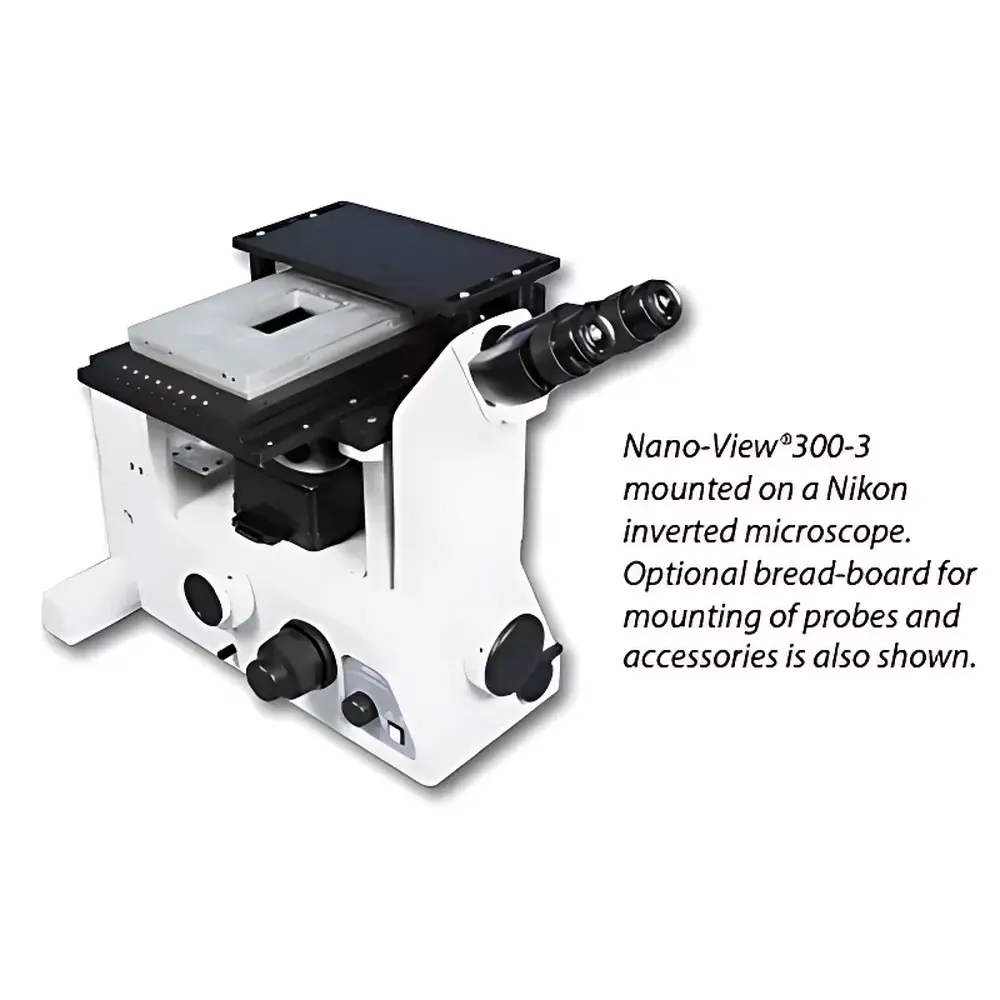
MCL Think Nano Nano-View® Series Integrated Micropositioning and Nanopositioning Translation Stage

| Brand | MCL Think Nano |
|---|---|
| Origin | USA |
| Model | Nano-View® Series |
| Type | Motorized Translation Stage with Integrated Piezoelectric Nanopositioners |
| Travel (Micropositioning) | 25 mm per axis (X/Y) |
| Travel (Nanopositioning) | up to 300 µm per axis (X/Y/Z) |
| Micropositioner Step Size | 95 nm |
| Micropositioner Repeatability | 50 nm |
| Encoder Resolution (optional) | 20 nm |
| Nanopositioner Resolution | 0.2–0.6 nm (depending on range) |
| Closed-Loop Positioning Accuracy | Picometer-level (PicoQ® sensor technology) |
| Stiffness | 1.0 N/µm |
| Angular Deviation (Roll/Pitch) | ≤1 µrad |
| Angular Deviation (Yaw) | ≤3 µrad |
| Max Horizontal Load | 0.5 kg |
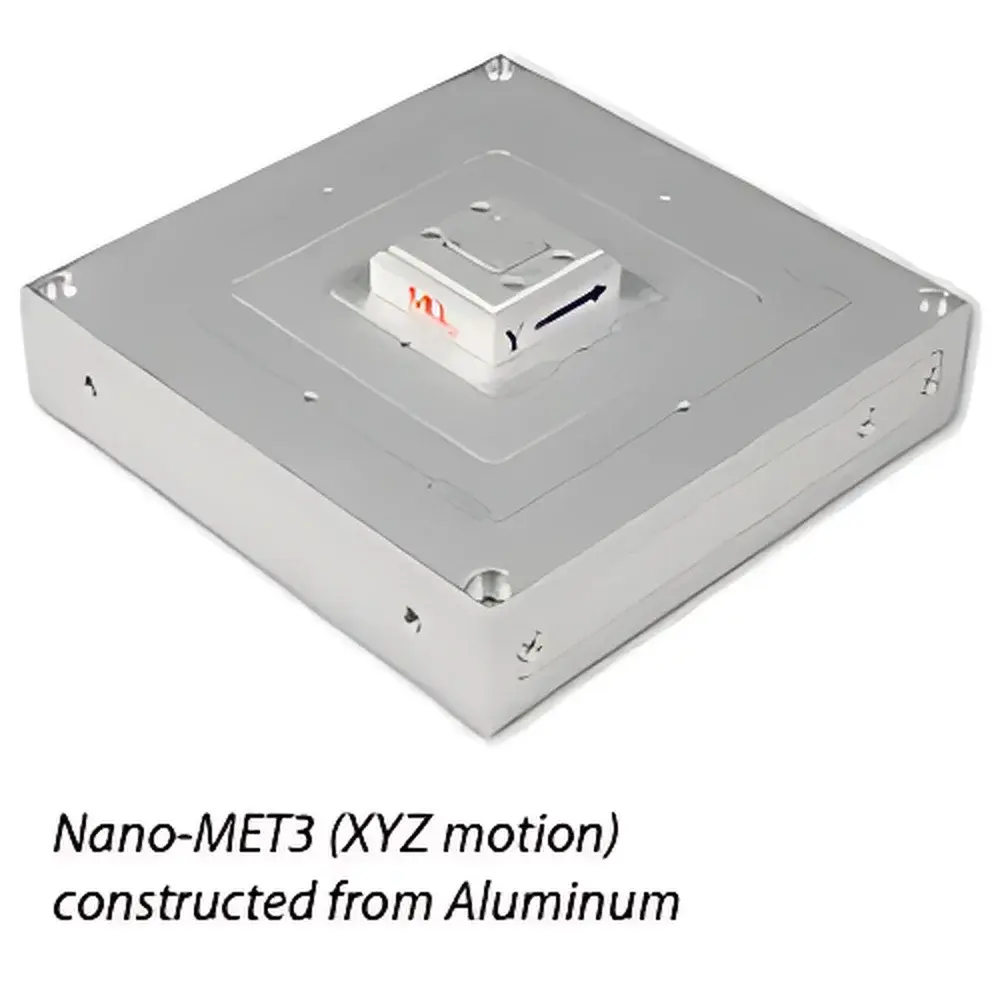
| Body Materials | Aluminum, Invar, or Titanium |
| Controllers | Nano-Drive® (nanopositioning) + Micro-Drive™ (micropositioning), USB interface |
| Software Compatibility | LabVIEW-ready, includes native motion control routines |
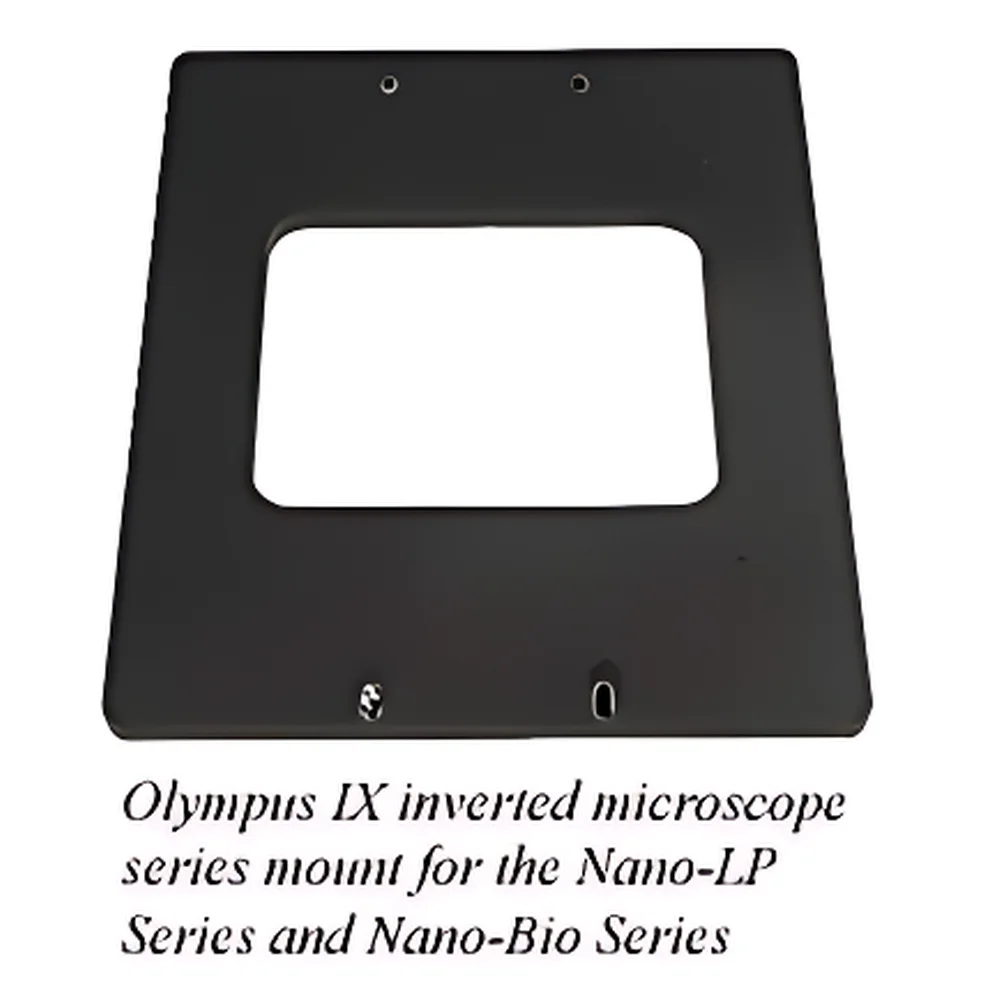
| Microscope Compatibility | Olympus IX/IX2, Nikon TE2000/Ti, Leica DMI, Zeiss Axiovert/Axio Observer, MCL RM21™ Platform |
Ask about pricing, availability and specifications.
Overview
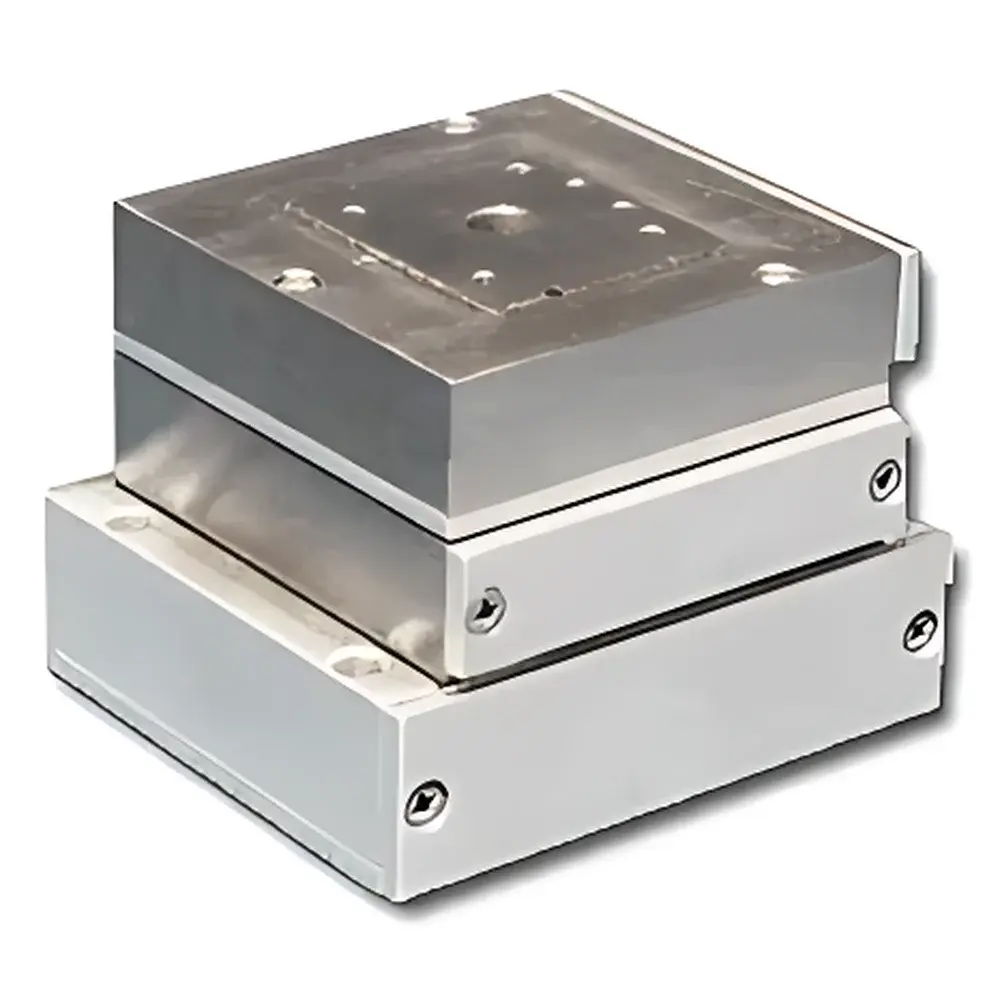
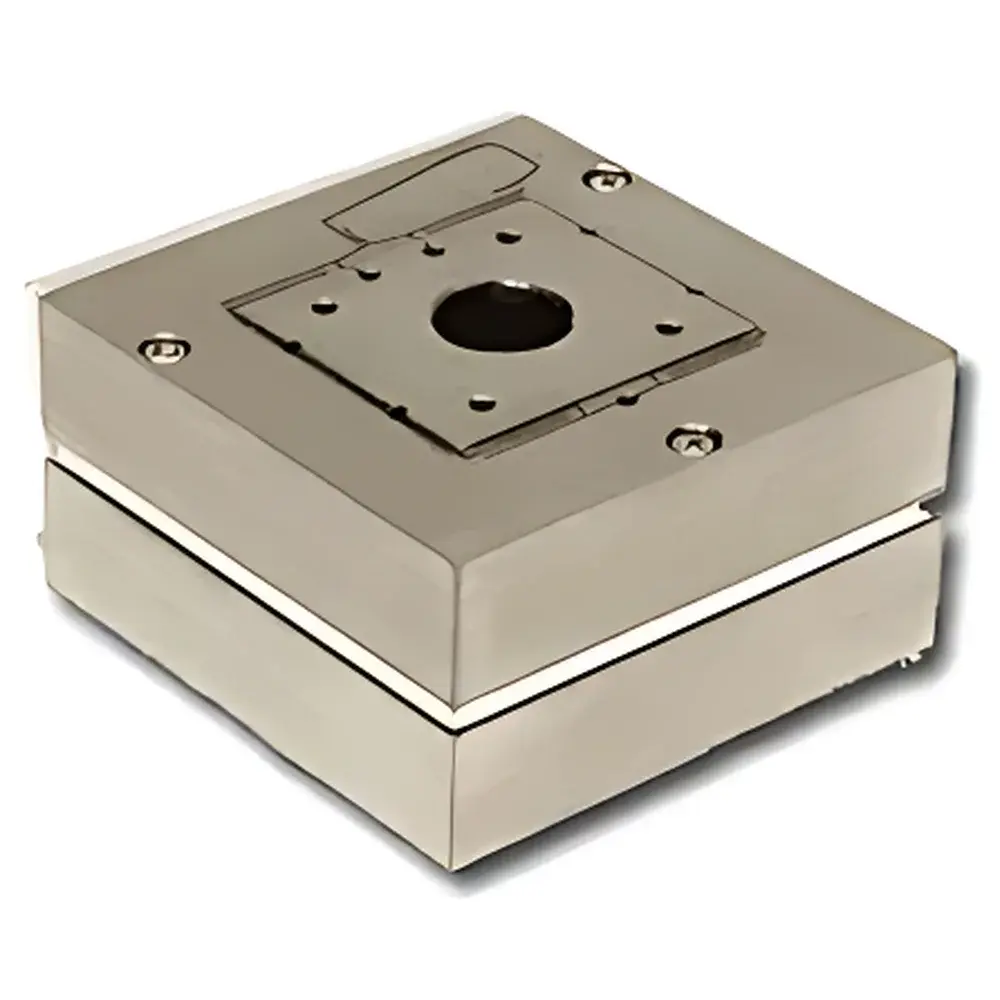
The MCL Think Nano Nano-View® Series is a fully integrated, dual-range positioning system engineered for high-precision optical microscopy applications requiring simultaneous coarse (micrometer-scale) and fine (sub-nanometer-scale) positional control. Designed specifically for inverted microscope platforms, the Nano-View® combines a motor-driven, 25 mm travel XY micropositioning stage with an ultra-low-profile, multi-axis piezoelectric nanopositioner—enabling seamless transition between sample navigation and atomic-scale stabilization. Its architecture leverages Couette-type mechanical design principles for minimal hysteresis and thermal drift, while proprietary PicoQ® capacitive position sensing delivers absolute, real-time closed-loop feedback with picometer resolution across all axes (X, Y, Z). This hybrid actuation strategy addresses fundamental limitations in conventional single-stage systems: long-range travel without sacrificing nanoscale fidelity, and mechanical stability under dynamic imaging conditions such as confocal raster scanning or time-resolved single-molecule tracking.
Key Features
- Fully integrated XY micropositioning stage (25 mm travel per axis) with optional high-resolution linear encoders (20 nm resolution)
- Integrated XYZ nanopositioning modules offering 100 µm, 200 µm, or 300 µm ranges—each calibrated for sub-nanometer resolution (0.2–0.6 nm, depending on selected range)
- PicoQ® capacitive position sensors providing absolute, drift-free, closed-loop control with picometer-level repeatability
- Ultra-low profile (< 25 mm height) nanopositioner stack enabling direct integration beneath objective lenses and within constrained optical paths
- Dual-controller architecture: Nano-Drive® for nanopositioning and Micro-Drive™ for micropositioning, both communicating via standard USB 2.0
- LabVIEW-compatible API with pre-validated motion control libraries, supporting custom automation, synchronization with camera triggers, and external DAQ integration
- Modular mechanical interface kits for standardized mounting on Olympus IX/IX2, Nikon TE2000/Ti, Leica DMI, Zeiss Axiovert/Axio Observer, and MCL’s RM21™ platform
Sample Compatibility & Compliance
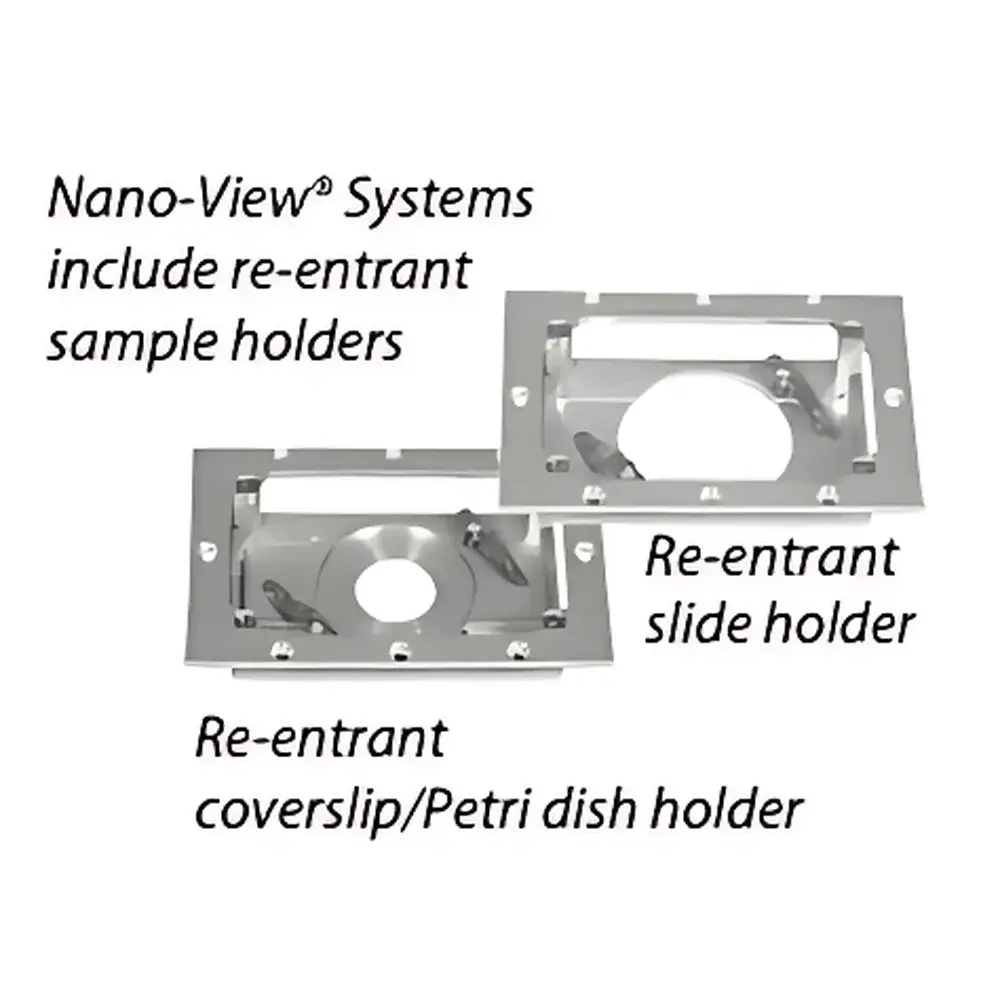
The Nano-View® accommodates standard 3-inch (76 mm) optical slides and custom sample holders up to 0.5 kg horizontal load capacity. Its aluminum, Invar, or titanium construction ensures dimensional stability over extended acquisition times and under variable ambient temperature conditions (±0.5 °C). All nanopositioning modules comply with ISO 20957-4 (fitness equipment — stationary training equipment — additional requirements for strength and stability) for mechanical robustness, and meet electromagnetic compatibility (EMC) Class B limits per FCC Part 15 and CE EN 61326-1. The closed-loop control architecture supports GLP/GMP-aligned workflows through audit-trail-capable firmware logging (accessible via Nano-Drive® CLI), and is compatible with FDA 21 CFR Part 11-compliant software environments when deployed with validated LabVIEW applications and electronic signature protocols.
Software & Data Management
The Nano-View® ships with Nano-Drive® firmware v4.2+ and Micro-Drive™ firmware v3.8+, both supporting deterministic motion profiling (trapezoidal, S-curve, and custom waveform inputs) and real-time position streaming at up to 10 kHz. Native drivers are provided for Windows 10/11 (64-bit) and Linux (Ubuntu LTS). A complete LabVIEW 2020+ development suite—including VIs for XY raster scanning, Z-stack acquisition, and synchronized nanopositioner offset correction—is included. Raw position data is output in IEEE 754 double-precision format with microsecond timestamping, exportable to HDF5 or CSV for post-acquisition analysis in Python (NumPy/Pandas), MATLAB, or Igor Pro. Firmware updates and configuration backups are managed via encrypted USB-based provisioning tools compliant with NIST SP 800-193 guidelines.
Applications
- Single-molecule fluorescence spectroscopy (smFRET, FCS, burst analysis) requiring sub-10 nm positional stability over >10-minute acquisitions
- Super-resolution microscopy techniques including STORM and PALM, where precise stage drift correction (< 0.5 nm RMS over 30 min) directly improves localization precision
- Confocal and multiphoton imaging of live cells, leveraging fast nanopositioner response (resonant frequencies: 300–400 Hz) for active focus stabilization during z-scanning
- Nanomanipulation tasks using optical tweezers or AFM probes, where coordinated XY coarse positioning and Z nanopositioning enable tip-sample approach with < 1 nm incremental control
- Quantitative optical trapping assays requiring calibrated force-position coupling, enabled by stiffness specification (1.0 N/µm) and angular deviation metrics (≤1 µrad roll/pitch)
FAQ
What inverted microscope models are supported out-of-the-box?
Standard Nano-View® configurations are mechanically validated for Olympus IX/IX2, Nikon TE2000/Ti, Leica DMI, Zeiss Axiovert/Axio Observer, and MCL’s RM21™ platform. Custom mounting solutions—including direct optical table integration—are available upon engineering consultation.
Can the Nano-View® be used in vacuum or cleanroom environments?
Yes—Invar and titanium body options are rated for Class 100 cleanroom use; vacuum-compatible versions (10⁻⁶ Torr) with non-outgassing cabling and ceramic piezo actuators are available under part number NV-VAC-XX.
Is encoder feedback mandatory for micropositioning?
No—encoders are optional but strongly recommended for applications demanding traceable position accuracy; without encoders, open-loop step repeatability remains ±50 nm.
How is thermal drift compensated during long-duration experiments?
PicoQ® sensors operate independently of thermal expansion effects; combined with low-CTE materials (Invar/titanium) and active ambient monitoring (via optional Nano-Temp™ add-on), positional drift is maintained below 0.8 nm/°C over 25–35 °C operating range.
Does the system support third-party synchronization (e.g., with EMCCD or sCMOS cameras)?
Yes—the Nano-Drive® provides TTL-compatible trigger I/O (input/output) with programmable latency compensation (0–100 ms, 1 µs resolution), enabling hardware-synchronized shutter, laser pulse, and frame acquisition events.