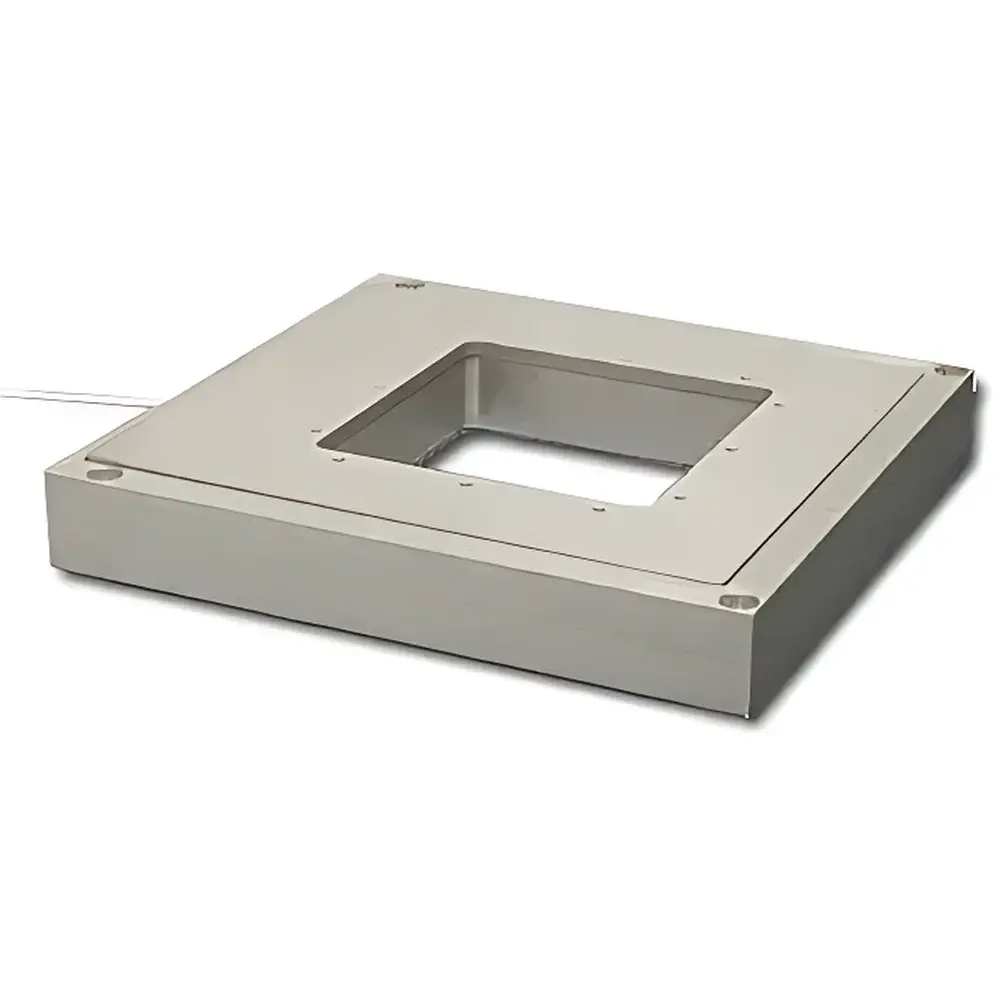
MCL Think Nano Nano-ZS Series Piezoelectric Z-Axis Translation Stage

| Brand | MCL Think Nano |
|---|---|
| Origin | USA |
| Manufacturer Type | Authorized Distributor |
| Product Category | Imported |
| Model | Nano-ZS Series |
| Product Type | Motorized Precision Translation Stage |
| Motion Axis | Single-Axis (Z) |
| Travel Range | 100 μm or 200 μm |
| Resolution | 0.2 nm (Nano-ZS100) / 0.4 nm (Nano-ZS200) |
| Resonant Frequency | 450 Hz (100 μm) / 250 Hz (200 μm) |
| Stiffness | 1.0 N/μm |
| Max Recommended Load (Horizontal) | 0.5 kg |
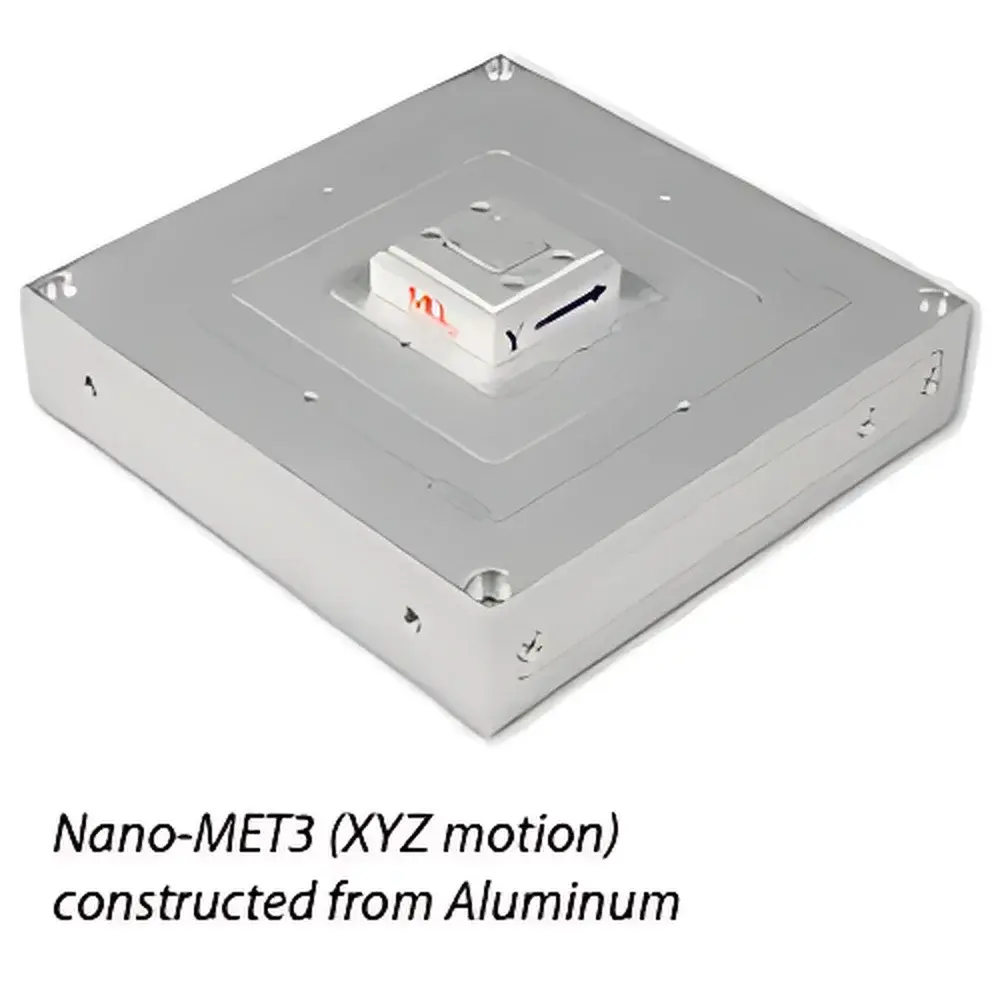
| Body Material | Aluminum or Invar |
| Control Mode | Closed-Loop |
| Sensor Technology | PicoQ® Absolute Position Sensing |
| Controller Compatibility | Nano-Drive® and Nano-Drive®85 |
Ask about pricing, availability and specifications.
Overview
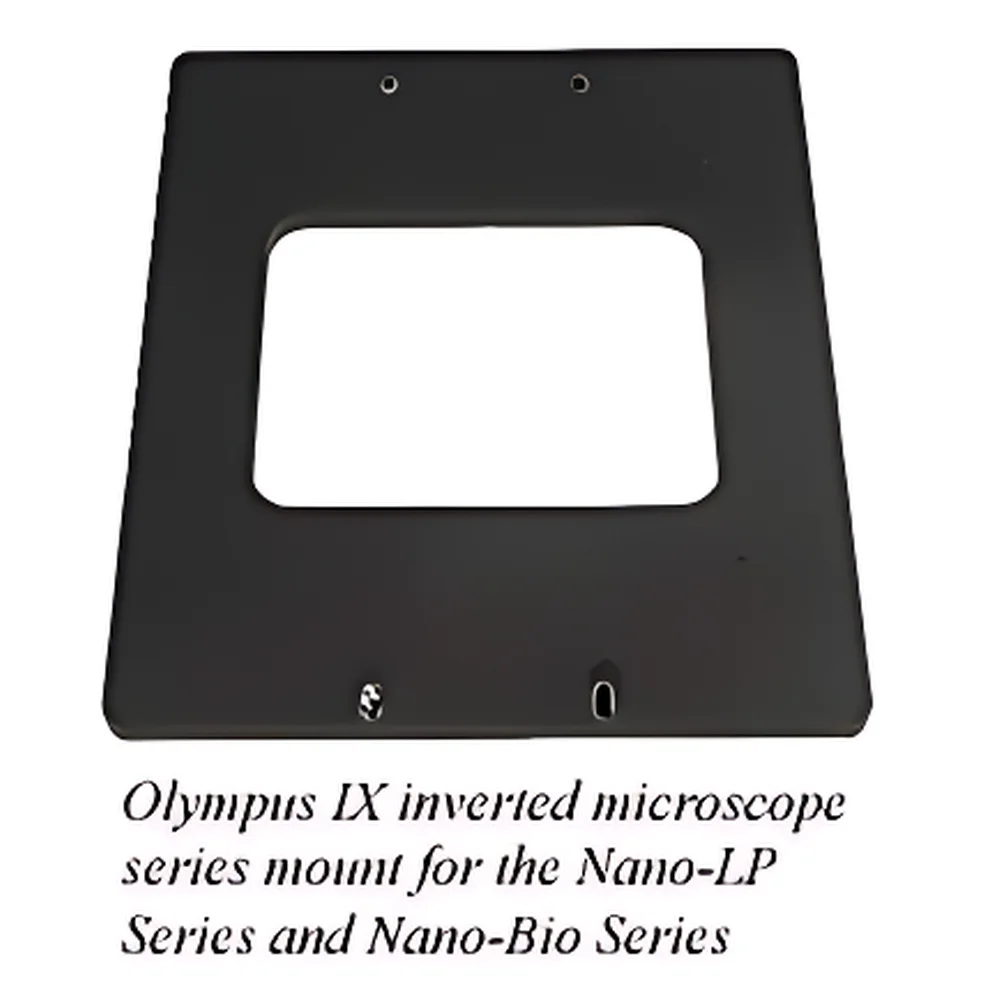
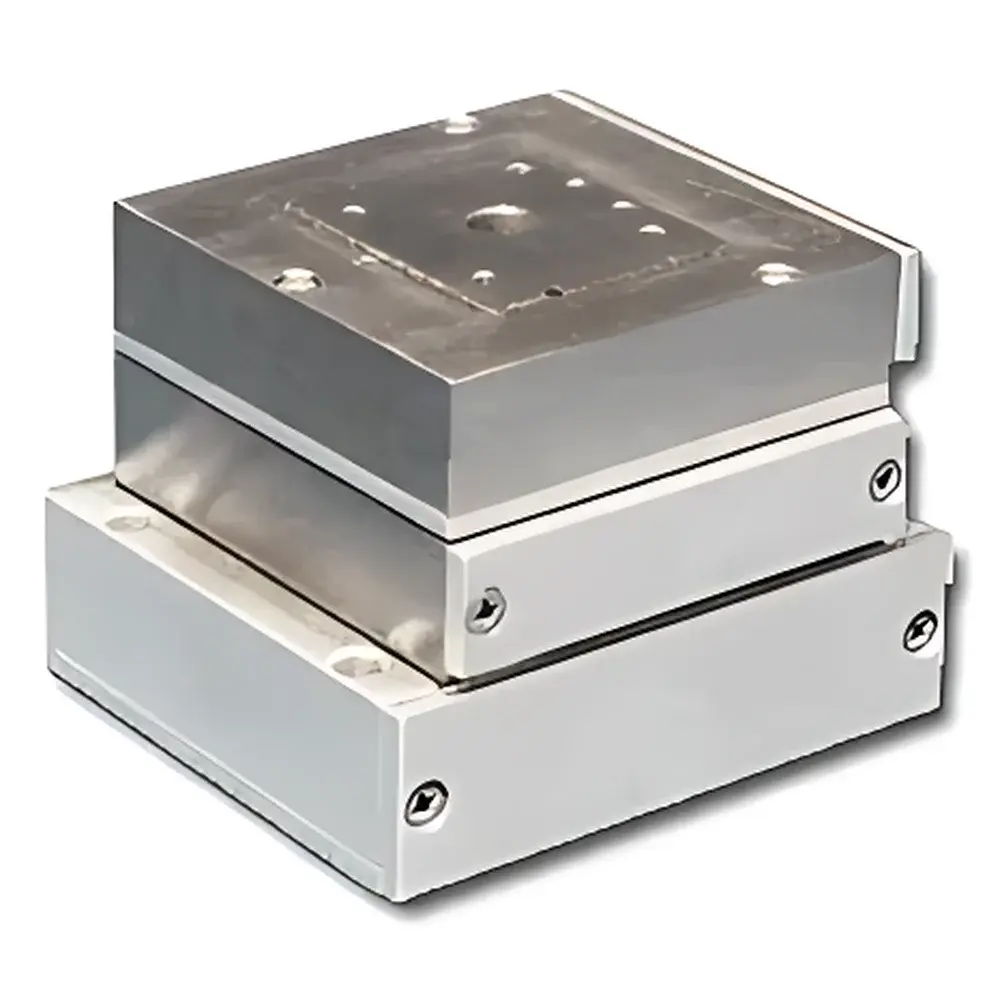
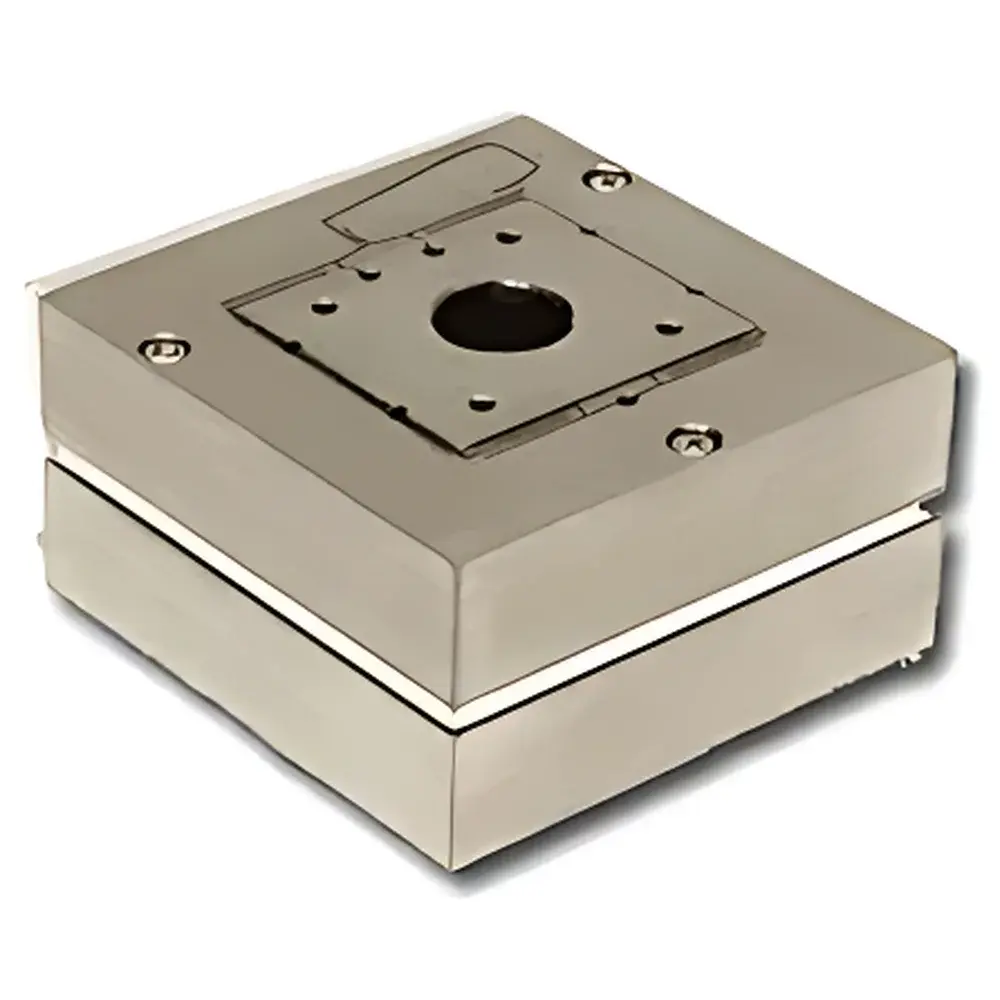
The MCL Think Nano Nano-ZS Series is a high-performance, single-axis piezoelectric translation stage engineered specifically for precision Z-axis positioning in optical microscopy and photonics instrumentation. Utilizing direct-drive piezoelectric actuation and proprietary PicoQ® capacitive position sensing, the Nano-ZS delivers sub-nanometer resolution, picometer-level repeatability, and closed-loop positional fidelity without hysteresis or drift. Its ultra-low profile (0.8″) and large central aperture (2.6″ × 2.6″) enable seamless integration into space-constrained platforms—including inverted microscopes, confocal scanning systems, and super-resolution imaging setups—without obstructing optical paths or requiring mechanical reconfiguration. Designed for OEM and research-grade integration, the Nano-ZS Series operates on electrostatically stable piezo ceramics with low thermal expansion coefficient materials (Aluminum or optional Invar), ensuring dimensional stability across ambient lab conditions.
Key Features
- Sub-nanometer resolution: 0.2 nm (Nano-ZS100) and 0.4 nm (Nano-ZS200) under closed-loop control
- PicoQ® integrated absolute position sensors provide real-time, drift-free feedback with picometer accuracy
- High dynamic performance: resonant frequencies up to 450 Hz (100 μm version) support rapid focus stepping and high-speed autofocus routines
- Rigid mechanical architecture with 1.0 N/μm stiffness ensures minimal settling time and high positional stability under load
- Modular design allows custom footprint adaptation for OEM integration into microscope frames, optical breadboards, or automated inspection systems
- Compatible with both Nano-Drive® (standard) and Nano-Drive®85 (high-power, low-noise) controllers for optimized voltage delivery and noise suppression
Sample Compatibility & Compliance
The Nano-ZS Series is designed for use with standard optical components including objective lenses (up to 60 mm diameter), dichroic mirrors, and emission filters mounted on its top plate. Its open-aperture geometry accommodates transmitted-light configurations and multi-channel fluorescence detection paths. The stage meets mechanical and electrical safety requirements per IEC 61000-6-3 (EMC Emission) and IEC 61000-6-2 (Immunity), and supports GLP-compliant operation when paired with Nano-Drive®85 controllers featuring audit-trail-enabled firmware (optional). While not FDA-cleared as a medical device, its performance parameters align with ISO 10110-7 (optical component testing) and ASTM E2594 (laser-based metrology system validation) best practices for laboratory instrumentation.
Software & Data Management
The Nano-ZS Series interfaces natively with MCL’s NanoControl™ software suite (Windows/Linux), supporting real-time position monitoring, waveform-driven motion profiling (sine, triangle, step), and synchronized triggering via TTL/USB. All controller firmware versions comply with 21 CFR Part 11 requirements when configured with electronic signature and audit trail modules—enabling traceable calibration logs and user-access-controlled parameter changes. Raw position data streams at up to 10 kHz are exportable in CSV or HDF5 format for post-acquisition analysis in MATLAB, Python (NumPy/Pandas), or LabVIEW. Third-party API support includes DLL libraries (C/C++), .NET wrappers, and Python bindings for integration into custom acquisition pipelines.
Applications
- High-speed confocal z-stacking with <10 ms step-and-settle times across 200 μm range
- Adaptive optics correction loops requiring sub-5 nm feedback latency
- Structured illumination microscopy (SIM) and STORM/PALM sample z-drift compensation
- In situ nanomechanical testing where vertical displacement must be decoupled from lateral vibration
- OEM integration into automated wafer inspection tools requiring repeatable focal plane registration
- Time-resolved spectroscopy setups requiring synchronized z-motion with laser pulse timing
FAQ
What is the difference between Nano-ZS100 and Nano-ZS200?
The Nano-ZS100 offers 100 μm travel with higher resonant frequency (450 Hz) and finer resolution (0.2 nm); the Nano-ZS200 extends travel to 200 μm at slightly reduced bandwidth (250 Hz) and 0.4 nm resolution.
Can the Nano-ZS operate in vacuum environments?
Standard units are rated for ambient air; vacuum-compatible variants (with outgassing-certified materials and feedthroughs) are available upon engineering consultation.
Is thermal drift compensated in closed-loop mode?
Yes—PicoQ® sensors are temperature-compensated and calibrated over 15–35 °C; long-term positional drift remains below ±0.5 nm over 8 hours at constant temperature.
How is mechanical loading defined for horizontal mounting?
The 0.5 kg limit assumes static, centered load with no off-axis torque; dynamic loads or cantilevered configurations require structural analysis and may necessitate Invar-body or custom stiffening options.
Does the Nano-ZS support analog voltage input for external control?
Yes—Nano-Drive®85 provides 0–10 V analog input with 16-bit DAC resolution and ≤100 ns response latency, fully compatible with FPGA- or DAQ-based motion orchestration systems.