
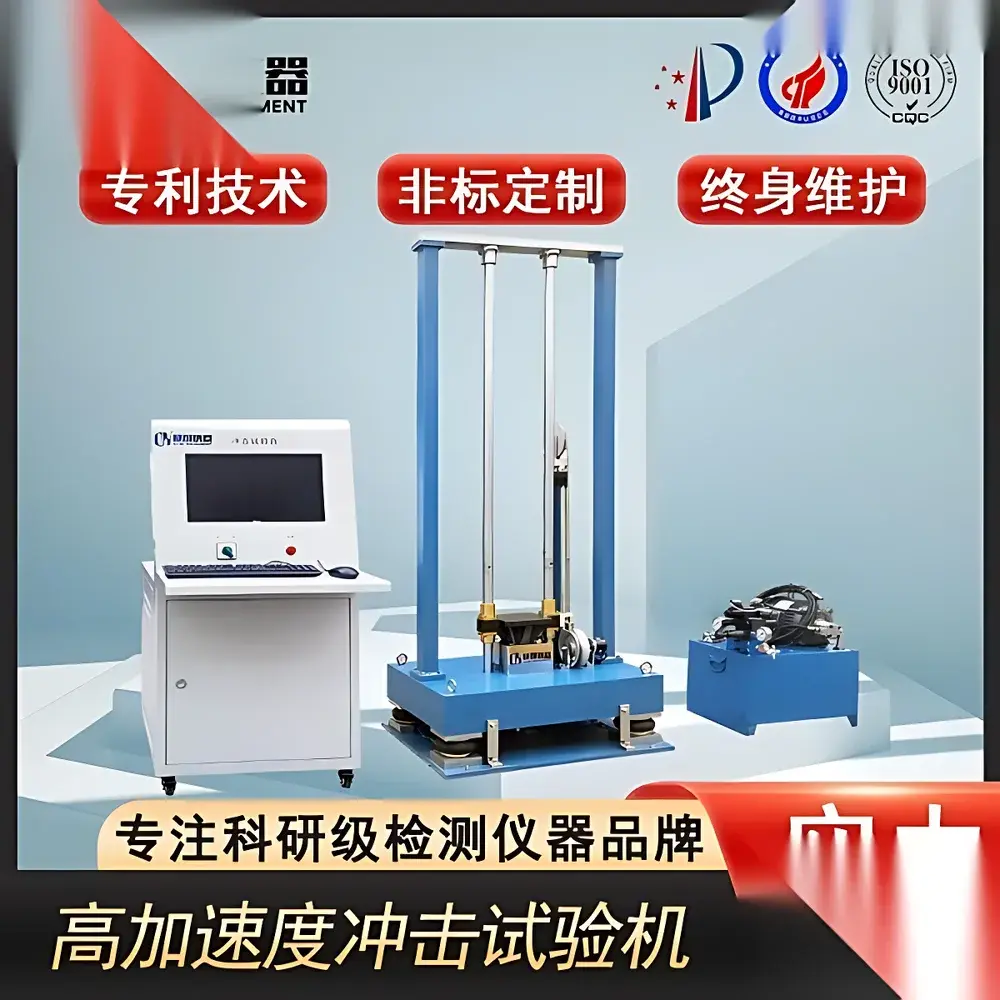
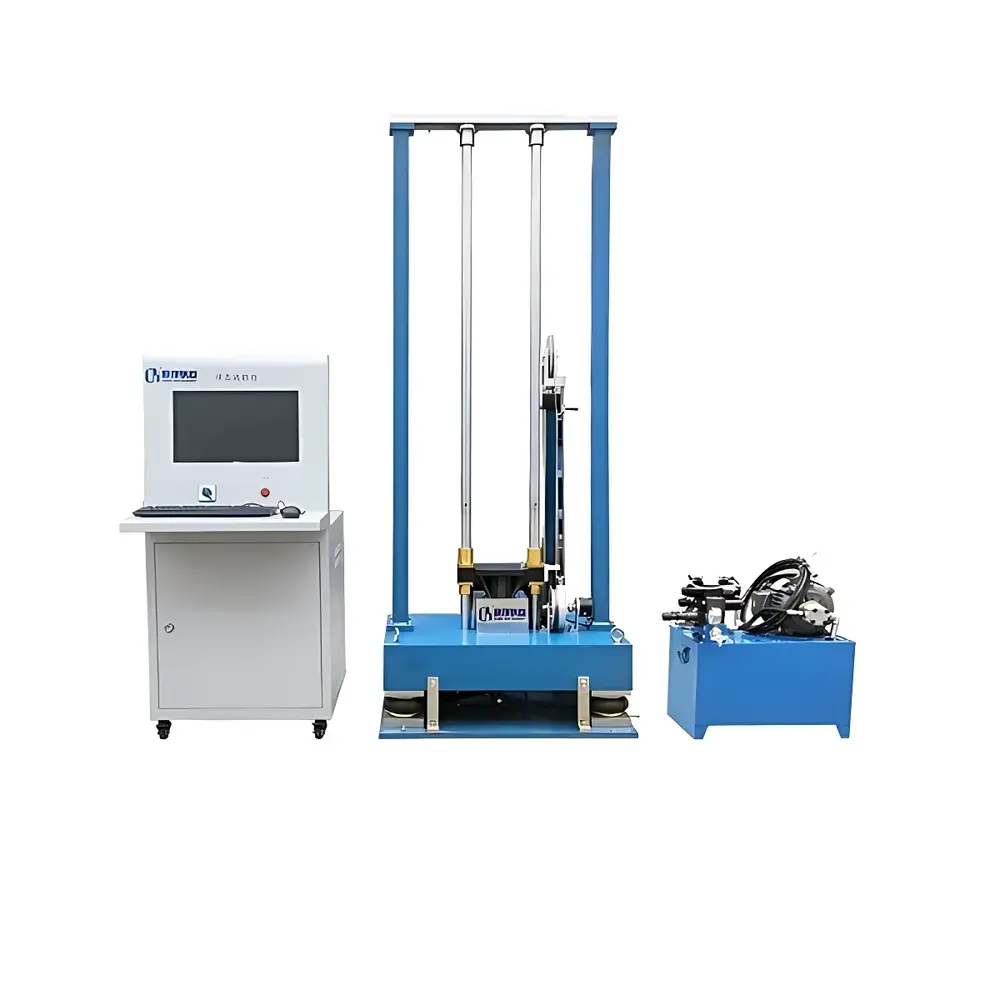
Mechanical Shock Tester for Acceleration Impact Testing
| Brand | Other Brands |
|---|---|
| Origin | Imported |
| Manufacturer Type | Authorized Distributor |
| Price | USD 14,500 (FOB) |
| Waveform Options | Half-Sine (Standard), Trapezoidal & Reverse-Peak Sawtooth (Optional) |
| Height Control | Digital Positioning with ±0.5 mm Repeatability |
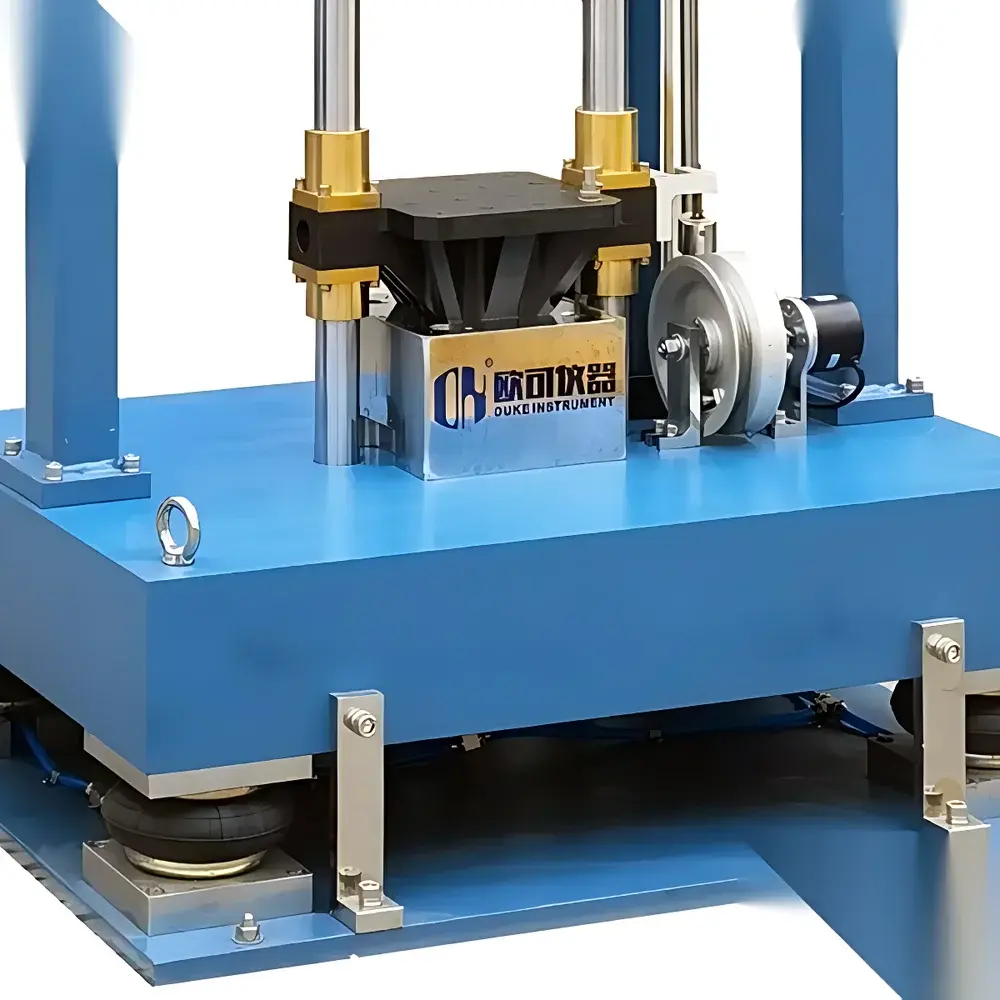
| 制动 System | Hydraulic Post-Impact Arrest Mechanism |
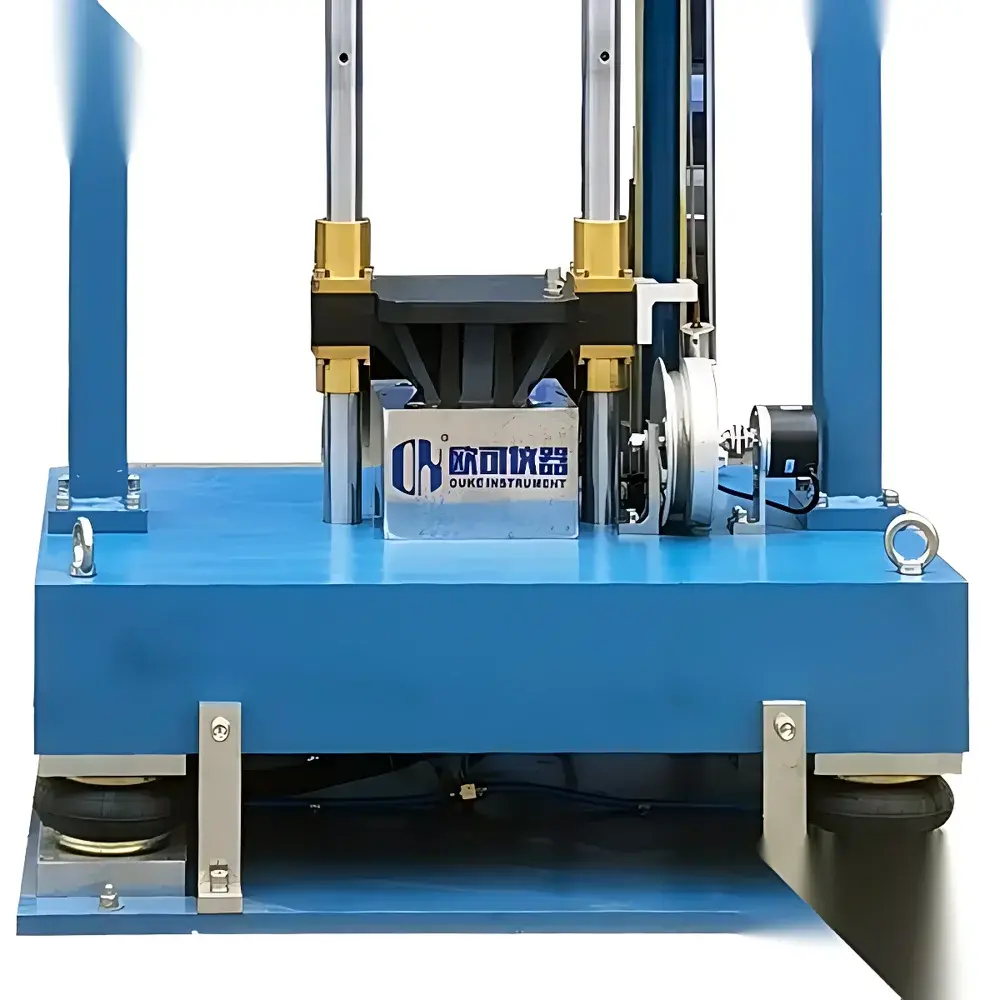
| Damping | Multi-Stage Isolation Mounts for Structural Vibration Suppression |
| Drive Motor | DC Servo with Variable-Speed Control |
Overview
The Mechanical Shock Tester for Acceleration Impact Testing is a precision-engineered system designed to replicate controlled mechanical shock environments in accordance with international standards including ISO 16750-3, IEC 60068-2-27, MIL-STD-810H Method 516.8, and GB/T 2423.5. It operates on the principle of free-fall impact dynamics: a test platform is elevated to a user-defined height and released under gravity, striking a calibrated waveform generator (e.g., elastomeric buffer or pneumatic damper) to produce reproducible acceleration pulses. The resulting transient shock pulse—characterized by peak acceleration (g), pulse duration (ms), and waveform shape—is applied to mounted specimens to assess structural integrity, solder joint reliability, sensor response, and packaging performance under sudden inertial loading. Unlike drop towers relying solely on gravity, this system integrates active deceleration control and real-time waveform validation to eliminate secondary rebound effects that compromise data fidelity.
Key Features
- Hydraulic post-impact arrest mechanism prevents secondary rebound, ensuring single-pulse fidelity and eliminating waveform distortion caused by platform oscillation.
- Digital height positioning system with encoder feedback achieves ±0.5 mm repeatability across the full stroke range (50–1,200 mm), enabling precise control over peak acceleration magnitude via the relationship a = 2gh / t² (where h = drop height, t = pulse duration).
- Integrated multi-stage vibration isolation mounts attenuate reaction forces transmitted to floor structures—critical for installations in shared laboratory facilities or near sensitive metrology equipment.
- Standard half-sine waveform generation; optional trapezoidal and reverse-peak sawtooth pulse modules allow compliance with application-specific requirements (e.g., automotive ECU qualification per ISO 16750-3 Annex C).
- DC servo drive with closed-loop speed regulation enables programmable pulse repetition rates from 1 to 30 impacts per minute, supporting both single-event qualification and fatigue-style shock sequencing.
Sample Compatibility & Compliance
The tester accommodates payloads up to 100 kg on a 600 × 600 mm rigid aluminum test surface, with M8 and M10 threaded mounting patterns conforming to ISO 2247-1. Load capacity includes fixture mass; optional counterweight kits mitigate reaction-induced waveform asymmetry during high-g testing (>100 g). All configurations support bidirectional vertical (Z-axis) shock input. For triaxial evaluation, the base frame is compatible with orthogonal turntable adapters (sold separately), enabling sequential X/Y/Z testing without specimen reorientation—essential for gravity-dependent devices such as MEMS accelerometers or fluid-filled pressure sensors. Calibration traceability follows ISO/IEC 17025 requirements, with annual verification against NIST-traceable laser vibrometer reference standards.
Software & Data Management
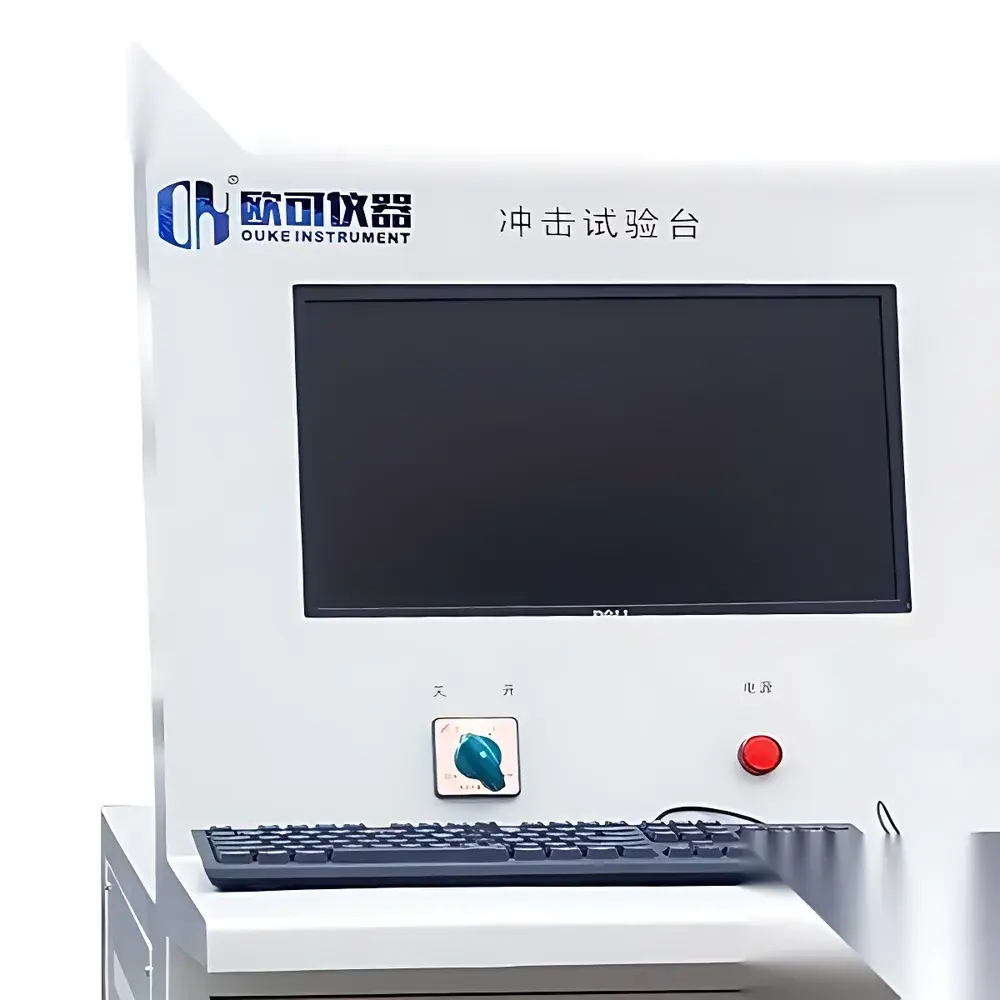
The embedded shock analysis system features a real-time 100 kS/s, 16-bit ADC acquisition module synchronized with platform position and trigger events. Waveform visualization, peak/g-duration measurement, and tolerance band overlay (per IEC 60068-2-27 Fig. 2) are performed in situ. Export formats include CSV, MATLAB .mat, and universal TDMS for downstream statistical process control (SPC) integration. Audit trails comply with FDA 21 CFR Part 11 requirements: all parameter changes, calibration logs, and test reports are digitally signed and time-stamped. Optional GLP/GMP mode enforces electronic signatures, role-based access control, and automated report generation with configurable headers and footers.
Applications
This system is routinely deployed in electronics manufacturing for PCB-level shock survivability validation; in aerospace for avionics housing qualification under launch vibration spectra; in medical device R&D for implantable sensor robustness assessment; and in packaging engineering for ISTA 3A/3E-compliant transport simulation. Its ability to maintain waveform fidelity at pulse durations from 2 ms to 11 ms—and peak accelerations from 10 g to 500 g—makes it suitable for both low-energy durability screening and high-impact safety-critical verification.
FAQ
What waveform types are supported, and how are they selected?
Half-sine is standard; trapezoidal and reverse-peak sawtooth waveforms require optional hardware modules installed at the buffer interface. Selection is configured via software prior to test initiation.
Can the system perform tests in orientations other than vertical?
Yes—horizontal orientation is supported using optional side-mount brackets; full 3-axis testing requires a motorized rotary stage (Model RT-3AX, sold separately) and firmware upgrade.
Is the hydraulic arrest system maintenance-intensive?
No—the sealed piston assembly uses long-life hydraulic fluid with 5-year service intervals; no user-serviceable components are exposed during normal operation.
How is calibration verified between accredited lab audits?
Each unit ships with a Certificate of Conformance and a NIST-traceable accelerometer calibration certificate; field verification uses the included portable reference transducer and automated self-check routine.
Does the system support remote operation and integration into MES/QMS platforms?
Yes—OPC UA and Modbus TCP protocols are embedded; RESTful API endpoints enable direct integration with Siemens Opcenter, Rockwell FactoryTalk, or custom LIMS environments.



