
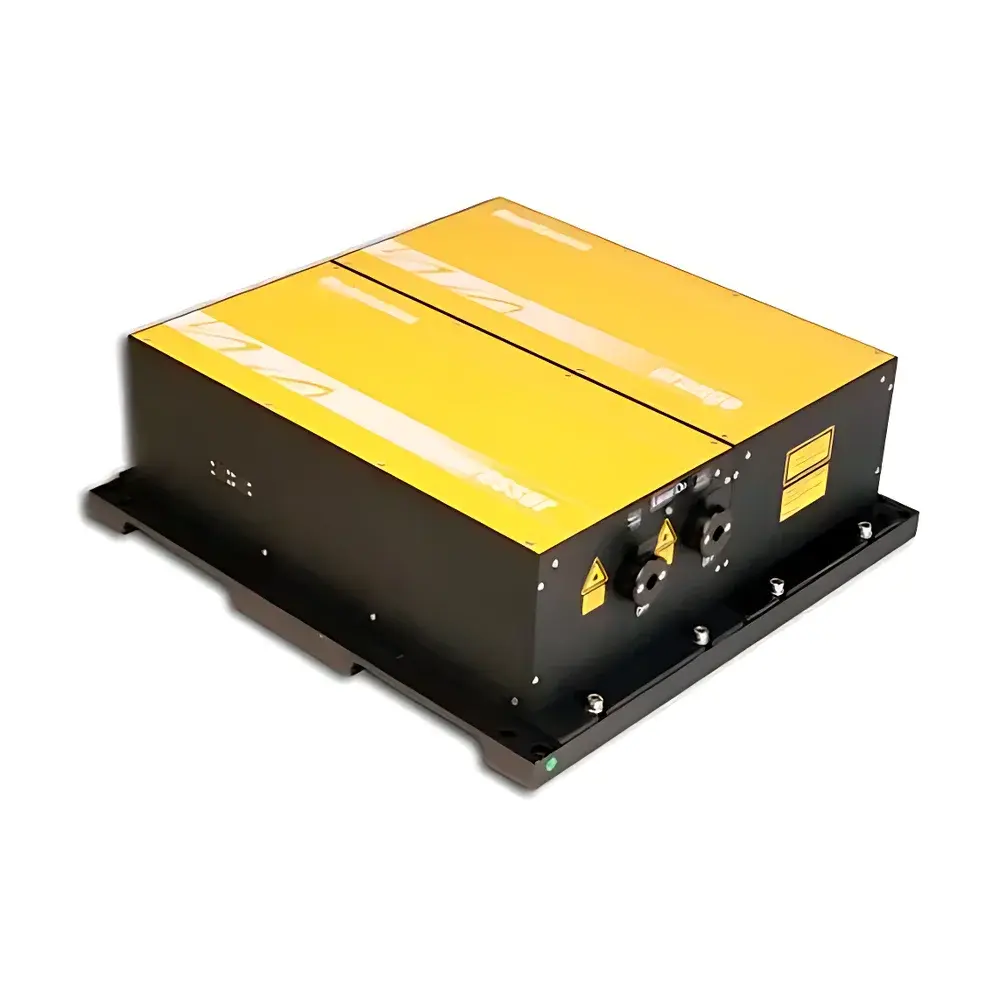
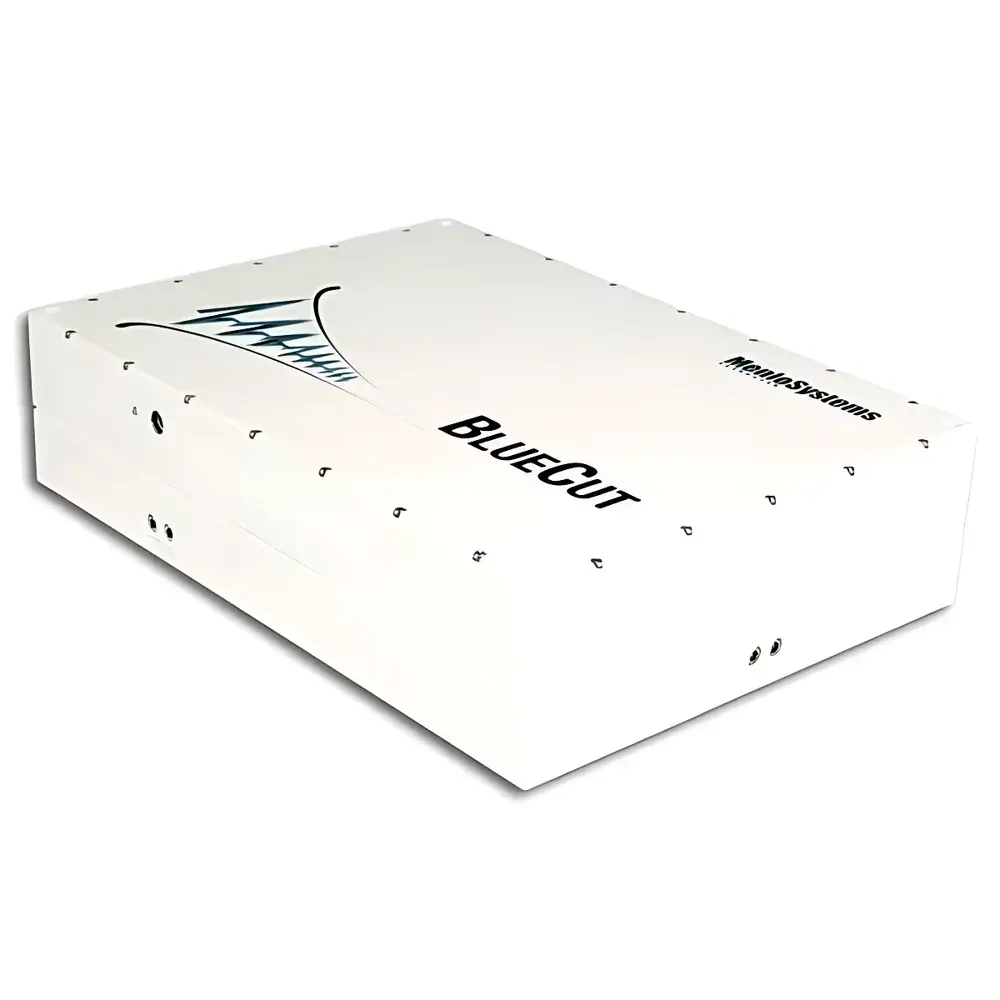
Menlo Systems Orange Series Fiber-Based Femtosecond Laser
| Brand | Menlo Systems |
|---|---|
| Origin | Germany |
| Model | Orange Series |
| Wavelength | 1040 ± 10 nm |
| Average Power | >100 mW (Orange), >1 W (Orange HP), >10 W (Orange HP 10) |
| Pulse Energy | >1.0 nJ (Orange), >10 nJ (Orange HP), >100 nJ (Orange HP 10) |
| Pulse Duration | <150 fs |
| Repetition Rate | 100 MHz (50–250 MHz optional) |
| Pulse Timing Stability | <1 ppm over 90 h |
| RMS Power Stability | <1 % (over 12 h) |
| Beam Quality | M² < 1.2–1.25 |
| Output | Free-space collimated beam |
| Cooling | Active air cooling |
| Architecture | All-fiber, polarization-maintaining components |
| Technology | Figure-9 mode-locked oscillator with integrated SHG module |
Overview
The Menlo Systems Orange Series represents a class of turnkey, fiber-based femtosecond laser sources engineered for precision scientific and industrial applications requiring ultrafast temporal resolution, high amplitude stability, and long-term operational reliability. Built upon a monolithic all-fiber architecture using only polarization-maintaining (PM) fiber components, the Orange Series leverages Menlo’s proprietary Figure-9 ring cavity design—a robust, self-starting mode-locking topology that eliminates alignment sensitivity and enables exceptional pulse-to-pulse timing stability (<1 ppm over 90 hours) and low-intensity noise. The integrated second-harmonic generation (SHG) module provides efficient wavelength conversion while preserving beam quality (M² < 1.25) and pulse fidelity. Unlike bulk-optic or free-space amplified systems, the Orange Series delivers sub-150 fs pulses at 1040 ± 10 nm directly from an alignment-free, maintenance-free platform—ideal for integration into interferometric setups, frequency comb metrology, pump-probe spectroscopy, and nonlinear optical experiments where environmental resilience and reproducibility are critical.
Key Features
- All-fiber, polarization-maintaining construction ensures mechanical and thermal stability without active realignment
- Figure-9 mode-locked oscillator architecture guarantees self-starting operation and <2 fs RMS timing jitter
- Integrated SHG module enables efficient harmonic generation while maintaining beam pointing stability and M² < 1.25
- Active air-cooling system supports continuous 24/7 operation in standard laboratory environments
- One-button startup with embedded firmware control—no external controllers or alignment tools required
- Optional repetition rate tuning (50–250 MHz) via electronic cavity length modulation
- OEM-ready mechanical housing with standardized mounting interfaces (e.g., 4-40 threaded holes, kinematic base plate)
- Fully compliant with IEC 60825-1:2014 Class 4 laser safety requirements; includes interlock connectors and shutter-compatible output port
Sample Compatibility & Compliance
The Orange Series is designed to interface seamlessly with a broad range of ultrafast diagnostic and application hardware—including autocorrelators (e.g., AA-10DD), pulse compressors, optical parametric amplifiers (OPAs), and electro-optic sampling systems. Its free-space collimated output (Ø3–4 mm, divergence <0.5 mrad) meets ISO 11146 beam parameter standards and is compatible with standard reflective and transmissive optics (UV–NIR coatings). From a regulatory standpoint, each unit ships with full CE marking, RoHS compliance documentation, and a traceable calibration certificate referencing NIST-traceable power meters and autocorrelation measurements. For GLP/GMP environments, the laser supports optional audit trail logging via USB virtual COM port and adheres to FDA 21 CFR Part 11 principles when paired with validated third-party data acquisition software.
Software & Data Management
Control is implemented through Menlo’s open-architecture Laser Control Suite (LCS), a cross-platform application (Windows/macOS/Linux) offering real-time monitoring of output power, repetition rate, internal temperature, and diode current. LCS provides programmable scripting via Python API (PyMenlo), enabling synchronization with external devices (e.g., delay stages, detectors, DAQ cards) using TTL triggers and analog voltage outputs. All operational parameters—including pulse energy history, thermal drift logs, and mode-lock status—are timestamped and exportable in CSV or HDF5 format. Remote operation via RS232 or USB CDC is supported, with secure firmware update capability and password-protected configuration locks for multi-user lab deployments.
Applications
- Optical frequency comb generation and stabilization for optical clocks and spectroscopic calibration
- Pump-probe transient absorption and time-resolved photoluminescence in semiconductor and 2D material research
- Multi-photon excitation microscopy (MPM) and second-harmonic generation (SHG) imaging in life sciences
- Femtosecond laser micromachining of dielectrics, glasses, and polymers for photonics device fabrication (e.g., FBGs, waveguides)
- Seed source for chirped-pulse amplification (CPA) systems targeting millijoule-level pulse energies
- Nonlinear optical parametric processes including OPO pumping and terahertz generation via optical rectification
- Attosecond science infrastructure—serving as driver lasers for high-harmonic generation (HHG) in gas-phase targets
FAQ
Is the Orange Series suitable for integration into OEM laser systems?
Yes—the Orange Series features a compact, rack-mountable enclosure (220 × 160 × 75 mm), standardized electrical interfaces (24 V DC input, TTL sync I/O), and RS232/USB remote control, making it ideal for embedding into larger laser platforms.
What is the typical warm-up time to achieve specified power and timing stability?
Less than 15 minutes from cold start; full specification compliance (including <1% RMS power stability) is achieved within 30 minutes under ambient temperature variation ≤ ±2 °C.
Can the repetition rate be externally modulated or locked to a reference clock?
Yes—via the analog voltage input (0–5 V) or digital PLL interface, enabling synchronization to RF references up to 100 MHz with sub-picosecond phase error.
Does Menlo provide application-specific beam delivery options?
Yes—custom collimation, fiber coupling (SMF-28 or PM980), and harmonic separation optics (e.g., dichroic filters for 520 nm SHG output) are available as factory-installed options with full performance validation.
Are service contracts and extended warranties available for industrial deployment?
Yes—Menlo offers 3-year and 5-year comprehensive support packages including on-site calibration, firmware updates, priority technical assistance, and spare parts provisioning aligned with ISO 9001 service management protocols.




