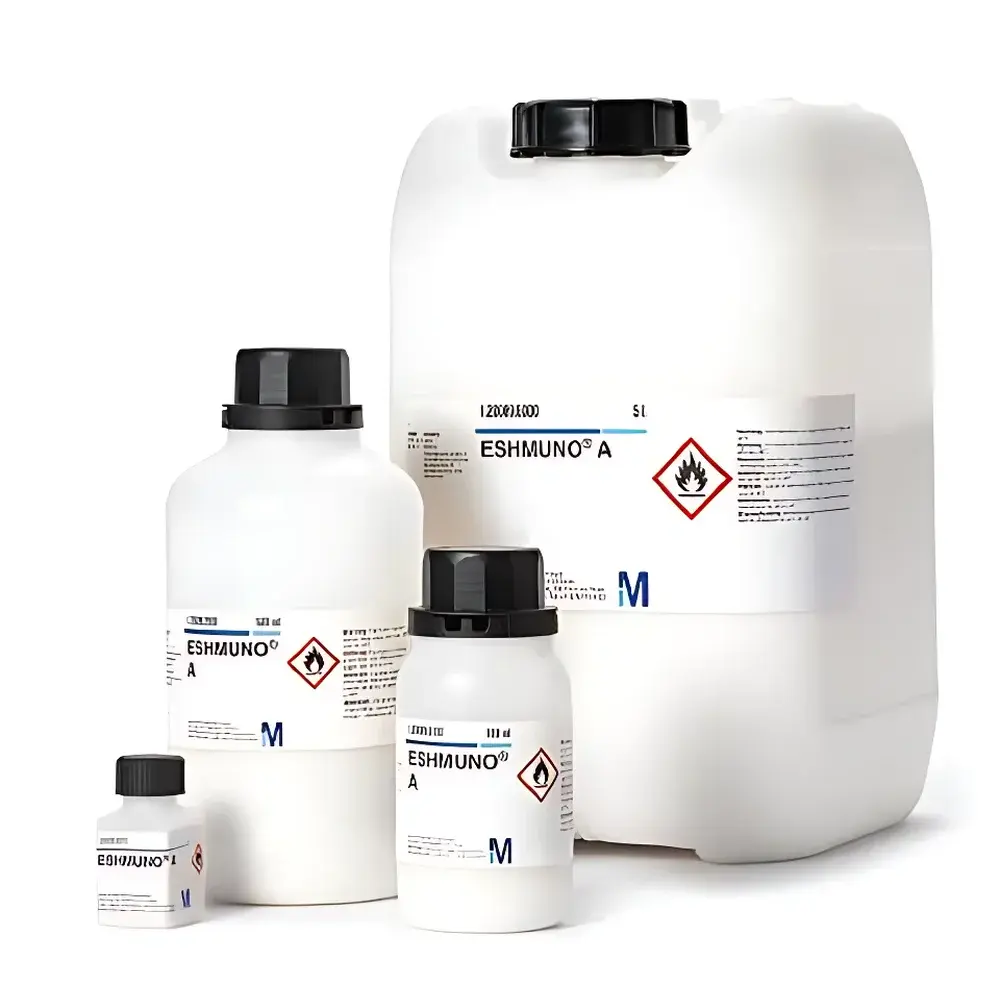
Merck Eshmuno® Chromatography Resins
| Brand | Millipore |
|---|---|
| Origin | USA |
| Manufacturer Type | Authorized Distributor |
| Product Origin | Imported |
| Model | Eshmuno® |
| Pricing | Available Upon Request |
Overview
Eshmuno® chromatography resins are a family of high-performance, polymer-based separation media engineered for robust, scalable, and regulatory-compliant downstream processing of biopharmaceuticals—particularly monoclonal antibodies (mAbs), fusion proteins, antibody–drug conjugates (ADCs), and plasma-derived therapeutics. Built on a rigid, hydrophilic polyvinyl ether (PVE) backbone, Eshmuno® resins eliminate the inherent limitations of traditional agarose- or dextran-based matrices, including compressibility under pressure, low chemical stability, and poor flow–pressure characteristics. The PVE matrix provides exceptional mechanical strength, enabling operation at elevated flow rates without bed deformation, while its intrinsic hydrophilicity minimizes non-specific binding and enhances recovery of labile biomolecules. All Eshmuno® resins incorporate Merck’s proprietary “tentacle” ligand architecture—a dense, flexible, hydrophilic spacer arm system that significantly improves mass transfer kinetics, mitigates steric hindrance, and increases effective binding capacity—especially for large, complex proteins such as Fc-containing molecules.
Key Features
- Rigid, non-compressible polyvinyl ether (PVE) base matrix with uniform spherical morphology (50 µm or 85 µm options)
- Hydrophilic surface chemistry minimizing HCP and DNA adsorption; supports low-protein-loss purification
- Proprietary tentacle ligand technology enhancing accessibility, binding kinetics, and dynamic binding capacity (DBC)
- High chemical and pH stability: compatible with 0.1–1.0 M NaOH cleaning-in-place (CIP), acidic elution (e.g., 100 mM citrate, pH 3.5), and organic solvent exposure
- Low backpressure profile enabling high-throughput processing (≥200 cm/h linear velocity in manufacturing-scale columns)
- Validated scalability from analytical to commercial manufacturing (up to 200 L resin volume per cycle)
- Animal-component-free manufacturing: all ligands—including Protein A domains—are recombinantly expressed in E. coli, eliminating adventitious agent risks
Sample Compatibility & Compliance
Eshmuno® resins are qualified for use in GMP-compliant biomanufacturing environments and support full regulatory documentation packages (including CoA, CoO, extractables/leachables data, and viral clearance validation reports). Each resin variant is designed to meet critical quality attributes outlined in ICH Q5, Q5A, and Q5B guidelines, as well as USP , , and . Eshmuno® A, CPX, CP-FT, and S resins have demonstrated ≥3-log reduction of model viruses (e.g., MMV, PRV) under standard CIP and elution conditions. The entire Eshmuno® platform conforms to ISO 10993-5 (cytotoxicity) and USP Class VI testing requirements. Process validation studies confirm compatibility with FDA 21 CFR Part 11–compliant chromatography systems (e.g., ÄKTA™, BioProcess™) and support GLP/GMP audit readiness—including full traceability of resin lot history, binding capacity trending, and column performance monitoring.
Software & Data Management
Merck provides comprehensive digital support for Eshmuno® resin deployment, including the Eshmuno® Process Navigator—a web-based tool offering resin selection guidance, buffer compatibility matrices, and predictive DBC modeling based on feedstock conductivity, pH, and load density. All resins ship with electronic batch records compliant with Annex 11 and ALCOA+ principles. Integration with DeltaV™, PATVision™, and UNICORN™ software enables real-time monitoring of breakthrough curves, pressure differentials, and UV absorbance profiles—facilitating automated fraction collection, deviation alerts, and audit-ready electronic logs. Full data integrity is maintained through role-based access control, electronic signatures, and immutable audit trails aligned with 21 CFR Part 11 requirements.
Applications
- Eshmuno® A: Capture of Fc-fusion proteins and mAbs; superior aggregate removal vs. legacy Protein A resins; stable over ≥200 cycles in NaOH CIP
- Eshmuno® CP-FT: Flow-through CEX for aggregate depletion in mAb polishing; 10× higher capacity than conventional CEX in high-salt loading conditions
- Eshmuno® CMX & HCX: Mixed-mode polishing for HCP and leached Protein A removal; effective in high-conductivity streams without dilution
- Eshmuno® CPS: High-salt cation exchange for direct-load capture of acidic impurities (e.g., host cell proteins, DNA)
- Eshmuno® Q: Anion exchange polishing in flow-through mode for endotoxin and DNA clearance in plasma fractionation
- Eshmuno® P (anti-A/anti-B): Affinity removal of isoagglutinins from IVIG and plasma derivatives—critical for ABO-compatible product release
FAQ
Are Eshmuno® resins suitable for single-use manufacturing platforms?
Yes—Eshmuno® resins are fully compatible with pre-packed columns (e.g., Eshmuno® ReadyToProcess™) validated for ≤30 cycles under GMP conditions and certified for use in disposable bioprocessing systems.
What is the recommended storage condition for Eshmuno® resins?
Store at 2–8 °C in supplied 20% ethanol/buffer solution; avoid freezing and prolonged exposure to ambient temperatures above 25 °C.
Can Eshmuno® resins be regenerated after extended use?
Yes—regeneration protocols include sequential washes with 1 M NaCl, 0.1 M NaOH (60 min), and equilibration buffer; capacity retention >95% is typical after 100 cycles when following Merck’s SOP-ESH-REG-01.
Do Eshmuno® resins require special column hardware?
No—standard stainless-steel or PEEK-packed columns rated for ≤4 bar operating pressure are fully compatible; no hardware modification is needed for scale-up.
Is process characterization data available for Eshmuno® resins?
Yes—Merck provides full process characterization packages including DoE studies, worst-case loading models, and comparability reports for resin lot transitions, supporting regulatory submissions under ICH Q5D and Q5E.
Related Products