
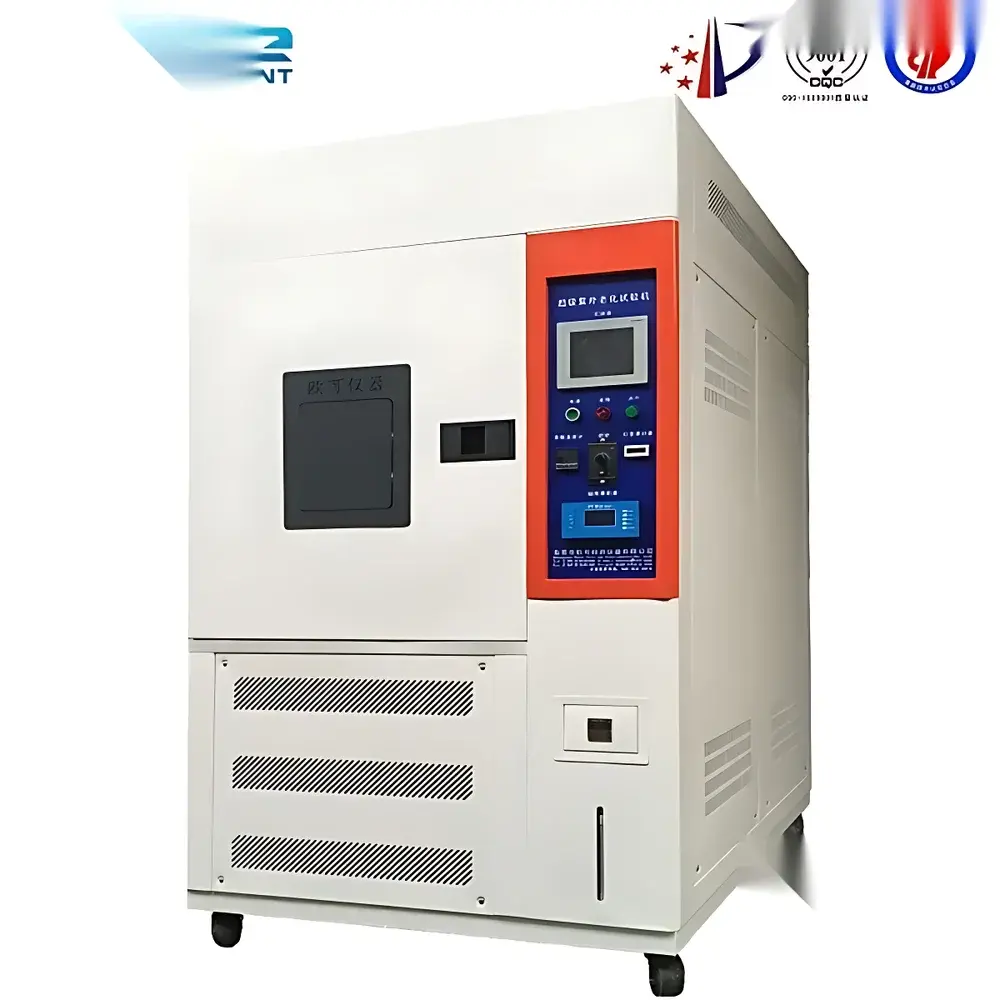
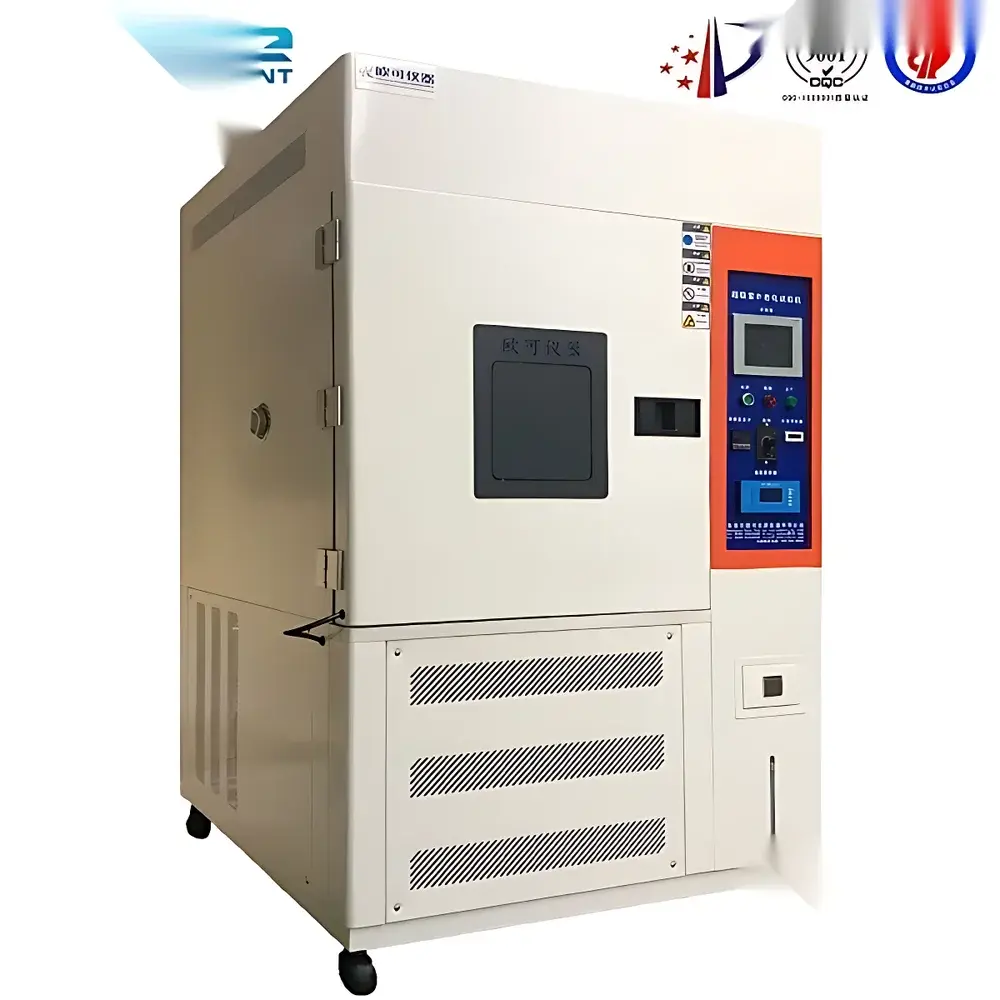
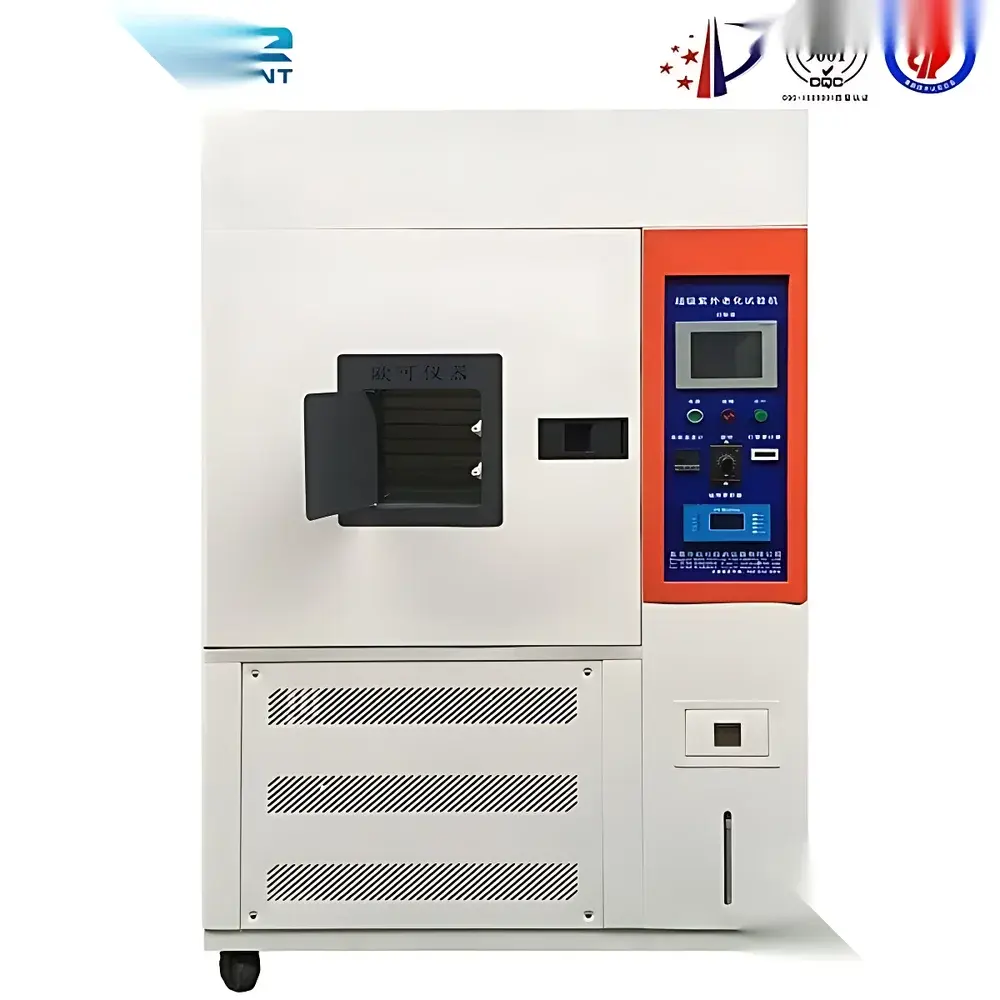
Metal Halide Solar Radiation Aging Test Chamber
| Brand | OEM / Custom Brand |
|---|---|
| Origin | Imported |
| Manufacturer Type | Authorized Distributor |
| Price | USD 14,200 (FOB) |
| Spectral Range | 295–450 nm |
| Light Source | Air-Cooled Metal Halide Lamps |
| Filter System | 3-mm Equivalent Solar UV/Visible Transmission Filter |
| Compliance | ASTM G155, ISO 4892-2, SAE J2527, IEC 61215 |
Overview
The Metal Halide Solar Radiation Aging Test Chamber is an engineered environmental test system designed to accelerate material degradation under controlled solar-simulated irradiance, temperature, and moisture conditions. Unlike conventional fluorescent UV chambers limited to narrow UVA/UVB bands, this chamber employs high-intensity air-cooled metal halide lamps whose unfiltered spectral output spans 295–450 nm—closely matching the terrestrial solar spectrum, including critical near-UV and visible wavelengths responsible for photochemical degradation mechanisms such as polymer chain scission, chromophore bleaching, and oxidative crosslinking. The integrated optical filter system replicates the spectral transmission profile of 3-mm-thick borosilicate glass, ensuring irradiance distribution at the specimen plane conforms to real-world exposure through automotive glazing or PV module encapsulants. This enables physically representative aging of coatings, composites, elastomers, and photovoltaic materials—where spectral fidelity directly correlates with prediction accuracy of field service life.
Key Features
- High-fidelity solar simulation: Metal halide lamps deliver continuous spectrum irradiance (295–450 nm), enabling evaluation of both UV-driven and visible-light-mediated degradation pathways.
- Multi-stress synchronization: Independent control of black-panel temperature (30–110°C), chamber air temperature (20–90°C), relative humidity (10–95% RH), and cyclic water spray (including cold condensation and hot rain phases).
- Uniform irradiance distribution: Lamp array geometry and reflector design ensure ±15% irradiance uniformity across standard 100 × 100 mm specimen planes per ASTM G155 Annex A3.
- Calibrated radiometric monitoring: Integrated broadband UV sensor (295–400 nm) with NIST-traceable calibration; optional spectral irradiance meter available for full 295–450 nm mapping.
- Robust chamber architecture: Stainless steel 316L interior, double-wall insulation, and corrosion-resistant water delivery system rated for >10,000 hours of continuous operation.
Sample Compatibility & Compliance
The chamber accommodates specimens up to 1200 × 800 × 300 mm (W×D×H), making it suitable for full-scale automotive exterior components (headlamps, bumpers, trim panels), solar modules (60/72-cell formats), and industrial electronics enclosures. It fully supports test protocols requiring multi-axis exposure geometry—including vertical mounting for façade materials and inclined positioning for PV panel validation. All operational parameters comply with ASTM G155 (Cycle A, B, C), ISO 4892-2 (Method A), SAE J2527 (for automotive plastics), and IEC 61215-2 MQT03 (for photovoltaic module qualification). Data logging meets GLP/GMP requirements, with audit trails, user access controls, and electronic signature support aligned with FDA 21 CFR Part 11 when paired with optional compliant software.
Software & Data Management
The embedded controller runs a deterministic real-time OS with dual-loop PID regulation for irradiance, temperature, and humidity. Optional PC-based software provides full protocol scripting (e.g., 8-h UV + 4-h condensation + 2-h spray cycles), automated calibration reminders, and export of time-stamped CSV/Excel reports containing irradiance积分 (J/m²), thermal history, and humidity profiles. All data files include metadata headers specifying lamp age, filter replacement date, and sensor calibration certificate ID—enabling traceability per ISO/IEC 17025 laboratory accreditation standards.
Applications
This chamber is deployed in R&D labs and quality assurance departments for predictive durability assessment of: automotive OEM coatings and sealants; silicon and thin-film PV module encapsulants and backsheets; aerospace composite matrix resins; outdoor LED lighting housings; architectural cladding systems; and medical device polymer housings exposed to ambient sunlight. Its spectral fidelity allows correlation studies between accelerated test results and natural exposure sites (e.g., Arizona, Florida, Qatar), supporting ISO 11341 lifetime modeling and failure mode analysis.
FAQ
How does this chamber differ from standard fluorescent UV testers?
It uses metal halide lamps—not UV-A/UV-B fluorescent tubes—delivering a broad, solar-weighted spectrum (295–450 nm) essential for evaluating visible-light-induced degradation and heat-assisted photochemistry.
Can it replicate the spectral cutoff of automotive glazing?
Yes—the standard 3-mm-equivalent filter matches the transmission profile of laminated windshield glass, enabling realistic testing of interior components.
Is radiometric calibration included with shipment?
Each unit ships with NIST-traceable irradiance calibration certificate for the broadband UV sensor; optional spectral calibration is available upon request.
What maintenance intervals are recommended?
Lamp replacement every 1,200 operating hours; filter inspection every 500 hours; full system verification annually per ISO/IEC 17025 guidelines.
Does it support custom test profiles beyond ASTM/ISO standards?
Yes—the controller accepts user-defined multi-parameter sequences with up to 99 steps per cycle, including ramp rates, dwell times, and conditional triggers.
Related Products



