
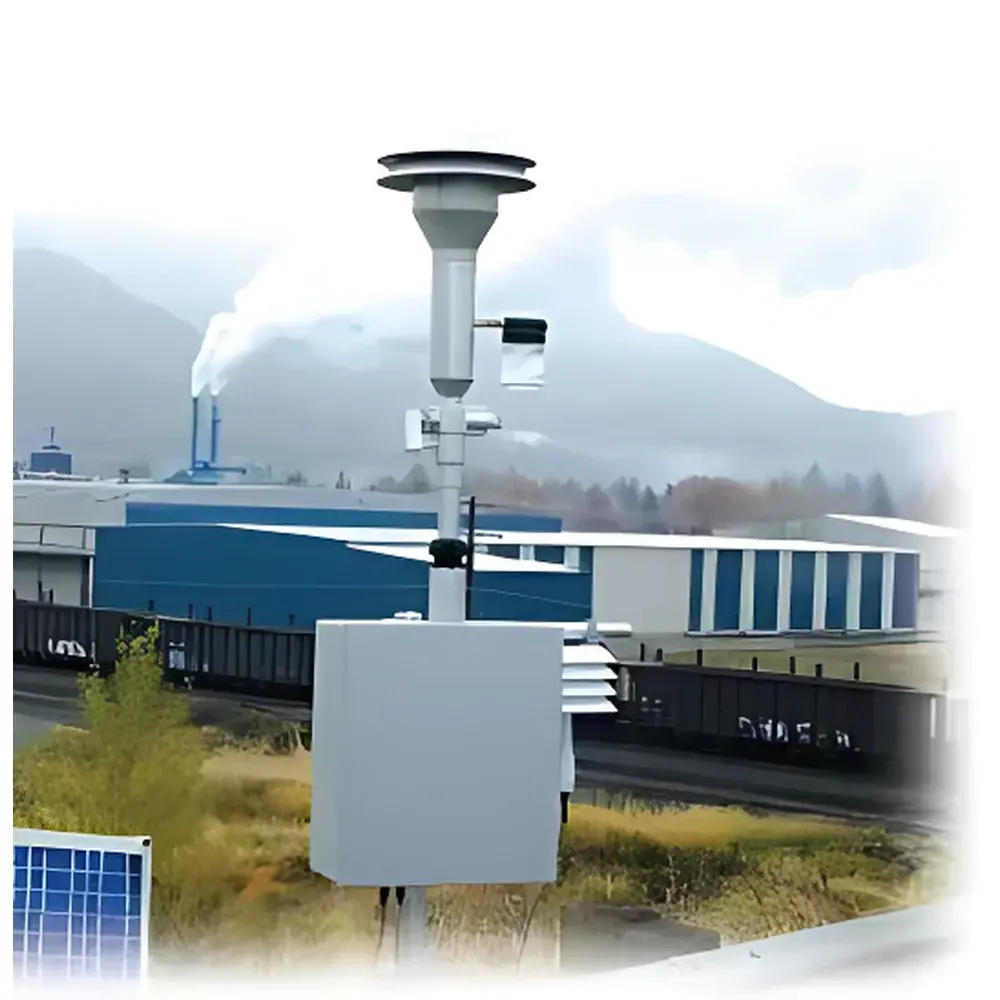
Metone E-BAM Portable Beta Attenuation PM2.5 Monitor
| Brand | Metone |
|---|---|
| Origin | USA |
| Manufacturer Type | Authorized Distributor |
| Origin Category | Imported |
| Model | E-BAM |
| Pricing | Upon Request |
Overview
The Metone E-BAM Portable Beta Attenuation PM2.5 Monitor is a field-deployable, real-time ambient particulate matter analyzer engineered for regulatory-grade measurement of fine inhalable particles with aerodynamic diameter ≤ 2.5 µm (PM2.5). It operates on the beta attenuation monitoring (BAM) principle—a gravimetric-equivalent method traceable to U.S. Environmental Protection Agency (EPA) Reference and Equivalent Methods (40 CFR Part 53). As air is drawn through a precision-cut size-selective inlet (e.g., PM2.5 cyclone), particulate mass is collected onto a moving filter tape. A calibrated 14C beta radiation source emits electrons; attenuation of the beta flux—proportional to accumulated particle mass—is measured by a solid-state detector. Mass concentration (µg/m³) is calculated in real time using tape advancement timing, volumetric flow rate (corrected for temperature and pressure), and beta absorption coefficient calibration. Unlike optical scattering methods, BAM is insensitive to particle composition, color, refractive index, or hygroscopic growth—ensuring high reproducibility across diverse ambient conditions including high humidity, fog, or mixed aerosol phases.
Key Features
- U.S. EPA-designated Equivalent Method for PM2.5 (EQPM-0609-184) and PM10 (EQPM-0609-185), compliant with Tier 3 performance specifications per 40 CFR Part 53 Subpart C
- Integrated size-selective inlets for TSP, PM10, PM2.5, and PM1—each meeting ISO 25239 and EN 12341 sampling efficiency criteria
- True field-gravimetric operation: no post-sampling lab weighing required; eliminates filter handling errors and laboratory turnaround delays
- Robust aluminum alloy housing rated IP54 for outdoor deployment; operational temperature range: −30 °C to +50 °C
- Flexible power architecture: accepts 10–28 VDC (battery or solar-ready), 100–240 VAC 50/60 Hz, or optional internal rechargeable Li-ion battery (72 h runtime)
- Full-system self-diagnostics including flow verification, tape tension monitoring, beta source activity tracking, and leak detection
Sample Compatibility & Compliance
The E-BAM enables direct ambient sampling without thermal denuders or denuders—preserving semi-volatile components such as ammonium nitrate and low-volatility organic compounds (LVOCs) that may otherwise volatilize during heated filter-based collection. This preserves measurement fidelity for epidemiological and source-apportionment studies requiring chemically intact aerosol mass. All hardware and firmware comply with ISO/IEC 17025:2017 general requirements for competence of testing and calibration laboratories. Data acquisition meets U.S. EPA Data Quality Objectives (DQOs) for PM2.5 network monitoring, supporting compliance with National Ambient Air Quality Standards (NAAQS) and reporting under the Air Quality System (AQS). The instrument satisfies audit trail and data integrity requirements aligned with 21 CFR Part 11 when paired with validated data logging software.
Software & Data Management
The E-BAM includes embedded firmware supporting configurable data logging intervals (1 second to 1 hour), with onboard memory retaining ≥200 days of minute-averaged PM2.5 mass concentrations plus six auxiliary parameters (temperature, pressure, relative humidity, flow rate, tape position, and beta count rate). Digital outputs include RS-232 and USB 2.0; analog outputs provide 4–20 mA or 0–10 V scalable to user-defined concentration ranges. Alarm thresholds trigger relay outputs for external notification or control integration. Metone’s E-BAM Manager software (Windows-based) supports remote configuration, real-time telemetry, calibration certificate import, QA/QC flagging (e.g., flow deviation >±5%), and export to CSV, NetCDF, or EPA AQS-compliant formats. All data records include timestamp, instrument ID, calibration history, and environmental metadata—enabling GLP/GMP-aligned audit readiness.
Applications
- Ambient air quality monitoring networks (federal reference/designated equivalent method stations)
- Construction site and industrial perimeter monitoring per EPA Method 201A and local air pollution control ordinances
- Community-scale exposure assessment and environmental justice studies
- Source characterization and receptor modeling campaigns requiring co-located PM2.5/PM10 differentiation
- Calibration transfer and collocation studies with federal reference method (FRM) samplers
- Mobile monitoring platforms (vehicle-mounted or UAV-deployed via ruggedized mounting kit)
FAQ
What regulatory standards does the E-BAM meet?
It is EPA-designated Equivalent Method for PM2.5 (EQPM-0609-184) and PM10 (EQPM-0609-185), fully compliant with 40 CFR Part 53 Tier 3 performance requirements.
Can the E-BAM measure semi-volatile aerosols accurately?
Yes—its unheated, real-time collection preserves semi-volatile nitrates and organics that would otherwise be lost in heated FRM filter protocols.
How is calibration maintained in the field?
The system supports NIST-traceable beta source calibration checks, zero/span verification using clean air and certified test aerosols (e.g., ammonium sulfate), and automated flow calibration via built-in critical orifice and pressure sensor.
Is the E-BAM suitable for unattended long-term deployment?
Yes—designed for continuous operation up to 30 days between maintenance cycles, with optional solar charging and weatherproof enclosure kits available.
Does it support networked data transmission?
Yes—via optional cellular or Ethernet communication modules, enabling integration into centralized air quality management platforms using MODBUS TCP or MQTT protocols.
Related Products







