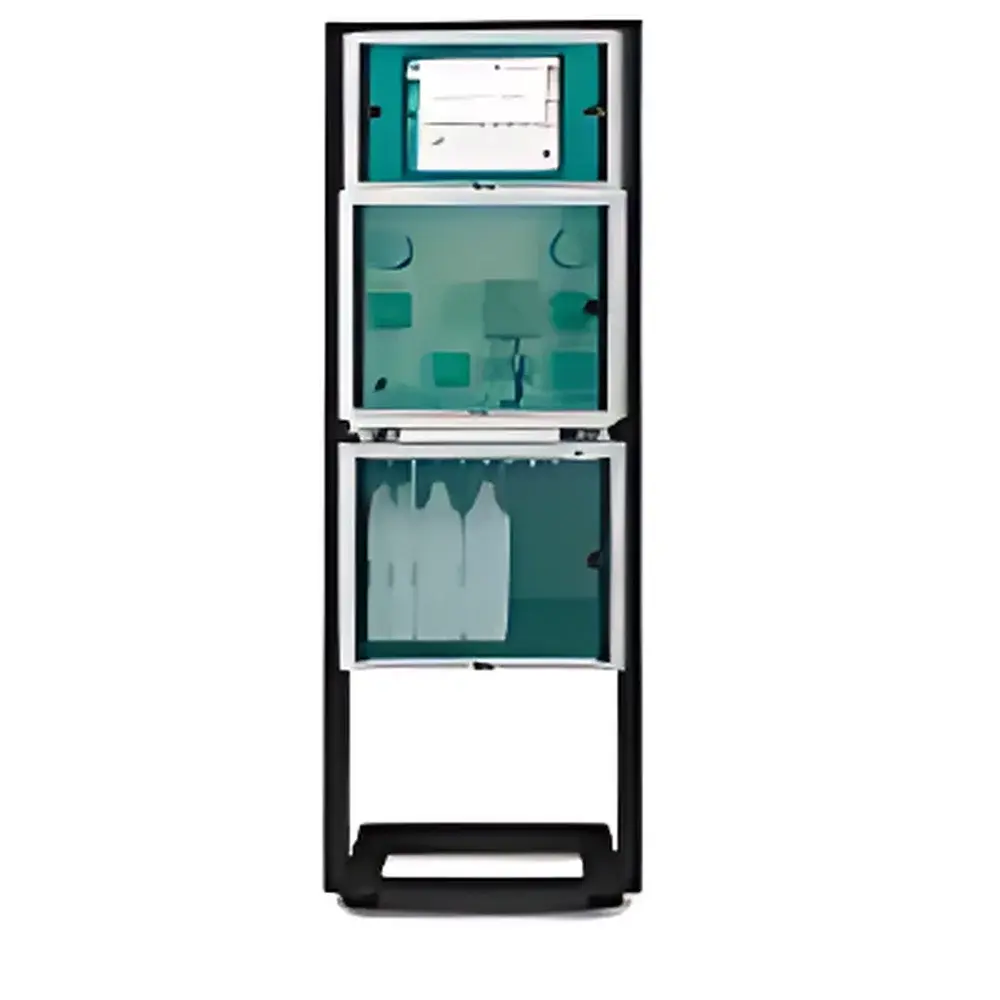
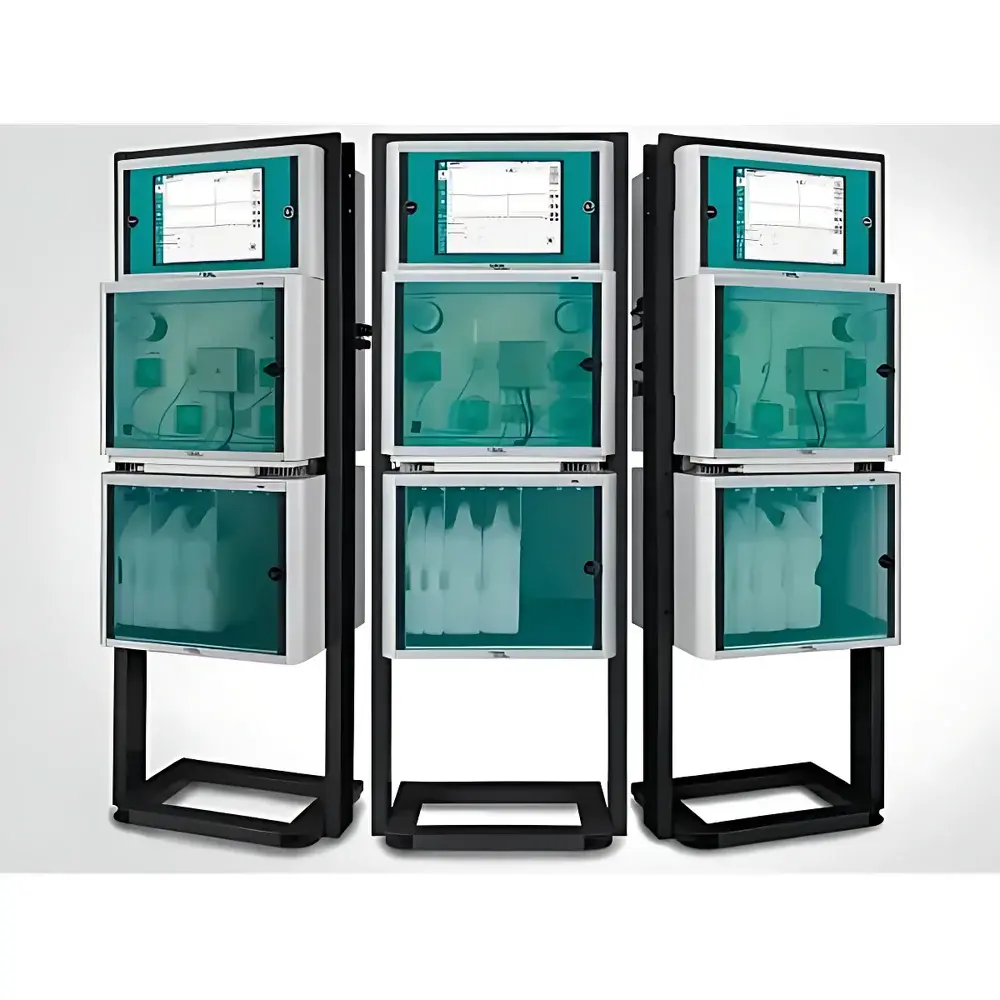
Metrohm 2060 XRF Process Analyzer
| Brand | Metrohm |
|---|---|
| Origin | Switzerland |
| Manufacturer | Metrohm AG |
| Country of Origin | Imported |
| Model | 2060XRF |
| Pricing | Upon Request |
Overview
The Metrohm 2060 XRF Process Analyzer is a robust, industrial-grade energy-dispersive X-ray fluorescence (ED-XRF) system engineered for continuous, real-time elemental analysis in demanding production environments. Operating on the fundamental principle of X-ray fluorescence spectroscopy, the instrument irradiates liquid or homogeneous solid samples with high-energy primary X-rays, inducing inner-shell electron ejection. As outer-shell electrons transition to fill these vacancies, characteristic secondary (fluorescent) X-rays are emitted—each element producing a unique spectral signature defined by photon energy (keV). The 2060 XRF captures and resolves these emissions using a high-resolution silicon drift detector (SDD), enabling qualitative identification and quantitative determination of elements from magnesium (Z = 12) to uranium (Z = 92). Designed specifically for process analytical technology (PAT) frameworks, it supports closed-loop quality control, feed-forward adjustment, and compliance-driven manufacturing across electroplating, chemical synthesis, metal finishing, and catalyst management applications.
Key Features
- Multi-point sampling architecture supporting up to 10 independent online flow cells or dip probes—enabling parallel monitoring of multiple process streams without hardware duplication
- Analysis cycle time ≤ 60 seconds per sample, delivering rapid feedback for dynamic process intervention
- Non-destructive measurement principle preserving sample integrity; no reagents, consumables, or sample preparation required
- Integrated Axon™ technology minimizing electronic noise and maximizing counts-per-second (cps) throughput—enhancing detection limits and precision at low concentrations
- Modular platform architecture allowing seamless co-integration with complementary Metrohm analytical modules, including potentiometric titration and photometric detection units, within a single control interface
- Ruggedized industrial enclosure rated IP65, compliant with NEMA 4X specifications for operation in humid, corrosive, or dust-laden plant environments
Sample Compatibility & Compliance
The 2060 XRF accommodates liquid samples—including aqueous electrolytes, organic solvents, acid baths, and plating solutions—as well as flat, homogeneous solids (e.g., coated foils, sputtered films, or pressed pellets). Sample presentation is optimized via standardized flow cells with PTFE-wetted components and temperature-stabilized measurement chambers to ensure reproducible geometry and minimize matrix effects. From a regulatory standpoint, the system supports audit-ready operation under GLP and GMP conditions. Data acquisition, calibration management, and user access logs comply with FDA 21 CFR Part 11 requirements when deployed with Metrohm’s OMNIS software suite. Method validation protocols align with ISO 8258 (control charts), ASTM E1621 (ED-XRF for metals), and IEC 61508 (functional safety for process instrumentation).
Software & Data Management
Control and data handling are centralized through Metrohm OMNIS Platform—a modular, browser-based software environment supporting method development, sequence programming, multivariate calibration (PLS, MLR), and real-time statistical process control (SPC). All raw spectra, processed results, alarm events, and instrument diagnostics are timestamped and stored in an encrypted SQL database with configurable retention policies. Role-based user authentication, electronic signatures, and full audit trail functionality satisfy traceability requirements for regulated industries. Integration with DCS/SCADA systems is achieved via OPC UA and Modbus TCP protocols, enabling direct feed of elemental concentration values into distributed control logic or MES-level dashboards.
Applications
- Electroplating bath control: Continuous monitoring of Ni²⁺, Co²⁺, Cu²⁺, Zn²⁺, Cr⁶⁺, and additive concentrations (e.g., brighteners, levelers) to maintain coating uniformity and adhesion
- Catalyst management in petrochemical refining: Tracking heavy metal poisons (e.g., Fe, V, Ni) in FCC catalyst slurries to schedule regeneration cycles
- Wastewater treatment compliance: Real-time verification of heavy metal removal efficiency (Pb, Cd, Hg, As) prior to discharge
- Pharmaceutical excipient QC: Verification of elemental impurities (ICH Q3D) in raw materials and intermediates during continuous manufacturing
- Battery electrolyte formulation: In-line quantification of Li⁺, Mn²⁺, Co²⁺, and PF₆⁻ counterion stability indicators in lithium-ion production lines
FAQ
What sample types are compatible with the 2060 XRF Process Analyzer?
Liquid samples—including acidic, alkaline, and organic-phase solutions—are fully supported. Homogeneous solids with flat, polished surfaces may also be analyzed using optional sample holders.
Does the system require periodic recalibration during continuous operation?
Calibration stability is maintained via internal reference standards and automated drift correction algorithms; scheduled recalibration intervals are typically 24–72 hours depending on matrix complexity and regulatory requirements.
Can the 2060 XRF be integrated into existing PLC-based control systems?
Yes—native support for OPC UA, Modbus TCP, and Ethernet/IP enables bidirectional communication with major industrial automation platforms without third-party gateways.
Is hazardous material handling certification required for installation?
No radioactive sources are used; the system employs a low-power X-ray tube (<50 kV, <1 mA) classified as a Class I radiation device under IEC 61010-1, requiring only standard electrical safety commissioning.
How is data security ensured in networked deployments?
OMNIS implements TLS 1.2 encryption for web traffic, AES-256 encryption for database storage, and granular permission sets aligned with ISO/IEC 27001 information security management principles.
Related Products