
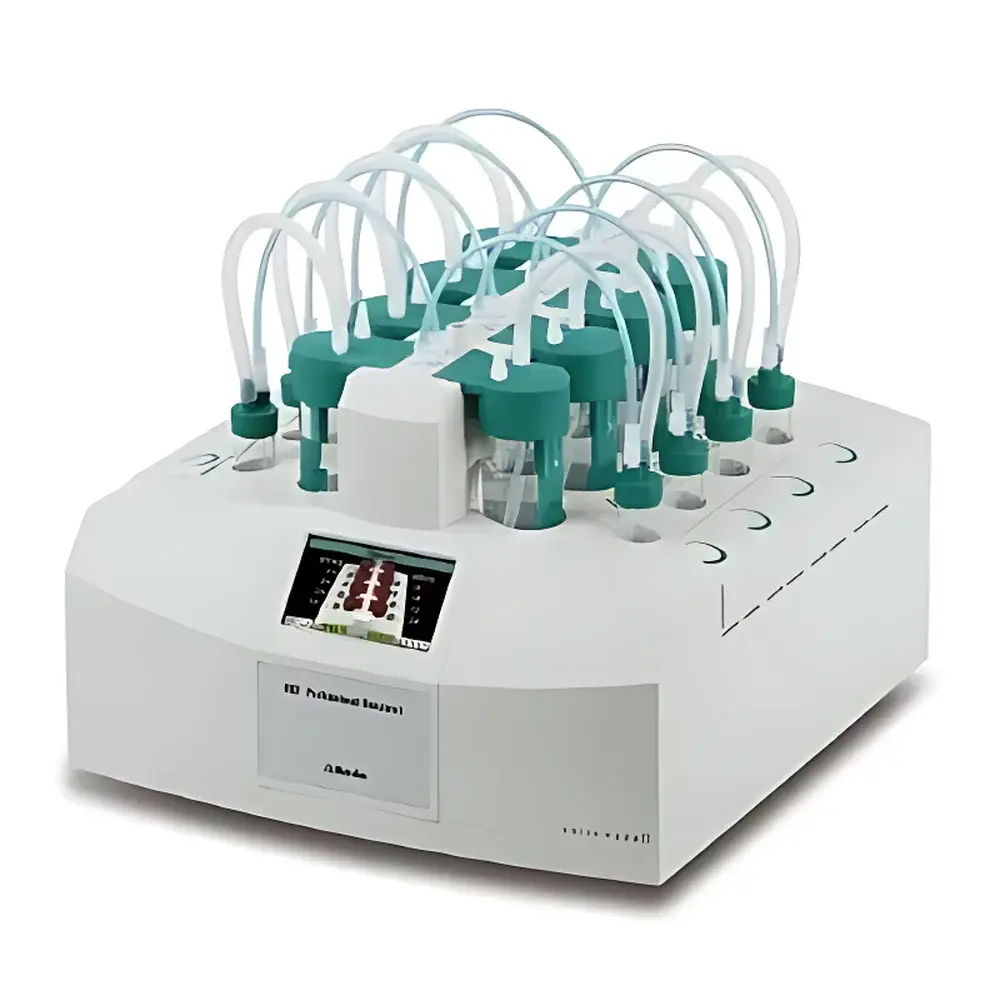

Metrohm 892 Rancimat Professional Oil Oxidation Stability Analyzer
| Brand | Metrohm |
|---|---|
| Origin | Switzerland |
| Manufacturer | Metrohm AG |
| Country of Origin | Imported |
| Model | 892 |
| Pricing | Upon Request |
Overview
The Metrohm 892 Rancimat Professional Oil Oxidation Stability Analyzer is an advanced, fully automated instrument engineered for the accelerated oxidative stability assessment of fats and oils according to the internationally standardized Rancimat method. Based on the principle of accelerated oxidation under controlled elevated temperature and continuous air flow, the system monitors volatile secondary oxidation products—primarily formic acid—by measuring the electrical conductivity of condensate water in real time. This quantifiable endpoint (induction period, IP) serves as a robust indicator of oxidative resistance, enabling precise comparison of antioxidant efficacy, formulation stability, and shelf-life prediction across edible oils, lipid-containing foods, cosmetics, and industrial lubricants.
Key Features
- Eight independent reaction channels with individual sample initiation via front-panel tactile keys—enabling flexible, non-sequential measurement scheduling
- Integrated high-resolution color display per channel showing live status: temperature, airflow rate (L/h), and conductivity (μS/cm)
- Precise dual-zone heating architecture supporting simultaneous operation at two distinct setpoints (50–220 °C), each with ±0.1 °C stability and <0.3 °C inter-channel uniformity
- Onboard temperature calibration via integrated reference electrodes, eliminating manual drift correction
- Integrated diaphragm air pump delivering stable, pulse-free airflow from 1–25 L/h (calibrated at 25 °C, 1013 hPa)
- Conductivity detection range: 0–400 μS/cm, optimized for low-level formic acid accumulation with 12-second data acquisition intervals
- USB-based instrument control with full remote operation and parameter synchronization via StabNet™ software
Sample Compatibility & Compliance
The 892 Rancimat accommodates solid, semi-solid, and liquid lipid matrices—including crude vegetable oils, refined fish oils, margarines, butter, chocolate, nut pastes, cosmetic emulsions (e.g., lip balms, sunscreens), and processed snacks (e.g., potato chips, microwave popcorn). Samples requiring pre-extraction—such as high-moisture or high-protein foods (e.g., mayonnaise, salad dressings)—are compatible with standard lipid isolation protocols (e.g., cold petroleum ether extraction per AOCS Cd 12b-92). The system complies with multiple international standards including ISO 6886:2006, AOCS Cd 12b-92, JIS 2.4.28.2-93, and GB/T 21121-2007. Its design supports GLP/GMP-aligned workflows and meets FDA 21 CFR Part 11 requirements for electronic records and signatures when deployed with StabNet™ Client-Server Edition.
Software & Data Management
StabNet™ v3.x is a modular, client-server application built for regulatory-compliant laboratory environments. It features role-based user management (administrator, analyst, reviewer), full audit trail logging (including parameter changes, measurement starts/stops, and data exports), and encrypted database storage. All raw conductivity curves, induction period calculations, and metadata are timestamped and digitally signed. Export options include CSV, PDF reports (with customizable templates), and direct integration into LIMS via ODBC. Method validation tools support IQ/OQ documentation, and automatic backup routines ensure data integrity across networked deployments.
Applications
- Quantitative evaluation of natural and synthetic antioxidants (e.g., tocopherols, BHA, BHT, rosemary extract) in bulk oils and finished products
- Shelf-life modeling of fried snack foods, dairy-based spreads, and confectionery items containing cocoa butter or palm oil
- Batch release testing of edible oils prior to bottling or further processing
- Stability screening of lipid-based cosmetic formulations exposed to thermal stress and UV degradation pathways
- Comparative analysis of oxidation kinetics across different refining processes (e.g., deodorization impact on tocopherol retention)
- Supporting R&D efforts in developing oxidation-resistant functional foods and clean-label preservation systems
FAQ
What is the minimum and maximum sample mass required for reliable measurement?
Typical sample amounts range from 2–5 g (solids) or 2–5 mL (liquids); optimal mass depends on expected induction period and matrix volatility.
Can the 892 Rancimat operate unattended overnight?
Yes—each channel runs independently with auto-stop upon conductivity threshold crossing; system remains operational for up to 100 hours per run.
Is method transfer possible from older Rancimat models?
Fully supported—StabNet™ includes legacy method import tools and maintains identical calculation algorithms per ISO 6886.
How is airflow calibrated and verified?
Airflow is factory-calibrated using traceable mass flow meters; users can perform routine verification with certified flow calibrators (e.g., DryCal®) via the service menu.
Does the system support multi-language interfaces?
StabNet™ offers English, German, French, Spanish, Chinese, Japanese, and Korean UI localization with synchronized report generation.






