
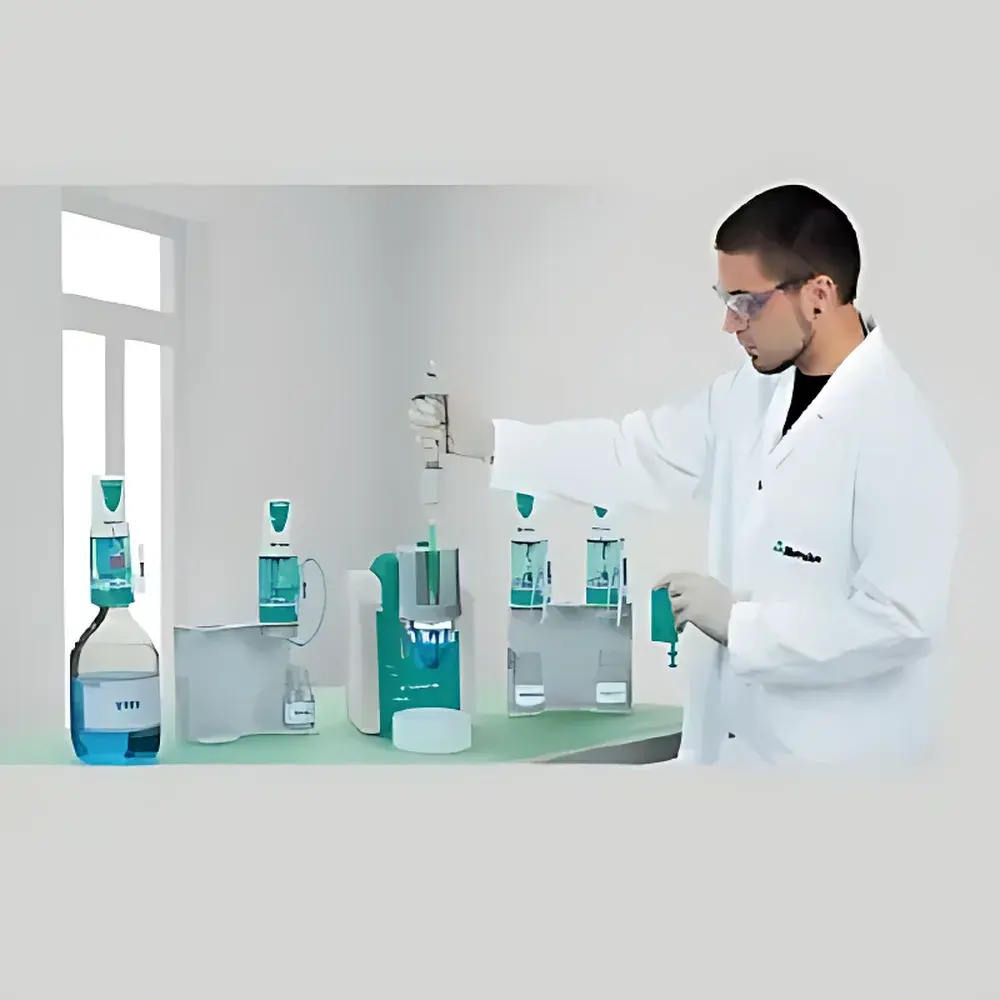
Metrohm 894 Professional CVS (Cyclic Voltammetric Stripping) System
| Brand | Metrohm |
|---|---|
| Origin | Switzerland |
| Manufacturer | Metrohm AG |
| Product Type | Imported Instrument |
| Model | 894 Professional CVS |
| Pricing | Available upon Request |
Overview
The Metrohm 894 Professional CVS System is a dedicated, modular electrochemical platform engineered for the precise quantification of organic additives—such as brighteners, suppressors, and levelers—in electroplating bath solutions using Cyclic Voltammetric Stripping (CVS). Based on the fundamental principle of controlled-potential electrolysis followed by reverse-scan stripping current measurement, the system delivers high reproducibility in detecting trace-level organic impurities that critically influence deposit morphology, throwing power, and bath stability. Designed exclusively for industrial process control laboratories and R&D facilities supporting PCB manufacturing, semiconductor packaging, and decorative/electroforming plating lines, the 894 Professional CVS integrates potentiostat/galvanostat functionality with advanced liquid handling and real-time data acquisition—all calibrated to meet the stringent requirements of routine QC environments.
Key Features
- Fully modular architecture enabling scalable configuration: base unit supports seamless integration of optional modules including the 800 Dosino automated reagent dispensing system, peristaltic pumps, level sensors, and sample processors.
- Integrated calibration verification hardware ensures continuous traceability of electrode response and cell performance—critical for maintaining measurement integrity across shifts and operators.
- Removable, standardized measurement head simplifies cleaning, maintenance, and cross-bath validation without recalibration downtime.
- Viva software suite provides full instrument control, method development, and synchronized operation of all connected peripherals—including dosing units, stirrers, and temperature modules.
- Pre-loaded, validated application methods (e.g., Modified Linear Approximation Technique for brightener analysis; Dilution Titration for suppressor quantification) reduce method development time and support rapid deployment.
- Comprehensive user management with role-based access control (administrator, analyst, reviewer) aligned with GLP/GMP documentation workflows.
Sample Compatibility & Compliance
The system is optimized for aqueous acidic and alkaline plating baths used in copper, nickel, tin, and precious metal deposition processes. It accommodates standard three-electrode configurations (working, counter, reference) with compatibility for solid-state reference electrodes (e.g., Ag/AgCl), rotating disk electrodes (RDE), and disposable screen-printed electrodes. All hardware and software components comply with IEC 61010-1 safety standards. Data handling meets FDA 21 CFR Part 11 requirements for electronic records and signatures, including audit trails, electronic signatures, and immutable archival. The system supports ISO/IEC 17025-compliant laboratory accreditation through documented calibration procedures, system suitability checks, and full traceability of reagents, electrodes, and instrument parameters.
Software & Data Management
Viva software serves as the central operational interface, built on a client-server architecture supporting multi-user network deployment. Its object-oriented method editor allows unrestricted definition of potential sweeps, pulse sequences, timing parameters, and post-acquisition evaluation algorithms. Raw voltammograms are stored in vendor-neutral binary format with embedded metadata (operator ID, timestamp, electrode serial number, bath ID, calibration status). The integrated database enables hierarchical browsing by project, batch, or date; supports custom report templates compliant with internal SOPs or external regulatory submissions; and performs automatic daily backups to network drives or cloud repositories with version-controlled retention policies. All data modifications generate time-stamped audit logs accessible only to authorized personnel.
Applications
- Quantitative determination of brighteners in acid copper sulfate baths via Modified Linear Approximation Technique (MLAT).
- Accurate measurement of suppressor concentration using Dilution Titration (DT) methodology, minimizing matrix interference from complex bath chemistries.
- Leveler activity profiling in nickel sulfamate and Watts nickel formulations through differential pulse CVS protocols.
- Stability monitoring of additive degradation under thermal stress or prolonged electrolysis conditions.
- Method transfer and validation across multiple production sites using standardized Viva method files and shared calibration databases.
- Support for ASTM B808-17 (Standard Test Method for Determination of Organic Additives in Electroplating Baths by CVS) and IPC-4552A (for copper electroplating bath control in printed wiring board manufacturing).
FAQ
What electrode configurations are supported by the 894 Professional CVS?
The system supports conventional three-electrode setups with interchangeable working electrodes (e.g., Pt, Au, glassy carbon), Ag/AgCl or saturated calomel reference electrodes, and platinum wire counter electrodes. Optional RDE and flow-cell configurations are available via module expansion.
Can the 894 Professional CVS be integrated into an existing LIMS environment?
Yes—Viva software provides ODBC-compliant database connectivity and supports export of structured CSV/Excel reports with configurable field mapping for direct ingestion into third-party LIMS platforms.
Is remote diagnostics and firmware updates supported?
Metrohm’s ServiceLink protocol enables secure remote troubleshooting and over-the-air firmware upgrades, subject to customer-configured network security policies and IT department approval.
How does the system ensure long-term measurement consistency across different operators?
Through mandatory calibration verification steps embedded in each method, operator-specific digital signatures, and automated logging of all parameter changes—ensuring full compliance with GLP principles and internal quality audits.






