
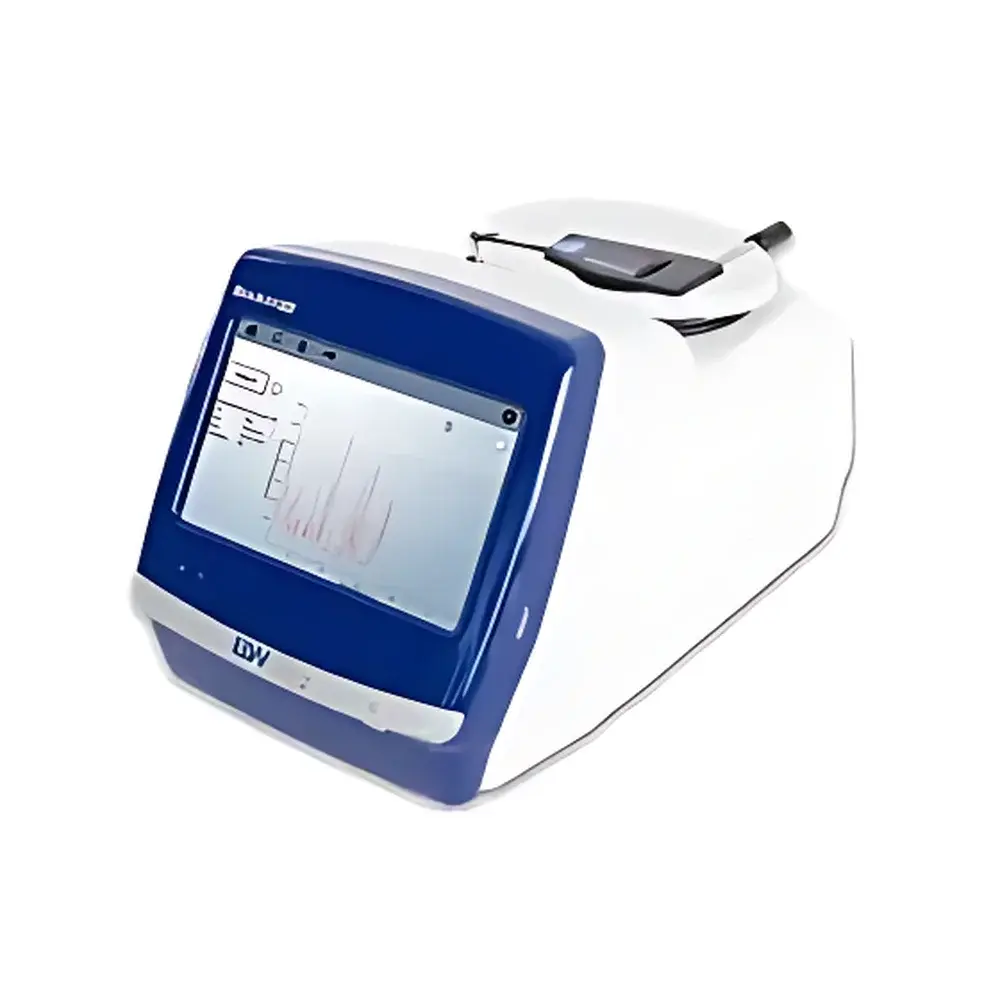
Metrohm i-Raman Prime High-Throughput, Deep-Cooled Portable Raman Spectrometer
| Brand | Metrohm |
|---|---|
| Origin | USA |
| Manufacturer | B&W Tek (distributed by Metrohm) |
| Instrument Type | Portable/HANDHELD Raman Spectrometer |
| Spectral Range | 150–3400 cm⁻¹ |
| Spectral Resolution | < 8.0 cm⁻¹ @ 912 nm |
| Spatial Resolution | 1 µm (lateral), 1 µm (axial) |
| Minimum Wavenumber | 150 cm⁻¹ |
| Spectral Reproducibility | ≤ ±0.15 cm⁻¹ |
Overview
The Metrohm i-Raman® Prime is a research-grade, portable Raman spectrometer engineered for high-throughput, high-sensitivity, and high-resolution molecular fingerprinting in both laboratory and field-deployable environments. Based on dispersive Raman spectroscopy using laser excitation (532 nm or 785 nm), the system captures inelastic scattering signatures to deliver chemically specific vibrational spectra with exceptional fidelity. Its core architecture integrates a thermoelectrically cooled, high-quantum-efficiency CCD detector operating at –25 °C—enabling low-noise acquisition across an extended spectral window from 150 to 3400 cm⁻¹. This wide coverage supports detection of low-frequency lattice modes (e.g., in polymorphs or layered materials) as well as high-frequency C–H/N–H/O–H stretching regions critical for pharmaceutical and biological analysis. The instrument’s optical design minimizes stray light and maintains wavelength calibration stability over time, ensuring long-term reproducibility (≤ ±0.15 cm⁻¹) required for quantitative process analytical technology (PAT) and regulatory-compliant workflows.
Key Features
- Deep-cooled CCD detector (–25 °C) delivering high dynamic range and low dark current for enhanced signal-to-noise ratio (SNR), particularly essential for weak scatterers (e.g., aqueous biological samples, carbon nanomaterials, or SERS substrates)
- High-throughput optical bench optimized for maximum photon collection efficiency—reducing integration times without sacrificing spectral fidelity
- Integrated Android-based touchscreen tablet with preloaded BWSpec®Mobile software for real-time acquisition, library matching, and on-device spectral processing
- Dual-laser capability: switchable 532 nm (>35 mW at probe tip) and 785 nm (>340 mW at probe tip) excitation with precise 1% step power control to balance sensitivity, fluorescence suppression, and sample integrity
- Modular fiber-optic probe interface compatible with video microscopes, long-working-distance lenses (up to 6 m), immersion probes, and STRaman® transmission-ready accessories
- Ruggedized enclosure (8.8 kg, 40 × 26 × 25 cm) rated for operation between 0–35 °C and 10–85% RH; optional battery pack enables true field-portable operation
Sample Compatibility & Compliance
The i-Raman Prime accommodates diverse physical forms—including solids, powders, liquids, gels, tablets, and packaged goods—via interchangeable sampling interfaces. Its 1 µm spatial resolution supports micro-domain analysis when coupled with video microscopy or XYZ positioning stages. For regulated environments, optional BWID-Pharma® software provides full compliance with FDA 21 CFR Part 11, including electronic signatures, audit trails, role-based access control, and secure data archiving. The system meets general requirements for GLP and GMP-aligned analytical workflows, and its spectral reproducibility and calibration traceability support adherence to ISO/IEC 17025 documentation standards. All hardware and firmware are designed to maintain spectral accuracy under variable ambient conditions, facilitating use in manufacturing suites, cleanrooms, and forensic mobile labs.
Software & Data Management
The i-Raman Prime operates natively with BWSpec®Mobile for intuitive field acquisition and rapid identification. In lab settings, it connects via USB 2.0 to Windows PCs running BWSpec®—the foundational platform supporting advanced spectral preprocessing (baseline correction, smoothing, normalization), multivariate modeling, and batch analysis. BWIQ®, the embedded chemometrics suite, implements PLS regression, PCA, and SVM algorithms with integrated preprocessing tools; models trained offline can be deployed for real-time prediction during PAT monitoring. BWID® offers library-driven identification with customizable match thresholds and confidence scoring. When paired with STRaman® transmission probes, STID® algorithms enable non-invasive, through-barrier identification of sealed pharmaceutical blisters or polymer packaging—validated per USP and ASTM E2598 guidelines.
Applications
- Pharmaceutical QA/QC: Polymorph screening, API quantification, counterfeit detection, and real-time blend uniformity monitoring
- Biomedical research: Label-free tissue characterization, exosome analysis, and biomolecular conformational studies
- Materials science: Graphene layer counting, stress/strain mapping in 2D materials, and catalyst surface speciation
- Forensics: Narcotics identification, explosive residue detection, and ink/pigment differentiation on questioned documents
- Geosciences: Mineral phase identification in drill cores and meteorite fragments without destructive preparation
- Process analytics: In-line reaction monitoring, crystallization endpoint determination, and cleaning validation in bioreactors
FAQ
Is the i-Raman Prime compliant with FDA 21 CFR Part 11?
Yes—when configured with BWID-Pharma® software, the system provides full electronic record and signature functionality, including audit trail generation, user authentication, and data integrity safeguards.
Can it perform measurements through packaging?
Yes—when used with STRaman® transmission probes and STID®-enabled BWID software, it supports non-contact, through-barrier identification of contents in blister packs, vials, and pouches.
What is the minimum detectable concentration for typical analytes?
Detection limits depend on sample matrix, laser line, and integration time; for crystalline APIs under 785 nm excitation with 30 s integration, sub-1% w/w quantification is routinely achieved using BWIQ® PLS models.
Does it support external triggering or synchronization with other instruments?
Yes—the system accepts TTL trigger inputs and supports hardware synchronization with third-party devices (e.g., HPLC fraction collectors or environmental chambers) via its digital I/O port.
Is spectral calibration traceable to NIST standards?
Yes—factory calibration uses NIST-traceable rare-earth oxide standards (e.g., KGd(WO4)2), and users can perform routine recalibration using included polystyrene or silicon reference slides.





