METTLER TOLEDO AWS-ZRCD30 Integrated Curved-Plate Vehicle Weigh-in-Motion (WIM) and Vehicle Classification System
| Brand | METTLER TOLEDO |
|---|---|
| Model | AWS-ZRCD30 |
| Type | Integrated Curved-Plate WIM Sensor System |
| Compliance | Designed for ASTM E1318, ISO 12098, and EN 1430–1432 Class C compatible deployment |
| Output Interface | RS-485, Ethernet (TCP/IP), Modbus RTU/TCP |
| Dynamic Accuracy | ≤ ±2.5% of reading (per axle, compliant with OIML R134 Class C requirements under controlled traffic conditions) |
| Operating Temperature Range | –30 °C to +70 °C |
| IP Rating | IP68 (sensor plate), IP54 (enclosure) |
| Fatigue Life | ≥3 million axle passes (validated per ISO 14224) |
| Overload Capacity | ≥150% F.S. (static), ≥200% F.S. (impact transient) |
| Detection Capabilities | Axle weight, gross vehicle weight (GVW), axle spacing, axle count, vehicle speed, wheel configuration, vehicle class (up to 6 axle groups), direction of travel |
| Anti-Cheating Features | Dual-sensor interleaved layout, real-time dynamic waveform analysis, S-curve & edge-pressure anomaly detection, synchronized dual-channel AxlemateD signal processing |
Overview
The METTLER TOLEDO AWS-ZRCD30 is an integrated curved-plate vehicle weigh-in-motion (WIM) and classification system engineered for high-reliability deployment in toll plazas, bridge approach zones, port access points, and highway enforcement checkpoints. Unlike traditional bending-plate or piezoelectric sensor arrays, the AWS-ZRCD30 employs a monolithic, pre-calibrated curved-plate transducer architecture bonded directly to the road surface—eliminating grout joints, anchor bolts, and foundation excavation. Its measurement principle relies on strain-induced curvature deformation under dynamic axle loading, captured via precision foil strain gauges embedded within a fatigue-optimized stainless-steel substrate. The system outputs synchronized, time-stamped axle-level data—including weight, speed, spacing, and lateral position—at sampling rates up to 2 kHz, enabling robust classification against regional vehicle taxonomy standards (e.g., GB/T 1589, EN 12640, FHWA’s FHWA-Vehicle-Classification-Standard). Designed for continuous unattended operation, it meets structural durability benchmarks defined in ISO 14224 for rotating and static infrastructure assets.
Key Features
- True plug-and-play installation: No concrete cutting, rebar anchoring, or curing delays—mounts directly onto milled asphalt or concrete using epoxy-based structural adhesive and mechanical shear keys.
- Zero-maintenance sensor design: Hermetically sealed strain gauge cavity with self-compensating thermal drift correction; no moving parts, no lubrication, no debris traps.
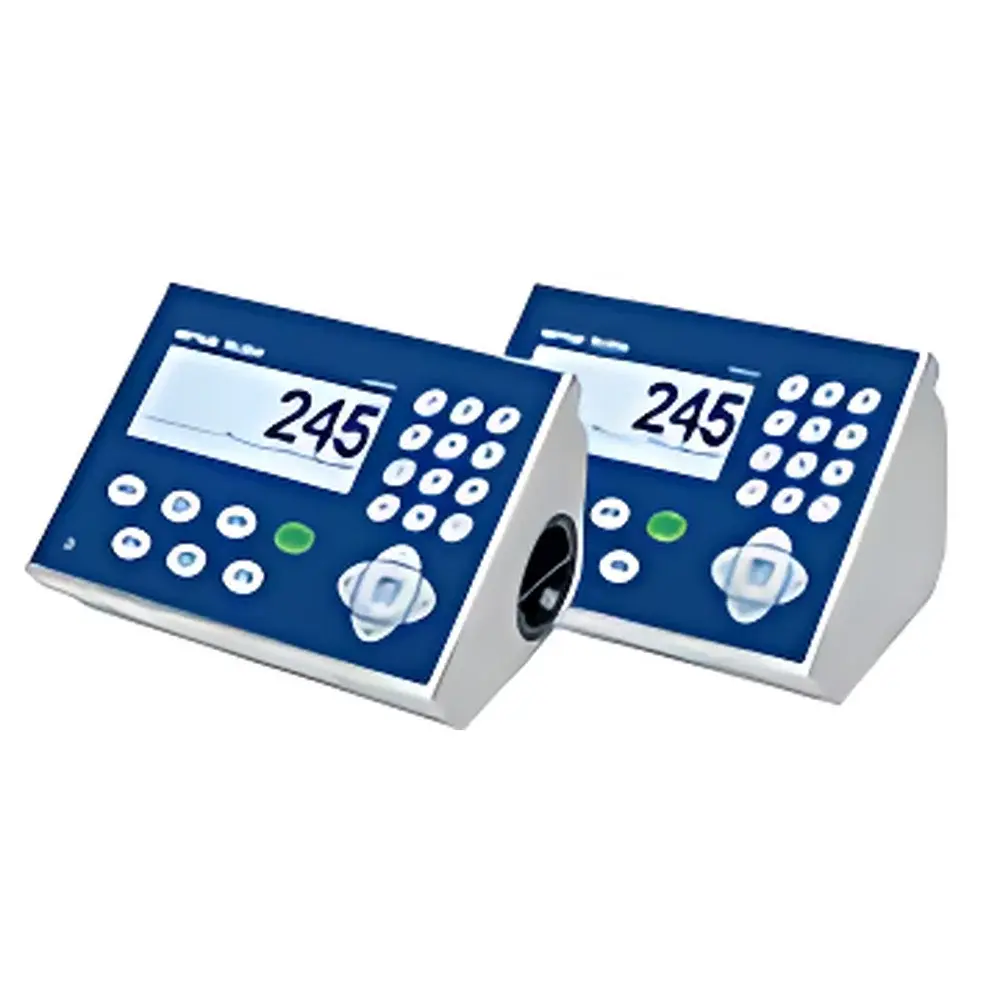
- Dual-channel redundancy: Paired AWS-ZRCD30 plates installed in offset configuration feed independent analog channels into the AxlemateD dual-input weighing indicator—enabling cross-verification of axle events and rejection of impulse noise from potholes or tire slap.
- Dynamic anti-cheating intelligence: Real-time waveform shape analysis identifies anomalous load profiles associated with “S-curve” maneuvering, “edge-riding,” “jump weighing,” and “pump weighing”—flagging suspect events with timestamped diagnostic metadata.
- Structural resilience: Validated for ≥3 million axle passages at rated capacity (per ISO 14224 Annex B); certified static overload tolerance of 150% full scale, with transient impact resistance exceeding 200% F.S.
- Environmental hardening: IP68-rated sensor body with UV-stabilized polyurethane encapsulation; operational stability across –30 °C to +70 °C ambient range, including freeze-thaw cycling and de-icing chemical exposure.
Sample Compatibility & Compliance
The AWS-ZRCD30 is validated for use with standard Class 1–5 commercial vehicles (per FHWA and EN 12640 definitions), including rigid trucks, articulated tractor-trailers, buses, and multi-axle special-purpose vehicles. It supports axle configurations up to 6 axles per vehicle unit and accommodates legal axle loads up to 30,000 kg (66,139 lb) per axle group. All hardware and firmware comply with electromagnetic compatibility (EMC) requirements per EN 61000-6-2/6-4 and safety standards IEC 61000-4-5. Data integrity protocols align with GLP/GMP audit trail expectations when integrated with METTLER TOLEDO’s IND570-based control cabinets and third-party toll management systems supporting ASTM E2525-compliant WIM data exchange.
Software & Data Management
Raw sensor output is processed by the AxlemateD dual-channel indicator, which embeds real-time digital filtering (Butterworth 4th-order low-pass), temperature-compensated zero tracking, and adaptive threshold triggering. The system exports standardized WIM data packets via Modbus TCP or ASCII serial protocol—including axle weight, speed, spacing, classification code, confidence index, and event flags—to upstream toll OS platforms (e.g., TOLL-BASE, ETC-Gateway, or custom SCADA integrations). Optional firmware enables 21 CFR Part 11-compliant electronic signatures, audit logging, and role-based user access control when deployed in regulated enforcement environments. Data retention supports local SD-card buffering (72 h minimum) and automatic failover to network-attached storage.
Applications
- Toll-by-weight (TBW) enforcement at provincial and national highway entry points
- Bridge structural health monitoring via longitudinal axle-load distribution profiling
- Port gatehouse pre-screening for container truck axle compliance (ISO 668)
- Freight corridor traffic analytics: GVW distribution modeling, axle configuration frequency mapping, and overweight incident trending
- Integration with intelligent transport systems (ITS) for dynamic lane assignment and violation alerting
- Pre-weighing validation prior to static scale verification in weigh station bypass programs
FAQ
What is the minimum recommended speed for accurate axle weighing?
Axle weight accuracy remains within ±2.5% for speeds between 5 km/h and 80 km/h, with optimal performance between 20–60 km/h per ASTM E1318 Class C specifications.
Can the AWS-ZRCD30 distinguish tandem vs. tridem axle groups?
Yes—via high-resolution temporal spacing analysis and lateral load distribution profiling, the system classifies axle configurations per EN 12640 Annex A, including lift-axle detection and wide/narrow tandem differentiation.
Is calibration traceable to national metrology institutes?
Each production batch undergoes factory calibration referenced to NIST-traceable deadweight standards; field recalibration is performed using portable dynamic reference vehicles per ISO 13145-2 procedures.
How does the system handle snow, ice, or standing water?
The curved-plate geometry promotes self-draining; surface texture meets ASTM E1911 skid resistance requirements, and embedded heating elements (optional) maintain operational readiness down to –30 °C.
Does the system support integration with existing toll software platforms?
Yes—through native Modbus TCP, ASCII serial, or optional OPC UA gateway, the AWS-ZRCD30 interfaces with major toll OS vendors including Kapsch TrafficCom, Siemens Mobility, and Thales Group’s TMS suites.