
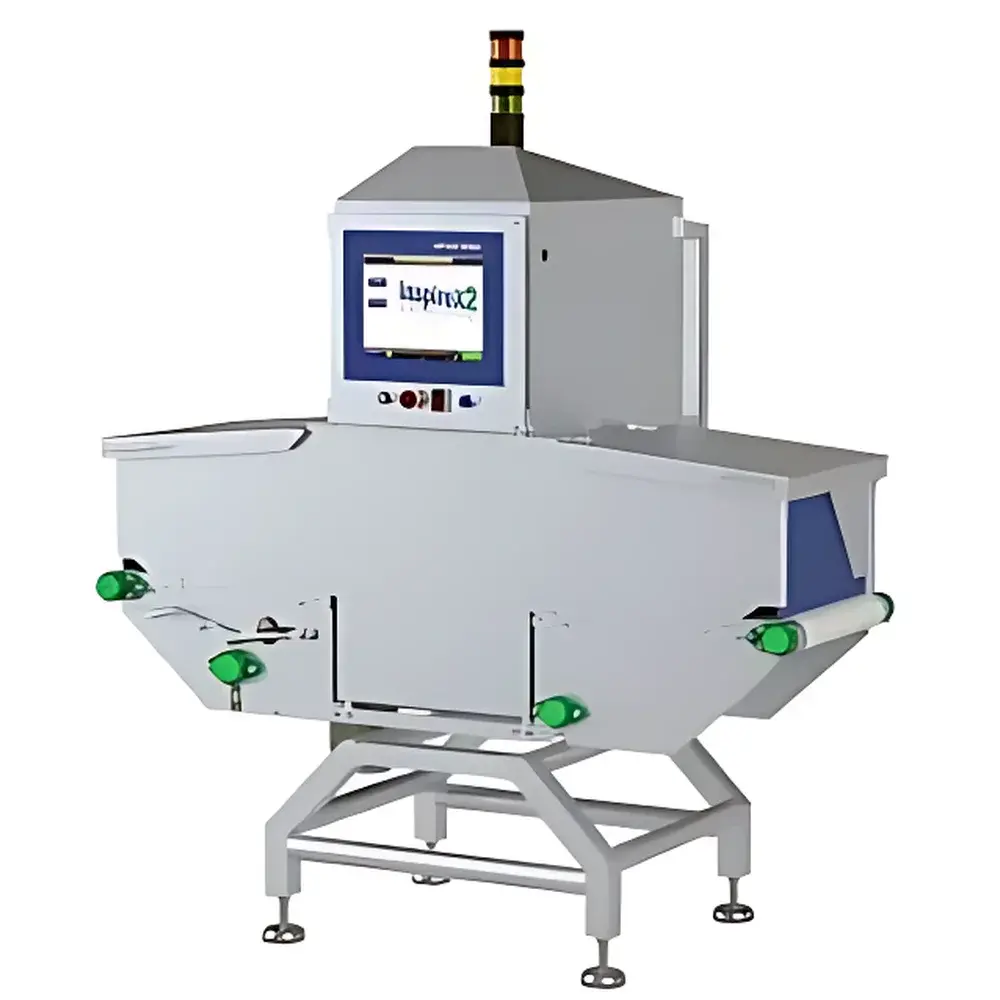
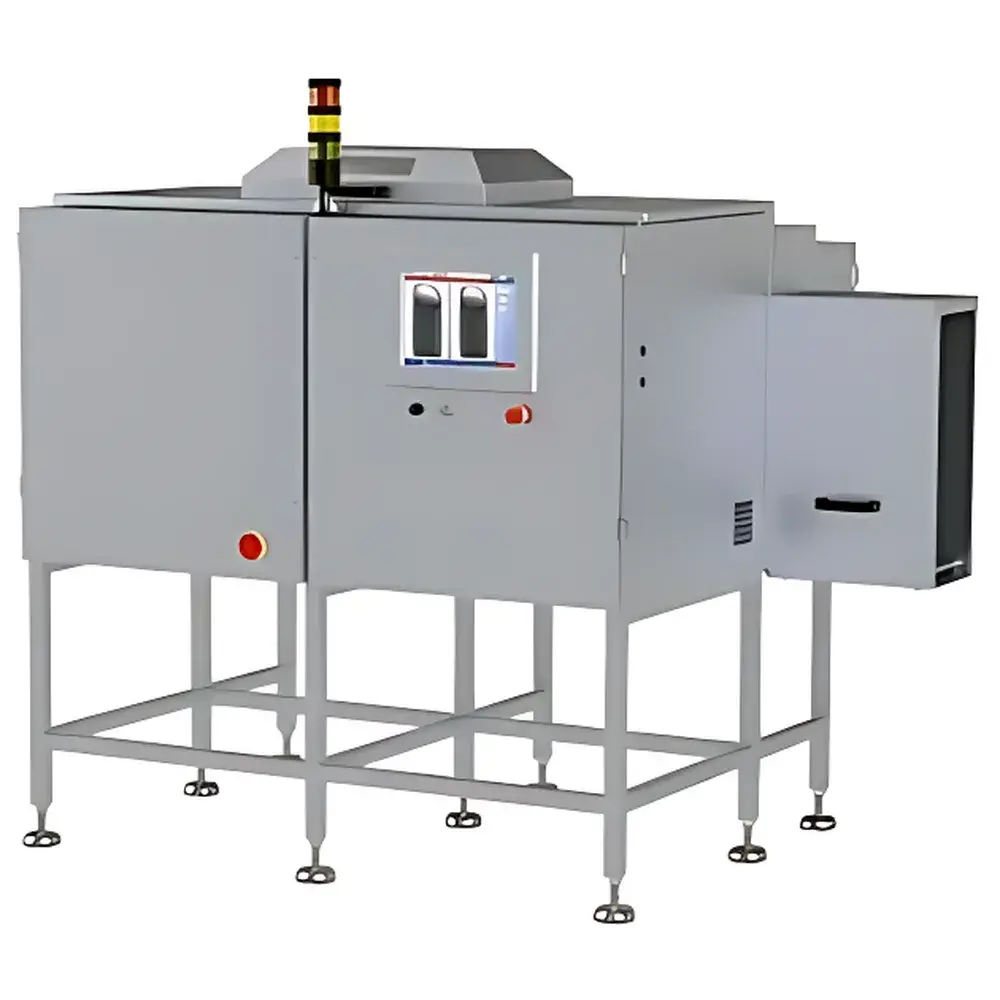
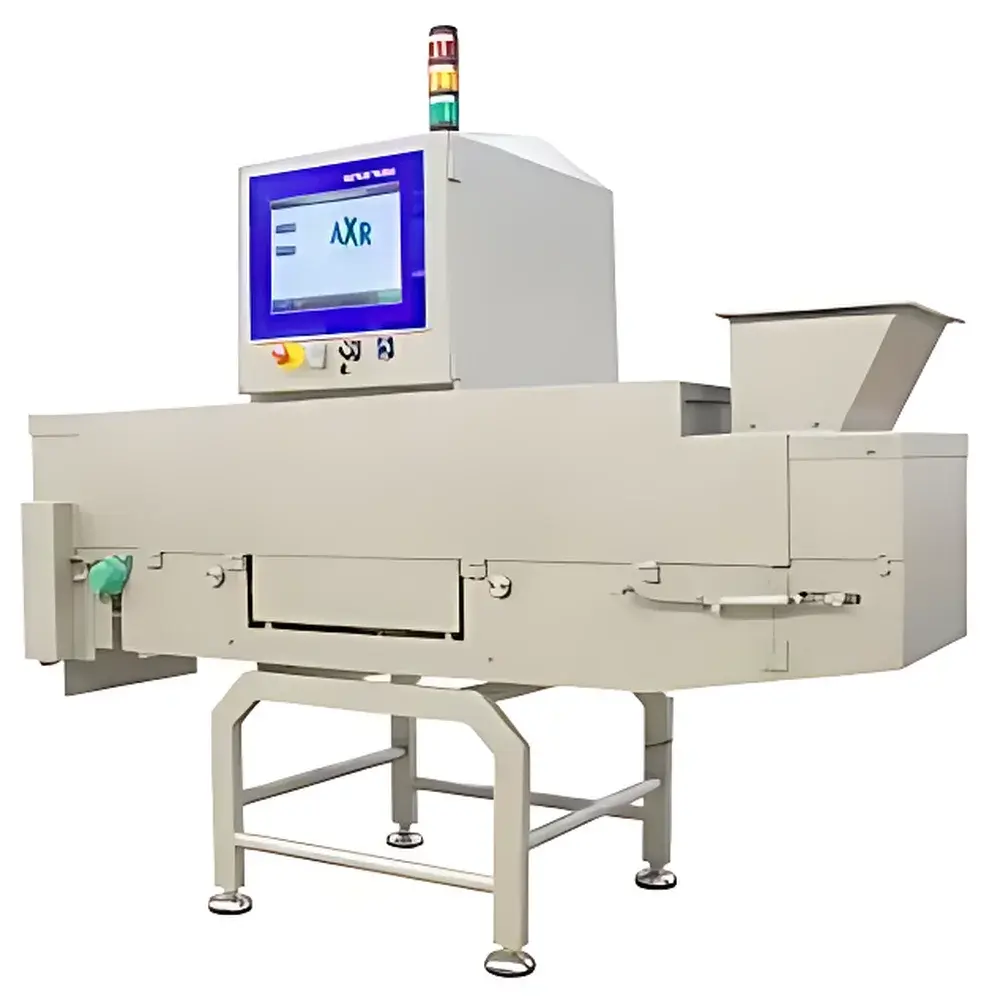
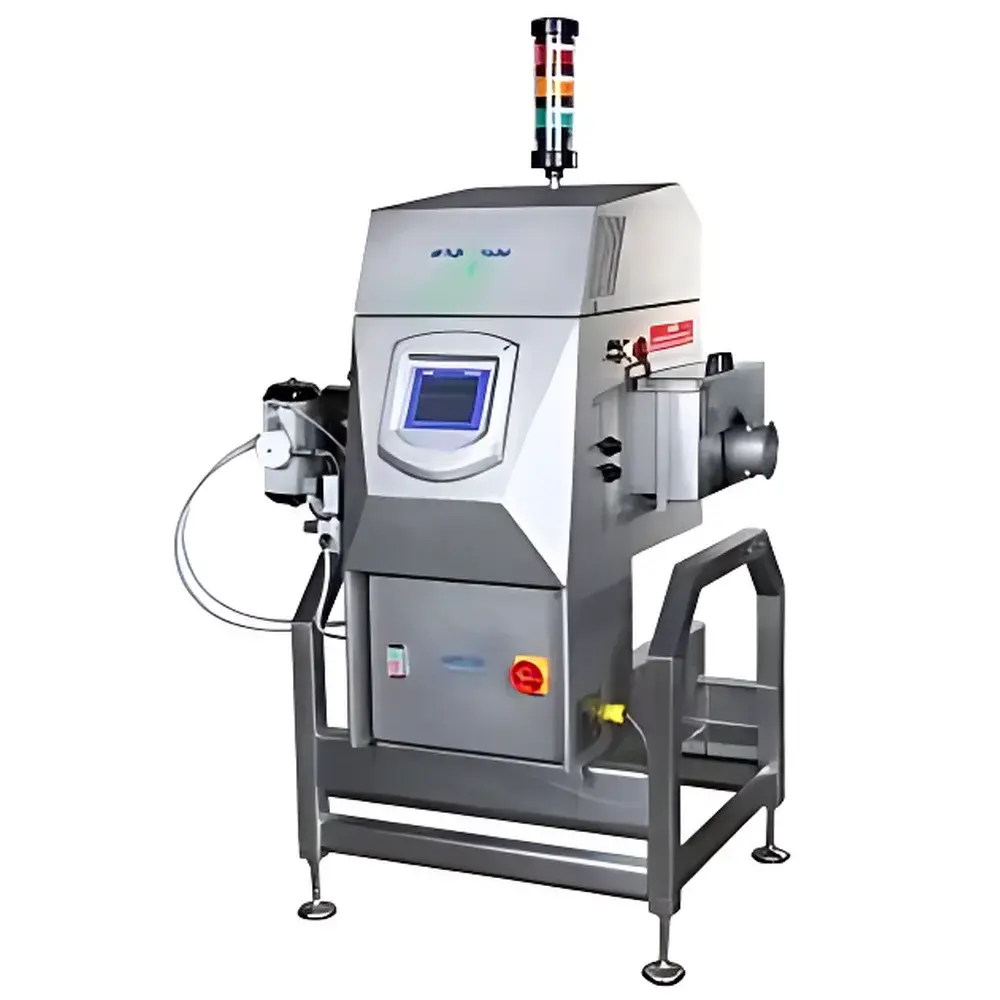
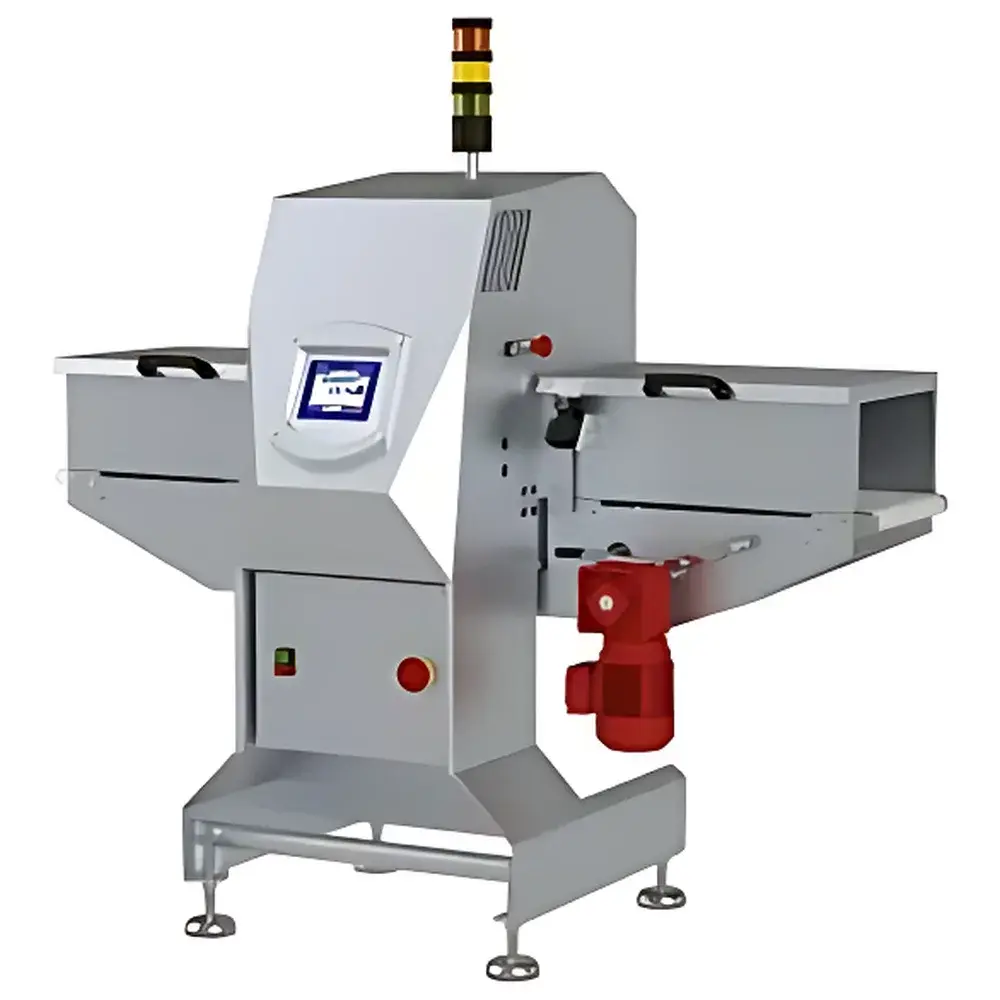
METTLER TOLEDO AXR Industrial X-ray Inspection System
| Brand | METTLER TOLEDO |
|---|---|
| Origin | United Kingdom |
| Manufacturer Type | Authorized Distributor |
| Origin Category | Imported |
| Model | AXR |
| Pricing | Available Upon Request |
Overview
The METTLER TOLEDO AXR Industrial X-ray Inspection System is a high-performance, CE-compliant inline detection platform engineered for precision foreign object detection (FOD) and comprehensive quality assurance in food, pharmaceutical, nutraceutical, and consumer packaged goods manufacturing. Based on dual-energy X-ray absorption imaging and real-time digital radiography, the AXR system delivers deterministic detection of contaminants—including stainless steel, aluminum, copper, glass shards, calcified bone, stones, dense plastics, and rubber—regardless of product density, packaging material, or orientation. Unlike optical or metal-detection-only solutions, the AXR leverages differential attenuation physics to resolve low-atomic-number (low-Z) materials within high-density matrices (e.g., glass-in-glass, stone-in-cereal, or fragmented ceramic in wet pet food), making it indispensable for HACCP-critical control points and regulatory-aligned preventive controls.
Key Features
- Multi-spectrum X-ray imaging with programmable kVp (30–160 kV) and mA output, optimized for product-specific penetration depth and contrast resolution
- High-dynamic-range flat-panel detector (FPD) with 14-bit grayscale depth and sub-millimeter spatial resolution (≤0.4 mm at ISO 15530 reference)
- Real-time image processing engine supporting simultaneous multi-parameter inspection: foreign object detection, mass measurement, fill-level verification, component counting, seal integrity analysis, and package defect recognition (e.g., crimp misalignment, lid warping, vacuum loss)
- IP65-rated stainless-steel enclosure with sanitary design compliant with FDA 21 CFR Part 110, EHEDG Guideline No. 8, and USDA-FSIS requirements
- Modular tunnel architecture accommodating belt widths from 150 mm to 1200 mm and product heights up to 350 mm—configurable for small-pack, bulk, irregular, or pipeline-integrated applications
- Integrated reject mechanism with pneumatic or servo-driven diverters, synchronized to conveyor speed with ≤±5 ms timing accuracy
Sample Compatibility & Compliance
The AXR system supports broad physical form coverage: discrete unit-dose packages (e.g., blister packs, sachets, pouches), secondary cartons, flow-wrapped bundles, rigid containers (PET, HDPE, glass, metal cans), bulk conveyors (vibratory feeders, gravity chutes), and inline pipelines (30–150 mm nominal bore). It meets ISO/IEC 17025 traceability requirements for measurement uncertainty reporting and is validated per ASTM F2965–21 (Standard Practice for Performance Verification of X-ray Inspection Systems in Food Processing). All software functions comply with FDA 21 CFR Part 11 electronic records/signatures criteria, including audit trail logging, role-based access control, and data immutability enforcement. The system supports GLP/GMP-aligned validation documentation packages (IQ/OQ/PQ) and integrates with enterprise MES/QMS platforms via OPC UA or RESTful API.
Software & Data Management
AXR systems run METTLER TOLEDO’s proprietary X-View™ 5.0 inspection software—a deterministic, rule-based vision engine with configurable detection logic trees. Operators define inspection criteria using intuitive graphical thresholds (e.g., minimum pixel area, contrast delta, shape factor, edge gradient), not black-box AI models—ensuring full interpretability and regulatory defensibility. All inspection data—including raw radiographs, metadata (timestamp, line speed, product ID, operator login), and pass/fail decisions—is stored in encrypted SQLite databases with optional SQL Server mirroring. Data export supports CSV, XML, and PDF report generation with embedded digital signatures. Automated daily self-diagnostics verify X-ray tube stability, detector gain calibration, and beam homogeneity per IEC 62495 standards.
Applications
- Small-pack inspection: Retail-ready pouches, trays, blister cards, and cartons—detecting wire fragments, mold flash, or misaligned seals in foil-laminated structures
- Bulk & irregular packaging: Composite cans, PET bottles, glass jars, and tetra-packs—identifying internal breakage (e.g., glass-on-glass), cap defects, or filler inconsistencies
- Pipeline inspection: Inline detection of slurries, pastes, sauces, and powders pre-filling; enables early-stage contamination removal to minimize scrap and rework
- Loose-product screening: Raw agricultural commodities (nuts, grains, dried fruit, coffee beans, spices) prior to milling or blending—validated for ≥0.3 mm stainless steel, ≥1.0 mm glass, ≥1.5 mm stone
- Pharmaceutical compliance: Final container inspection per USP particulate matter testing equivalency, including vial/cap integrity and lyophilized cake uniformity assessment
FAQ
What regulatory standards does the AXR system support?
The AXR is designed to meet FDA 21 CFR Part 11, EU Annex 11, ISO 22000:2018, and HACCP Principle 3 (critical limit establishment) requirements. Validation protocols align with AOAC Official Method 2020.01 for X-ray detection performance.
Can the system detect contaminants inside metallized film or aluminum packaging?
Yes—dual-energy subtraction algorithms compensate for beam hardening effects in reflective barriers, enabling reliable detection of non-metallic contaminants (e.g., rubber gaskets, PVC fragments) even within foil-laminated pouches.
Is remote diagnostics and software update capability available?
All AXR units include embedded Ethernet connectivity with TLS 1.2-secured remote maintenance access, firmware OTA updates, and predictive tube-life analytics based on cumulative mAs exposure logs.
How is measurement traceability maintained across shifts and operators?
Each inspection event is time-stamped with GPS-synced NTP, logged with operator credentials, and linked to calibrated reference phantoms (ASTM F2965 test objects) scanned daily—ensuring metrological continuity per ISO/IEC 17025 Clause 7.7.



