
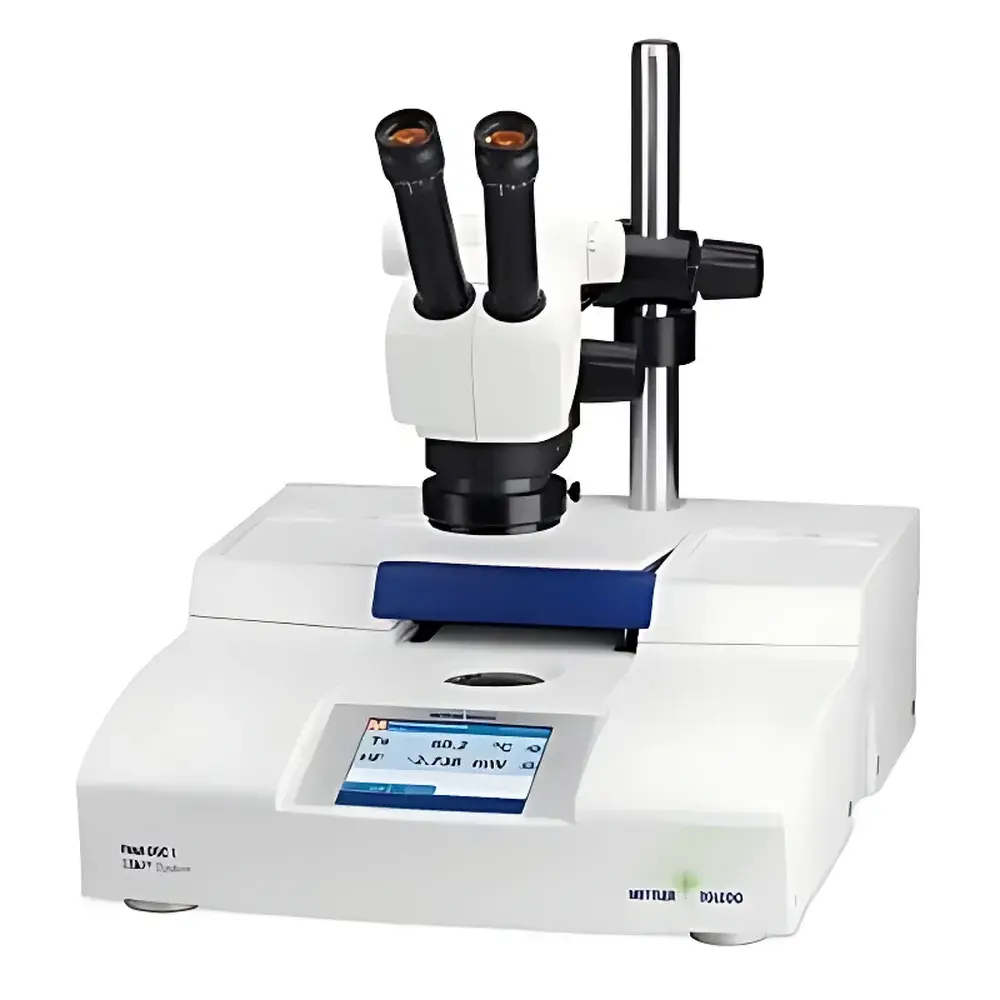
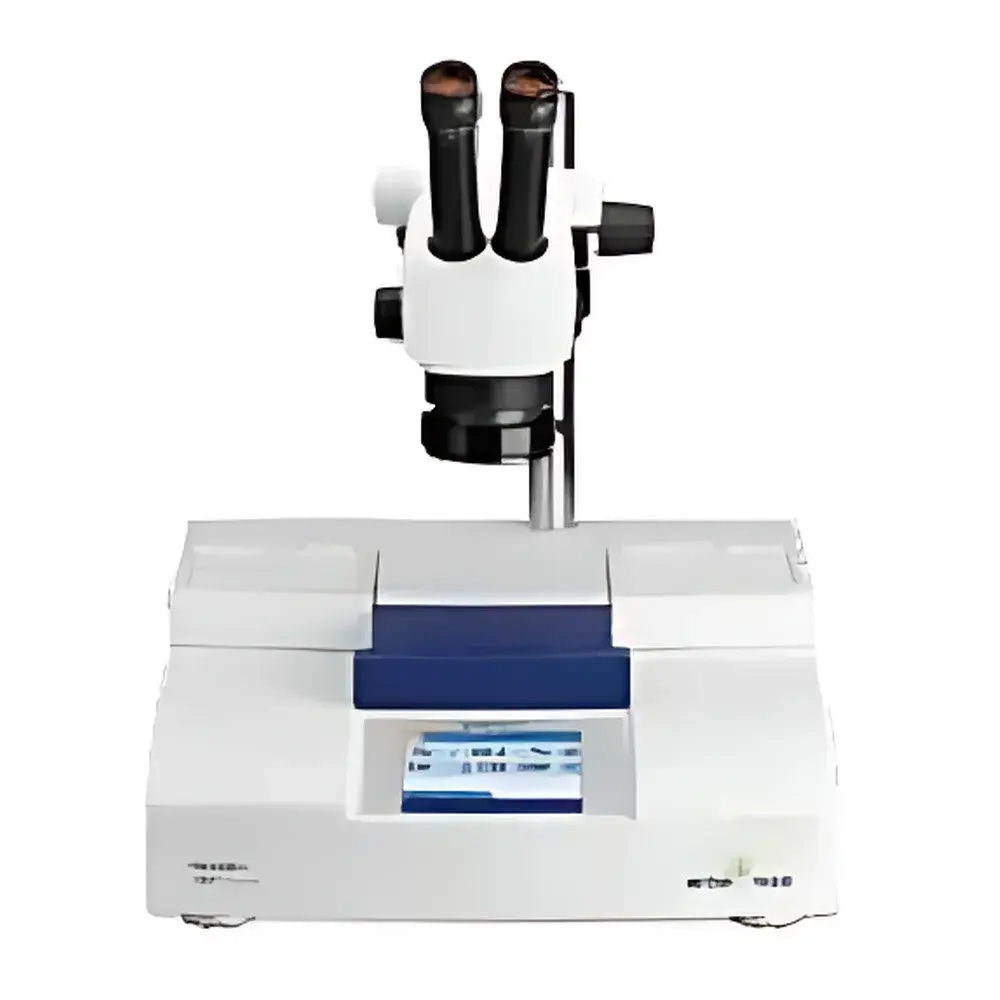
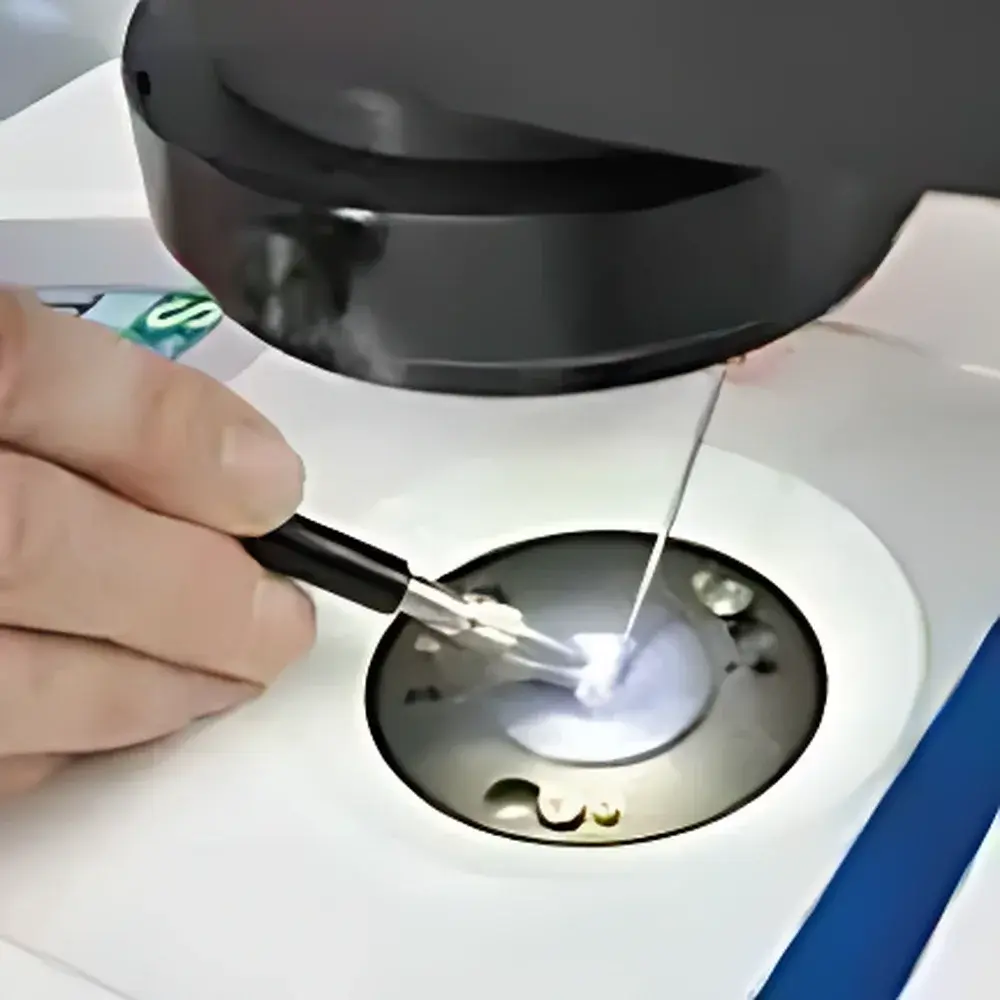
METTLER TOLEDO Flash DSC 2+ Ultra-Fast Scanning Differential Scanning Calorimeter
| Brand | METTLER TOLEDO |
|---|---|
| Origin | Switzerland |
| Model | Flash DSC 2+ |
| Temperature Range | −95 °C to 1,000 °C |
| Heating Rate | 6 K/min to 2,400,000 K/min |
| Cooling Rate | 6 K/min to 240,000 K/min |
| Maximum Heat Flow Signal | 20 mW |
| Heat Flow Noise | < 0.5 µW |
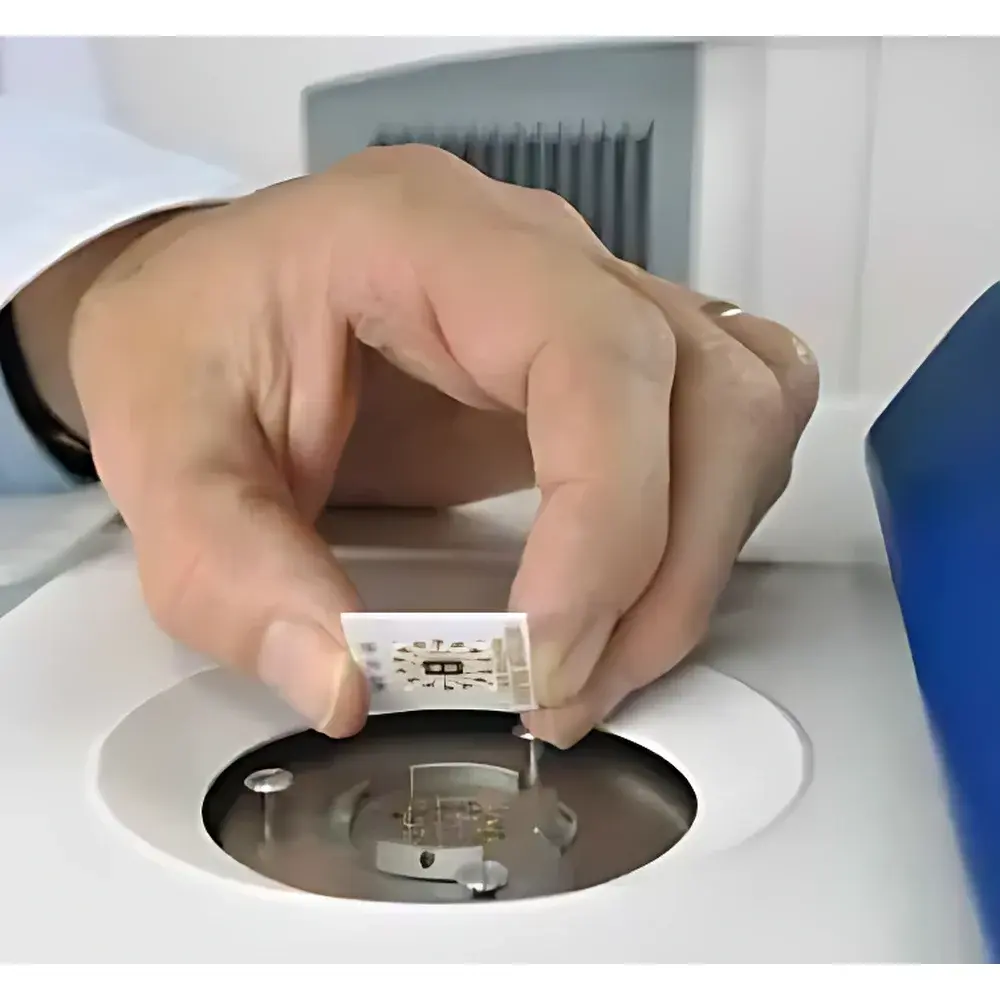
| Sensor Type | UFS1 MEMS-based chip calorimeter with 16 thermocouple pairs (8 per sample/reference side) |
| Measurement Principle | Dynamic power compensation |
Overview
The METTLER TOLEDO Flash DSC 2+ is an ultra-fast scanning differential scanning calorimeter engineered for nanoscale thermal analysis under extreme heating and cooling conditions. Unlike conventional DSC systems operating at rates up to 100 K/min, the Flash DSC 2+ leverages Micro-Electro-Mechanical Systems (MEMS) technology—specifically the patented UFS1 sensor chip—to achieve unprecedented scan rates: up to 2.4 × 10⁶ K/min during heating and 2.4 × 10⁵ K/min during cooling. This capability enables direct observation of transient thermal events that are kinetically inaccessible to standard DSC, including rapid crystallization onset, vitrification dynamics, solid-state reaction initiation, and metastable phase formation. The instrument operates across a broad temperature range (−95 °C to 1,000 °C), supporting studies from cryogenic polymer relaxation to high-temperature ceramic sintering. Its core measurement principle is dynamic power compensation: independent resistive heaters on both sample and reference sides are modulated in real time to maintain near-zero temperature difference between them, while heat flow is quantified via dual arrays of eight thermocouples per side. This architecture ensures high signal fidelity and minimal thermal lag even at microsecond-scale thermal transients.
Key Features
- MEMS-based UFS1 sensor chip with integrated 16 thermocouple pairs (8 on sample side, 8 on reference side) for sub-millisecond thermal response
- Dynamic power compensation circuitry optimized to suppress noise at ultra-high scan rates (signal noise < 0.5 µW)
- Heating rate programmability from 6 K/min to 2,400,000 K/min; cooling rate from 6 K/min to 240,000 K/min
- Full temperature coverage from −95 °C to 1,000 °C, validated across the entire range using NIST-traceable standards
- Ceramic sensor mount with robust electrical interconnects ensuring long-term stability and reproducibility
- On-chip sample containment compatible with nanogram-scale specimens (typical mass: 1–100 ng), minimizing thermal mass and enhancing time resolution
- Modular design supporting optional vacuum or controlled-atmosphere operation for oxidation-sensitive materials
Sample Compatibility & Compliance
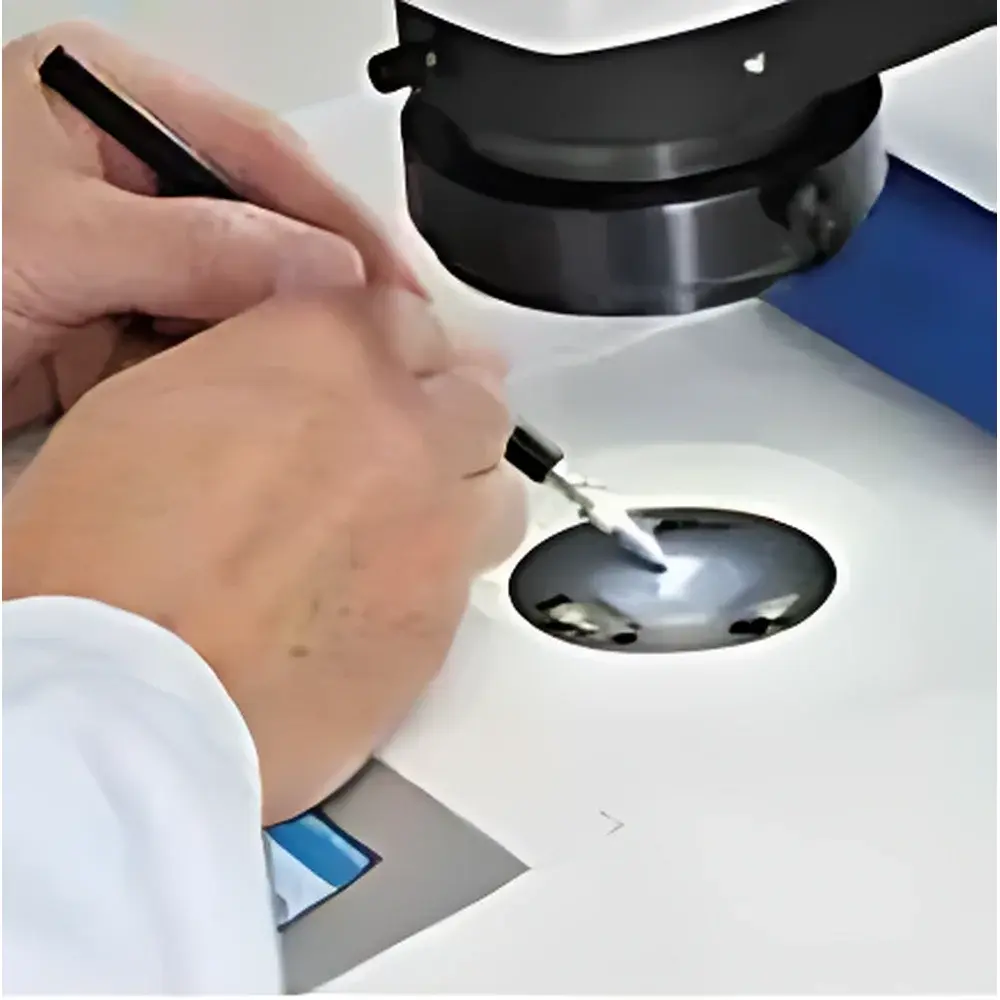
The Flash DSC 2+ accommodates a wide range of solid and semi-crystalline materials—including thermoplastics, elastomers, pharmaceutical polymorphs, metallic glasses, and inorganic thin films—without requiring encapsulation or crucible mounting. Sample preparation is performed directly on the UFS1 chip surface using microdispensing or focused ion beam (FIB) deposition techniques. The system complies with ISO 11357 series standards for DSC calibration and performance verification. Data acquisition meets ALCOA+ principles for data integrity, and the instrument supports audit trail functionality aligned with FDA 21 CFR Part 11 requirements when operated with METTLER TOLEDO’s STARe software suite. All thermal calibrations (temperature, enthalpy, and heat capacity) follow traceable protocols certified by Swiss Federal Institute of Metrology (METAS).
Software & Data Management
Controlled exclusively via METTLER TOLEDO’s STARe software platform, the Flash DSC 2+ provides synchronized acquisition, real-time baseline correction, and kinetic modeling tools. The software includes built-in modules for isoconversional analysis (e.g., Friedman, Ozawa–Flynn–Wall), nucleation-and-growth modeling (e.g., Avrami, Jeziorny), and non-isothermal crystallization parameter extraction. Raw heat flow and temperature signals are stored in HDF5 format with embedded metadata (instrument configuration, calibration history, environmental conditions). Export options include ASCII, CSV, and ASTM E1461-compliant XML for third-party analysis. All user actions—including method creation, parameter modification, and data reprocessing—are logged with timestamp, operator ID, and digital signature for GLP/GMP compliance.
Applications
- Quantification of crystallization kinetics in polymeric systems under process-relevant cooling profiles (e.g., injection molding, fiber spinning)
- Identification and stabilization of amorphous pharmaceutical intermediates through controlled vitrification
- In situ monitoring of rapid solid-state reactions, such as metal–organic framework (MOF) decomposition or battery cathode phase transitions
- Thermal stability assessment of nanocomposites and layered 2D materials under ultrafast thermal cycling
- Calibration-free determination of glass transition breadth (ΔTg) and fictive temperature in chalcogenide glasses
- Correlation of thermal history with mechanical performance in additively manufactured polymer parts
FAQ
What distinguishes Flash DSC 2+ from conventional DSC instruments?
The Flash DSC 2+ utilizes a MEMS-based sensor architecture enabling heating/cooling rates exceeding six orders of magnitude higher than standard DSC—making it uniquely capable of resolving processes occurring on microsecond timescales.
Can Flash DSC 2+ perform quantitative enthalpy measurements?
Yes—calibrated enthalpy values are traceable to NIST SRM 768 (indium) and SRM 3451 (sapphire), with uncertainty budgets compliant with ISO/IEC 17025 for accredited laboratories.
Is the UFS1 sensor replaceable in-house?
UFS1 chips are field-replaceable consumables with pre-characterized calibration coefficients stored in RFID tags; no manual recalibration is required after chip exchange.
Does the system support inert or reactive gas environments?
Optional gas-tight sensor housing allows operation under nitrogen, argon, or forming gas (N₂/H₂), with flow control integrated into STARe software.
How is thermal contact ensured between sample and sensor surface?
Samples are deposited directly onto the gold-plated sensor surface using solvent-assisted wetting or thermocompression bonding—ensuring optimal thermal coupling without interfacial resistance artifacts.



