
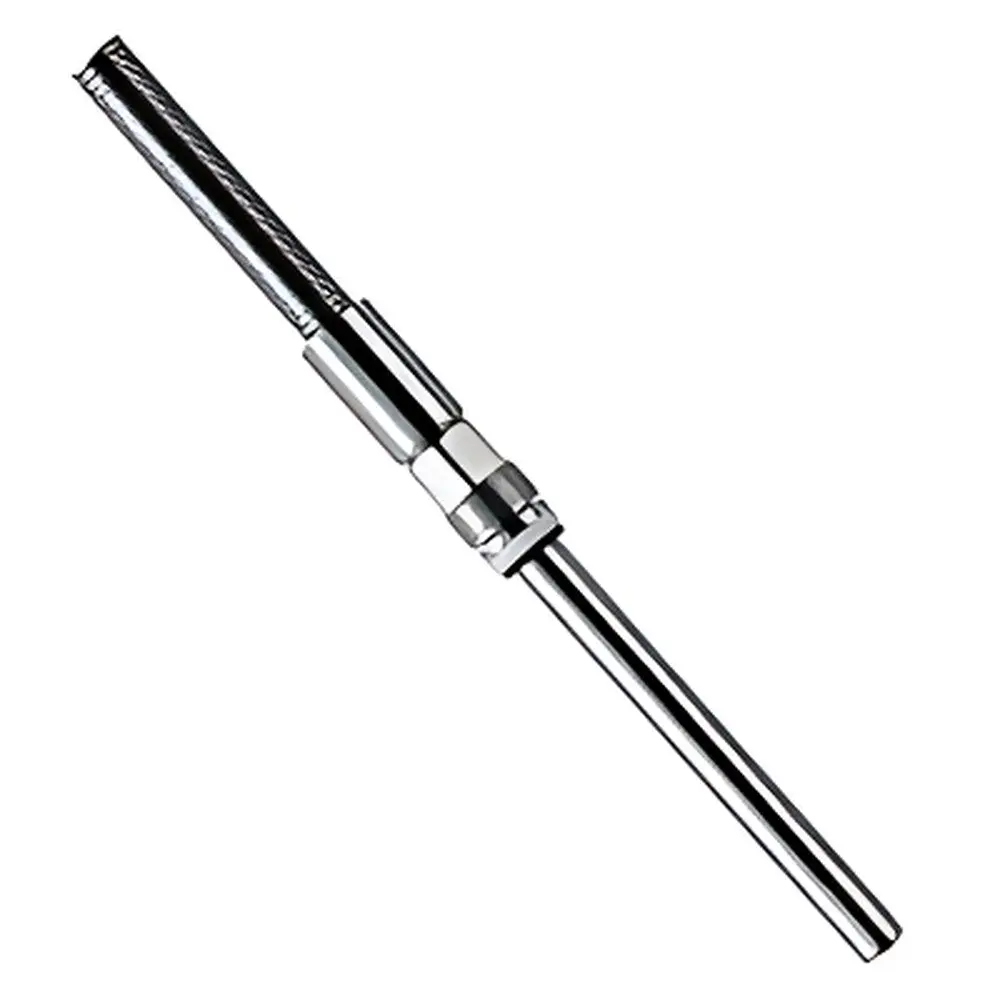
METTLER TOLEDO InPro8200/S(H)/Epoxy In-Line Turbidimeter Sensor
| Brand | METTLER TOLEDO |
|---|---|
| Origin | Switzerland |
| Model | InPro8200 |
| Measurement Principle | Backscatter Optical Detection |
| Optical Path | Dual-Fiber Configuration |
| Measuring Range | 5–4000 FTU, 0–30 g/L (cell density) |
| Probe Length Options | 120 / 205 / 297 / 407 mm |
| Wetted Materials | ASTM A240 UNS S31603 (316L stainless steel) or UNS N10276 (Hastelloy C-276) |
| Process Connection | Pg 13.5 thread |
| Max. Operating Pressure | 16 bar (232 psi) |
| Window Material | Epoxy-sealed optical window |
| Fiber Optic Cable | Fixed 3 m dual-fiber cable with 2 FC/PC connectors |
| Probe Diameter | 12 mm |
| Compliance | Designed for GMP/GLP environments |
Overview
The METTLER TOLEDO InPro8200/S(H)/Epoxy is an in-line, process-integrated turbidity sensor engineered for continuous, real-time monitoring of suspended solids concentration in biopharmaceutical, chemical, and fine chemical manufacturing environments. Unlike conventional nephelometric or transmission-based turbidimeters, the InPro8200 employs a calibrated backscatter optical detection principle—illuminating the sample at a fixed angle and detecting scattered light intensity near the incident beam path. This configuration minimizes interference from air bubbles, coloration, or particle settling, delivering high reproducibility across dynamic fermentation, cell culture, and crystallization processes. Its dual-fiber architecture physically separates the light source and detector paths, eliminating internal cross-talk and enabling stable long-term signal integrity—even under thermal cycling or mechanical vibration. The sensor is designed for direct insertion into vessels, pipelines, or bioreactors via standardized Pg 13.5 threaded fittings, supporting seamless integration with METTLER TOLEDO’s Trb8300 transmitter and InFit or InTrac sanitary process housings.
Key Features
- Backscatter optical measurement optimized for low-to-moderate turbidity ranges (5–4000 FTU), with linear response up to 30 g/L cell dry weight—ideal for microbial and mammalian cell density tracking.
- 12 mm outer diameter probe enables installation in space-constrained bioreactor ports and small-diameter tubing without flow restriction.
- Epoxy-sealed optical window provides hermetic protection against aggressive media—including caustic cleaning-in-place (CIP) solutions and steam sterilization-in-place (SIP) cycles—while maintaining optical clarity over extended service life.
- ATEX II 2G Ex db IIB T4 Gb and IECEx certification confirms suitability for Zone 1 hazardous areas, supporting deployment in solvent-handling or flammable vapor environments.
- Wetted materials conform to USP Class VI and FDA-compliant surface finish standards (Ra ≤ 0.4 µm for 316L; Ra ≤ 0.8 µm for Hastelloy C-276), ensuring compatibility with cGMP-compliant pharmaceutical processing.
- Fixed 3 m dual-fiber cable with FC/PC connectors ensures mechanical stability and eliminates alignment drift—critical for unattended 24/7 operation in automated batch and continuous manufacturing systems.
Sample Compatibility & Compliance
The InPro8200/S(H)/Epoxy is validated for use with aqueous suspensions, fermentation broths, cell cultures (E. coli, CHO, Sf9), and crystallization slurries. It exhibits minimal fouling due to its smooth, crevice-free epoxy window and uniform surface geometry—reducing manual cleaning frequency and supporting automated CIP validation per ASME BPE-2022 guidelines. When paired with the Trb8300 transmitter, the system meets IEC 61511 functional safety requirements for SIL 2 applications and supports full audit trail generation per FDA 21 CFR Part 11 and EU Annex 11 when connected to METTLER TOLEDO LabX or iC software platforms. All wetted components comply with ISO 10993-5 cytotoxicity testing and meet EC 1935/2004 food contact material regulations where applicable.
Software & Data Management
The sensor operates as part of a closed-loop measurement ecosystem: raw analog or digital signals are processed by the Trb8300 transmitter, which supports HART 7, PROFIBUS PA, and FOUNDATION Fieldbus protocols. Integrated firmware enables automatic temperature compensation (via optional Pt100 RTD input), zero-point verification routines, and configurable alarm thresholds. Data streams are traceable through METTLER TOLEDO’s iC software suite, providing electronic batch records (EBR), trend analysis, and deviation reporting aligned with ALCOA+ principles. Audit trails include user identity, timestamp, parameter changes, and calibration events—fully compliant with GxP data integrity expectations.
Applications
- Real-time monitoring of biomass growth during upstream bioprocessing (e.g., inoculum expansion, fed-batch fermentation).
- Endpoint detection in microbial lysis or harvest clarification steps.
- Crystallization nucleation and crystal size distribution (CSD) proxy measurement in API synthesis.
- In-line quality control of purified protein solutions pre-filtration or pre-fill-finish.
- Monitoring of particulate carryover in buffer preparation and distribution loops.
FAQ
What is the recommended calibration protocol for the InPro8200 in GMP environments?
Calibration shall be performed using NIST-traceable formazin or polymer standard suspensions at ≥3 points across the operational range (e.g., 10, 100, and 1000 FTU), documented per SOP with instrument ID, operator, date, and reference standard lot number.
Can the InPro8200 be autoclaved or subjected to SIP conditions?
No—SIP is permitted only when installed in an InTrac housing rated for 135 °C/30 min; direct autoclaving of the bare sensor is not supported. Thermal cycling must remain within –20 °C to +130 °C ambient limits.
Is fiber optic cable replacement possible in the field?
The 3 m dual-fiber cable is factory-terminated and non-serviceable; replacement requires return to METTLER TOLEDO certified service centers to maintain optical alignment and pressure integrity.
How does the InPro8200 compare to transmission-mode turbidity sensors in high-solids applications?
Backscatter detection avoids signal saturation at elevated turbidity levels (>1000 FTU) and remains insensitive to minor window fouling—where transmission sensors require frequent cleaning or suffer rapid signal decay.
Does the sensor support predictive maintenance diagnostics?
Yes—the Trb8300 transmitter logs optical power output, signal-to-noise ratio, and window contamination index, enabling trend-based maintenance scheduling and reducing unplanned downtime.



