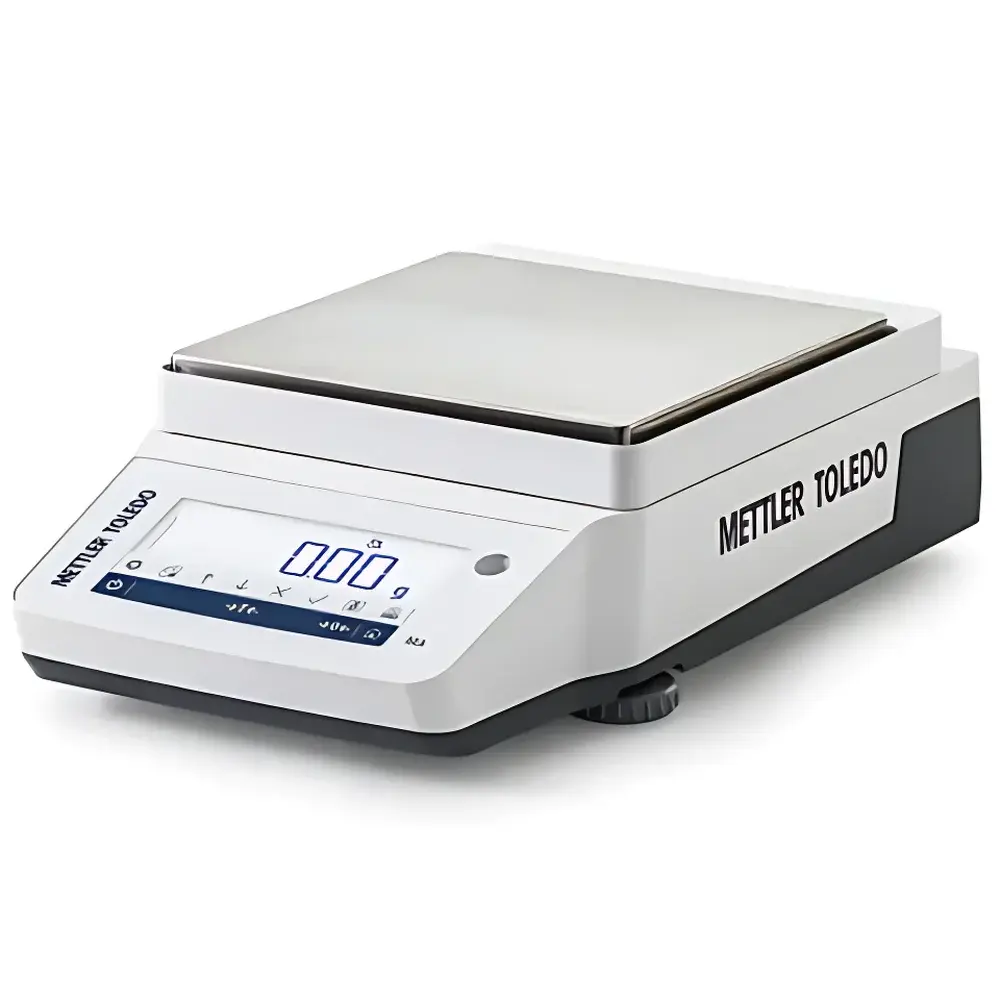
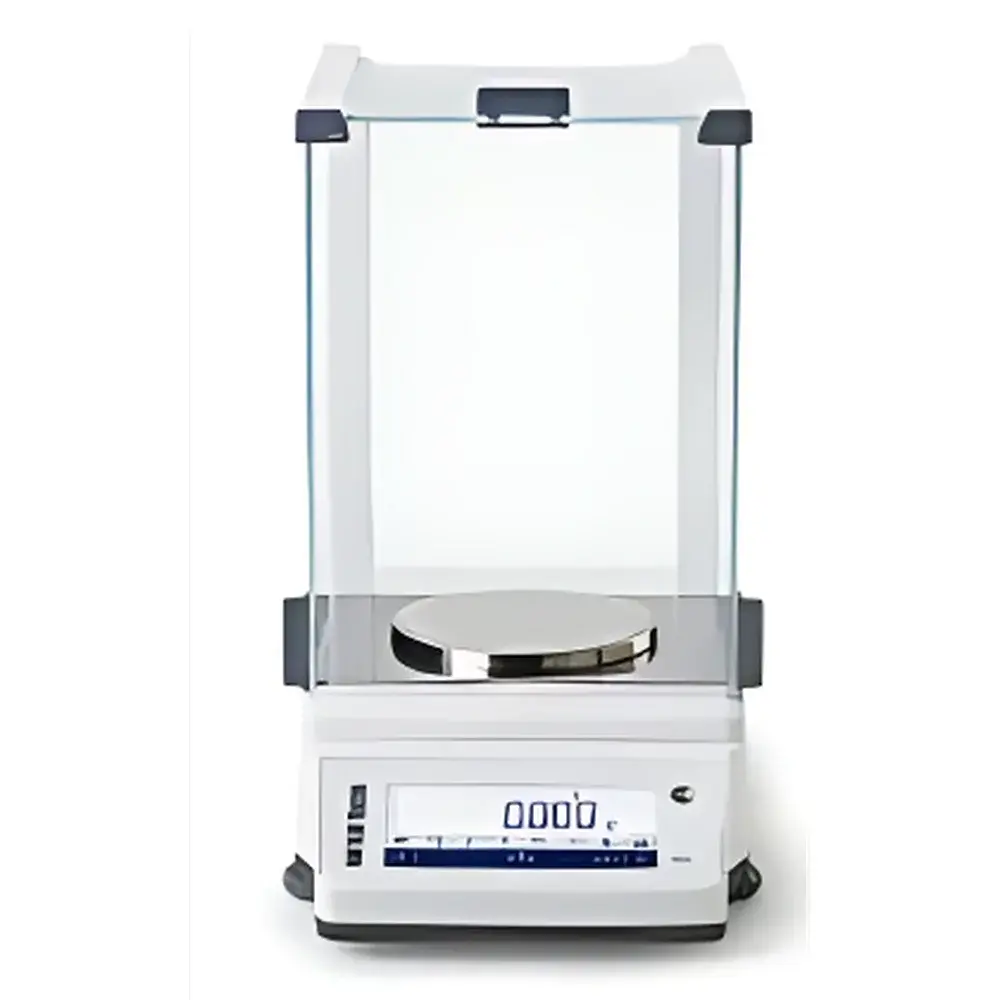
METTLER TOLEDO MA103 Precision Balance
| Brand | METTLER TOLEDO |
|---|---|
| Origin | Shanghai, China |
| Model | MA103 Precision Balance |
| Maximum Capacity | 103 g |
| Readability | 1 mg |
| Repeatability | ±0.001 g |
| Calibration | Internal automatic calibration with built-in test weight |
| Display | High-contrast LCD with backlight |
| Interface | USB-A, RS232 |
| Dimensions (W × D × H) | 190 × 330 × 90 mm |
| Net Weight | ~2.5 kg |
| Compliance | ISO/IEC 17025, GLP/GMP-ready, FDA 21 CFR Part 11 compatible (via optional software) |
Overview
The METTLER TOLEDO MA103 Precision Balance is an entry-level analytical-grade weighing instrument engineered for routine laboratory applications requiring reliable 1 mg readability and consistent repeatability of ±0.001 g. Based on electromagnetic force compensation (EMFC) technology, the MA103 delivers stable, drift-resistant measurements under standard ambient conditions (20 ±5 °C, <70% RH). Its compact footprint and robust mechanical architecture—featuring a monolithic aluminum base and reinforced draft shield mount—ensure long-term stability in shared lab environments. Designed for daily QC, formulation, sample preparation, and educational use, the MA103 integrates core metrological rigor with intuitive human-machine interaction, minimizing operator dependency while maintaining traceability to national standards via internal self-calibration.
Key Features
- Internal automatic calibration with integrated test weight—performed at user-defined intervals or upon temperature drift detection (±1.5 °C), ensuring continuous compliance with ISO 9001 and ISO/IEC 17025 calibration management requirements.
- High-contrast backlit LCD display with dynamic contextual guidance: real-time prompts appear directly on-screen during tare, weighing, percentage calculation, and density determination workflows.
- Touch-sensitive front-panel keys with tactile feedback—engineered for gloved operation and resistant to repeated alcohol-based disinfection protocols common in pharmaceutical and clinical labs.
- Dual communication interfaces: native RS232 for legacy label printers and LIMS integration; USB-A port supporting direct connection to PCs (virtual COM port mode), USB flash drives (for CSV export of up to 1,000 records), and HID-compatible keyboards for alphanumeric entry.
- Glass pan surface with chemical-resistant coating—tested per IEC 61000-4-2 (ESD 8 kV contact discharge) and compliant with ISO 8549-2 for surface hardness (≥6H pencil grade), facilitating rapid decontamination between samples.
- GLP/GMP audit trail readiness: timestamped event logging (power-on, calibration, tare, print, data export) stored in non-volatile memory; full traceability supported when paired with METTLER TOLEDO LabX Lite software (optional).
Sample Compatibility & Compliance
The MA103 accommodates standard 120 mm diameter weighing pans and supports optional accessories including anti-static ionizers, draft shields (MA-DS), and universal sample holders for irregular solids. It meets mechanical safety requirements per EN 61010-1 and electromagnetic compatibility per EN 61326-1 Class I. While not certified for hazardous area use (ATEX/IECEx), its sealed load cell housing and conformal-coated PCBs provide protection against incidental dust and non-corrosive aerosols (IP42 rating). All firmware and calibration routines are validated per ASTM E898–22 (Standard Practice for Verification of Analytical Balances) and support documentation required for FDA 21 CFR Part 11 compliance when used with validated electronic record systems.
Software & Data Management
Data integrity is enforced through configurable user access levels (Operator, Supervisor, Administrator) and password-protected settings modification. Weighing results can be exported in timestamped CSV format with metadata (date/time, operator ID, balance ID, net/gross/tare values, unit). Optional LabX Lite software enables centralized instrument monitoring, automated report generation (PDF/Excel), and electronic signature capture for SOP adherence. Audit logs—including calibration history, error codes, and parameter changes—are retained for ≥36 months and exportable for regulatory review. All data transfers comply with TLS 1.2 encryption when routed through LabX servers.
Applications
- Pharmaceutical quality control: active pharmaceutical ingredient (API) dispensing, excipient ratio verification, and tablet weight uniformity testing per USP <41>.
- Academic teaching labs: stoichiometric calculations, molar mass determination, and gravimetric analysis instruction with guided workflow overlays.
- Food & beverage QA: moisture content pre-weighing, portion control validation, and raw material lot acceptance sampling.
- Chemical manufacturing: catalyst dosage, reagent batching, and intermediate purity checks prior to HPLC or titration.
- Environmental testing labs: filter paper weighing for particulate matter (PM2.5/PM10) analysis per EPA Method 201A.
FAQ
Does the MA103 support external calibration with traceable weights?
Yes—the balance accepts external calibration using Class M2 or better certified weights per OIML R111. Internal calibration remains the primary method for routine verification; external calibration is recommended annually or after physical relocation.
Can the MA103 store weighing methods or custom formulas?
No—the MA103 does not support user-defined method storage. However, it includes embedded applications for percentage weighing, parts counting, density determination, and checkweighing with preset tolerance limits.
Is the USB-A port compatible with modern Windows/macOS systems without drivers?
Yes—USB-A operates in CDC ACM (virtual COM port) mode. No additional drivers are required for Windows 10/11 or macOS 12+; plug-and-play functionality is confirmed with Microsoft Excel, Notepad++, and METTLER TOLEDO’s free MT-SICS software.
What is the warm-up time required for optimal accuracy?
Minimum 30 minutes at stable room temperature (20 ±2 °C) is recommended before critical measurements. The balance displays “CAL” status during stabilization and automatically initiates internal calibration once thermal equilibrium is achieved.
How often should the internal calibration be performed?
METTLER TOLEDO recommends calibration at power-on, after 2-hour idle periods, and following ambient temperature fluctuations exceeding ±1.5 °C—configurable via the service menu. For GLP environments, scheduled calibration every 4 hours is typical.