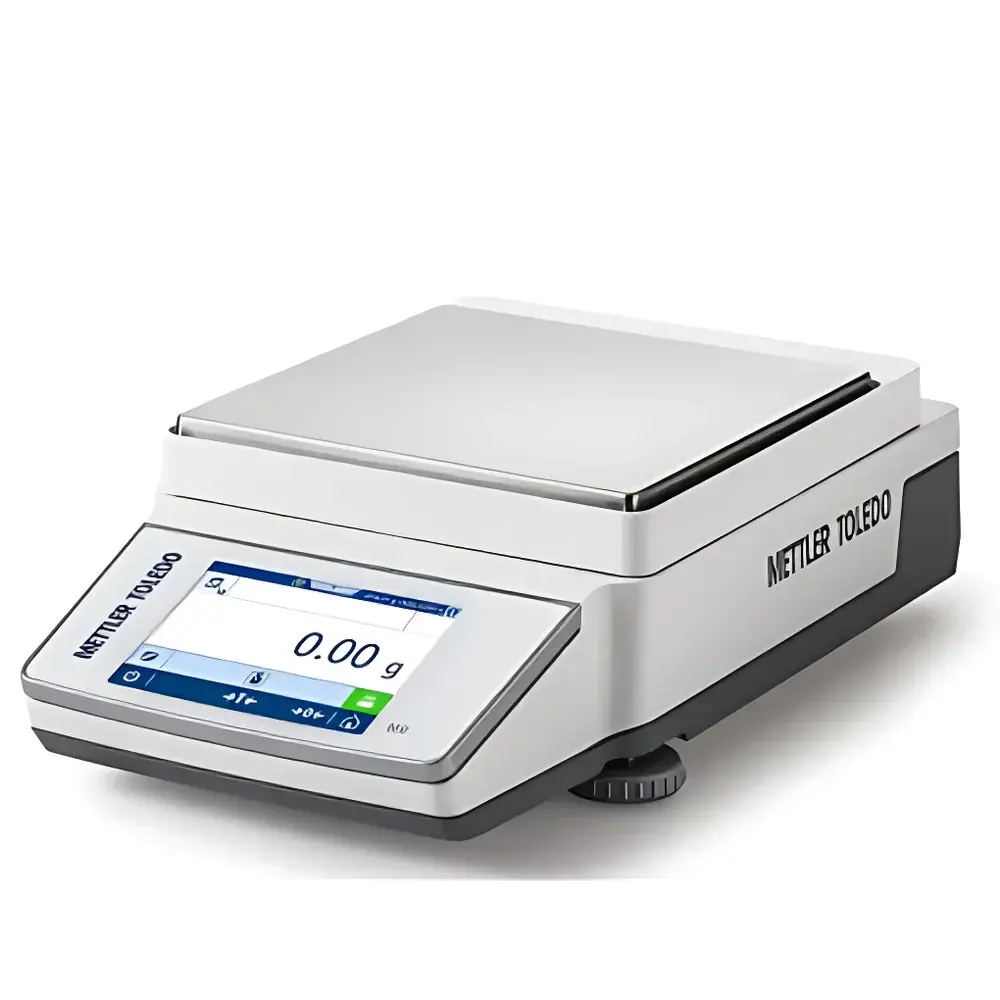
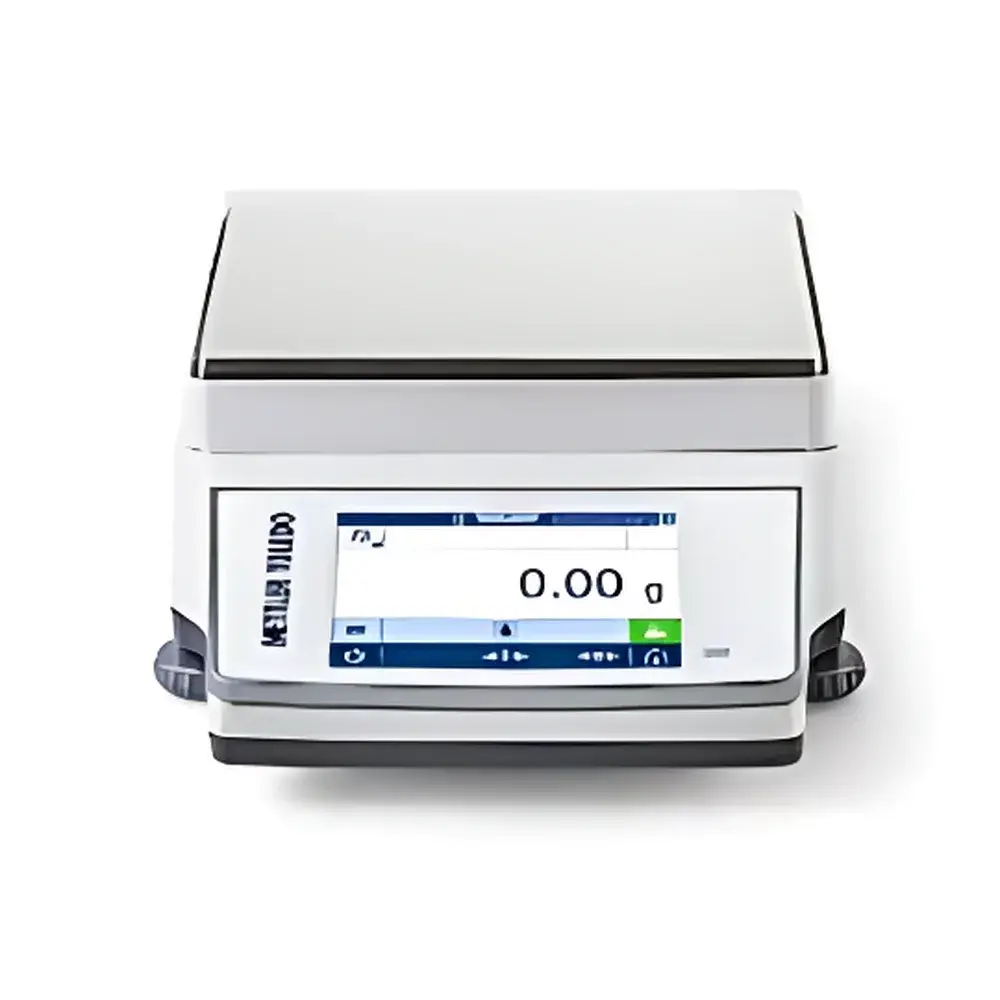
METTLER TOLEDO MR2002 Precision Balance
| Brand | METTLER TOLEDO |
|---|---|
| Origin | Shanghai, China |
| Model | MR2002 Precision Balance |
| Protection Rating | IP43 |
| Construction | Full-metal housing with chemically resistant components |
| Overload Protection | Integrated sensor protection against mechanical shock and pan drop |
| Power Management | Configurable energy-saving mode |
| Connectivity | RS232, USB, Ethernet (optional), MT-SICS command protocol compliant |
| User Management | Role-based access control with customizable profiles |
| Compliance | Designed for GLP/GMP environments |
Overview
The METTLER TOLEDO MR2002 Precision Balance is an industrial-grade analytical weighing instrument engineered for reproducible mass determination in demanding laboratory, quality control, and production environments. Built upon electromagnetic force compensation (EMFC) technology, the MR2002 delivers high-resolution static weighing performance with exceptional long-term stability and minimal drift—even under fluctuating ambient conditions. Its robust mechanical architecture, including a full-metal monolithic frame and hardened stainless-steel weighing pan, ensures structural integrity during repeated handling, vibration exposure, and incidental chemical contact. Designed for operational continuity across diverse settings—from ISO Class 7 cleanrooms to factory-floor QC stations—the MR2002 meets the functional requirements of routine gravimetric analysis, formulation verification, sample preparation, and inventory reconciliation where precision, durability, and regulatory traceability are non-negotiable.
Key Features
- IP43-rated enclosure providing protection against solid objects ≥1 mm (e.g., dust ingress) and water droplets directed up to 60° from vertical—enabling safe operation near sinks, reagent dispensers, or humidified workspaces.
- Integrated overload protection system safeguards the electromagnetic force transducer from mechanical overloads and accidental pan drops, extending sensor service life and reducing calibration downtime.
- Automatic internal calibration (AutoCal™) with temperature-triggered recalibration ensures metrological consistency without manual intervention; guided leveling via built-in bubble level and adjustable feet simplifies installation on non-ideal surfaces.
- Configurable power management mode reduces standby energy consumption by up to 70%, supporting sustainability objectives without compromising readiness or warm-up time.
- Dual-interface connectivity (RS232 + USB standard; Ethernet optional) enables seamless integration into automated data ecosystems—including PLC-controlled batching systems, MES platforms, and LIMS—using industry-standard MT-SICS ASCII command protocol.
- Multi-level user management supports role-based access control (RBAC), allowing administrators to define operator groups with granular permissions for application visibility, parameter editing, and calibration execution—reducing procedural errors and supporting ALCOA+ data integrity principles.
Sample Compatibility & Compliance
The MR2002 accommodates a broad range of sample types—including powders, granules, liquids in tared containers, and small solid components—within its maximum capacity range (2,200 g typical, depending on configuration). Its sealed keypad and smooth, non-porous housing minimize residue accumulation and simplify decontamination using common laboratory disinfectants (e.g., 70% ethanol, diluted sodium hypochlorite). The balance is designed to operate within ambient conditions of 10–40 °C and 20–80% RH (non-condensing), making it suitable for both climate-controlled labs and semi-conditioned manufacturing zones. While not certified as intrinsically safe, its construction aligns with general-purpose industrial safety standards. Documentation packages support IQ/OQ validation protocols, and firmware logs comply with data retention requirements under GLP, GMP, and ISO/IEC 17025 frameworks when deployed with validated software infrastructure.
Software & Data Management
Data output follows METTLER TOLEDO’s standardized MT-SICS (Standard Interface Command Set) protocol, ensuring interoperability with third-party acquisition tools such as LabX®, Excel-based macros, custom Python scripts, or enterprise SCADA systems. All weight readings include timestamp, operator ID (if logged), unit code, and stability flag—enabling full traceability. Optional Ethernet connectivity allows remote monitoring and centralized firmware updates via secure HTTPS. When paired with compliant host software, the MR2002 supports electronic signatures, audit trails, and change history logging required under FDA 21 CFR Part 11 and EU Annex 11 regulations. Raw data export formats include CSV, TXT, and XML, facilitating downstream statistical process control (SPC) analysis and compliance reporting.
Applications
- Raw material receipt inspection and lot acceptance testing in pharmaceutical and chemical manufacturing.
- Formulation batch weighing for excipients, APIs, and intermediates in cGMP-compliant environments.
- Quality assurance checks on packaged goods, including net content verification and fill-weight uniformity assessment.
- Environmental monitoring sample preparation—e.g., filter weighing for particulate matter analysis (PM2.5/PM10).
- Educational laboratories requiring rugged, entry-level precision balances with real-world industrial interface capabilities.
- Contract manufacturing organizations (CMOs) needing validated, multi-user instruments with configurable access rights and audit-ready output.
FAQ
What is the typical readability and capacity of the MR2002 Precision Balance?
The MR2002 offers readability down to 0.01 g (10 mg) at its full capacity of 2,200 g; specific configurations may vary—consult technical datasheets for model-specific specifications.
Does the MR2002 support external calibration weights?
Yes—it accepts external calibration via standard Class M2 or better weights, with full traceability documentation available through METTLER TOLEDO’s calibration services.
Can the MR2002 be validated for use in regulated environments?
Yes—validation documentation (IQ/OQ templates), firmware version records, and calibration certificates are provided; integration with LabX or other Part 11–compliant software enables full compliance.
Is the MR2002 compatible with wireless data transmission?
No native Wi-Fi or Bluetooth; however, Ethernet-enabled variants support wired network integration, and third-party gateways can bridge RS232/USB outputs to wireless infrastructures.
How often does the internal calibration activate automatically?
AutoCal™ triggers based on user-defined temperature thresholds (e.g., ±1.5 °C from last calibration point) or scheduled intervals—configurable via front-panel menu or remote command.