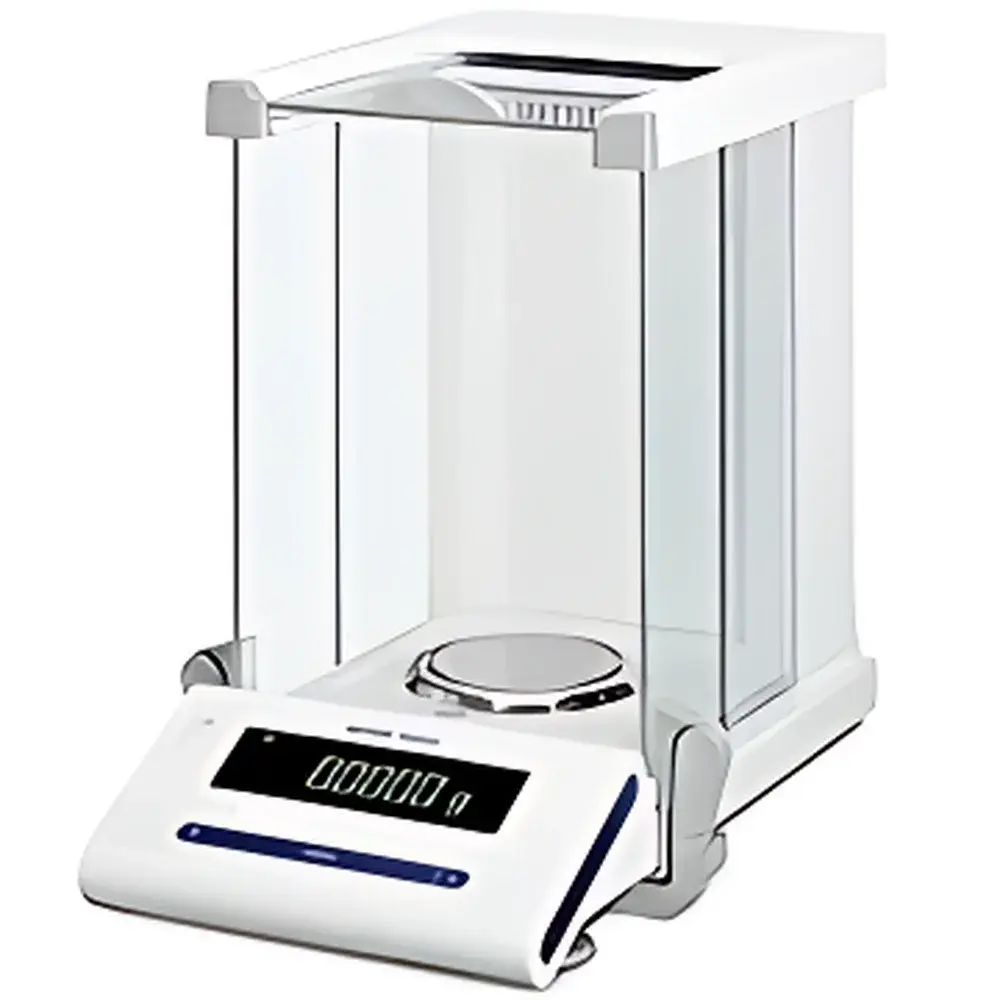
METTLER TOLEDO MS Precision Balance
| Brand | METTLER TOLEDO |
|---|---|
| Origin | Switzerland |
| Model | MS Precision Balance |
| Instrument Type | Precision Balance |
| Maximum Capacity | ≥5000 g |
| Readability | 1 mg (0.001 g) to 1 g |
| Sensor Technology | MonoBloc® single-module weighing cell |
| Repeatability (sd) | 0.001–0.5 mg (model-dependent) |
| Linearity Error | 0.002–0.3 mg (model-dependent) |
| Pan Dimensions | 127×127 mm to 351×245 mm |
| Calibration | FACT™ automatic internal calibration or external calibration (models ending in “E”) |
| Connectivity | RS232 and USB interfaces |
| Display | High-Contrast Display (HCD) |
| Leveling | Front-access leveling feet with integrated bubble level indicator |
| Draft Shield | QuickLock™ removable glass draft shield (dishwasher-safe for 0.001 g models) |
Overview
The METTLER TOLEDO MS Precision Balance is an engineered solution for laboratories requiring consistent, traceable mass measurement across a broad capacity range—from 320 g to 32 kg—with readability options spanning 1 mg to 1 g. Built upon the patented MonoBloc® single-module sensor architecture, this balance eliminates mechanical stress points inherent in traditional multi-component load cells, delivering superior long-term stability, shock resistance, and overload tolerance up to 500% of nominal capacity without recalibration. Its core metrological performance adheres to international standards including OIML R76 and ISO/IEC 17025 requirements for calibration laboratories. The MS series is designed for routine quality control, formulation, sample preparation, and educational applications where reproducibility, ease of operation, and regulatory compliance are essential—not merely desirable.
Key Features
- MonoBloc® Weighing Cell: Monolithic sensor design ensures minimal drift, high immunity to mechanical shock, and exceptional resistance to overloading—critical for environments with frequent handling or accidental impacts.
- FACT™ Fully Automatic Calibration Technology: Internal motorized calibration weights enable temperature-triggered or time-scheduled recalibration without user intervention, maintaining accuracy across ambient fluctuations (±1.5 °C trigger threshold).
- QuickLock™ Draft Shield System: Tool-free, one-handed removal of all glass panels; compatible with industrial dishwashers for validated cleaning protocols (applicable to models with 1 mg readability).
- High-Contrast Display (HCD): 4.5-inch backlit LCD with large, legible digits and intuitive icon-based navigation—optimized for gloved operation and low-light lab conditions.
- Front-Access Leveling System: Dual front-mounted leveling feet with integrated bubble level provide rapid, precise horizontal alignment—reducing setup time and minimizing leveling-related errors.
- Integrated Application Software: Preloaded functions include piece counting, percentage weighing, checkweighing, dynamic weighing (for unstable samples), statistical analysis (mean, SD, CV, min/max), density determination (with optional kit), and weight retrieval history.
Sample Compatibility & Compliance
The MS Precision Balance accommodates diverse sample types—from fine powders and granular solids to irregularly shaped objects—via configurable pan sizes (127×127 mm to 351×245 mm) and optional accessories including anti-static kits, draft shields with side access ports, and vibration-dampening tables. All models comply with electromagnetic compatibility (EMC) per IEC 61326-1 and safety standards IEC 61010-1. For regulated environments, the balance supports audit trails when connected to METTLER TOLEDO LabX® software (optional), enabling full adherence to FDA 21 CFR Part 11, EU Annex 11, and GLP/GMP documentation requirements—including electronic signatures, user access controls, and immutable data archiving.
Software & Data Management
Standard RS232 and USB device interfaces allow seamless integration with LIMS, ELN, and spreadsheet applications such as Microsoft Excel. Data output follows ASCII protocol with customizable delimiters and timestamping. When paired with LabX® software, users gain advanced features: automated SOP execution, real-time instrument monitoring, deviation alerts, and centralized backup of calibration logs, weighing records, and user activity reports. All communications are encrypted, and data integrity is verified via checksum validation during transmission.
Applications
- Pharmaceutical QC labs performing raw material verification, tablet weight checks, and excipient dispensing (aligned with USP and ).
- Chemical manufacturing for batch formulation, catalyst dosing, and reagent preparation under ISO 9001-controlled processes.
- Food testing laboratories conducting nutritional labeling verification, moisture content analysis (in conjunction with halogen moisture analyzers), and portion control audits.
- Academic teaching labs where robustness, intuitive interface, and multi-function capability support undergraduate analytical chemistry curricula.
- Environmental testing facilities weighing soil, sediment, or filter media prior to gravimetric analysis per EPA Method 1664 or ASTM D2974.
FAQ
What does “FACT™” mean and how does it differ from standard internal calibration?
FACT™ (Fully Automatic Calibration Technology) uses built-in motorized weights and temperature sensors to initiate calibration automatically when ambient temperature changes exceed ±1.5 °C—or at user-defined intervals—ensuring continuous traceability without manual action.
Is the QuickLock™ draft shield compatible with autoclaving or chemical sterilization?
No—QuickLock™ glass panels are dishwasher-safe (up to 75 °C) but not autoclavable. For sterile environments, optional stainless-steel draft shields or laminar flow hood integration is recommended.
Can the MS balance be used in a fume hood?
Yes—provided the fume hood airflow is stabilized (<0.2 m/s at pan level) and the balance is mounted on a vibration-isolated platform; models with 1 mg readability require additional environmental shielding.
Does the balance support direct printing to label printers?
Yes—via RS232 or USB-to-serial adapters, compatible with Zebra, SATO, and Brady label printers using standard ESC/POS or ZPL command sets.
How often should external calibration be performed if FACT™ is enabled?
Per ISO/IEC 17025:2017, external verification using traceable standards is recommended at least once per shift for critical measurements—or daily in GMP environments—regardless of FACT™ status.