
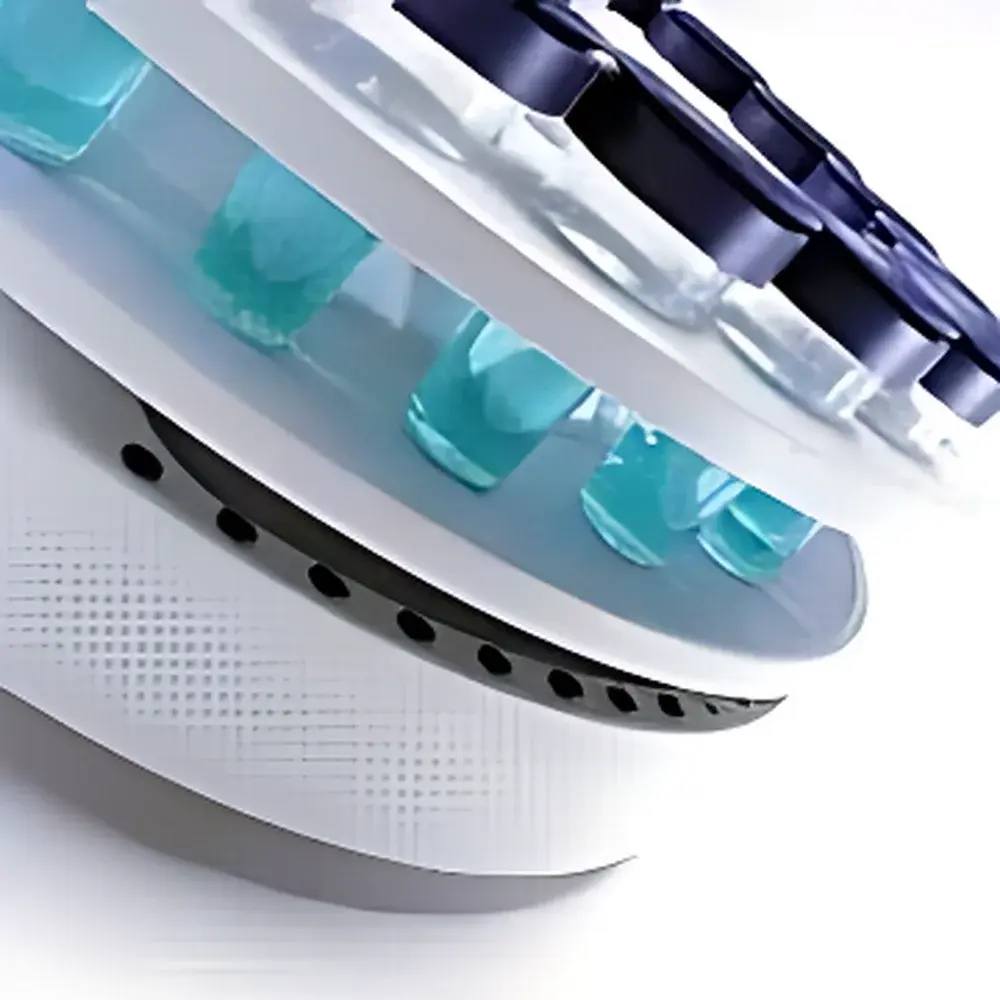
METTLER TOLEDO Rondo Series Automatic Potentiometric Titrators
| Brand | METTLER TOLEDO |
|---|---|
| Origin | Switzerland |
| Model | Rondo 12 / 15 / 20 / 30 / 60 / 60 Plus |
| Sample Capacity | 12–60 positions |
| Compatible Vessels | 80–600 mL (PE, borosilicate glass) |
| Integration Options | KF coulometric water determination, COD digestion modules, CoverUp sealing system, SU24 sample handler, Rondolino entry-level station, Liquid Handler for automated reagent/sample dispensing |
| Regulatory Compliance | Designed for GLP/GMP environments with audit trail and electronic signature support per FDA 21 CFR Part 11 |
Overview
The METTLER TOLEDO Rondo Series represents a modular, high-precision platform of automatic potentiometric titrators engineered for reproducible, traceable, and fully traceable quantitative chemical analysis in regulated laboratory environments. Based on the fundamental principle of potentiometric endpoint detection—measuring the potential difference between a reference electrode and an indicator electrode as a function of titrant addition—the Rondo systems deliver robust, stoichiometry-driven quantification of acid-base, redox, precipitation, and complexometric reactions. Unlike manual or semi-automated methods, the Rondo architecture integrates metrological-grade burettes, temperature-compensated electrodes, and real-time derivative-based equivalence point calculation to minimize operator bias and ensure compliance with ISO 8655 (volumetric equipment), ASTM E202–22 (standard test methods for titration), and pharmacopeial monographs (e.g., USP , EP 2.2.20). Each system is factory-calibrated and supports full traceability via instrument-specific calibration certificates aligned with ISO/IEC 17025 requirements.
Key Features
- Modular scalability across five core configurations: Rondo 12 (12-position, up to 600 mL vessels), Rondo 15 (15-position, dual-vessel compatibility), Rondo 20 (20-position, optimized for 100 mL PE/glass cups with optional KF/COD/cover integration), Rondo 30 (30-position, 80 mL PE vials), and Rondo 60 (60-position via SU24 dual-arm handler)
- Rondo 60 Plus extends functionality with direct pH measurement in standard sample tubes prior to titration—enabling independent parameter assessment without vessel transfer
- Rondolino serves as a cost-optimized entry point: 9-sample capacity with dedicated electrode rinse/cleaning cup and integrated titration cup management
- Liquid Handler integration enables automated sample dilution, standard addition, reagent pre-dosing, and multi-step protocol execution—critical for method validation and SOP adherence
- Robust mechanical architecture featuring corrosion-resistant stainless-steel chassis, precision stepper-motor-driven sample carousel, and gravimetric or volumetric burette options (0.001–50 mL range, ±0.002 mL accuracy per ISO 8655-3)
Sample Compatibility & Compliance
The Rondo Series accommodates heterogeneous sample geometries and chemistries without hardware modification. Standard vessel support includes polyethylene (80–250 mL), low-form and high-form borosilicate glass beakers (150–600 mL), and certified pharmaceutical vials. Electrode compatibility spans pH, redox, ion-selective (e.g., Ag, F⁻, Cl⁻), and non-aqueous sensors—with automatic electrode recognition and status logging. All systems are designed for operation under Good Laboratory Practice (GLP) and Good Manufacturing Practice (GMP) frameworks. Built-in audit trail records user actions, method changes, calibration events, and result modifications with timestamp, operator ID, and reason-for-change fields. Electronic signatures meet FDA 21 CFR Part 11 requirements when deployed with METTLER TOLEDO’s LabX software suite.
Software & Data Management
Control and data acquisition are managed through LabX Titration Software—a validated, role-based platform supporting method development, instrument control, real-time curve visualization, and automated report generation. LabX enforces method locking, version control, and digital signature workflows. Raw data—including mV/pH vs. volume curves, first/second derivative plots, equivalence point calculations, and uncertainty propagation—are stored in encrypted, tamper-evident databases compliant with ALCOA+ principles (Attributable, Legible, Contemporaneous, Original, Accurate, Complete, Consistent, Enduring, Available). Export formats include PDF/A-2, CSV, XML, and proprietary .TIT files compatible with LIMS integration via ASTM E1469 or HL7 standards.
Applications
Rondo systems serve critical quality control and R&D functions across regulated industries: acid number determination in lubricants (ASTM D974), chloride content in pharmaceutical excipients (USP ), peroxide value in edible oils (AOAC 965.33), total alkalinity in wastewater (EPA 310.1), iodine value in fats (ISO 3961), and Karl Fischer water content in hygroscopic APIs (EP 2.5.12). The Rondo 60 Plus configuration is particularly suited for high-throughput stability studies requiring concurrent pH profiling and titrimetric assay—such as dissolution testing of modified-release tablets per USP .
FAQ
Can the Rondo system perform non-aqueous titrations?
Yes—compatible with solvent systems including glacial acetic acid, dimethylformamide, and ethylene glycol, provided appropriate electrodes and reference junctions are selected.
Is method validation support included?
LabX provides IQ/OQ documentation templates, performance qualification protocols, and built-in system suitability tests per ICH Q2(R2) guidelines.
How is electrode maintenance handled during unattended runs?
Rondolino and Rondo 20+ models feature automated electrode rinsing, drying, and conditioning cycles between samples using configurable solvent sequences.
Can multiple Rondo units be controlled from a single LabX instance?
Yes—LabX supports centralized management of up to 16 connected titrators and sample handlers with shared method libraries and unified audit trails.
What level of cybersecurity is implemented?
LabX complies with IEC 62443-3-3 SL2 requirements, including TLS 1.2+ encryption, Windows Active Directory integration, and granular permission sets per user role.







