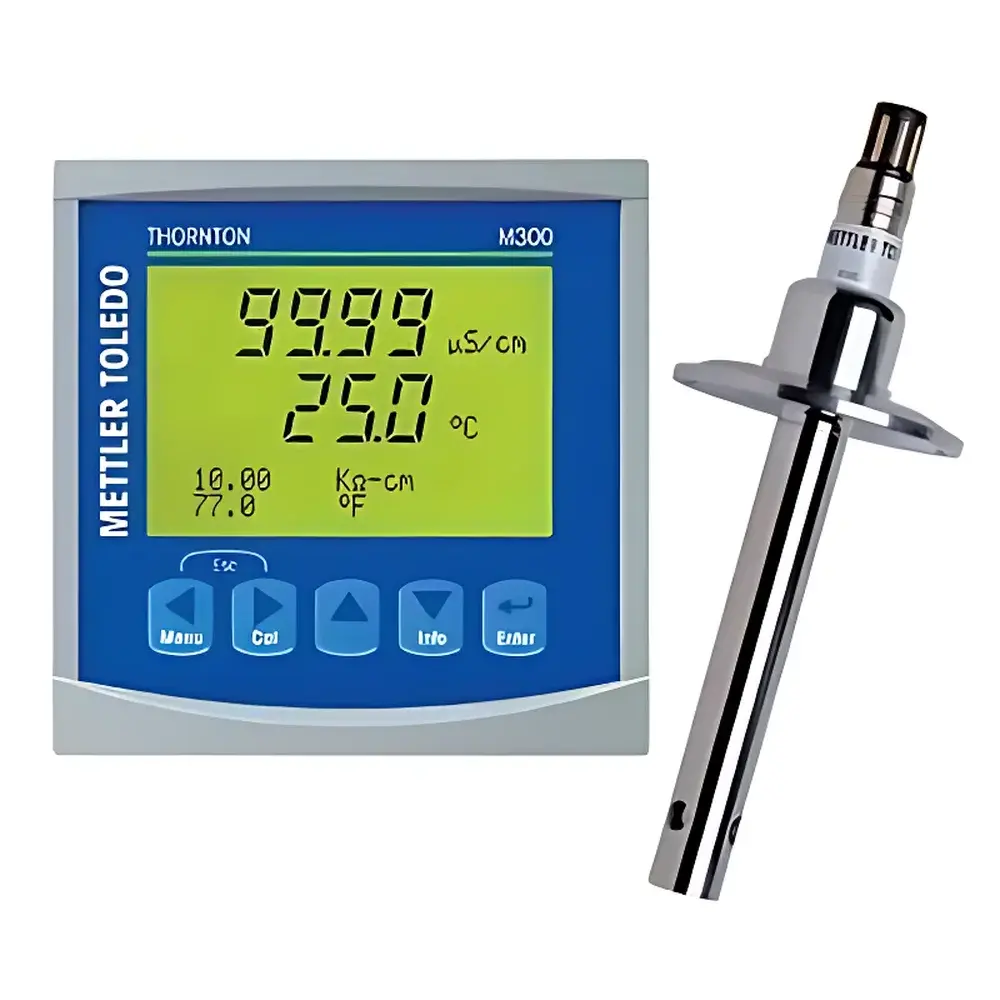
METTLER TOLEDO Thornton InPro7250 Series Online Inductive Conductivity / Resistivity / Salinity Analyzer
| Brand | METTLER TOLEDO |
|---|---|
| Origin | USA |
| Model | InPro7250 Series |
| Sensor Principle | Toroidal (Electrodeless) Induction |
| Measurement Parameters | Conductivity, Resistivity, Salinity (TDS-derived), Temperature |
| Output Protocols | HART, PROFIBUS PA, FOUNDATION Fieldbus |
| Enclosure Rating | IP66/IP67, ATEX/IECEx Certified Options Available |
| Channel Configuration | Single- or Dual-Channel Transmitter Options |
| Compliance | FDA 21 CFR Part 11 (with ISM software), ASTM D1125, ISO 7888, USP <645>, EP 2.2.38 |
Overview
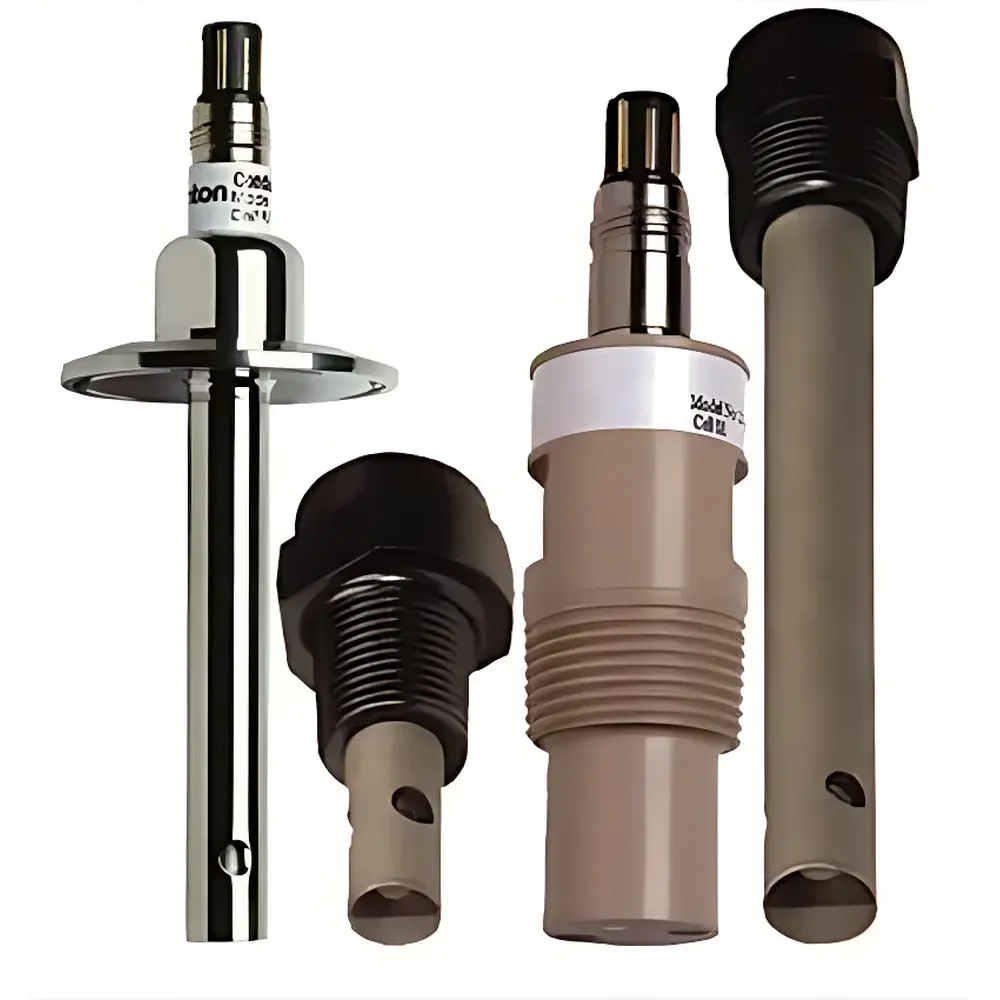
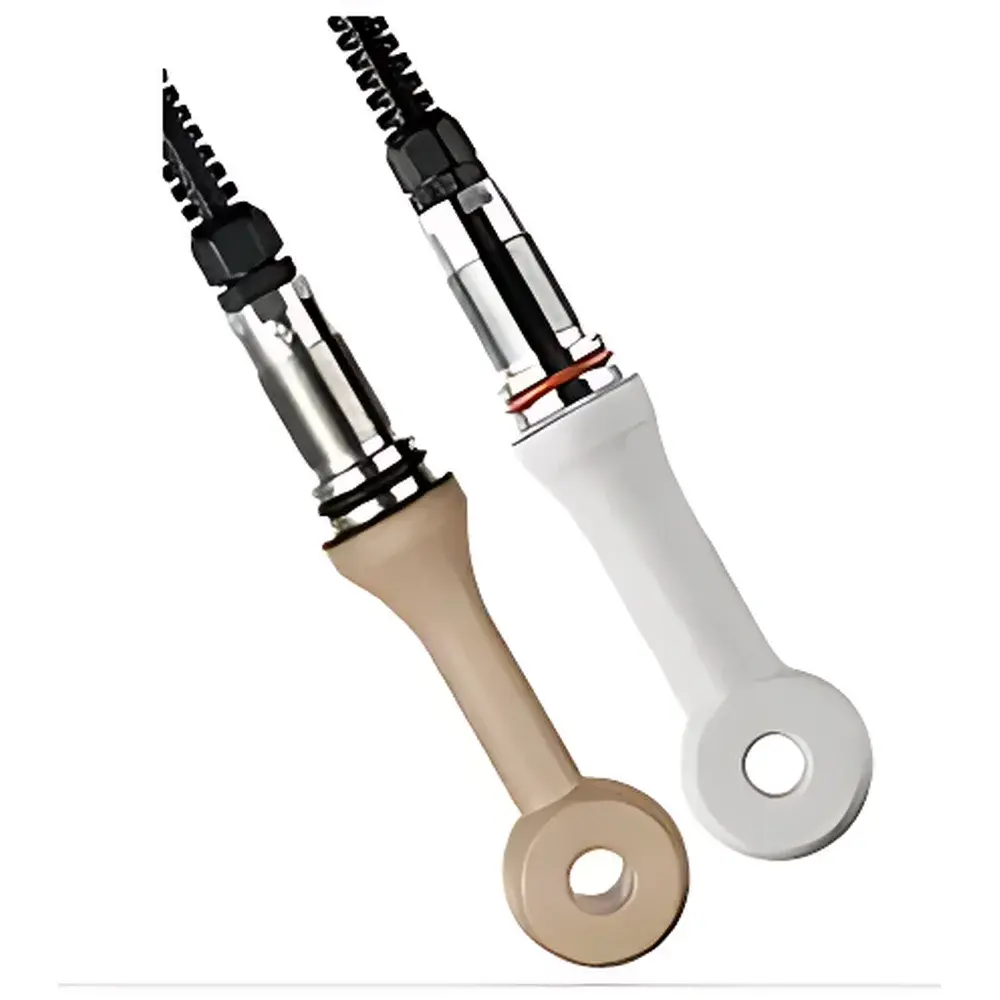
The METTLER TOLEDO Thornton InPro7250 Series is an industrial-grade online inductive conductivity, resistivity, and salinity analyzer engineered for continuous, high-reliability measurement in demanding process environments. Unlike contact-based two-electrode or four-electrode sensors, the InPro7250 employs a toroidal (electrodeless) induction principle: an excitation coil generates an alternating magnetic field that induces eddy currents in the conductive medium; a secondary pickup coil detects the resulting current magnitude—proportional to solution conductivity—without direct electrode contact. This design eliminates polarization, fouling, corrosion, and coating-related drift, making it especially suited for aggressive chemical streams, high-solids wastewater, CIP/SIP cycles, and ultra-pure water systems where electrode degradation compromises accuracy and maintenance frequency. The system comprises a rugged, hygienic sensor (available in PEEK, PVDF, or Hastelloy C-22 wetted materials), a configurable transmitter (single/dual channel), and integrated temperature compensation per IEC 60746-3. It delivers stable, linear response across a wide dynamic range—from 1 µS/cm to 2 S/cm—with inherent immunity to grounding issues and stray electrical noise.
Key Features
- Toroidal induction technology ensures zero electrode wear, eliminating calibration drift from surface contamination or passivation.
- Hygienic, clean-in-place (CIP) and steam-in-place (SIP)-compatible sensor designs compliant with 3-A Sanitary Standards and EHEDG guidelines.
- Integrated Pt1000 or Pt100 RTD for simultaneous temperature measurement and automatic linear/nonlinear compensation (e.g., NaCl or KCl reference curves).
- ISM (Intelligent Sensor Management) digital interface enables plug-and-play sensor recognition, full audit trail of calibration history, diagnostics, and predictive maintenance alerts.
- Transmitter supports HART 7, PROFIBUS PA, and FOUNDATION Fieldbus protocols—enabling seamless integration into DCS, PLC, and MES platforms.
- ATEX, IECEx, and CSA-certified variants available for hazardous area installations (Zone 0/1, Class I Div 1).
- Self-diagnostics include sensor integrity verification, cable fault detection, and signal-to-noise ratio monitoring—reportable via analog 4–20 mA or digital bus.
Sample Compatibility & Compliance
The InPro7250 is validated for use with corrosive, abrasive, viscous, and particulate-laden aqueous solutions—including strong acids (H₂SO₄, HCl), caustics (NaOH), oxidizing agents (HNO₃, ClO⁻), and high-TDS brines. Its non-invasive measurement principle avoids electrochemical interference in redox-active media. Regulatory alignment includes USP for purified and water-for-injection (WFI) monitoring, EP 2.2.38 for pharmaceutical water quality, ASTM D1125 for conductivity testing of water, and ISO 7888 for electrical conductivity of water. When deployed with ISM-enabled transmitters and validated configuration procedures, the system supports GLP/GMP data integrity requirements—including electronic signatures, change control logs, and FDA 21 CFR Part 11-compliant audit trails.
Software & Data Management
Configuration, calibration, and diagnostics are performed via the Thornton EasyConnect PC software or directly on the transmitter’s graphical LCD interface. All sensor metadata—including serial number, calibration date, slope, offset, and diagnostic flags—is stored onboard and accessible via digital communication. Historical data export (CSV/Excel) supports trend analysis and PQ/OQ documentation. For enterprise-level deployment, the analyzer integrates with METTLER TOLEDO’s LabX® Process or third-party SCADA/Historian systems using OPC UA or Modbus TCP gateways. Firmware updates are delivered via secure USB or over-the-air (OTA) through authorized network interfaces—fully traceable under change management SOPs.
Applications
- Pharmaceutical & Biotech: Real-time WFI, PW, and pure steam condensate monitoring; CIP rinse cycle endpoint detection; buffer preparation concentration control.
- Semiconductor Fab: Ultrapure water (UPW) resistivity surveillance at sub-ppb ionic contamination levels; CMP slurry conductivity feedback.
- Power Generation: Condensate polishers, boiler feedwater purity assurance, and turbine cycle chemistry control per EPRI guidelines.
- Chemical Process Industry: Reaction mixture conductivity profiling for neutralization, hydrolysis, or polymerization; effluent TDS compliance reporting.
- Pulp & Paper: Black liquor solids concentration estimation; bleach plant electrolyte balance monitoring.
- Food & Beverage: Cleaning solution conductivity verification; syrup blending control; wastewater discharge compliance.
FAQ
What is the difference between toroidal and contacting conductivity sensors?
Toroidal sensors use electromagnetic induction and require no direct electrode contact with the process fluid—making them immune to coating, corrosion, and polarization errors common in contacting sensors.
Can the InPro7250 measure resistivity directly?
Yes—the transmitter calculates resistivity as the reciprocal of conductivity, with automatic temperature compensation applied per standardized algorithms (e.g., ASTM D1125).
Is SIP validation supported for the InPro7250 sensor body?
Yes—select models with all-welded PEEK or Hastelloy C-22 housings are rated for repeated 135 °C steam sterilization cycles and documented in manufacturer’s PQ reports.
How does ISM improve sensor lifecycle management?
ISM stores full calibration history, usage hours, diagnostic events, and firmware version on the sensor’s embedded memory—enabling automated recalibration scheduling and reducing manual logbook entries.
Does the transmitter support dual-parameter output (e.g., conductivity + temperature) on separate 4–20 mA channels?
Yes—dual-channel transmitters provide independent analog outputs for conductivity/resistivity and temperature, each with configurable scaling and fault signaling.