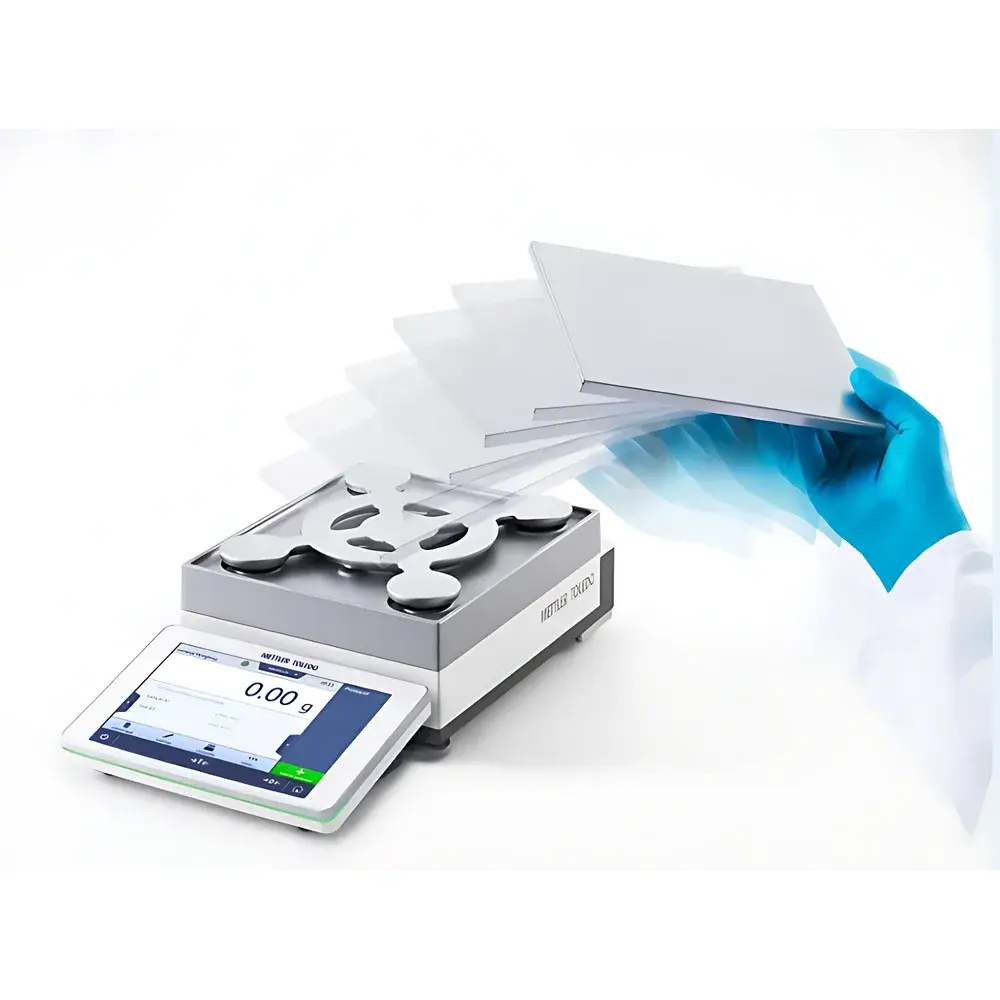
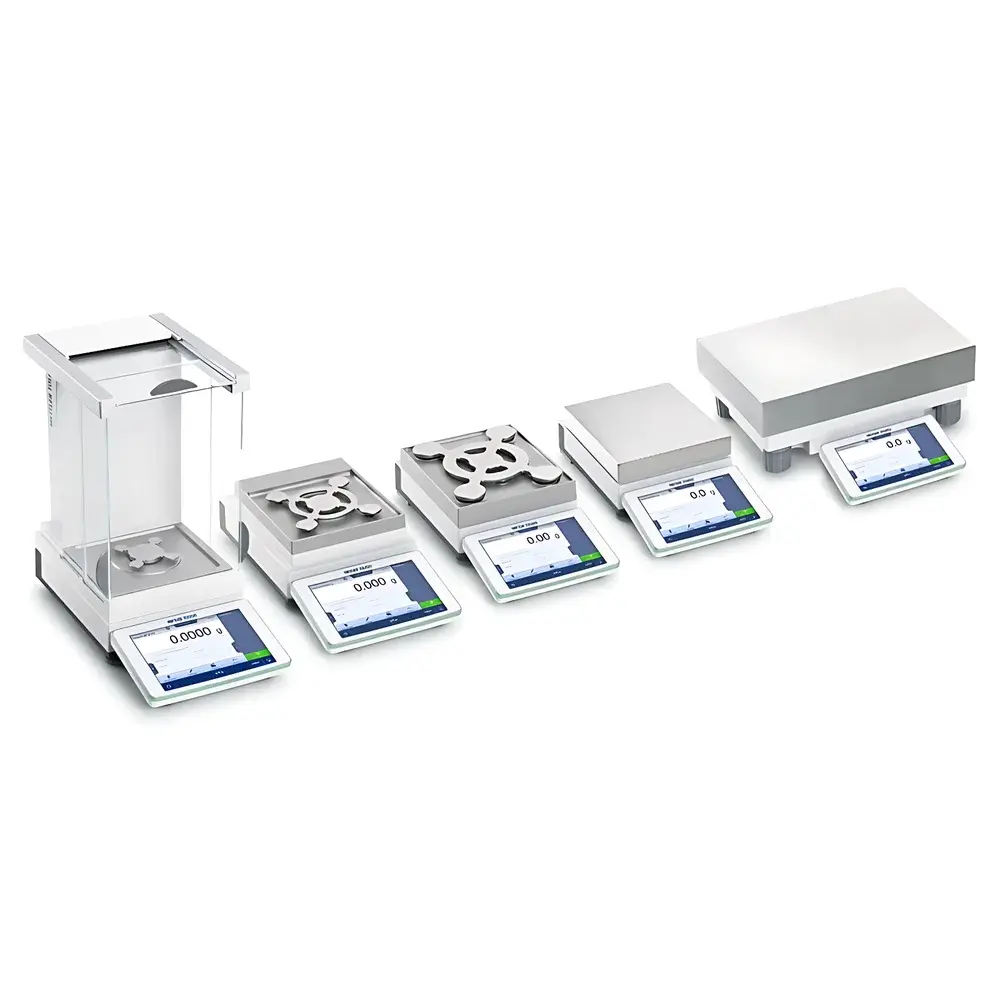
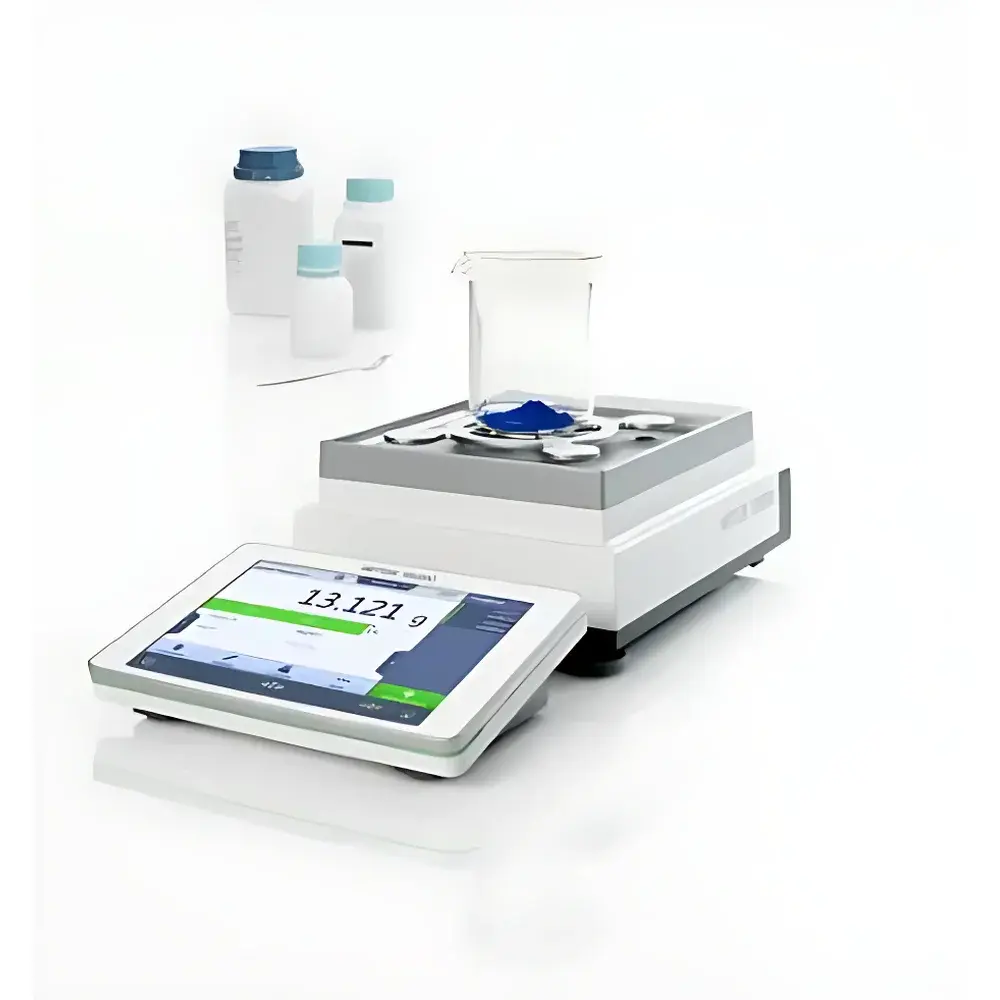
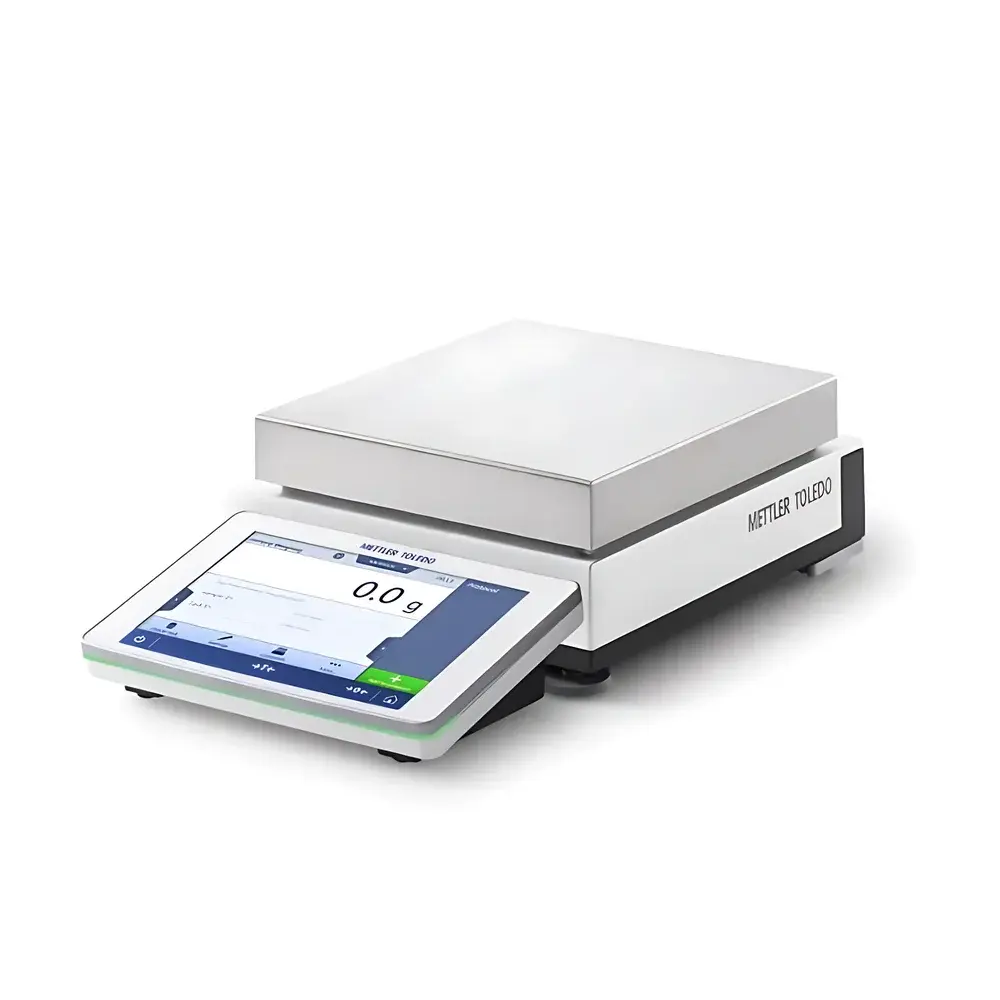
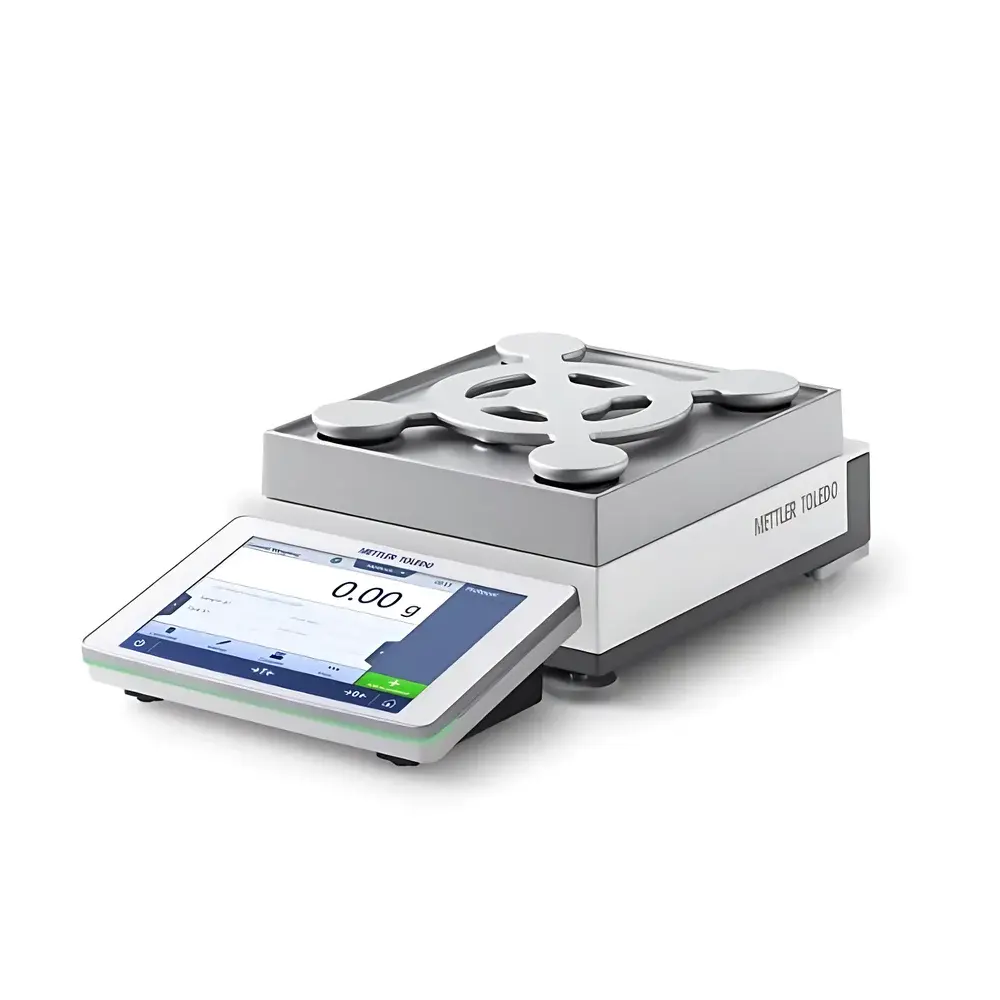
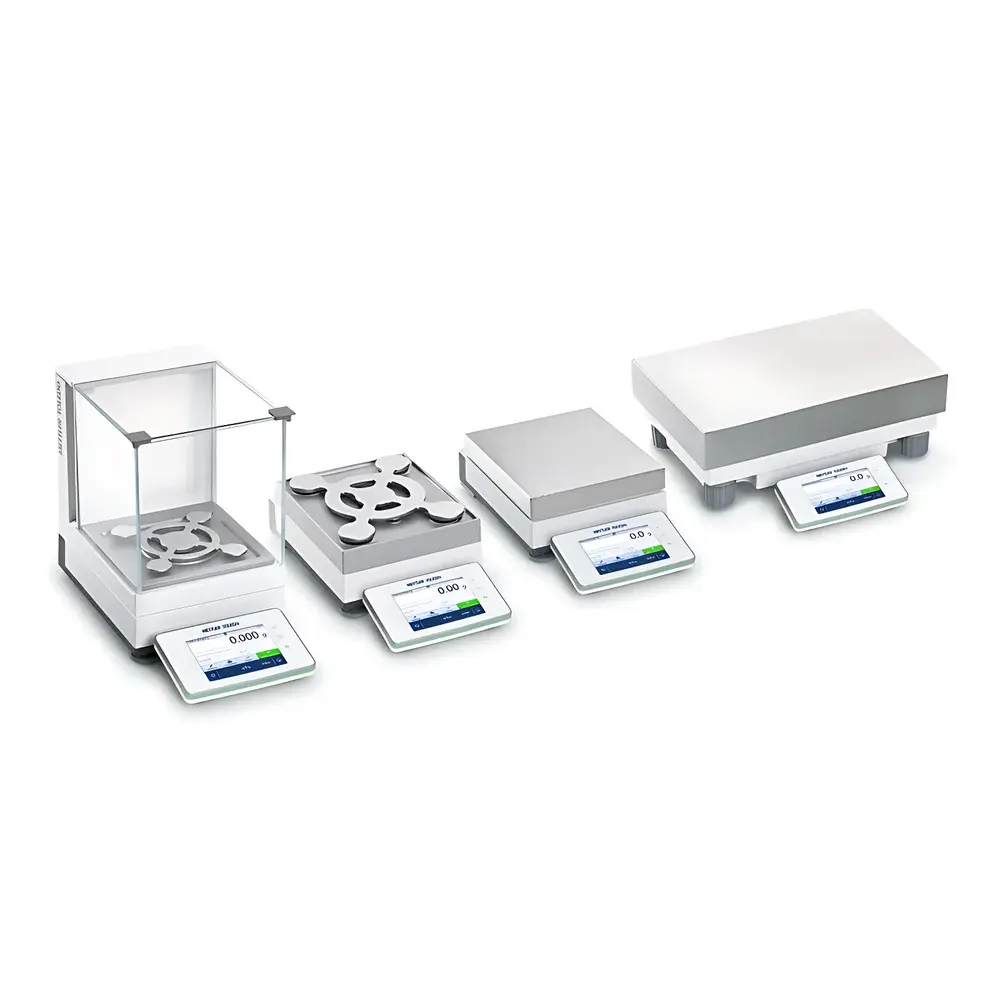
METTLER TOLEDO XPR Precision Balance
| Brand | METTLER TOLEDO |
|---|---|
| Origin | Switzerland |
| Model Series | XPR Precision Balance |
| Readability | 0.1 mg to 1 g |
| Max Capacity | 210 g to 64,100 g |
| Compliance | USP <41>, <1251>, GxP, ISO/IEC 17025, FDA 21 CFR Part 11 (with optional software), GLP/GMP-ready |
| Calibration | proFACT automatic internal calibration with temperature/time-triggered adjustment |
| Sensor Technology | MonoBloc HighSpeed single-module electromagnetic force compensation sensor |
| Interface | RS232, Ethernet, Bluetooth, LocalCAN, PS/2 (via modular interface slot) |
| Display | TFT color touchscreen (SmartScreen) with protective polycarbonate cover |
| Smart Functions | SmartSens infrared gesture control, LevelControl real-time leveling monitoring, MinWeigh regulatory minimum weight guidance, BalanceCheck external verification prompt, GWP Excellence integrated risk-based performance assurance |
Overview
The METTLER TOLEDO XPR Precision Balance is an engineered solution for laboratories requiring traceable, repeatable, and regulation-compliant mass measurement across pharmaceutical, chemical, academic, and quality control environments. Built upon the MonoBloc HighSpeed electromagnetic force compensation principle, the XPR series delivers high-speed stabilization and exceptional reproducibility — critical for dynamic workflows involving serial dilution, formulation, or reference standard preparation. Its monolithic sensor architecture eliminates mechanical hysteresis and ensures long-term stability under variable thermal and mechanical stress. Designed and manufactured in Switzerland, each unit undergoes rigorous factory calibration and individual performance certification per ISO/IEC 17025 requirements. The balance operates as a foundational instrument within regulated workflows governed by USP (Acceptance Criteria for Weighing), USP (Weighing on an Analytical Balance), and EU GMP Annex 18, supporting both routine QC testing and method validation protocols.
Key Features
- MonoBloc HighSpeed Sensor: A single-piece, temperature-compensated electromagnetic transducer delivering rapid settling times (<2 s typical for full-scale step), high overload tolerance (up to 500% of capacity), and immunity to mechanical drift from vibration or shock.
- SmartScreen TFT Touch Interface: A 4.3-inch high-resolution color display with intuitive icon-driven navigation, multilingual support (including English, German, French, Chinese), and configurable user profiles — all protected by a removable polycarbonate shield resistant to solvent splashes and particulate corrosion.
- SmartSens Infrared Gesture Control: Contactless operation for tare, print, and sample ID entry via hand motion detection — eliminating cross-contamination risks and enhancing ergonomics in cleanroom or glovebox environments.
- LevelControl Real-Time Monitoring: Integrated inclinometer continuously verifies horizontal alignment; visual and audible alerts trigger if deviation exceeds ±0.5°, preventing systematic error before measurement begins.
- proFACT Automatic Calibration: Dual-trigger system initiates internal recalibration based on time intervals (user-defined) and ambient temperature fluctuations (>1.5 °C change), ensuring continuous metrological traceability without manual intervention.
- MinWeigh Regulatory Guidance: Software-assisted minimum weight calculation aligned with USP and EUR Pharm. 2.1.7 — activated and configured on-site by METTLER TOLEDO certified service engineers to enforce compliance during daily use.
- BalanceCheck Verification Prompt: Scheduled reminders guide users through external calibration using certified weights, generating timestamped audit logs for internal review or regulatory inspection.
- GWP Excellence Integration: Embedded risk-based assessment engine evaluates environmental conditions, usage frequency, and historical performance data to recommend recalibration, maintenance, or requalification actions — fully documented in GWP reports.
Sample Compatibility & Compliance
The XPR Precision Balance accommodates diverse sample forms — powders, granules, liquids in tared vessels, and solid reference standards — across capacities ranging from 210 g to 64.1 kg. Draft shields (standard or optional motorized) minimize air-current interference for low-mass measurements. All models meet IEC 61326-1 (EMC) and IEC 61010-1 (safety) standards. For regulated environments, the balance supports full GxP compliance when paired with METTLER TOLEDO LabX software: electronic signatures, 21 CFR Part 11–compliant audit trails, role-based access control, and immutable raw data storage are enforced at the system level. Validation documentation (IQ/OQ/PQ templates), calibration certificates (NIST-traceable), and uncertainty budgets are provided with each instrument shipment.
Software & Data Management
LabX software serves as the central hub for XPR data acquisition, processing, and reporting. It enables automated SOP execution, real-time statistical process control (SPC), and direct export to LIMS or ERP systems via ODBC, CSV, or HL7. All weighing events — including tare, net weight, density, percentage, and formulation steps — are timestamped, user-authenticated, and stored with full metadata (environmental conditions, calibration status, draft shield position). Audit trails are tamper-evident and cannot be disabled or deleted. Optional features include electronic batch records, deviation tracking, and integration with MES platforms for paperless manufacturing execution.
Applications
The XPR Precision Balance is deployed in applications demanding metrological rigor: active pharmaceutical ingredient (API) dispensing per USP , reference standard weighing for HPLC calibration, catalyst mass dosing in R&D synthesis, gravimetric moisture analysis, filter weighing for particulate matter testing (ISO 16268), and formulation of clinical trial batches under GMP. Its dual-range models (e.g., XPR404SDR) support both ultra-low-mass micro-weighing and high-capacity bulk handling within a single instrument — reducing cross-contamination risk and lab footprint. In academia, it supports ISO/IEC 17025-accredited testing labs conducting proficiency testing or reference material certification.
FAQ
Is the XPR Precision Balance compliant with USP ?
Yes — when configured with MinWeigh and used within validated environmental conditions (temperature stability ±2 °C, humidity <70% RH), the XPR meets USP requirements for minimum weight determination and uncertainty-based acceptance criteria.
Can the balance be integrated into a 21 CFR Part 11–compliant workflow?
Yes — with LabX software and appropriate system configuration (electronic signatures, audit trail activation, secure user management), the XPR satisfies all technical and procedural requirements of FDA 21 CFR Part 11.
What is the purpose of the BalanceCheck function?
BalanceCheck prompts users to perform periodic external verification using certified weights, recording date, operator ID, weight value, and deviation — generating a traceable record for internal QA audits or regulatory inspections.
Does the XPR require annual recalibration by a certified technician?
While proFACT ensures ongoing accuracy, annual verification against national standards (e.g., NIST, UKAS) by an accredited metrology provider is recommended to maintain ISO/IEC 17025 conformance and support audit readiness.
How does LevelControl improve measurement reliability?
By detecting and alerting to out-of-level conditions before weighing begins, LevelControl prevents systematic bias caused by gravitational vector misalignment — a common source of nonlinearity error in precision mass measurement.