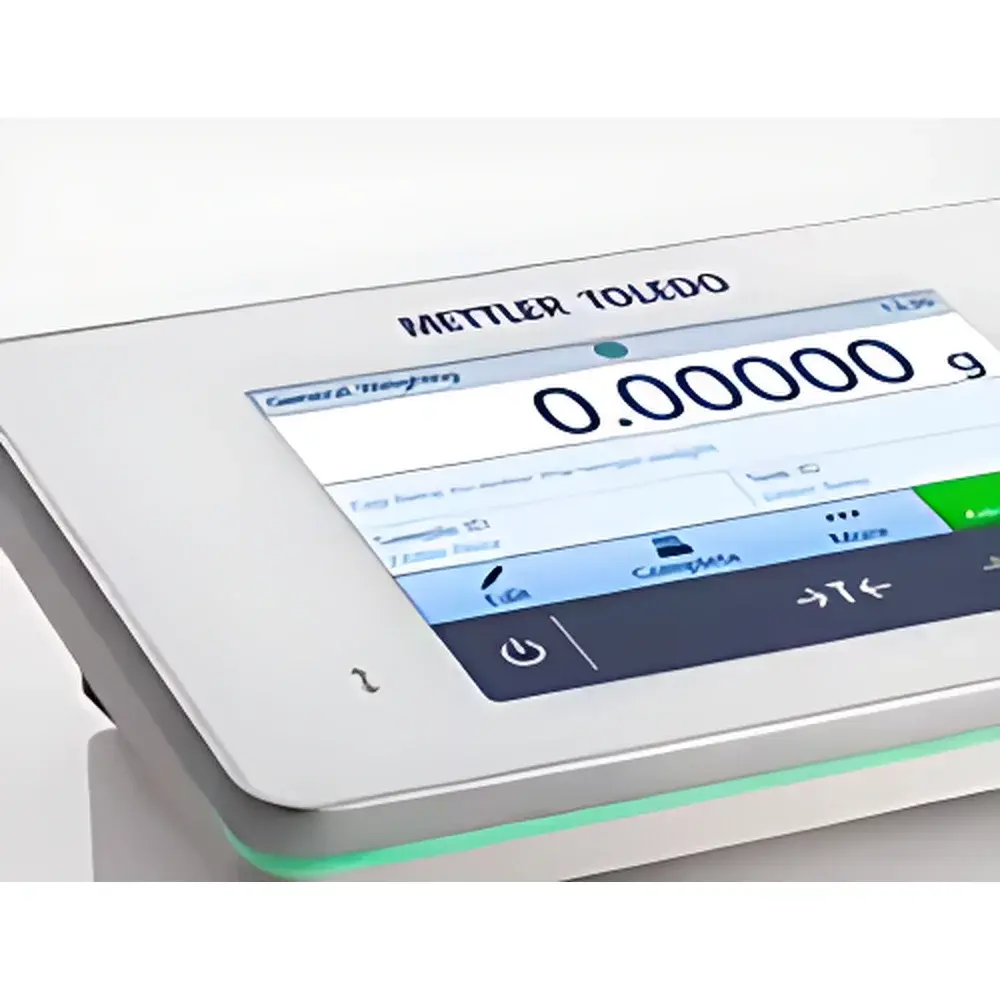
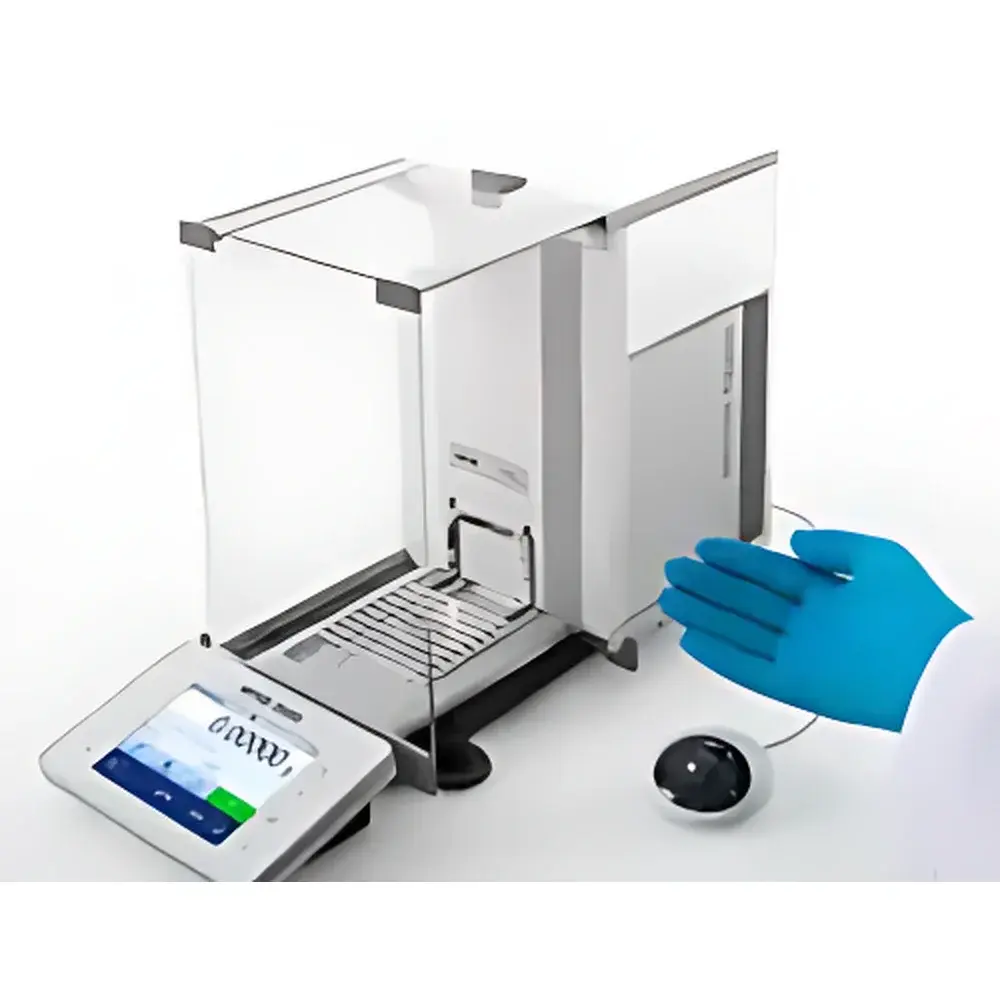
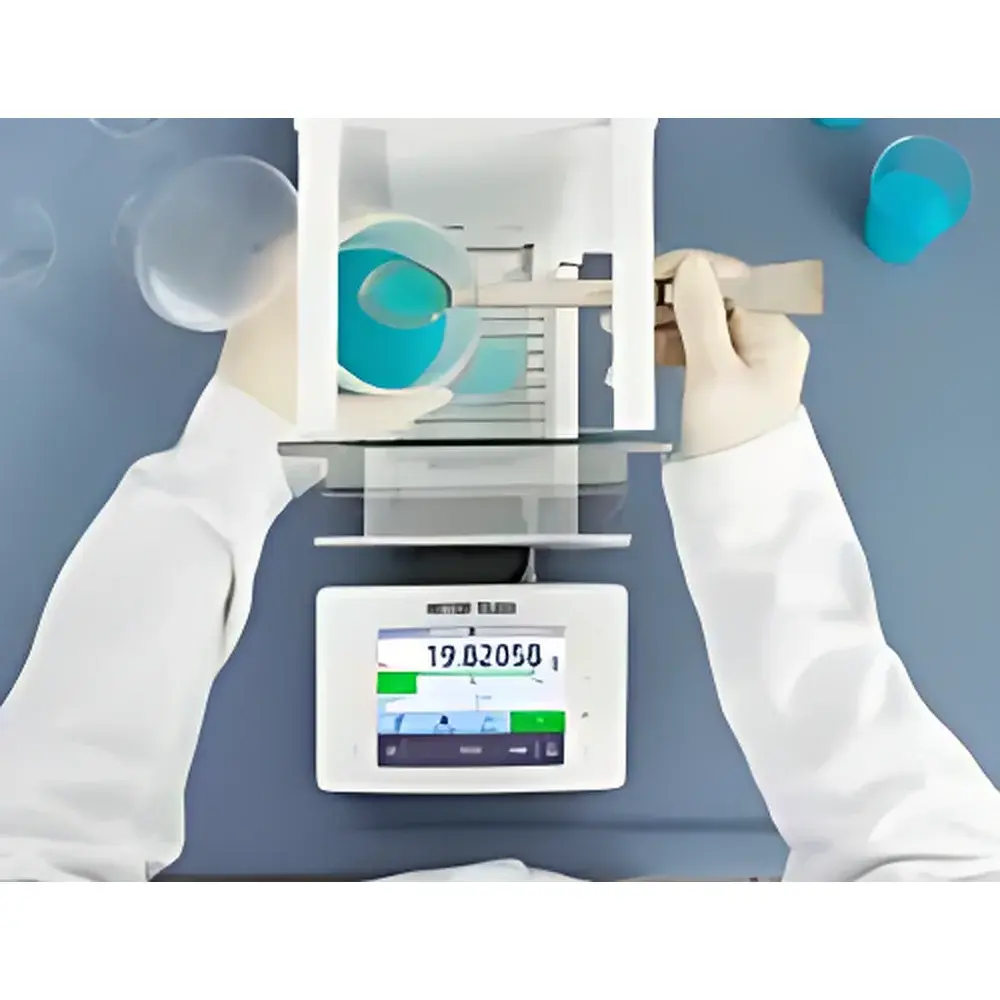
METTLER TOLEDO XSR Advanced Analytical Balance
| Brand | METTLER TOLEDO |
|---|---|
| Origin | Switzerland |
| Instrument Type | Analytical Balance |
| Model | XSR |
| Compliance | ISO/IEC 17025, USP <41>, USP <1251>, ASTM E898, GLP/GMP-ready |
| Software | LabX®-compatible, FDA 21 CFR Part 11 compliant (with optional audit trail license) |
| Weighing Range | Up to 520 g (model-dependent) |
| Readability | 0.001 mg to 0.01 mg |
| Repeatability (sd) | ≤ 0.0006 mg (typical) |
| Calibration | Internal & external, fully traceable to SI units |
| Draft Shield | Motorized automatic draft shield with SmartDoor™ logic |
| Pan Design | SmartGrid™ perforated weighing pan |
| Connectivity | USB, RS232, Ethernet, Bluetooth (optional) |
Overview
The METTLER TOLEDO XSR Advanced Analytical Balance is an ISO/IEC 17025–compliant precision instrument engineered for high-accuracy mass determination in regulated laboratory environments. Based on electromagnetic force compensation (EMFC) technology, the XSR delivers exceptional stability and reproducibility under dynamic environmental conditions—including minor air currents, temperature fluctuations, and mechanical vibrations. Its core architecture integrates real-time drift compensation, adaptive filtering algorithms, and temperature-controlled sensor electronics to ensure consistent readability down to 0.001 mg across its full weighing range (up to 520 g, depending on configuration). Designed explicitly for quality-critical workflows in pharmaceutical development, reference standard preparation, and analytical chemistry labs, the XSR meets stringent requirements outlined in USP (Balances), USP (Weighing on an Analytical Balance), and ASTM E898 (Standard Practice for Use of Analytical Balances). The balance operates as a foundational metrology node within a digitally connected lab infrastructure—fully compatible with LabX® software for centralized method management, electronic recordkeeping, and full 21 CFR Part 11 compliance when licensed.
Key Features
- SmartGrid™ Weighing Pan: A laser-perforated stainless-steel grid structure minimizes air turbulence beneath the sample, reducing settling time by up to 40% compared to solid pans—critical for hygroscopic or low-density materials.
- Motorized SmartDoor™ Draft Shield: Fully automated door actuation synchronizes with user workflow—opening only when required and closing during stabilization—eliminating manual intervention and minimizing operator-induced variability.
- StatusLight™ Real-Time Readiness Indicator: An integrated optical status system continuously monitors environmental parameters (vibration, temperature gradient, air flow) and displays green/yellow/red feedback—ensuring only validated, metrologically sound measurements are recorded.
- Method-Based Operation: Predefined weighing protocols—including formulation, differential weighing, pipette calibration, and statistical QC checks—are stored directly on the balance. Each method enforces fixed parameters (tare tolerance, stability criteria,允差 limits) and logs all execution metadata automatically.
- Ergonomic Low-Profile Design: With a 120 mm clearance between benchtop and pan surface, the XSR enables seated operation and direct container loading—reducing wrist flexion and eliminating transfer losses associated with intermediate weighing vessels or filter paper.
- GLP/GMP-Ready Architecture: Built-in audit trail (enabled via LabX® license), electronic signature support, role-based access control, and configurable data retention policies align with FDA 21 CFR Part 11, EU Annex 11, and ICH GCP standards.
Sample Compatibility & Compliance
The XSR accommodates diverse sample forms—including powders, crystals, viscous liquids, and micro-volume solids—without requiring recalibration or hardware modification. Its SmartGrid™ pan supports open-vessel weighing (e.g., volumetric flasks, scintillation vials) and eliminates static buildup through grounded stainless-steel construction. All models comply with ISO 9001, ISO/IEC 17025:2017 (clause 6.4.10 on measurement equipment), and pharmacopeial requirements for analytical balance validation. Certificate of Conformance includes full traceability to national metrology institutes (e.g., METAS, NIST) and uncertainty budgets per OIML R 76-1. Regulatory documentation packages (IQ/OQ/PQ templates, URS, risk assessments) are available upon request.
Software & Data Management
The XSR functions as a standalone instrument or as a node in a LabX®-managed network. LabX® provides method centralization, cross-balance synchronization, and automated report generation (PDF/CSV/XML) with embedded digital signatures. All raw data—including timestamps, environmental logs, stability flags, and user credentials—are immutably stored with cryptographic hashing. Optional 21 CFR Part 11 modules enable electronic records with audit trail, change control, and permission hierarchies aligned with ALCOA+ principles. Data export supports LIMS integration via ASTM E1384 or HL7 messaging protocols.
Applications
- Primary standard preparation in reference material laboratories (ISO Guide 35)
- API potency assay and blend uniformity testing (ICH Q5C, USP )
- Differential weighing for gravimetric titration and Karl Fischer moisture analysis
- Pipette performance verification per ISO 8655-6 and ASTM E1153
- Microgram-level catalyst dosing in synthetic chemistry workflows
- Stability-indicating assays requiring mass tracking over extended time series
FAQ
Does the XSR support internal calibration with built-in weights?
Yes—the XSR features motorized internal calibration using traceable, temperature-compensated reference masses. Calibration frequency can be scheduled manually or triggered automatically based on time, temperature drift, or usage events.
Can multiple users store personalized methods without administrative privileges?
No—user-specific method storage requires administrator-level access. However, preconfigured methods can be assigned to user groups with read-only or execute-only permissions via LabX® role management.
Is the SmartGrid™ pan compatible with corrosive solvents or acidic vapors?
The SmartGrid™ pan is constructed from electropolished 316L stainless steel and withstands routine exposure to common lab solvents (e.g., methanol, acetone, HCl <10%). For prolonged exposure to aggressive media, optional PTFE-coated pans are available.
How does StatusLight™ determine “ready-to-weigh” status?
StatusLight™ evaluates real-time sensor output variance, ambient temperature gradient (<0.1°C/min), floor vibration amplitude (<0.5 µm/s RMS), and draft shield seal integrity—only illuminating green when all thresholds meet ISO 17025-defined stability criteria.
Can historical weighing data be exported without LabX®?
Yes—via USB drive in CSV format with timestamped metadata. However, full audit trail, electronic signatures, and regulatory-compliant reporting require LabX® licensing.