
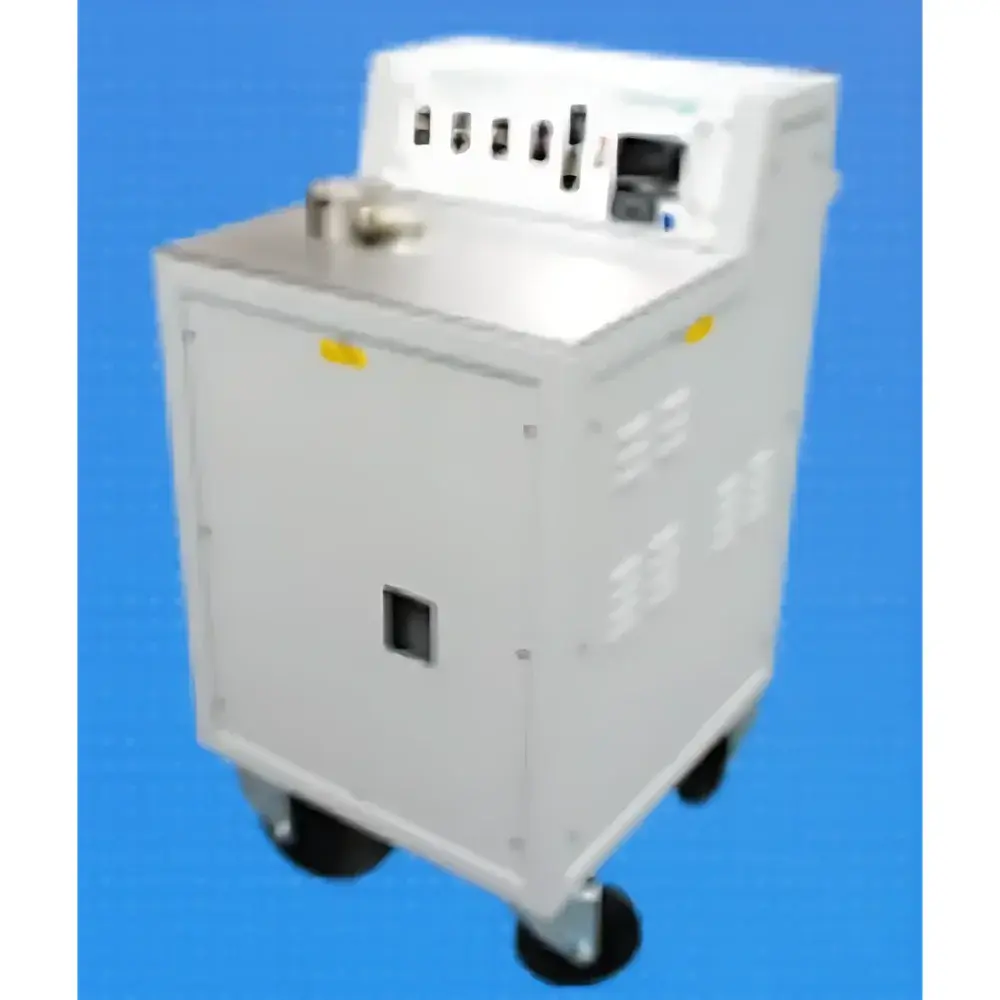
MICHEM Hyscan II Hydrogen Analyzer for Molten Aluminum
| Brand | MICHEM (MechaTech) |
|---|---|
| Origin | United Kingdom |
| Model | Hyscan II |
| Measurement Principle | Quantitative Pressure-Reduction Solidification Method |
| Analysis Time | ≤ 5 min per sample |
| Detection Limit | 0.01 cm³/100 g Al |
| Accuracy | ±<5% RSD |
| Compliance | Designed for GLP/GMP-aligned foundry QA workflows |
| Portability | Benchtop with integrated vacuum system and field-deployable rugged chassis |
Overview
The MICHEM Hyscan II Hydrogen Analyzer is a precision-engineered instrument for quantitative determination of dissolved hydrogen concentration in molten aluminum and aluminum alloys. It operates on the well-established pressure-reduction solidification principle: a representative sample of molten aluminum is extracted under inert atmosphere, rapidly cooled under controlled vacuum, and allowed to solidify while releasing trapped hydrogen gas. The evolved hydrogen volume is measured via a calibrated Pirani vacuum gauge, then converted to concentration (cm³ H₂ per 100 g Al) using temperature-compensated gas law calculations and instrument-specific calibration factors. This method eliminates reliance on visual interpretation or empirical correlation tables—delivering traceable, operator-independent results directly traceable to SI units. Unlike qualitative bubble observation or subjective surface morphology assessment, the Hyscan II delivers metrologically sound data essential for process validation, alloy specification compliance (e.g., ASTM B179, EN 1706), and statistical process control (SPC) in high-integrity casting environments.
Key Features
- Quantitative analysis with detection limit of 0.01 cm³/100 g Al and repeatability better than ±5% RSD across routine operating range (0.05–0.30 cm³/100 g)
- Complete analysis cycle completed in ≤5 minutes—from sample immersion to final report generation
- Integrated dual-stage vacuum system with thermally stabilized Pirani sensor and real-time pressure/temperature logging
- Ruggedized stainless-steel chassis rated IP54 for foundry floor deployment; no external gas cylinders or cryogenic consumables required
- On-site verification capability via certified reference standards (NIST-traceable aluminum-hydrogen master alloys)
- Passive thermal management ensures stable operation during extended shifts without active cooling
Sample Compatibility & Compliance
The Hyscan II accepts standard 15–25 g molten aluminum samples drawn from crucibles, holding furnaces, or launder systems at temperatures between 680–750 °C. Compatible with all common aluminum alloys (1xxx–8xxx series), including those containing Mg, Si, Cu, and rare-earth modifiers. Sample cups are disposable graphite or reusable ceramic—both pre-baked to eliminate moisture interference. The analyzer meets functional requirements for ISO/IEC 17025-compliant laboratories when operated within documented SOPs, and supports audit-ready data integrity through time-stamped measurement logs. While not a regulated medical device, its output informs critical quality gates aligned with automotive OEM specifications (e.g., Ford WSS-M1A301-A, GM GMW14872) and aerospace material standards (AMS2772, AMS4210).
Software & Data Management
The embedded firmware provides intuitive touchscreen navigation with multilingual UI (English, German, Spanish, Chinese). All measurements are automatically timestamped, tagged with operator ID and furnace location, and stored locally on encrypted internal flash memory (≥10,000 records). Optional USB export generates CSV files compatible with LIMS integration or Excel-based SPC charting. Audit trail functionality records all parameter changes, calibration events, and user logins—fully compliant with FDA 21 CFR Part 11 requirements when paired with enterprise-level access controls. No cloud dependency; data sovereignty remains fully on-site.
Applications
- Real-time verification of rotary degassing efficiency prior to casting
- Root-cause analysis of porosity-related scrap in high-pressure die-cast components
- Validation of flux-based purification protocols in secondary aluminum recycling
- Development and qualification of low-hydrogen alloy compositions for aerospace forgings
- Process capability studies (Cpk/Ppk) for continuous casting lines producing foil stock or extrusion billets
- Teaching and research applications in metallurgy and materials science curricula
FAQ
What sample volume is required for a valid measurement?
A minimum of 15 g of homogeneous molten aluminum is required; typical practice uses 20 ±2 g to ensure sufficient gas evolution above detection threshold.
Can the Hyscan II be used with aluminum-lithium or high-magnesium alloys?
Yes—provided sample extraction is performed under argon or nitrogen shroud to prevent oxidation; magnesium-rich melts require shorter exposure time (<3 seconds) to minimize oxide skin formation.
Is periodic recalibration necessary?
Annual verification against certified reference materials is recommended; field calibration checks using blank graphite cups and known-alloy standards can be performed daily or per shift.
Does the instrument require external utilities beyond standard AC power?
No—only 100–240 VAC, 50/60 Hz, 1.2 kVA; no compressed air, cooling water, or vacuum pumps are needed.
How is data security maintained during transfer to enterprise systems?
CSV exports are generated without embedded macros or executable code; metadata fields include digital signatures verifying measurement integrity and tamper-evident timestamps.




