
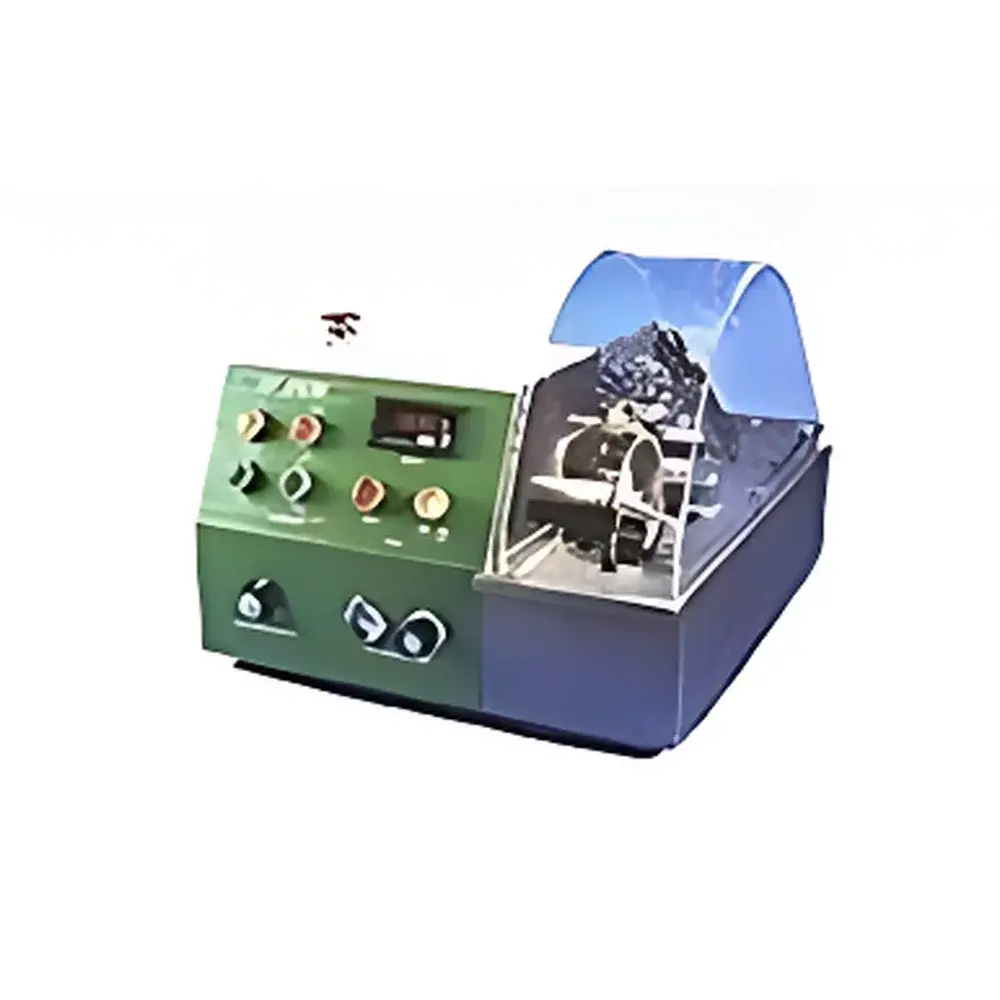
Microcut Polishing and Grinding Machine by JinJunPai
| Brand | JinJunPai |
|---|---|
| Origin | France |
| Manufacturer Type | Authorized Distributor |
| Origin Category | Imported |
| Model | microcut |
| Pricing | Upon Request |
Overview
The Microcut Polishing and Grinding Machine is a precision-engineered laboratory instrument designed for controlled sectioning, surface preparation, and dimensional reduction of metallic specimens prior to microstructural analysis. Operating on the principle of abrasive material removal via rotating diamond-impregnated or silicon carbide grinding wheels under regulated force and coolant flow, the system enables reproducible cross-sectional cuts with minimal thermal distortion and mechanical deformation. Its architecture supports both coarse grinding for rapid stock removal and fine polishing for surface finish optimization—critical prerequisites for subsequent SEM, EBSD, metallographic imaging, or hardness testing workflows. The machine complies with core mechanical safety standards applicable to rotating equipment in EU-based laboratories (EN 61000-6-2/6-4, EN ISO 12100), and its sealed coolant circulation path minimizes operator exposure to metal particulates and aerosols.
Key Features
- Modular grinding/polishing station with dual-wheel configuration: one coarse-grit wheel (e.g., 120–240 grit SiC) for initial cutting and one fine-grit wheel (e.g., 600–2000 grit diamond) for surface refinement
- Adjustable sample holder with precision micrometer-controlled vertical feed (±1 µm resolution) and angular tilt (0–15°) to accommodate oblique sectioning requirements
- Integrated coolant delivery system with programmable flow rate (0.5–3.0 L/min) and temperature monitoring (15–25 °C range) to suppress localized heating during metal ablation
- Brushless DC motor drive delivering stable rotational speeds from 500 to 3,000 rpm, with real-time tachometric feedback and automatic load compensation
- IP54-rated enclosure with transparent polycarbonate shield, emergency stop button, and interlocked door sensor meeting CE machinery directive requirements
- Tool-free wheel replacement mechanism and quick-release sample clamping system to reduce setup time between specimen batches
Sample Compatibility & Compliance
The Microcut accommodates metallic samples up to 100 mm × 100 mm × 50 mm (L × W × H), including ferrous alloys (carbon steels, stainless steels), non-ferrous metals (aluminum, copper, titanium), and sintered metal powders. It supports both flat-sheet specimens (≥0.1 mm thickness) and irregularly shaped cast or forged parts when mounted in custom jigs. All operational parameters—including wheel speed, feed rate, dwell time, and coolant composition—are documented and traceable per GLP-compliant laboratory practices. While not classified as a medical device or IVD instrument, the system’s design aligns with ISO 17025:2017 clause 6.4 (equipment suitability) and ASTM E3-22 (standard guide for preparation of metallographic specimens). Routine calibration verification is performed using certified reference blocks with known hardness and grain structure.
Software & Data Management
The Microcut operates via an embedded industrial controller with a 7-inch capacitive touchscreen HMI. No external PC is required for basic operation; however, optional USB-C data export enables logging of process parameters (timestamp, RPM, feed depth, coolant temp, cycle duration) in CSV format for audit trails. Firmware supports firmware version tagging and user-access-level management (Operator / Technician / Administrator), with password-protected parameter modification rights. Audit logs are retained for ≥90 days and comply with data integrity expectations outlined in FDA 21 CFR Part 11 for electronic records—though full Part 11 validation requires site-specific IQ/OQ documentation executed by qualified personnel.
Applications
- Preparation of transverse/longitudinal sections from rolled sheet, extruded profiles, or additive-manufactured metal components for grain size quantification (ASTM E112)
- Controlled thinning of bulk metallic samples to electron-transparent thickness (<100 nm) for TEM lamella extraction
- Edge preservation during cross-sectioning of coated systems (e.g., PVD/CVD layers on steel substrates) to avoid delamination artifacts
- Routine quality control in metallurgical labs supporting aerospace, automotive, and nuclear component certification (e.g., AS9100, ISO/TS 22163)
- Research-grade specimen fabrication for synchrotron X-ray diffraction mapping and neutron tomography sample holders
FAQ
What types of metals can be processed without excessive wheel wear or edge chipping?
Aluminum, copper, low-carbon steels, and austenitic stainless steels demonstrate optimal compatibility. Hardened tool steels (>55 HRC) require slower feed rates and diamond-coated wheels.
Is the machine compatible with automated sample loading systems?
No—microcut is a manually loaded benchtop unit. Integration with robotic arms or conveyor-fed staging requires third-party engineering and is not supported out-of-the-box.
Does the system include certification documentation for import into the United States?
Yes—CE Declaration of Conformity, RoHS compliance statement, and EU-type examination certificate (issued by notified body) accompany each shipment.
Can coolant be substituted with ethanol or isopropyl alcohol for non-aqueous applications?
Not recommended. Only water-soluble, corrosion-inhibited coolants meeting ISO 6743-12 class C2 specifications are approved for use.
What maintenance intervals are specified for bearing lubrication and wheel balancing?
Main spindle bearings require relubrication every 1,000 operating hours; wheel balance verification is advised before each shift when processing high-precision specimens.



