
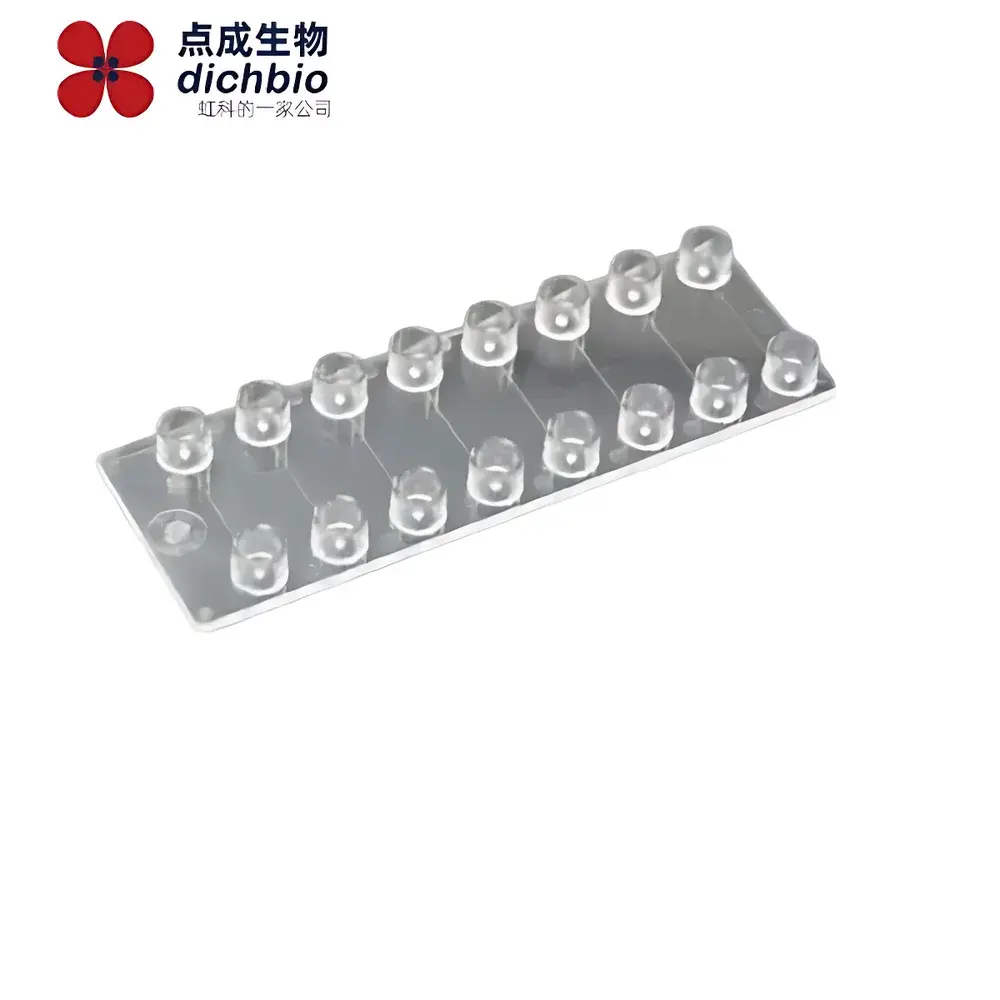
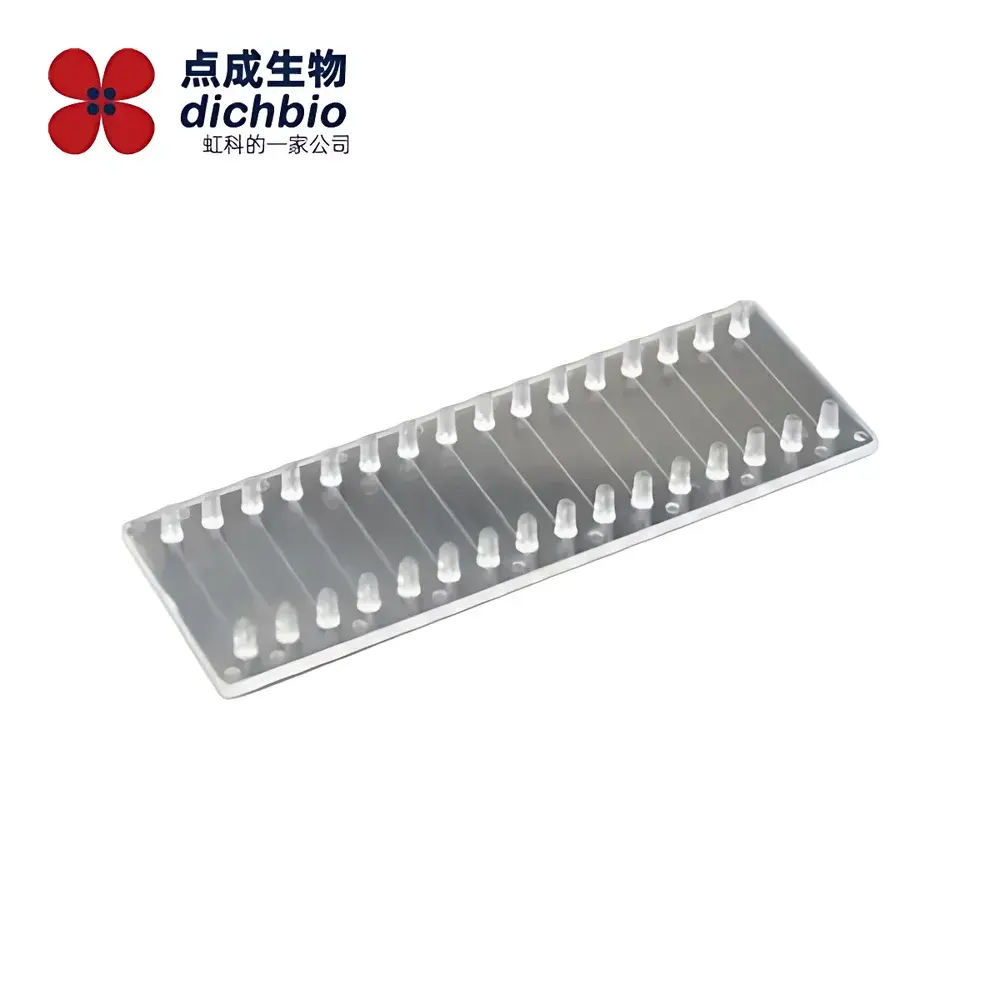
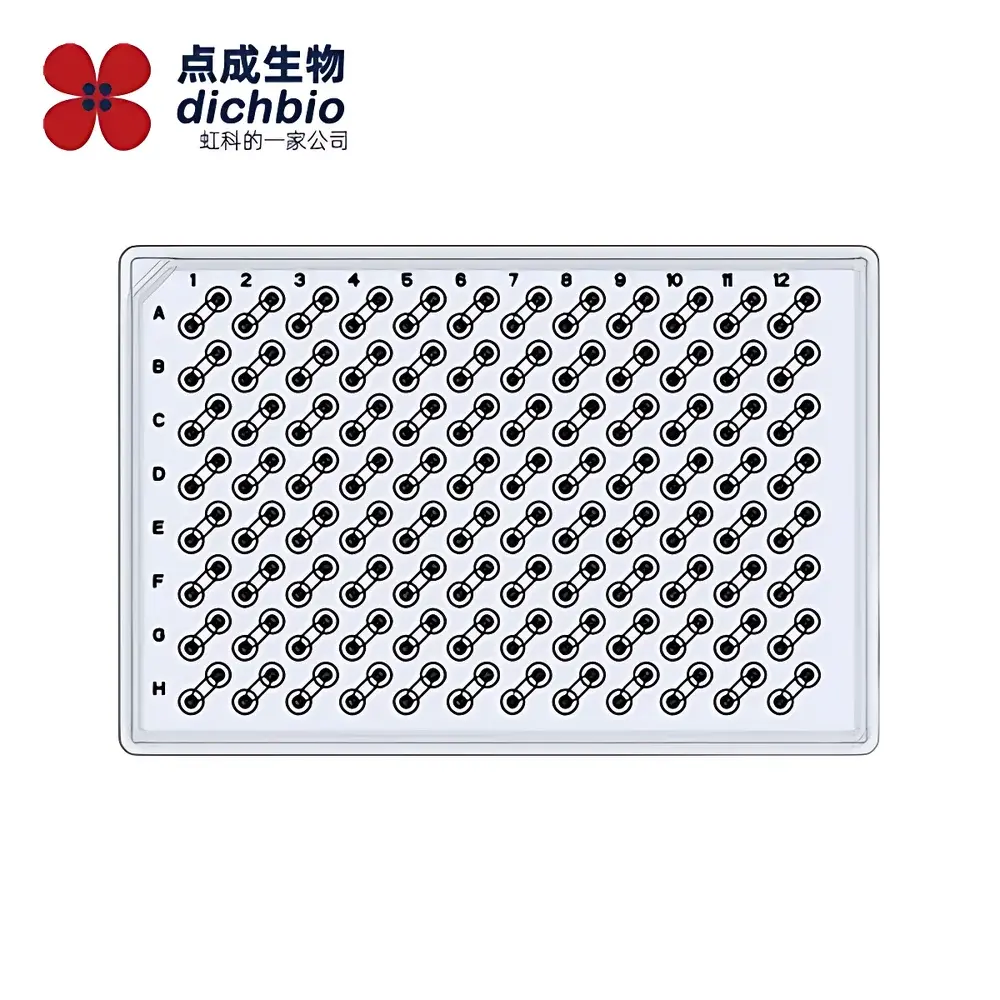
Microfluidic ChipShop Straight-Channel Microfluidic Chip
| Brand | Microfluidic ChipShop (MCS) |
|---|---|
| Origin | Guangdong, China |
| Manufacturer Type | Authorized Distributor |
| Country of Origin | China |
| Model | Straight-Channel Chip |
| Instrument Category | Microfluidic Chip System |
| Form Factor | Microscope Slide Format (75.5 × 25.5 × 1.5 mm) & SBS-Compatible Microtiter Plate Format (85.48 × 127.76 mm) |
| Channel Configurations | 4–96 parallel straight channels |
| Interface Options | Through-Hole, Mini Luer, Luer, Olive |
| Channel Dimensions | Widths from 100 µm to 2 mm |
| Material Options | Polycarbonate (PC), Polystyrene (PS), Polymethylmethacrylate (PMMA), Cyclic Olefin Polymer (COP/Zeonor) |
| Surface Functionalization Compatibility | DNA probe spotting, poly-L-lysine, collagen coating, etc. |
| Compliance | Designed for ISO 8601-compliant lab automation workflows |
Overview
The Microfluidic ChipShop Straight-Channel Microfluidic Chip is a precision-engineered platform for controlled fluid transport and real-time optical or electrochemical interrogation in life science applications. Based on laminar flow principles governed by low Reynolds number hydrodynamics, these chips enable reproducible delivery of nanoliter-to-microliter volumes across geometrically defined microchannels. Unlike complex networked architectures, the straight-channel design eliminates branching-induced flow heterogeneity, making it ideal for calibration studies, sensor integration, baseline optical pathlength validation, and comparative analysis of channel geometry effects on assay kinetics, diffusion-limited binding, or shear-dependent cellular responses. The chip’s standardized form factors—microscope slide and SBS-compliant microtiter plate formats—ensure seamless integration with commercial readers, inverted microscopes, fluorescence scanners, and automated liquid handlers.
Key Features
- Standardized Physical Formats: Two mechanically interoperable footprints: (1) microscope slide format (75.5 × 25.5 × 1.5 mm) for high-magnification imaging and (2) SBS-standard microtiter plate format (85.48 × 127.76 mm) for compatibility with 96-/384-well plate readers, robotic arms, and incubation systems.
- Configurable Channel Topology: Parallel straight channels arranged in 4-, 8-, 16-, 64-, or 96-channel arrays. Channel orientation (horizontal or vertical relative to chip edge) and center-to-center pitch (4.5 mm, matching 384-well plate spacing) support multi-parametric experimental design.
- Interchangeable Fluidic Interfaces: Multiple inlet/outlet options—including through-hole (2.5 mm conical ports), Mini Luer (female, 0.125″ thread), standard Luer lock, and Olive-type compression fittings—enable rapid coupling to syringe pumps, pressure controllers, or OEM fluidic manifolds without adhesive bonding or custom adapters.
- Material Versatility & Surface Engineering: Fabricated from optically transparent, biocompatible thermoplastics (PC, PS, PMMA, COP/Zeonor), each selected for specific UV transmission, solvent resistance, or plasma-bonding compatibility. All substrates support covalent surface modification including amine-reactive chemistry, silanization, and physical adsorption of extracellular matrix proteins (e.g., collagen I, fibronectin) or nucleic acid probes.
- Geometric Precision for Comparative Studies: Within a single chip batch, channel width remains constant while height varies systematically (e.g., 50 µm, 100 µm, 150 µm), enabling direct evaluation of hydraulic resistance, residence time distribution, and volumetric scaling effects on assay sensitivity or cell adhesion efficiency.
Sample Compatibility & Compliance
These chips are validated for use with aqueous buffers, cell suspensions (including primary neurons and suspension-adapted mammalian lines), lipid nanoparticle dispersions, and low-viscosity organic solvents (e.g., DMSO <10% v/v in PBS). Their monolithic polymer construction eliminates leachables commonly associated with PDMS-based devices, supporting long-term culture and regulatory-grade assay development. Devices conform to ISO 20776-1:2021 (in vitro diagnostic medical devices) dimensional tolerances and are suitable for inclusion in analytical method validation packages aligned with ICH Q2(R2) and USP <1058>. Surface-treated variants meet ASTM F2150-22 requirements for biomaterial interface characterization. Batch traceability and CoA documentation are available upon request for GLP/GMP-regulated workflows.
Software & Data Management
While the straight-channel chip itself is a passive fluidic element, its design supports full digital assay traceability when paired with compliant instrumentation. When used with FDA 21 CFR Part 11–enabled microplate readers (e.g., BMG LABTECH PHERAstar FSX, Tecan Spark), channel-level data acquisition—including absorbance, fluorescence intensity, and kinetic time-course profiles—is automatically logged with electronic signatures, audit trails, and user-defined metadata fields. Chip lot numbers, interface type, and channel dimensions can be encoded into instrument method files to ensure protocol reproducibility across laboratories and regulatory submissions.
Applications
- Calibration of microfluidic flow sensors and pressure transducers
- Optical pathlength verification for spectrophotometric quantification in sub-µL volumes
- Shear stress profiling for endothelial or epithelial monolayer studies
- High-throughput screening of immobilized enzyme kinetics using spatially resolved detection
- Validation of droplet generation stability prior to emulsion-based assays
- Surface functionalization optimization for DNA hybridization or immunoassay development
- Cell viability and morphology assessment under defined laminar flow conditions
- Small-volume chemical synthesis monitoring via inline Raman or UV-Vis spectroscopy
FAQ
Are these chips sterile and ready for cell culture?
Sterility is not guaranteed as standard; however, gamma irradiation (25 kGy) and ethylene oxide sterilization protocols are validated for PC, PS, and COP variants upon request. Autoclaving is not recommended due to thermal deformation risk.
Can I bond multiple straight-channel chips together to create serial flow paths?
Yes—chip stacks can be assembled using precision-machined alignment fixtures and oxygen plasma activation (for PC/PS/PMMA) or thermal bonding (for COP). Inter-chip dead volume is minimized to <50 nL per junction when using optimized protocols.
What is the maximum operating pressure for the Mini Luer interface variant?
The Mini Luer-equipped chips maintain leak-free operation up to 300 kPa (43.5 psi) at 25°C when coupled with stainless-steel ferrules and torque-controlled installation (0.25–0.35 N·m).
Do you provide CAD files for custom integration into OEM instruments?
Yes—STEP and IGES format mechanical drawings, including GD&T annotations and material specifications, are supplied under NDA for qualified OEM partners.
Is surface treatment included, or must it be performed in-house?
Both options are supported: untreated chips ship as received, while pre-coated versions (e.g., poly-L-lysine, streptavidin, or anti-CD31) are available with QC-certified surface density reports (ng/cm²) and endotoxin testing (<0.1 EU/mL).





