
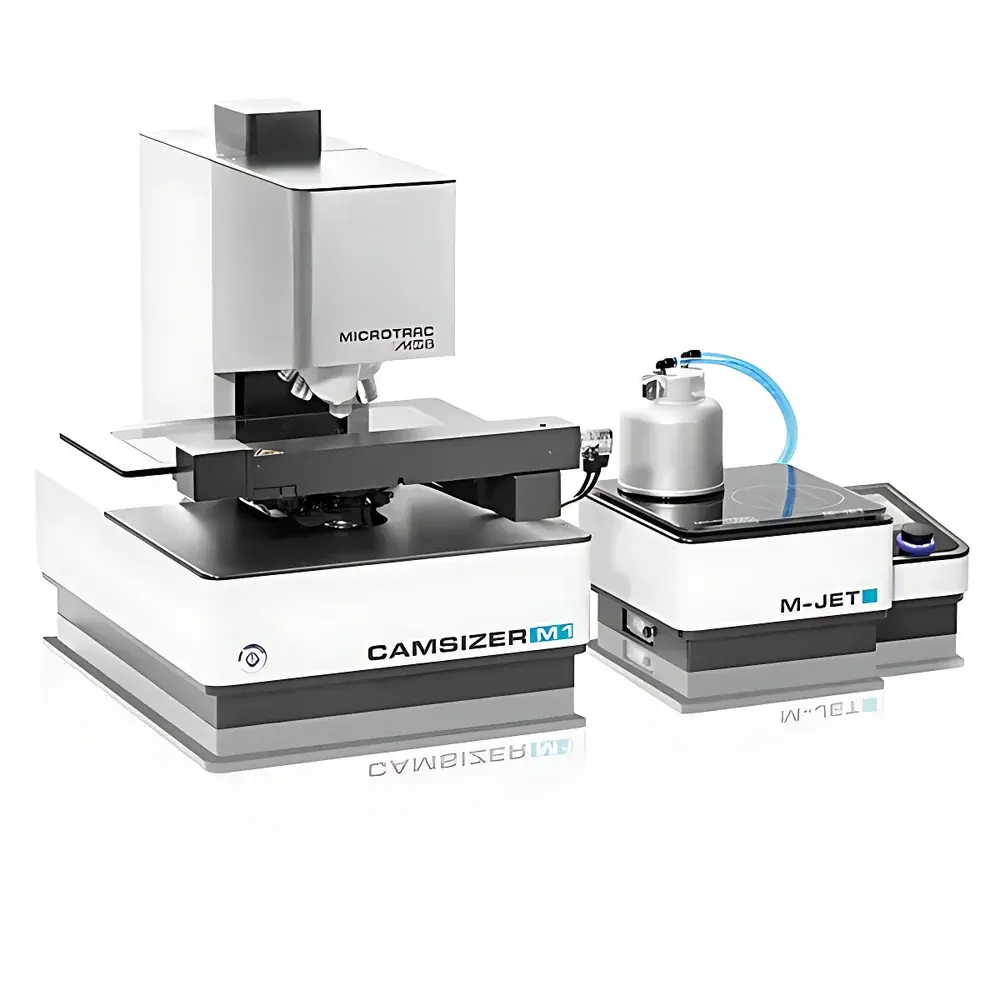
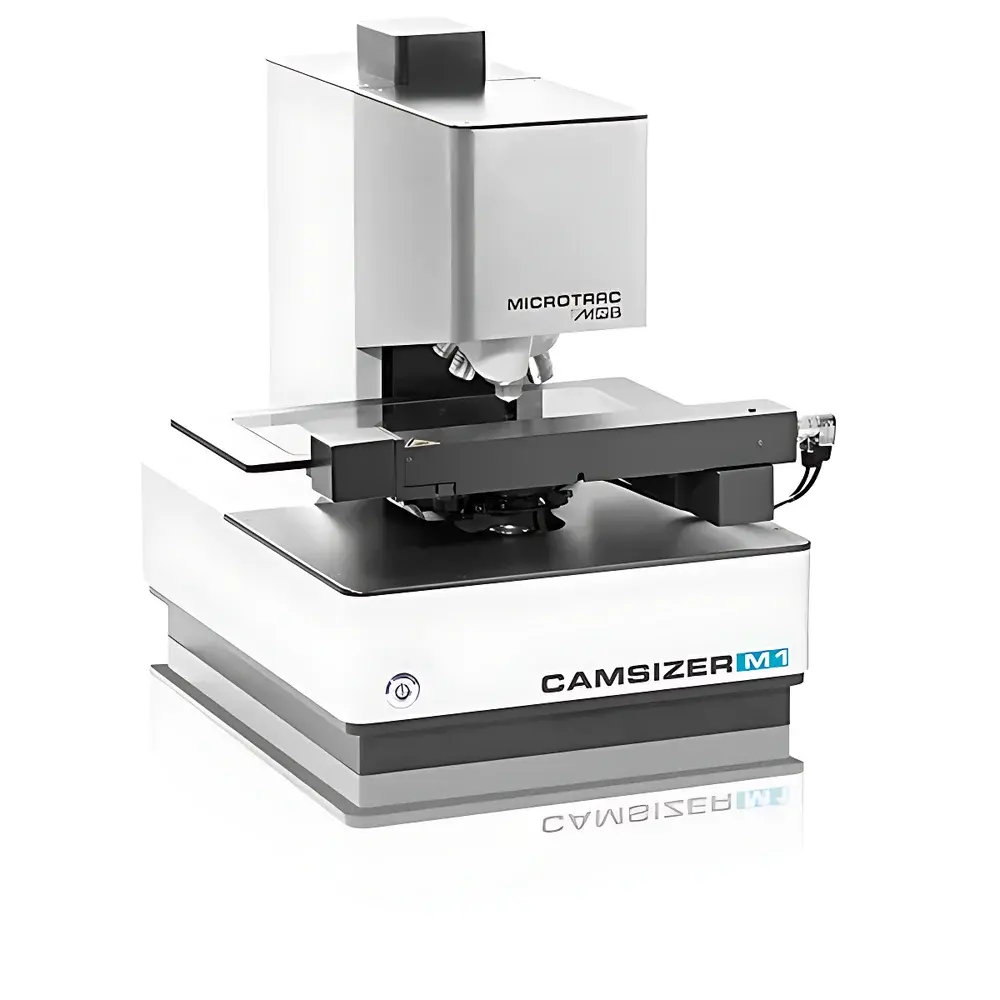
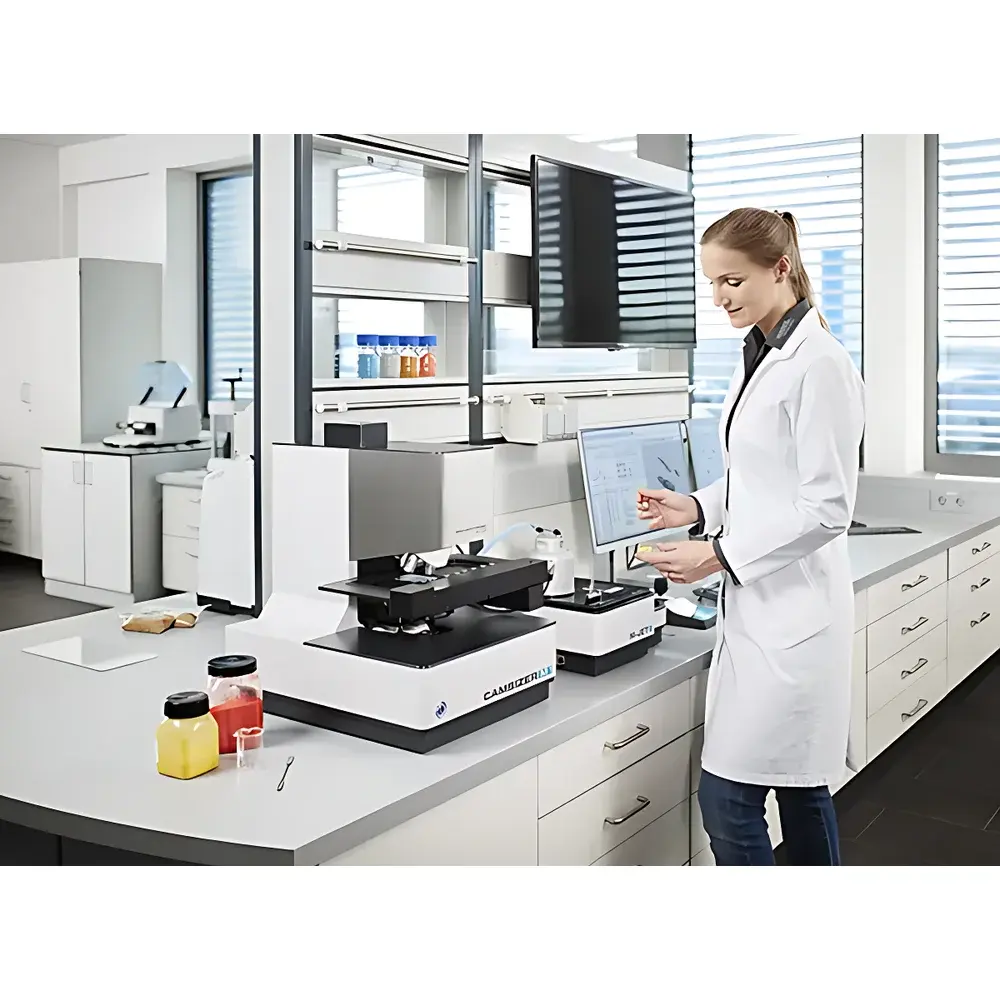
Microtrac MRB Camsizer M1 Static Image-Based Particle Size and Shape Analyzer
| Brand | Microtrac MRB |
|---|---|
| Origin | Germany |
| Model | Camsizer M1 |
| Measurement Principle | Static Image Analysis (ISO 13322-1) |
| Measurement Range | 0.5 µm – 1500 µm |
| Camera Resolution | 18.1 MP color sensor |
| Maximum Digital Resolution | 35 nm |
| Objective Lenses | 2.5×, 5×, 10×, 20×, 50× (standard) |
| Sample Stage Positioning Accuracy | <3 µm |
| Repeatability | ±1 µm |
| Dispersion Methods | Dry air dispersion (M-Jet module) and wet dispersion |
| Light Sources | Transmitted light, reflected light, and combined illumination |
| Particle Morphology Parameters | Aspect Ratio, Compactness, Convexity, Roundness |
| Maximum Supported Objectives | 6 |
| Dimensions (Analyzer) | 450 mm × 540 mm × 550 mm |
| Weight (Analyzer) | 45 kg |
| Power Supply | 100–230 V / 50–60 Hz |
| Interface | USB 2.0 (control), USB 3.0 (camera) |
Overview
The Microtrac MRB Camsizer M1 is a high-precision static image-based particle size and shape analyzer engineered for rigorous R&D and QC environments in pharmaceuticals, advanced materials, metallurgy, and chemical manufacturing. It implements the ISO 13322-1 compliant static image analysis principle: particles are immobilized on a precision stage, imaged under controlled optical conditions, and segmented using advanced edge-detection algorithms to extract both dimensional and morphological descriptors. Unlike dynamic imaging systems, the Camsizer M1 captures fully resolved, motion-free images—enabling sub-micron resolution (down to 35 nm digital resolution) and unambiguous identification of individual particle features including surface texture, edge definition, and geometric anomalies. Its dual-path optical design supports simultaneous transmitted and reflected illumination, ensuring optimal contrast for both transparent (e.g., API crystals, silica gels) and opaque (e.g., metal powders, pigments) samples. The system’s calibrated magnification ladder (2.5× to 50× standard; extendable to 1.25× or 100×) allows seamless coverage across the full 0.5 µm – 1500 µm measurement range, while its proprietary stitching algorithm enables accurate characterization of particles exceeding nominal field-of-view limits—critical for fibrous, flake-like, or agglomerated specimens.
Key Features
- High-fidelity 18.1 megapixel color CMOS camera with real-time auto-focus and LED-illuminated optical path for consistent contrast and signal-to-noise ratio
- Motorized, high-accuracy sample stage with positional repeatability of ±1 µm and absolute positioning accuracy better than 3 µm—ensuring pixel-level registration across multi-field acquisitions
- Five standard objective lenses (2.5×, 5×, 10×, 20×, 50×) plus optional 1.25× or 100× objectives to accommodate ultra-fine or macro-scale particulates
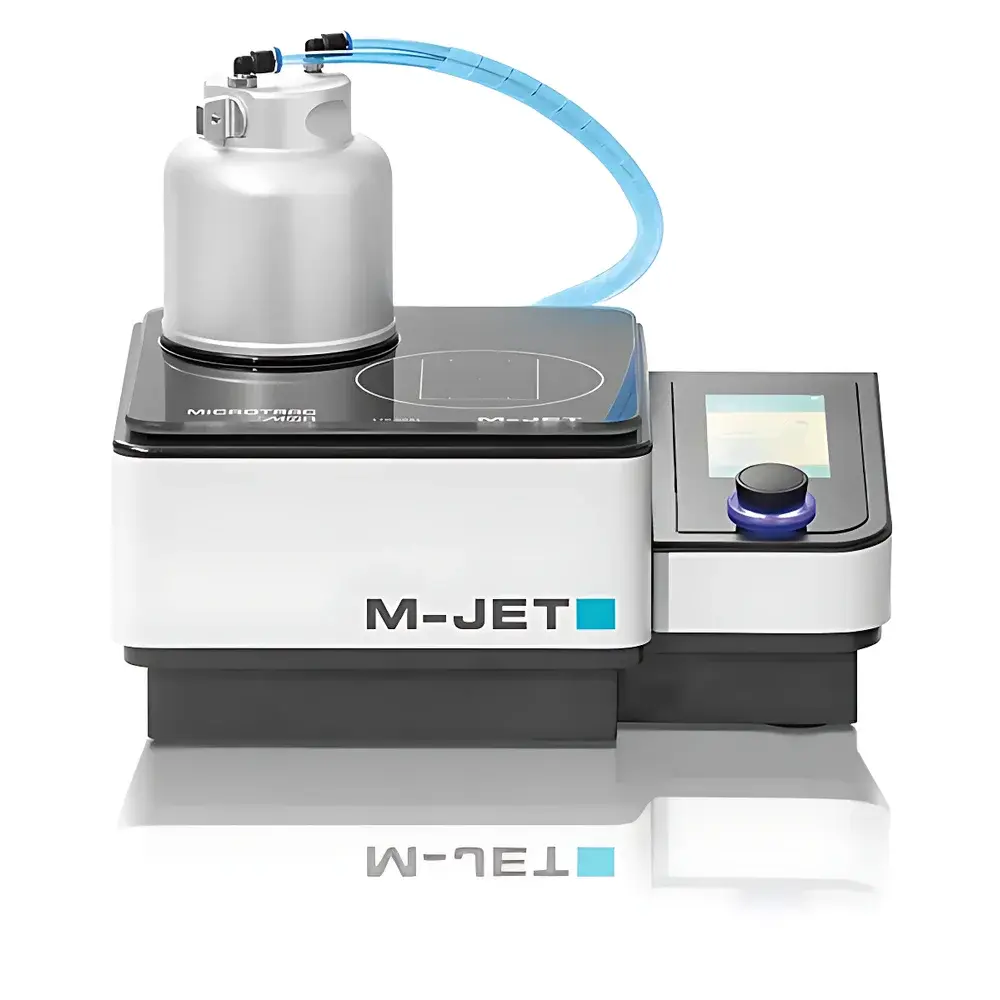
- Integrated M-Jet dry dispersion module with programmable vacuum control (−10 to −70 kPa) for gentle, reproducible de-agglomeration of cohesive powders without mechanical stress
- Modular sample holders supporting eight standard 76 × 26 mm slides, four extended 76 × 52 mm slides, large-area glass plates, and membrane filtration mounts—facilitating standardized GLP-compliant workflows
- Onboard calibration routine using NIST-traceable reference standards; automatic scale factor assignment per objective ensures metrological traceability and inter-instrument comparability
Sample Compatibility & Compliance
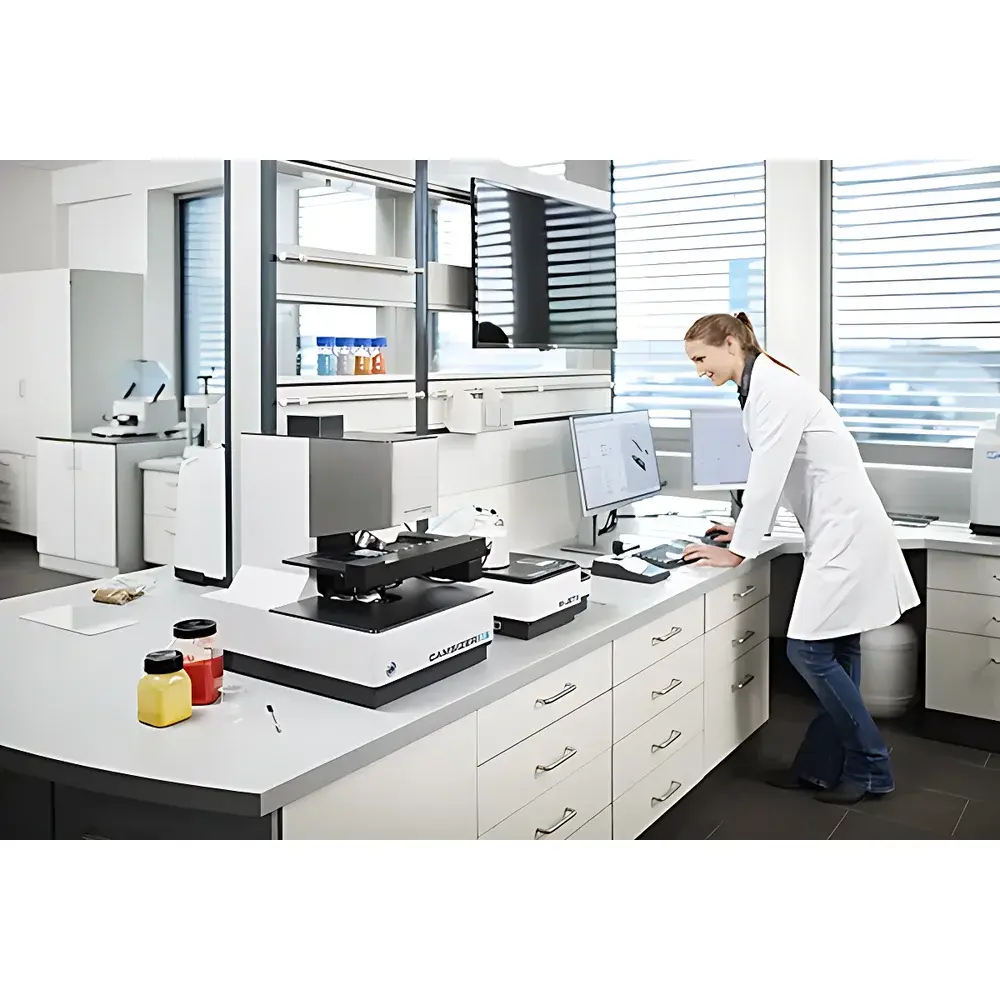
The Camsizer M1 accommodates both dry powders and liquid suspensions, making it suitable for raw material qualification, in-process monitoring, and final product release testing. Dry analysis leverages the M-Jet air dispersion unit to achieve uniform monolayer deposition, while wet dispersion utilizes gravity-fed or syringe-pump delivery into a flow cell compatible with aqueous and organic media. All hardware and software components conform to IEC 61000-6-3 (EMC) and IEC 61010-1 (safety) standards. Data acquisition and reporting modules support audit trails, electronic signatures, and user access controls aligned with FDA 21 CFR Part 11 requirements. Method validation documentation—including precision, linearity, detection limit, and robustness assessments—is provided to assist laboratories in meeting ISO/IEC 17025 and GMP/GLP compliance obligations.
Software & Data Management
Particle X-Plorer software serves as the analytical engine for the Camsizer M1. It delivers ISO-compliant particle detection, classification, and statistical reporting—including D10/D50/D90, span, and higher-order moments (e.g., skewness, kurtosis). Morphological parameters—Aspect Ratio, Compactness, Convexity, Roundness, Solidity, and Circularity—are calculated per particle using binary mask geometry and Euclidean distance transforms. Batch processing, template-driven method recall, and customizable report generation (PDF, CSV, XML) streamline regulatory submissions. Raw image archives, metadata logs, and version-controlled analysis protocols are stored in an encrypted local database. Optional integration with LIMS via OPC UA or RESTful API enables automated data routing and enterprise-level traceability.
Applications
- Pharmaceuticals: Quantitative assessment of active pharmaceutical ingredient (API) crystallinity, excipient morphology, and blend uniformity—supporting QbD initiatives and USP <429> guidance on particle characterization
- Advanced Manufacturing: Critical evaluation of metal powders for additive manufacturing (AM), including detection of satellite particles, spatter, and irregular sphericity—directly informing ASTM F3049 and ISO/ASTM 52900 conformance
- Materials Science: Discrimination of silicate crystal habits (e.g., acicular vs. platy vs. equant) via convexity–aspect ratio bivariate plots, enabling correlation with rheology, packing density, and dissolution kinetics
- Chemicals & Catalysts: Monitoring of catalyst support morphology degradation during thermal cycling or acid exposure—linking shape evolution to catalytic activity loss
- Food & Agrochemicals: Characterization of spray-dried emulsions, granulated nutrients, and micronized pesticides where particle shape governs dispersibility, wettability, and bioavailability
FAQ
What standards does the Camsizer M1 comply with?
The instrument implements static image analysis per ISO 13322-1 and supports method validation in accordance with ISO 13322-2 (wet dispersion), USP <429> (particle characterization), and ASTM E2457 (metal powder morphology).
Can the Camsizer M1 analyze nanoparticles below 1 µm?
Yes—the system achieves effective resolution down to 0.5 µm using 50× magnification and 35 nm digital resolution; sub-µm particles are reliably detected and measured when properly dispersed and imaged.
Is wet dispersion integrated or external?
Wet dispersion is supported via an optional flow cell module that interfaces directly with the sample stage; no third-party pumps or housings are required.
How is measurement reproducibility ensured across operators and instruments?
Through hardware-level calibration using certified reference slides, standardized slide loading protocols, and software-enforced method locking—including fixed illumination settings, threshold parameters, and segmentation algorithms.
Does the system support automated pass/fail criteria for release testing?
Yes—Particle X-Plorer allows definition of specification limits per parameter (e.g., D50 ±0.2 µm, Roundness ≥0.85), with real-time flagging and exportable compliance reports.
Related Products



