
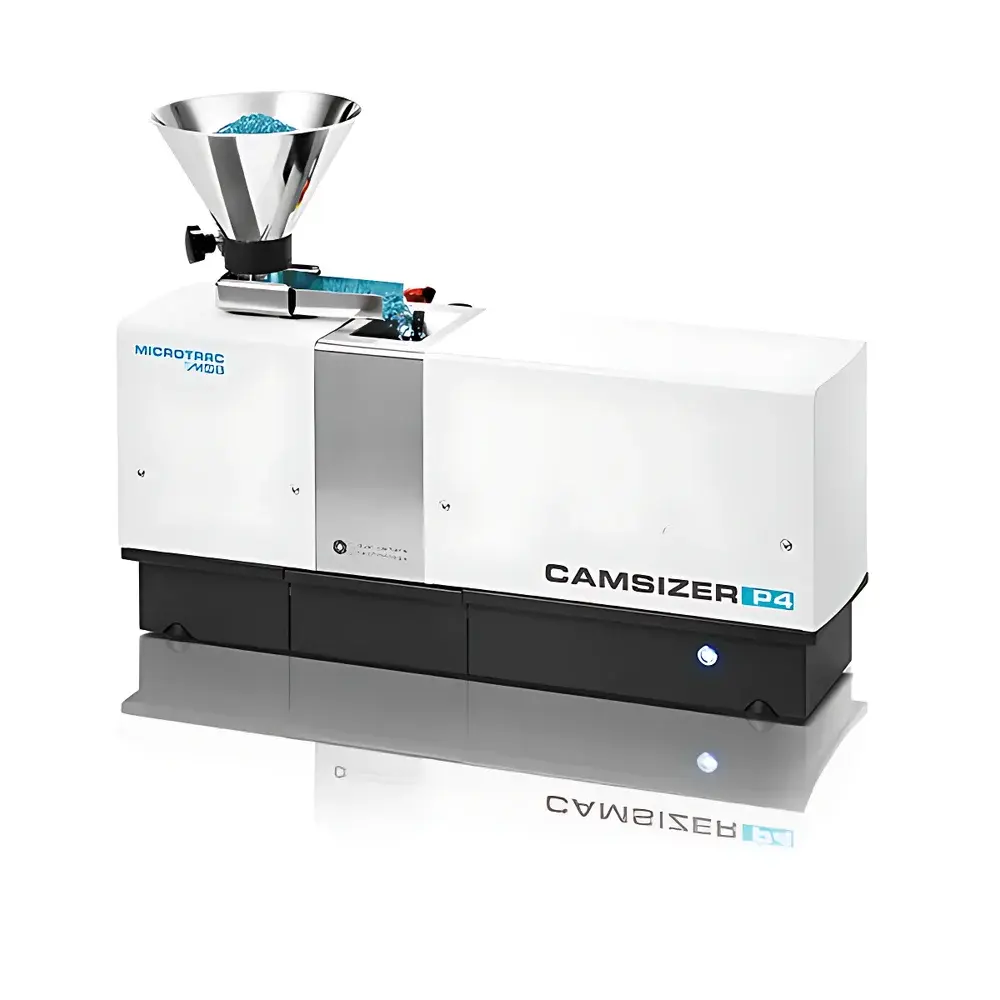
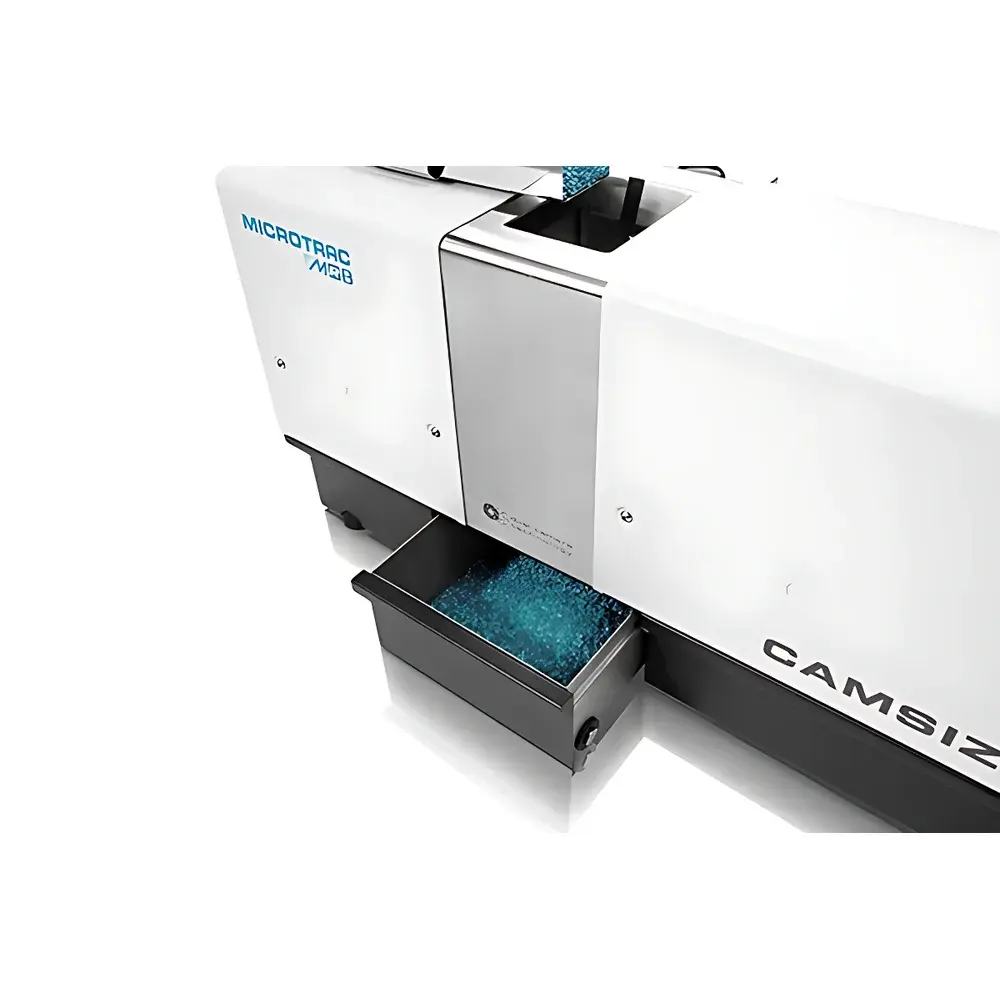
Microtrac MRB CAMSIZER P4 Dynamic Image Analysis Particle Size and Shape Analyzer
| Brand | Microtrac MRB |
|---|---|
| Origin | Germany |
| Manufacturer | RETSCH TECHNOLOGY & JENOPTIK JENA (formerly ZEISS) |
| Model | CAMSIZER P4 |
| Measurement Principle | Dynamic Image Analysis (DIA) |
| Measurement Range | 10 µm – 30 mm |
| Sample Type | Dry, free-flowing powders and granules |
| Dispersion Method | Vibratory dry dispersion |
| Optical System | Dual high-resolution lenses (1.3 MP per channel) |
| Image Acquisition Rate | 60 frames/s |
| Pixel Resolution per Image | >780,000 pixels |
| Compliance | ISO 13322-2, CE, FDA 21 CFR Part 11, GLP/GMP-ready audit trail |
| Dimensions (H×W×D) | 650 × 850 × 350 mm |
| Weight | 40 kg (without PC) |
| Analysis Time | 2–3 min (sample-dependent) |
| Key Output Parameters | Equivalent circular diameter (ECD), Feret diameter, aspect ratio, circularity, convexity, solidity, transparency index, particle count, size distribution (volume-, number-, surface-weighted), shape distribution histograms |
Overview
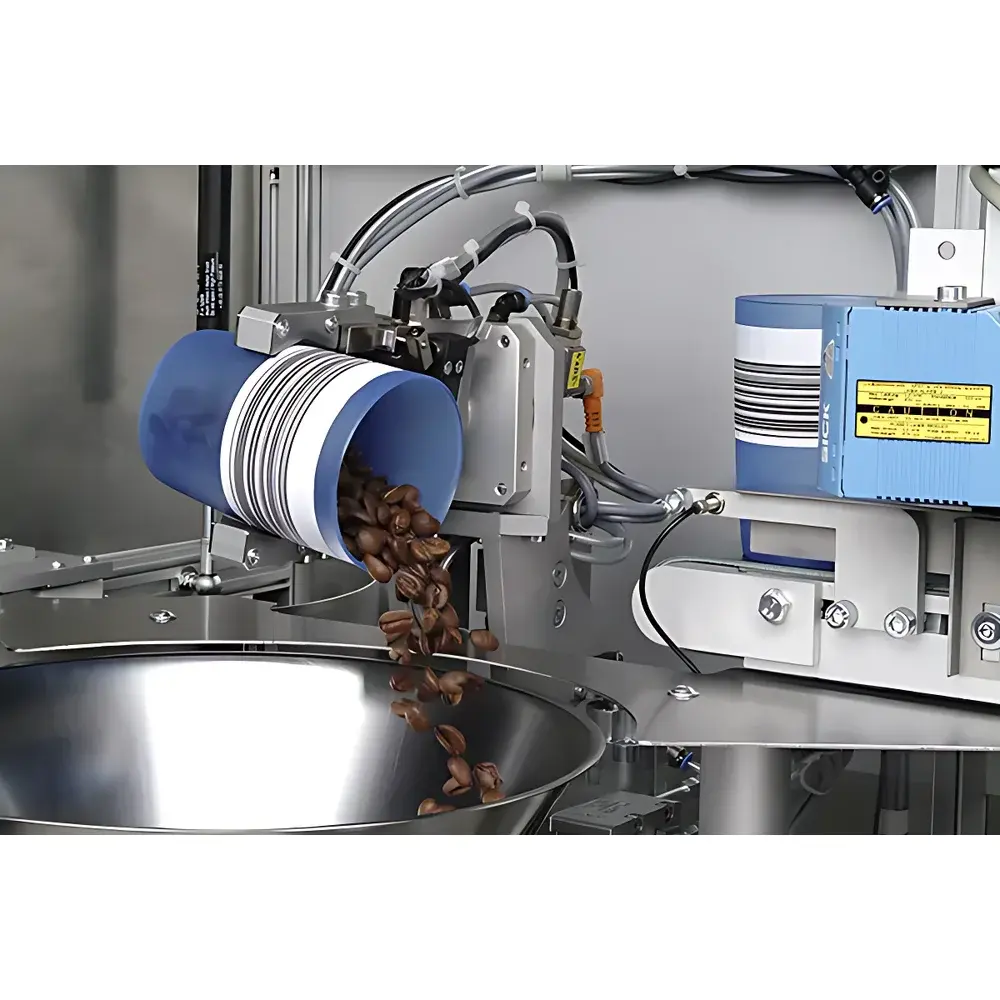
The Microtrac MRB CAMSIZER P4 is a high-performance dynamic image analysis (DIA) particle size and shape analyzer engineered for precision, reproducibility, and regulatory compliance in industrial and R&D laboratories. Unlike static imaging systems or ensemble-averaging techniques such as laser diffraction, the CAMSIZER P4 captures individual particles in motion—enabling true morphological characterization alongside size distribution quantification. Its patented dual-lens optical architecture, co-developed by RETSCH TECHNOLOGY and JENOPTIK JENA (successor to key ZEISS optical expertise), delivers full-frame, high-fidelity color images at 60 Hz with >780,000 pixels per frame. This enables robust statistical sampling across a uniquely wide dynamic range—from 10 µm to 30 mm—making it suitable for coarse granules (e.g., fertilizers, roasted coffee beans, foundry sands) as well as fine powders (e.g., catalysts, pharmaceutical excipients, metal atomized powders). The system operates exclusively in dry mode using vibratory dispersion, eliminating liquid handling complexity while ensuring representative sampling of free-flowing materials.
Key Features
- Dual high-resolution optical path: Two synchronized 1.3-megapixel lenses capture orthogonal projections simultaneously—minimizing shadowing artifacts and enabling accurate 2D morphometric reconstruction.
- Real-time imaging and processing: Onboard FPGA-accelerated image analysis delivers results within 2–3 minutes, including full particle-by-particle metadata export.
- Regulatory-compliant architecture: Built-in electronic signature support, audit trail logging, user access control, and data integrity safeguards compliant with FDA 21 CFR Part 11 and EU Annex 11 requirements.
- ISO 13322-2 certified methodology: Fully traceable to the international standard for static and dynamic image analysis of particulate systems.
- Scalable throughput: High-capacity vibratory feed unit ensures statistically significant sample volumes (>10,000 particles per analysis typical), enhancing representativeness over micro-sampling techniques.
- Modular software interface: Supports multi-language operation (English, German, French, Spanish, Chinese), customizable reporting templates, and direct integration into LIMS or MES environments via OPC UA or SQL export.
Sample Compatibility & Compliance
The CAMSIZER P4 is validated for dry, free-flowing particulates across diverse sectors—including food (sugar, salt, instant beverages), chemicals (catalysts, pigments), minerals (cement, ores, refractories), polymers (PS beads, toner), pharmaceuticals (API granules, excipients), and advanced materials (additive manufacturing metal powders, battery cathode materials). It excludes cohesive, fibrous, or highly electrostatic samples without pre-treatment. All measurements adhere to ISO 13322-2 for dynamic image analysis, and system validation documentation supports GLP and GMP audits. CE marking confirms conformity with EU Machinery Directive 2006/42/EC and Electromagnetic Compatibility Directive 2014/30/EU.
Software & Data Management
The proprietary CAMSIZER software provides complete traceability from raw image acquisition through feature extraction to final distribution statistics. Each analyzed particle is assigned a unique ID linked to its geometric descriptors (ECD, Feret min/max, aspect ratio, circularity, convexity, solidity, transparency index), enabling post-hoc filtering, clustering, and comparative trend analysis. Data exports include CSV, Excel, and XML formats compatible with statistical packages (JMP, Minitab) and visualization tools (Tableau, Power BI). Audit trails record operator ID, timestamp, instrument configuration, calibration status, and any manual intervention—fully satisfying FDA 21 CFR Part 11 requirements for electronic records and signatures.
Applications
- Food & beverage QA/QC: Quantifying crystal size in sucrose, agglomeration in powdered dairy, or roast uniformity in ground coffee.
- Pharmaceutical development: Monitoring granule morphology during fluid bed drying or roller compaction; verifying blend uniformity via particle shape fingerprinting.
- Materials science: Characterizing sphericity and surface roughness of metal AM powders; correlating catalyst particle geometry with pore accessibility.
- Mining & construction: Assessing angularity and flakiness of aggregates per ASTM D5821; grading cement clinker for optimal hydration kinetics.
- Chemical manufacturing: Validating attrition resistance of zeolite catalysts; optimizing spray-dried detergent particle flowability via circularity and convexity metrics.
FAQ
Does the CAMSIZER P4 require calibration standards?
Yes—traceable NIST-traceable glass microspheres and certified reference materials (e.g., NIST SRM 1980) are recommended for periodic verification of pixel-to-length conversion and shape algorithm stability.
Can it analyze wet or suspended samples?
No—the CAMSIZER P4 is designed exclusively for dry, aerodynamically dispersible materials. For slurry or emulsion analysis, consider the CAMSIZER XT (optimized for sub-7 mm particles in liquid suspension).
How does it compare to laser diffraction for shape-sensitive applications?
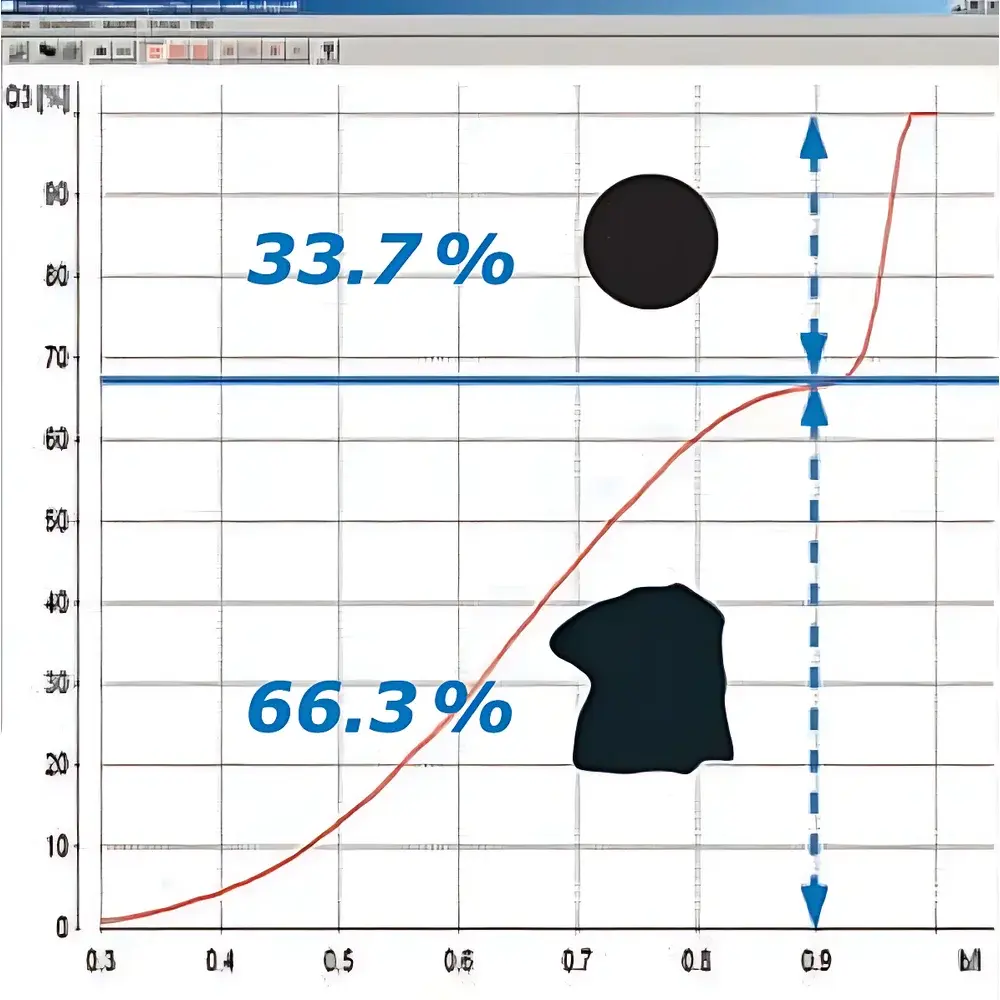
Laser diffraction assumes spherical equivalence and cannot resolve aspect ratio, convexity, or surface texture. The CAMSIZER P4 provides orthogonal shape descriptors essential for predicting flow, packing density, dissolution rate, and mechanical interlocking.
Is remote monitoring or integration with factory automation possible?
Yes—via Ethernet-connected OPC UA server, the system supports real-time data streaming to SCADA platforms and scheduled unattended operation with auto-start triggers based on PLC signals or time intervals.



