
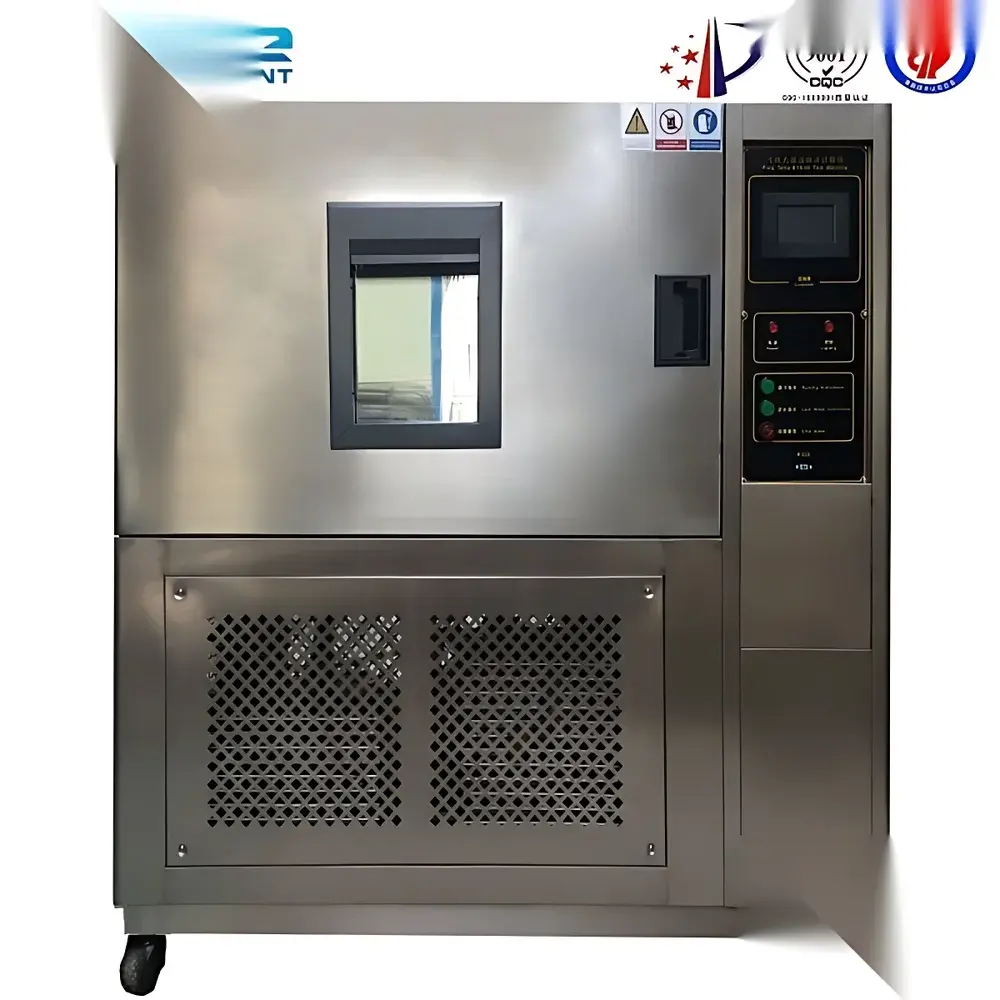
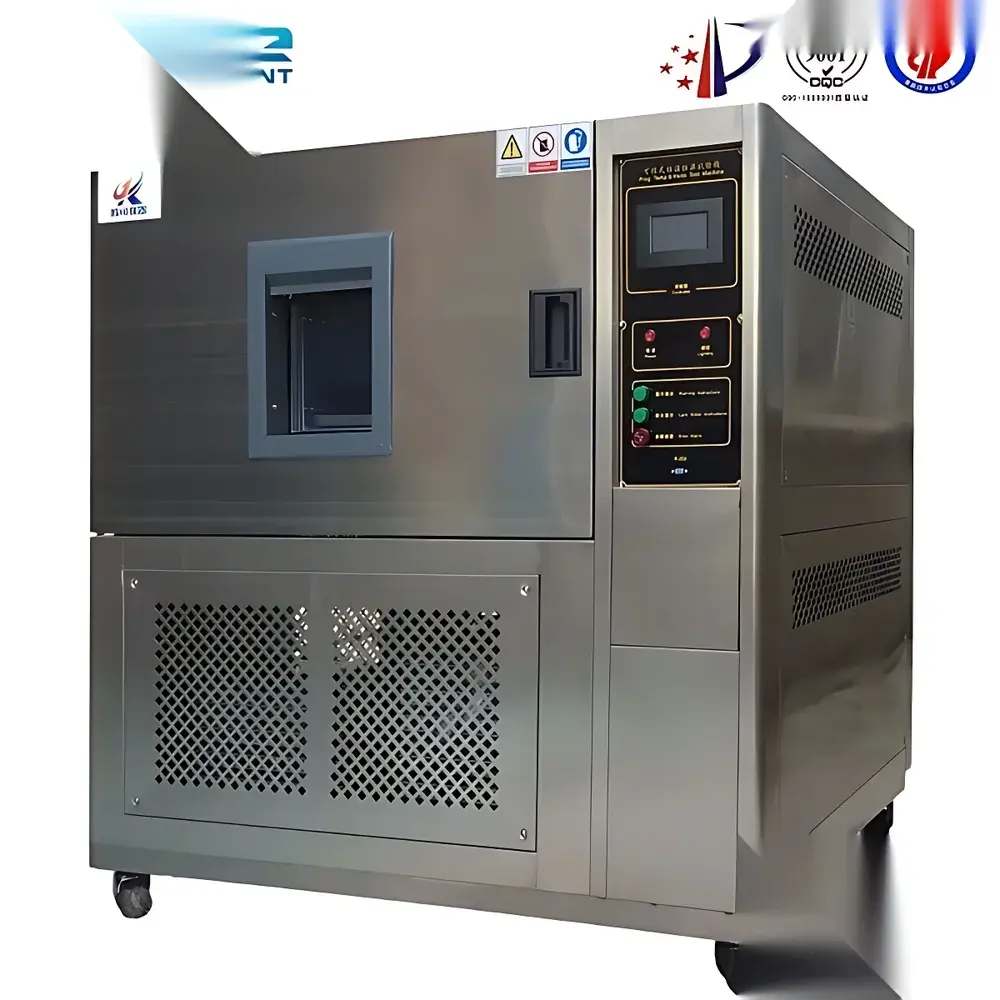
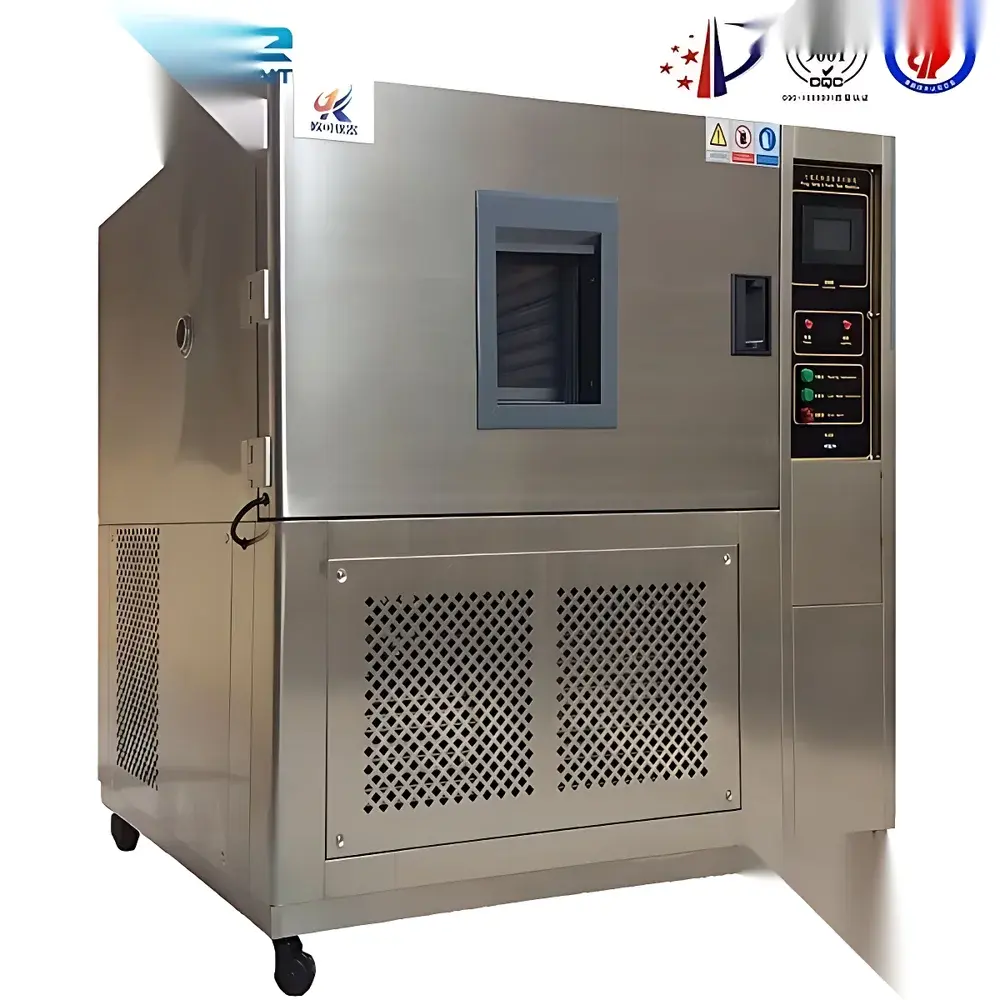
Miniature Temperature and Humidity Controlled Environmental Test Chamber
| Brand | OK Instrumentation |
|---|---|
| Model Series | OK-TH-80 to OK-TH-1000 |
| Temperature Range | -70 °C to +150 °C (configurable options A–D) |
| Humidity Range | 20–98 %RH (optional 5–98 %RH) |
| Temp. Uniformity | ±0.5 °C |
| RH Uniformity | ±2.5 %RH |
| Temp. Stability | ±2 °C |
| RH Stability | +2–3 %RH |
| Resolution | 0.1 °C / 0.1 %RH |
| Heating Rate | ~4.0 °C/min |
| Cooling Rate | ~1.0 °C/min |
| Internal Volume | 80–1000 L |
| Construction | SUS#304 stainless steel |
| Controller | Touchscreen LCD with bilingual (EN/CN) interface |
| Refrigeration | Hermetic dual-stage compressor system with R404A/R23 eco-refrigerants |
| Compliance | MIL-STD-810G (via GJB150.3/4), IEC 60068-2-1 (cold), -2 (dry heat), -30 (cyclic humidity), -78 (steady-state humidity), GB/T 2423.1–4 |
Overview
The OK-TH Miniature Temperature and Humidity Controlled Environmental Test Chamber is an engineered solution for precision environmental simulation in constrained laboratory, R&D, and quality assurance spaces. Designed on the principle of forced-air convection with dual independent control loops—one for temperature and one for relative humidity—the chamber delivers stable, repeatable climatic conditions across a wide operational envelope. Its compact footprint and modular internal geometry make it suitable for small-component testing, material aging studies, electronics reliability screening, and pre-compliance environmental stress evaluation. Unlike large-scale walk-in chambers, the OK-TH series prioritizes thermal and hygrometric fidelity within limited spatial footprints—achieving ±0.5 °C temperature uniformity and ±2.5 %RH humidity uniformity per IEC 60068-3-5—without compromising structural integrity or long-term calibration stability.
Key Features
- Modular internal volume range: 80 L (OK-TH-80) to 1000 L (OK-TH-1000), with customizable internal dimensions to accommodate user-specific DUT geometries.
- Dual-stage refrigeration system using environmentally compliant R404A (high-temp stage) and R23 (low-temp stage) refrigerants, enabling operation down to –70 °C without liquid nitrogen dependency.
- High-resolution digital control architecture with 0.1 °C / 0.1 %RH sensing resolution and real-time PID tuning via touchscreen interface; supports English/Chinese language switching and programmable ramp-soak profiles.
- SUS#304 stainless steel interior and exterior construction ensures corrosion resistance, cleanroom compatibility, and compliance with ISO 14644-1 particulate requirements when operated under controlled ambient conditions.
- Integrated mechanical features include two-tier adjustable stainless steel shelves, one 50 mm diameter cable port with silicone gasket, four swivel casters with locking brakes, and four leveling feet for vibration-isolated placement on standard lab benches or ISO-classified floors.
- Electrical configuration meets international industrial standards: 3-phase 380 V ±5 %, 50 Hz ±0.5 Hz, 5-wire grounding—fully compatible with CE-marked power distribution panels and uninterruptible power supply (UPS) integration for mission-critical test cycles.
Sample Compatibility & Compliance
The OK-TH chamber accommodates samples up to 100 cm × 100 cm × 100 cm (OK-TH-1000 model), with unrestricted access to airflow paths due to optimized fan placement and baffle design. It supports non-volatile, non-outgassing materials including PCB assemblies, polymer films, pharmaceutical packaging, optical lenses, and sensor modules. All models are validated against internationally recognized environmental test standards, including MIL-STD-810G Method 502.5 (low temperature), Method 501.5 (high temperature), and Method 507.5 (humidity); IEC 60068-2-1 (cold), -2-2 (dry heat), -2-30 (damp heat, cyclic), and -2-78 (damp heat, steady state); and corresponding Chinese national standards GB/T 2423.1–4. The chamber’s control system logs timestamped temperature/humidity data at user-defined intervals (1–60 s), supporting GLP/GMP audit trails when paired with external validation software.
Software & Data Management
While the embedded controller provides standalone operation, optional RS485/Modbus RTU and Ethernet (TCP/IP) interfaces enable seamless integration into centralized laboratory information management systems (LIMS) or SCADA platforms. Raw sensor data—including chamber setpoint, actual temperature, actual RH, compressor status, and alarm history—is exportable in CSV format for post-test statistical analysis (e.g., Cpk, control charting per ISO 22514). Firmware updates are performed via USB memory stick with cryptographic signature verification to ensure traceability and prevent unauthorized modification—aligning with FDA 21 CFR Part 11 requirements for electronic records and signatures where applicable.
Applications
- Accelerated aging of elastomers, adhesives, and conformal coatings under combined thermal-hygrometric stress.
- Pre-screening of automotive ECUs and infotainment modules per ISO 16750-4 (climate resistance).
- Stability testing of diagnostic reagents and lyophilized biologics per ICH Q1A(R2) guidelines.
- Qualification of MEMS sensors and micro-optical components prior to AEC-Q200 stress profiling.
- Validation of packaging barrier performance (e.g., blister foil, desiccant sachets) under ICH Q5C storage condition simulations.
- Teaching laboratories requiring reproducible, low-footprint environmental exposure platforms for materials science curricula.
FAQ
What is the minimum achievable temperature, and does it require auxiliary cooling?
The OK-TH series achieves –70 °C using an integrated dual-stage refrigeration system; no external chiller or LN₂ supply is required.
Can humidity be controlled below 20 %RH?
Standard configuration supports 20–98 %RH; extended range options (5–98 %RH or 10–98 %RH) are available as factory-configured upgrades.
Is the chamber suitable for use in ISO Class 5 cleanrooms?
Yes—SUS#304 construction, smooth welded seams, and absence of internal paint or coating meet ISO 14644-1 surface cleanliness requirements when maintained per manufacturer-recommended cleaning protocols.
How is temperature and humidity uniformity verified during qualification?
Uniformity is validated per IEC 60068-3-5 using nine calibrated NIST-traceable sensors placed at defined locations within the working volume; full validation reports are provided with each unit.
Does the controller support automated test sequencing with pass/fail logic?
Yes—the touch interface supports multi-step programs with conditional branching, dwell times, ramp rates, and configurable alarm thresholds triggering audible/visual alerts or relay outputs.



