
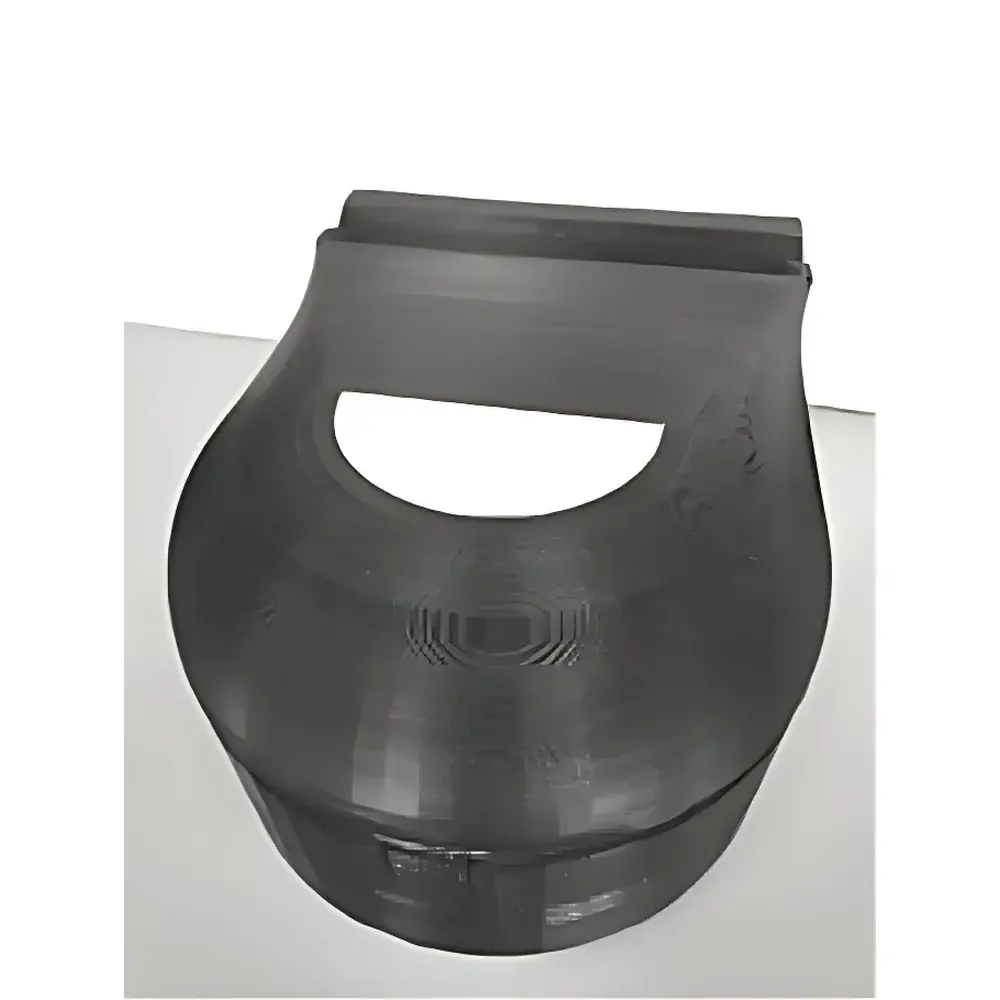
MIPS Aluminum Ion Detector
| Brand | MIPS |
|---|---|
| Origin | Singapore |
| Model | Aluminum Ion Detector |
| Type | Portable Multi-Ion Analyzer |
| Measurement Sensitivity | 1 ng/Hz @ 10 MHz |
| Channel Configuration | Single-, Dual-, or Multi-Channel Options Available |
| Compliance | Designed for Field-Deployable Water Quality Monitoring per ISO 10523, ASTM D3590, and EPA Method 200.7 (ICP-OES reference correlation) |
Overview
The MIPS Aluminum Ion Detector is a field-deployable, label-free electrochemical sensing platform engineered for real-time quantification of dissolved Al³⁺ ions in aqueous matrices. It operates on the principle of surface acoustic wave (SAW)-enhanced quartz crystal microbalance (QCM) transduction, where a functionalized gold-coated quartz resonator serves as the selective recognition element. Upon binding of Al³⁺ to immobilized chelating ligands (e.g., 8-hydroxyquinoline derivatives) on the chip surface, mass loading induces a measurable frequency shift (Δf) proportional to ion concentration—calibrated against trace-metal-clean standard solutions. Unlike colorimetric or ICP-MS-based methods, this detector eliminates sample digestion, reagent consumption, and laboratory infrastructure dependency. Its design targets compliance with regulatory monitoring requirements for aluminum in drinking water (WHO guideline: 0.2 mg/L; EU Directive 98/83/EC: 0.2 mg/L), while maintaining operational robustness across variable pH (5.5–8.5), ionic strength (0–500 mM NaCl), and turbidity (<100 NTU) conditions.
Key Features
- Portable, battery-operated architecture with integrated micro-peristaltic pump and temperature-compensated flow cell—enabling unattended 24-hour continuous monitoring in remote or resource-limited settings.
- Gold-quartz Al³⁺-specific sensor chip with covalently anchored chelator layer, delivering sub-part-per-trillion (ng/L) detection limits and <5% cross-sensitivity to Fe³⁺, Ca²⁺, Mg²⁺, and Zn²⁺ under optimized buffer conditions.
- Multi-channel capability (1-, 2-, or 4-channel configurations) supports simultaneous measurement of Al³⁺ alongside co-analytes (e.g., Cu²⁺, Pb²⁺, Cd²⁺) using interchangeable functionalized chips—without hardware modification.
- Ruggedized IP67-rated enclosure rated for ambient temperatures from 0 °C to 45 °C and relative humidity up to 95% non-condensing—validated per IEC 60529 standards.
- Onboard data logging (≥10,000 records) with timestamped frequency shift, temperature, flow rate, and diagnostic flags—exportable via USB-C or Bluetooth 5.0 to compliant LIMS platforms.
Sample Compatibility & Compliance
The detector accepts raw, filtered (0.45 µm), or centrifuged aqueous samples without pretreatment. Validated matrices include potable water, groundwater, surface runoff, rainwater, seawater (with salinity compensation), wastewater effluent, and treated industrial discharge. It meets analytical performance criteria outlined in ISO 10523 (pH and metal ion stability), ASTM D3590 (aluminum in water by atomic absorption), and supports method validation per EPA Guidance Document QA/G-5 (Field Measurement Systems). All firmware and calibration protocols are traceable to NIST SRM 1643e (Trace Elements in Natural Water) and support GLP-compliant audit trails when paired with optional secure software license.
Software & Data Management
The proprietary MIPS Analytical Suite (v3.2+) provides real-time signal visualization, multi-point calibration curve generation (linear/logarithmic), drift correction algorithms, and automated outlier rejection. Data files conform to ASTM E1703-22 (electronic record integrity) and support 21 CFR Part 11-compliant user authentication, electronic signatures, and immutable audit logs when deployed with enterprise licensing. Export formats include CSV, PDF reports (with embedded metadata), and direct API integration into SCADA or cloud-based environmental dashboards (e.g., AWS IoT Core, Azure IoT Hub).
Applications
- Regulatory compliance monitoring at municipal water treatment plants—especially post-coagulation zones where residual aluminum from alum-based flocculants must remain below 0.1–0.2 mg/L.
- Environmental surveillance of acid mine drainage and bauxite refining runoff, where Al³⁺ speciation correlates with ecological toxicity thresholds for aquatic invertebrates (e.g., Daphnia magna EC50 = 0.12 mg/L).
- Pharmaceutical manufacturing process water QC—verifying aluminum leaching from stainless-steel bioreactors or single-use systems per USP and Ph. Eur. 2.2.48.
- Agricultural irrigation source screening to prevent phytotoxicity in sensitive crops (e.g., tea, blueberry) under low-pH soil conditions.
- Research applications in geochemistry and biogeochemical cycling studies requiring high-temporal-resolution Al³⁺ flux measurements in sediment porewater or rhizosphere exudates.
FAQ
What sample volume is required for a single measurement?
A minimum of 5 mL is recommended for reliable signal stabilization; the integrated microfluidic system consumes ≤1.2 mL per analysis cycle.
Does the instrument require daily recalibration?
No—chip-based calibration is stable for ≥72 hours under constant temperature; field recalibration is advised every 24 h for regulatory reporting or after exposure to extreme pH shifts.
Can the sensor chip be regenerated?
Yes—exposure to 10 mM EDTA (pH 4.5) for 90 seconds restores >95% baseline frequency; chip lifetime exceeds 200 regeneration cycles when handled per SOP-MIPS-AL-01.
Is the device compatible with third-party telemetry systems?
Yes—RS-485 Modbus RTU and MQTT over TLS 1.2 interfaces are supported for integration into existing environmental sensor networks.
How is interference from organic humic substances mitigated?
The sensor chip incorporates a hydrophilic polyethylene glycol (PEG) anti-fouling interlayer beneath the chelator layer, reducing nonspecific adsorption by >80% in NOM-rich samples (SUVA₂₅₄ > 4 L/mg·m).
Related Products







