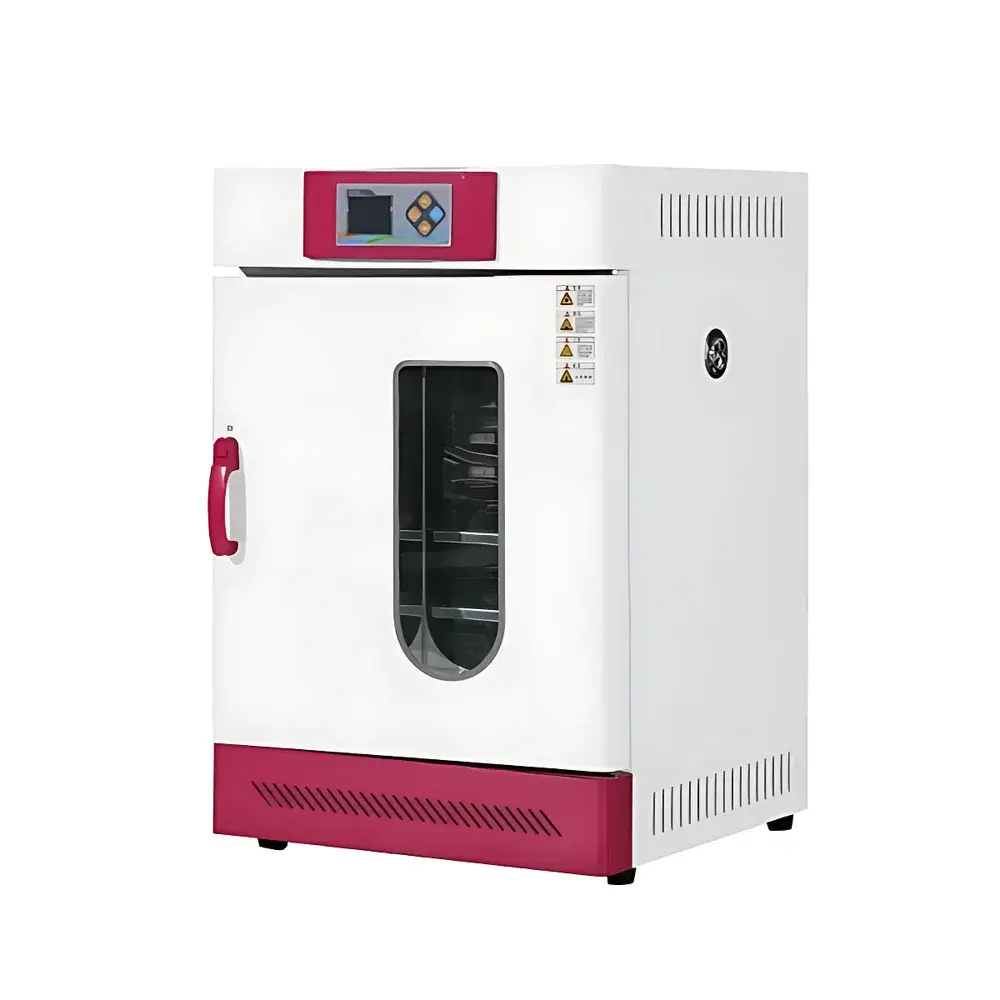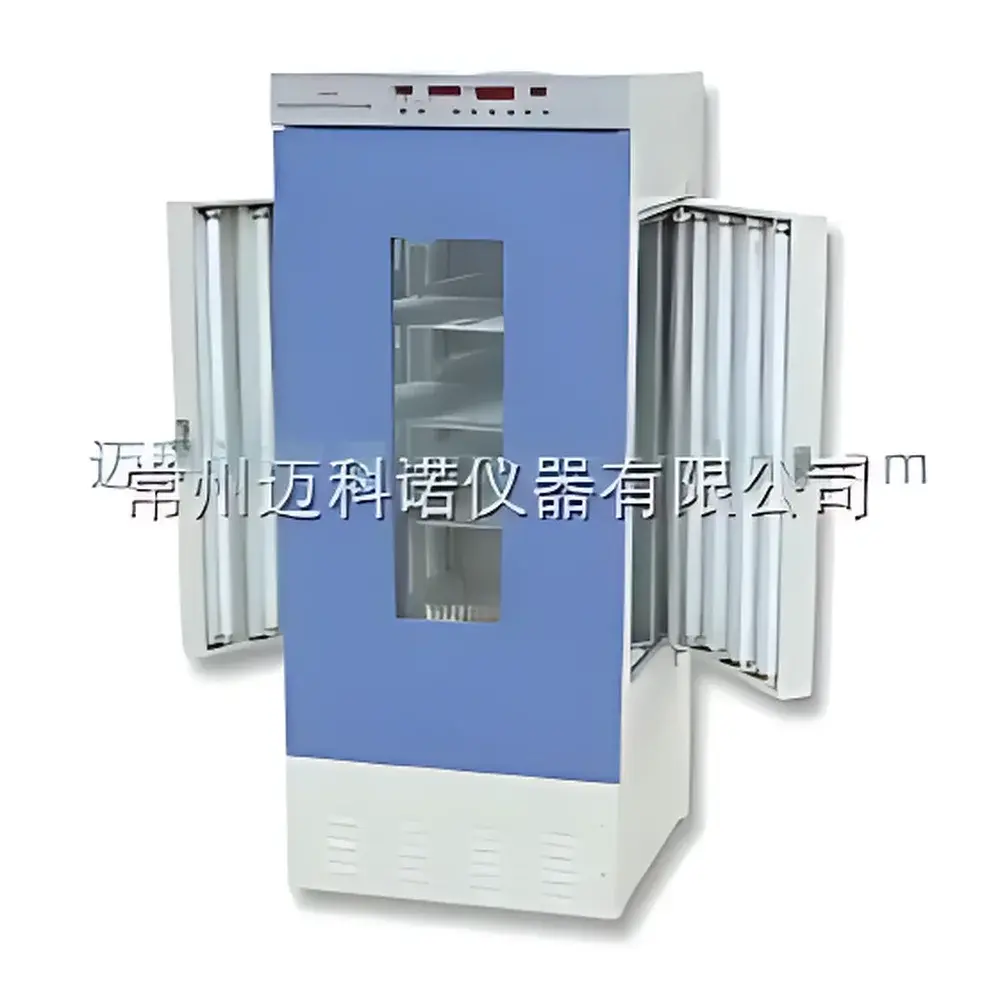
MKN GPX-150 Digital Illuminated Plant Growth Chamber
| Brand | MKN |
|---|---|
| Model | GPX-150 |
| Capacity | 150 L |
| Power Supply | AC 220 V ±10%, 50 Hz ±2% |
| Temperature Control Range | 10–50 °C (with full illumination), 5–50 °C (dark mode) |
| Temperature Accuracy | ±1 °C |
| Temperature Uniformity | ±1 °C |
| Illuminance | ≥5000 lx |
| Operating Ambient Temperature | 0–40 °C |
| Operating Ambient Relative Humidity | ≤85% RH |
| Construction | Exterior – powder-coated carbon steel |
Overview
The MKN GPX-150 Digital Illuminated Plant Growth Chamber is a precision-engineered environmental control system designed for reproducible, long-term plant physiology studies, seed germination assays, photobiological experiments, and microbial culture under controlled light–temperature regimes. It operates on the principle of active thermoelectric and refrigeration-based dual-mode temperature regulation—combined with uniform, spectrally stable illumination—to replicate diurnal cycles and simulate geographically specific growth conditions. Unlike standard incubators, this chamber integrates calibrated photometric output with high-stability thermal management, enabling compliance with standardized protocols in plant phenotyping (e.g., ASTM E2933), seed viability testing (ISTA), and OECD guideline-based ecotoxicology assessments. Its architecture supports GLP-aligned experimental integrity through stable setpoint maintenance, minimal thermal drift, and traceable LED-based illumination delivery.
Key Features
- Microprocessor-controlled temperature regulation with LED digital display—providing real-time monitoring and ±1 °C accuracy across the full operational range.
- Dual-mode thermal control: accommodates both illuminated (10–50 °C) and dark-phase (5–50 °C) operation, supporting circadian rhythm studies and dark-adapted physiological measurements.
- Uniform illumination system delivering ≥5000 lux at working height, using energy-efficient, low-heat LED arrays mounted behind removable side-access panels for simplified lamp replacement and spectral recalibration.
- Forced-air convection design ensures ≤±1 °C temperature uniformity throughout the 150 L stainless-steel interior chamber—validated per ISO 17025-compliant mapping procedures.
- Robust mechanical construction: exterior powder-coated carbon steel frame, seamless 304 stainless-steel interior, and high-density polyurethane insulation (≥50 mm thickness) minimizing thermal leakage and condensation risk.
- Double-glazed hollow-glass observation door enables non-invasive visual monitoring without compromising thermal or photometric stability.
- Integrated safety logic includes compressor anti-short-cycling delay (≥3 min), automatic power-fail recovery, and over-temperature cut-off—meeting IEC 61000-4 immunity requirements.
Sample Compatibility & Compliance
The GPX-150 accommodates standard plant growth vessels (e.g., Magenta boxes, Petri dishes, multi-well plates), hydroponic trays, and small-scale soil columns up to 12 cm in height. Its interior dimensions (500 × 450 × 670 mm W×D×H) permit modular shelving configurations with adjustable spacing. The chamber complies with key regulatory frameworks for life science instrumentation: it supports audit-ready documentation for FDA 21 CFR Part 11–aligned workflows when paired with external data loggers, meets electrical safety standards per EN 61010-1, and satisfies environmental test condition requirements referenced in ISO 14040 (LCA studies) and USP (pharmaceutical botanical cultivation). Optional calibration certificates (NIST-traceable temperature and illuminance) are available upon request.
Software & Data Management
While the GPX-150 operates via embedded standalone controller, it features RS-485 communication interface (Modbus RTU protocol) for integration into centralized laboratory monitoring systems (e.g., LabVantage, Siemens Desigo, or custom SCADA platforms). Users may record time-stamped temperature and illumination logs externally using compliant data acquisition hardware. All internal parameter settings—including ramp rates, light/dark cycle duration, and hold times—are retained after power loss. For GxP environments, optional validation packages include IQ/OQ documentation templates aligned with Annex 15 (EU GMP) and ASTM E2500-22 guidance for equipment qualification.
Applications
- Controlled-environment plant phenotyping: quantifying genotype–environment interactions under defined photoperiods and temperature gradients.
- Seed germination and vigor testing per ISTA Rule 5 and AOSA Standards.
- BOD5 incubation in environmental water quality labs (in accordance with APHA Standard Methods 5210B).
- Cultivation of phototrophic microorganisms (e.g., Chlamydomonas reinhardtii, cyanobacteria) requiring precise PAR delivery.
- Preclinical botanical extract stability studies under ICH Q1A(R2)-recommended storage conditions.
- Educational use in university botany, ecology, and biotechnology laboratories for inquiry-based experimental design.
FAQ
What is the recommended calibration frequency for temperature and illuminance sensors?
We recommend annual verification using NIST-traceable reference instruments—more frequently if used in regulated GLP/GMP workflows.
Can the chamber operate continuously for extended periods (e.g., >30 days)?
Yes—the system is rated for uninterrupted operation under ambient conditions ≤40 °C and ≤85% RH, with scheduled maintenance intervals every 6 months.
Is humidity control available as an option?
Standard GPX-150 units do not include active humidification or dehumidification; however, passive RH stabilization (±5% RH) can be achieved via desiccant trays or saturated salt solutions placed inside the chamber.
Does the unit support programmable light–temperature profiles (e.g., day/night cycling)?
The base controller supports fixed setpoints only; programmable ramp-and-hold sequences require external PLC integration via the RS-485 port.
What safety certifications does the GPX-150 carry?
It conforms to EN 61010-1 (Safety Requirements for Electrical Equipment for Measurement, Control, and Laboratory Use) and CE marking requirements for the European Economic Area.