
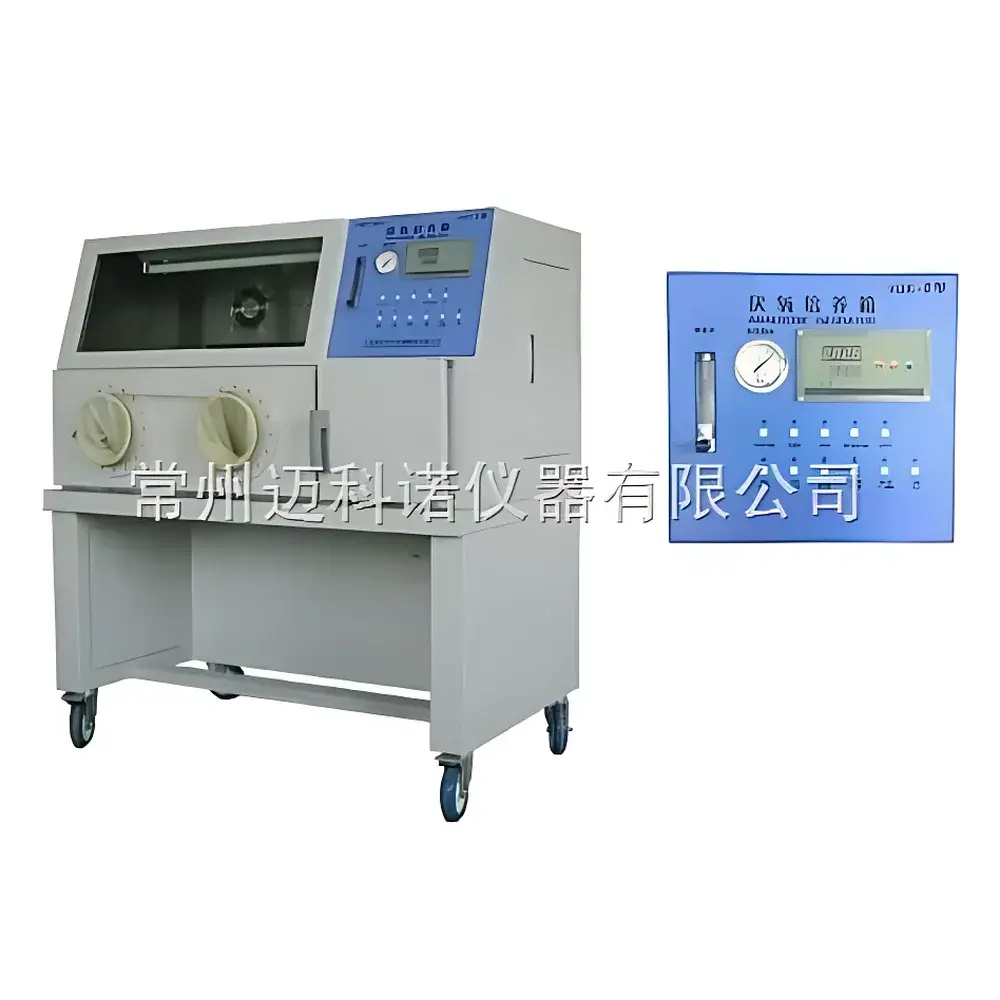
MKN YQX-II Anaerobic Chamber
| Brand | MKN |
|---|---|
| Model | YQX-II |
| Type | Anaerobic Chamber (Glove Box Configuration) |
| Temperature Range | Ambient +3°C to 50°C |
| Temp. Uniformity | ≤ ±1.0°C |
| Temp. Stability | ≤ ±0.3°C |
| Anaerobic Establishment Time (Transfer Chamber) | <5 min |
| Anaerobic Establishment Time (Main Chamber) | <60 min |
| Anaerobic Maintenance Duration (without gas replenishment) | >10 h |
| Chamber Dimensions (W×H×D) | 530 mm × 590 mm × 710 mm |
| Power Supply | 220 V ±10% AC, 500 VA |
| UV Sterilization | Integrated germicidal lamp |
| Catalytic Oxygen Scavenger | Built-in palladium-catalyzed deoxygenation system |
| Gas Control | Electromagnetically actuated microprocessor-regulated gas manifold with adjustable flow valves |
| Viewing Window | Thick laminated safety glass |
| Glove Ports | Dual ergonomic polymer gloves for tactile dexterity and seal integrity |
Overview
The MKN YQX-II Anaerobic Chamber is a purpose-engineered, benchtop-scale anaerobic work environment designed for the cultivation, isolation, and manipulation of obligate anaerobes—microorganisms that cannot tolerate molecular oxygen (O₂) and are irreversibly inactivated upon brief atmospheric exposure. It operates on the principle of catalytic O₂ removal combined with repeated vacuum-gas exchange cycles (N₂/H₂/CO₂ mixtures), establishing and maintaining an O₂ concentration below 5 ppm within the main operating chamber. Unlike conventional incubators, this system integrates both environmental control (temperature, humidity via optional humidification module) and sterile containment (UV irradiation, sealed glove ports, positive-pressure inert gas blanket) into a single platform. Its architecture conforms to fundamental biosafety Level 2 (BSL-2) operational principles and supports compliance with ISO 13485–aligned laboratory workflows where reproducible, low-oxygen culture conditions are essential—for example, in clinical microbiology diagnostics, gut microbiota research, and anaerobic bioprocess development.
Key Features
- Integrated catalytic deoxygenation system using palladium-coated alumina at ambient temperature, enabling continuous O₂ scavenging without consumable sachets or chemical reagents
- Microprocessor-controlled dual-chamber gas management: rapid evacuation (<5 min) in the antechamber followed by sequential N₂/H₂/CO₂ purging in the main chamber (<60 min)
- Dual independent temperature control zones: transfer chamber (for sample acclimatization) and main operating chamber (settable from ambient +3°C to 50°C, ±0.3°C stability)
- Laminated tempered safety glass viewport with anti-fog coating ensures unobstructed visual monitoring while preserving structural integrity under slight positive pressure
- Ergonomic, replaceable nitrile/polymer composite gloves mounted on stainless-steel flanges provide tactile sensitivity, chemical resistance, and long-term leak integrity
- Onboard 254 nm UV-C germicidal lamp with timed activation cycle (0–60 min programmable) for routine surface decontamination between sessions
- Electromagnetic valve array regulated by embedded firmware allows precise, repeatable gas blending ratios—critical for microaerophilic adaptations (e.g., Campylobacter jejuni cultivation at 5–10% O₂)
Sample Compatibility & Compliance
The YQX-II accommodates standard microbiological consumables including Petri dishes (up to 150 mm), anaerobic jars, blood culture bottles, and custom agar plates. Its chamber volume (222 L net working space) permits concurrent handling of multiple samples without cross-contamination risk. The system meets mechanical safety requirements per IEC 61010-1 and incorporates redundant thermal cutoffs to prevent overheating-induced sample degradation. While not certified to ISO 14644 Class 5 cleanroom standards, its design supports GLP-compliant documentation when paired with external loggers for temperature and O₂ traceability. Users may validate anaerobic performance using standardized biological indicators (e.g., ATCC® 25923 Clostridium sporogenes spore strips) per CLSI M48-A guidelines.
Software & Data Management
The YQX-II employs a dedicated embedded controller with LED-based interface—no external PC dependency. All operational parameters (temperature setpoint, UV duration, gas cycle count, error logs) are stored in non-volatile memory with timestamping. Audit trail functionality complies with FDA 21 CFR Part 11 requirements when connected to a validated networked data acquisition system (e.g., LabVIEW™ or custom SCADA). Optional RS-485 or Ethernet modules enable integration into centralized lab infrastructure for remote status monitoring and preventive maintenance alerts.
Applications
- Clinical isolation of strict anaerobes from stool, wound, and abscess specimens in diagnostic microbiology labs
- Preparation of anaerobic culture media and quality control testing of commercial anaerobic systems
- Functional studies of human gut microbiota—including fecal microbiota transplantation (FMT) sample processing
- Biodegradation assays involving sulfate-reducing bacteria (SRB) or methanogens in environmental engineering
- Adaptation of microaerophiles (e.g., Helicobacter pylori, Borrelia burgdorferi) through controlled O₂ gradient modulation
- Training platforms for undergraduate and graduate microbiology laboratories requiring hands-on anaerobic technique instruction
FAQ
What gas mixture is required for optimal anaerobic operation?
A standard blend of 80% N₂, 10% H₂, and 10% CO₂ is recommended; H₂ enables catalytic O₂ removal, while CO₂ supports bicarbonate buffering in common anaerobic media.
Can the chamber be used for microaerophilic cultures?
Yes—by reducing H₂ concentration and introducing calibrated air bleed, users can establish stable 5–10% O₂ environments suitable for Campylobacter and Streptococcus species.
Is humidity control available as a factory option?
Humidity regulation is not integrated but can be achieved externally using saturated salt solutions or standalone humidification trays placed inside the chamber.
How often must the catalyst be regenerated?
The palladium catalyst requires no periodic regeneration under normal use; it remains active for ≥2 years with regular H₂ supply and absence of sulfur-containing contaminants.
Does the system include validation documentation?
Factory calibration certificates for temperature sensors and O₂ sensor baseline verification are provided; full IQ/OQ protocols are available upon request for GMP-regulated facilities.





