
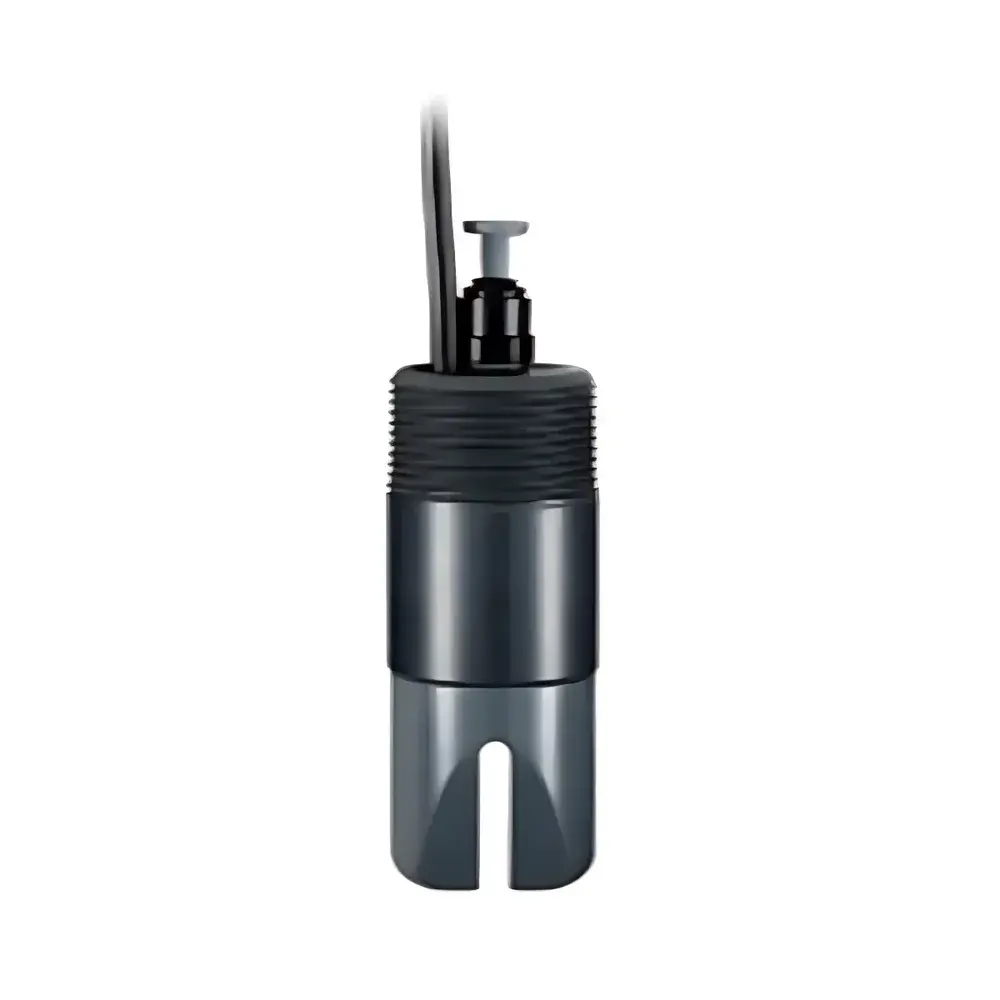
MLSS-300 Suspended Solids Online Analyzer by EXPEC
| Brand | EXPEC (Puyu Technology) |
|---|---|
| Origin | Zhejiang, China |
| Model | MLSS-300 |
| Measurement Principle | Infrared Absorption (Nephelometric/Transmissometric Dual-Mode) |
| Display | High-Brightness Sunlight-Readable LCD |
| Temperature Compensation | Automatic (PT100 RTD input supported) |
| Enclosure Rating | IP66/IP68 (Outdoor-rated, Wall or Pipe Mountable) |
| Cleaning | Compressed Air Purge System (Optional Auto-Cycle Control) |
| Power Supply | 24 VDC ±15% |
| Output | 4–20 mA (HART optional), RS485 Modbus RTU |
| Data Retention | Non-volatile memory with >10-year backup (EEPROM) |
| Alarm Functions | Dual-setpoint high/low concentration alarms with relay outputs |
| Installation | In-situ (submersible or flow-through) or side-stream configuration |
Overview
The EXPEC MLSS-300 Suspended Solids Online Analyzer is an industrial-grade, continuous-monitoring instrument engineered for real-time quantification of suspended solids concentration in aqueous media. It operates on a dual-mode infrared optical principle—combining transmissometry and backscatter nephelometry—to deliver robust, cross-compensated measurements across a broad dynamic range (typically 0–15,000 mg/L, application-dependent). Unlike single-wavelength turbidity sensors, the MLSS-300 employs broadband IR emission (850 nm center wavelength) with temperature-stabilized LED sources and calibrated photodetectors, minimizing interference from color, dissolved organics, and bubble entrainment. Its measurement architecture complies with fundamental principles outlined in ISO 7027 (optical water quality measurement) and supports traceable calibration via certified reference suspensions (e.g., Formazin or polymer-based standards). Designed for unattended operation in harsh environmental conditions, the analyzer features passive thermal management, corrosion-resistant 316L stainless steel wetted parts, and integrated diagnostics for signal integrity validation.
Key Features
- Dual-optical-path design: Simultaneous transmission and backscatter detection improves accuracy in heterogeneous slurry streams and mitigates fouling-induced drift.
- Sunlight-readable high-contrast LCD display with configurable parameter view (concentration, temperature, signal intensity, cleaning status).
- Automatic temperature compensation using integrated PT100 sensor input or external probe interface—ensuring stable output across 0–50 °C operating range.
- Compressed-air purge system with programmable cleaning cycles (interval, duration, pressure threshold); eliminates manual wiping and extends maintenance intervals to ≥6 months under typical municipal wastewater conditions.
- IP66/IP68-rated enclosure with UV-stabilized polycarbonate window and marine-grade mounting hardware—certified for outdoor wall, vertical pipe, or submersible installation.
- Non-volatile data logging: Stores >100,000 timestamped records (concentration, temp, diagnostic flags) with power-fail recovery and CRC-verified EEPROM retention.
Sample Compatibility & Compliance
The MLSS-300 is validated for use in raw sewage, activated sludge return lines, secondary clarifier effluents, industrial cooling water circuits, and potable water distribution networks. It accommodates particulate distributions ranging from fine colloidal clays (200 µm), provided flow velocity remains within 0.3–3 m/s for in-situ probes or ≤1.5 m/s for bypass configurations. The device meets CE marking requirements per EMC Directive 2014/30/EU and Low Voltage Directive 2014/35/EU. Its analog output conforms to NAMUR NE43 standards; digital communication supports Modbus RTU over RS485 (EN 50170 compliant). For regulated environments—including facilities operating under EPA NPDES permits or ISO 14001-certified wastewater management systems—the analyzer’s audit-ready event log (cleaning triggers, alarm activations, calibration history) supports GLP documentation workflows.
Software & Data Management
Local configuration and diagnostics are performed via the onboard keypad and display or through EXPEC’s PC-based EXPCONFIG utility (Windows 10/11 compatible, USB-to-RS485 adapter required). All setup parameters—including measurement range scaling, alarm thresholds, purge scheduling, and temperature coefficient adjustment—are stored with write-protected firmware revision stamping. The 4–20 mA output is linearly mapped to user-defined concentration spans and includes NAMUR fault signaling (≤3.8 mA / ≥20.5 mA). Optional HART 7 integration enables remote parameter read/write and device health reporting via asset management platforms (e.g., Emerson DeltaV, Honeywell Experion). Data export is supported in CSV format with UTC timestamps, facilitating import into SCADA historians or LIMS systems compliant with ASTM E2500-18 (verification of analytical instrumentation).
Applications
- Real-time monitoring of mixed liquor suspended solids (MLSS) in activated sludge bioreactors to optimize aeration control and prevent overloading.
- Effluent compliance tracking at municipal wastewater treatment plant outfalls per local discharge limits (e.g., <30 mg/L TSS).
- Process water quality assurance in pulp & paper mills, food & beverage production, and semiconductor fab rinse loops.
- Early detection of filter breakthrough or membrane fouling in tertiary treatment trains.
- Sludge blanket level estimation in clarifiers using vertical profiling arrays (multi-point deployment supported).
FAQ
Does the MLSS-300 require periodic calibration with standard suspensions?
Yes—initial field calibration and quarterly verification against traceable Formazin or kaolin standards are recommended per ISO 8466-1. Factory calibration certificates are supplied with each unit.
Can the analyzer operate in seawater or high-salinity brines?
It is rated for conductivity up to 50 mS/cm; however, extended exposure to salinities >35 g/kg requires optional titanium sensor housing upgrade and enhanced purge frequency.
Is the compressed air cleaning system compatible with oil-free compressors only?
Yes—oil-laden air will contaminate the optical window; ISO 8573-1 Class 1.2.1 filtration is mandatory for reliable long-term performance.
What cybersecurity protocols are implemented for remote access?
The standalone MLSS-300 has no network interface; remote configuration requires physically connected serial interface. Network-enabled gateways must be deployed externally per IEC 62443-3-3 guidelines.
How is sensor fouling diagnosed before measurement drift occurs?
The device continuously monitors raw optical signal stability, LED drive current, and detector response variance—triggering pre-alarm warnings when deviation exceeds ±5% of baseline over 24 hours.
Related Products







