
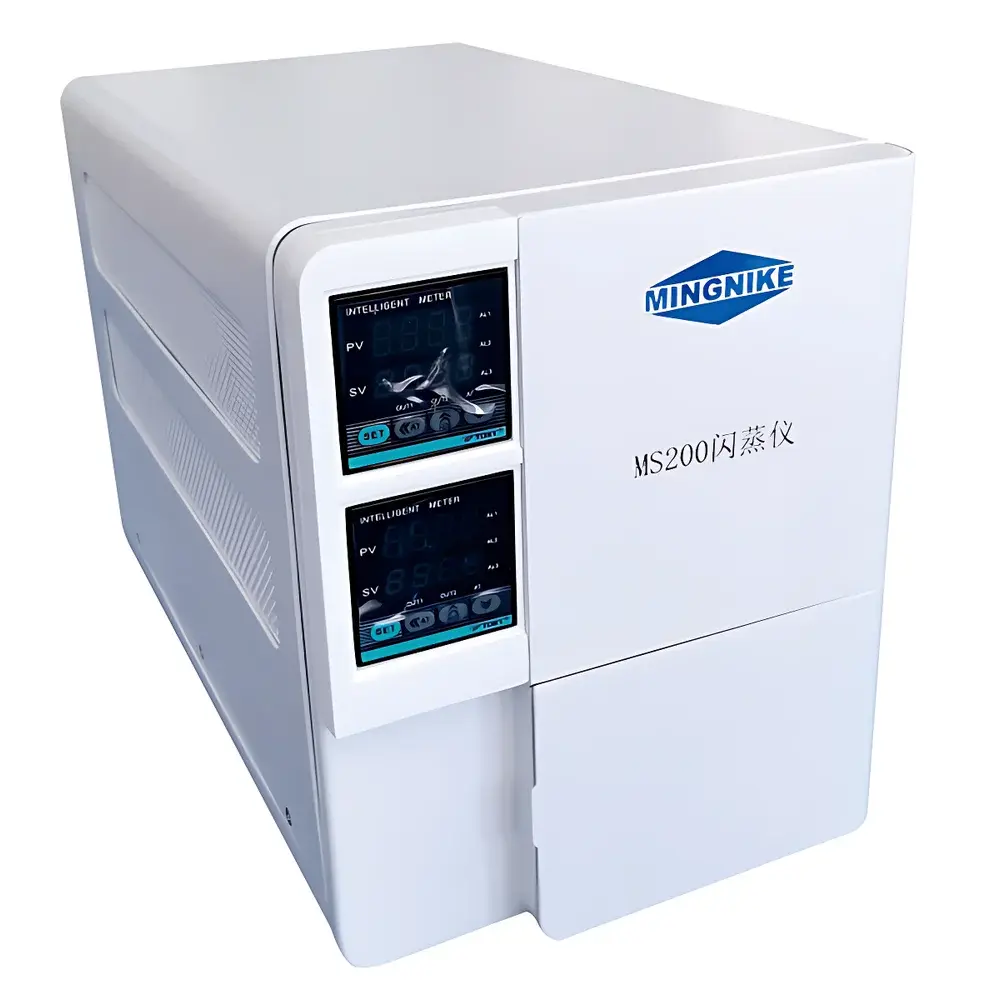
MNK MS200S Flash Vaporizer for GC Pre-Analysis of Liquefied Hydrocarbons
| Brand | MNK |
|---|---|
| Origin | Beijing, China |
| Manufacturer Type | Authorized Distributor |
| Regional Classification | Domestic (PRC) |
| Model | MS200S |
| Pricing | Available Upon Request |
| Liquid Sample Inlet Pressure Range | 0.69–2.75 MPa |
| Gas Sample Inlet Pressure Range | 0.69–2.07 MPa |
| Temperature Control Range (Heating & Trace Heating) | Ambient +5°C to 230°C |
| Temperature Stability | ±0.1°C |
| Carrier Gas Flow Rate | 0–100 mL/min |
| Flow Resolution | 0.1 mL/min |
| Operating Ambient Temperature | −18°C to +65°C |
| Surface Passivation | SilcoTek® SilcoNert®-treated Stainless Steel Tubing |
Overview
The MNK MS200S Flash Vaporizer is an engineered pre-analytical interface designed specifically for the quantitative gas chromatographic (GC) analysis of liquefied petroleum gases (LPG) and other light hydrocarbon streams (C1–C5). It operates on the principle of controlled flash vaporization—rapid, isothermal, and isobaric phase transition—converting pressurized liquid samples into representative, homogeneous gaseous mixtures under precisely regulated thermal and flow conditions. This ensures stoichiometric equivalence between the original liquid composition and the vapor-phase sample delivered to the GC injector, eliminating fractionation artifacts common in conventional heated injection valves or uncontrolled evaporation methods. The instrument complies with the analytical requirements specified in NB/SH/T 0230–2019 (“Determination of Composition of Liquefied Petroleum Gas by Gas Chromatography”), making it suitable for refinery QC laboratories, petrochemical R&D facilities, and third-party testing organizations conducting ASTM D2163-, ISO 6974-, or GPA 2145-compliant analyses.
Key Features
- Integrated trace-heated sample transfer line with independent temperature control (ambient +5°C to 230°C), preventing condensation of intermediate-boiling hydrocarbons (e.g., propane, butanes) during transport;
- Dual-mode sample introduction capability: compatible with both pressurized liquid feed (up to 2.75 MPa) and high-pressure gas feed (up to 2.07 MPa), enabling flexibility across LPG, natural gas liquids (NGL), and refinery off-gas matrices;
- High-throughput design supporting rapid cycle times (<60 s per sample), optimized for routine batch analysis in high-volume laboratory environments;
- Automated system purge sequence using selectable high-temperature carrier gas (up to 230°C), minimizing carryover between injections and ensuring reproducible baseline integrity;
- Full-fluid-path passivation via SilcoTek® SilcoNert® coating—a chemically inert, sulfur-resistant surface treatment applied to all stainless-steel tubing and internal components—to suppress adsorption of reactive species including H2S, mercaptans, carbonyl sulfide (COS), and oxygenates;
- Modular architecture with RS-232 and optional Ethernet interfaces for seamless integration with Agilent, Thermo Fisher, Shimadzu, and PerkinElmer GC systems, supporting remote start/stop, status monitoring, and parameter synchronization via standard SCPI or vendor-specific protocols.
Sample Compatibility & Compliance
The MS200S is validated for use with liquefied hydrocarbon samples containing C1 through C5 alkanes, alkenes, and isomers—including ethane, ethylene, propane, propylene, n-butane, isobutane, butylenes, and pentanes—under real-world refinery and terminal storage conditions. Its pressure-rated construction and inert surface chemistry ensure compatibility with trace-level sulfur- and oxygen-containing compounds critical for corrosion control and product specification compliance (e.g., ASTM D6667, ISO 8570). The instrument meets mechanical safety requirements per GB/T 150.1–2011 (Pressure Vessels) and electromagnetic compatibility (EMC) standards GB/T 18268.1–2010. While not a standalone GLP/GMP-certified device, its operational logs, temperature/pressure audit trails, and firmware-updatable configuration support alignment with FDA 21 CFR Part 11 data integrity expectations when deployed within validated GC workflows.
Software & Data Management
The MS200S operates via embedded firmware with local LCD interface for manual operation and diagnostics. For automated integration, it supports bidirectional communication with chromatography data systems (CDS) such as OpenLab CDS, Chromeleon, or LabSolutions via ASCII-based command sets. All critical process parameters—including vaporization temperature, line heat zone setpoints, carrier flow rate, inlet pressure, and purge duration—are logged internally with timestamps and retained for ≥30 days. Exportable CSV reports include full thermal history, pressure transients, and flow stability metrics, facilitating root-cause analysis during method troubleshooting or regulatory audits. Optional firmware upgrades provide enhanced alarm logic (e.g., overpressure shutdown, temperature deviation alerts) and extended data retention via USB mass storage.
Applications
- Routine compositional analysis of LPG per NB/SH/T 0230–2019 and ASTM D2163;
- Quantification of light ends in naphtha, reformate, and FCC overheads;
- Trace sulfur speciation (H2S, SO2, COS, mercaptans) in hydrocarbon streams prior to sulfur-sensitive detectors (e.g., PFPD, SCD);
- Calibration standard delivery for GC–MS or multidimensional GC systems requiring matrix-matched vapor-phase references;
- Stability testing of volatile organic compounds (VOCs) and dissolved gases in synthetic fuels and bio-LPG blends.
FAQ
What standards does the MS200S support for LPG analysis?
It is explicitly referenced in NB/SH/T 0230–2019 and fully compatible with ASTM D2163, ISO 6974-1/2, and GPA 2145 methodologies.
Can the MS200S handle samples containing hydrogen sulfide or mercaptans?
Yes—the SilcoNert®-passivated flow path minimizes active site adsorption, preserving recovery of sub-ppm sulfur species essential for ultra-low-sulfur fuel certification.
Is remote control possible without proprietary software?
Yes—RS-232/Ethernet interfaces support industry-standard SCPI commands; no vendor lock-in is required for CDS integration.
What maintenance intervals are recommended for long-term reliability?
Quarterly verification of temperature calibration (NIST-traceable thermometer), semiannual inspection of O-rings and pressure fittings, and annual replacement of SilcoNert®-coated filter elements under continuous operation.
Does the instrument meet explosion-proof requirements for field deployment?
No—the MS200S is rated for laboratory use only (Class I, Division 2 not certified); external hazardous-area enclosures or purged cabinets must be used if installed outside controlled lab environments.



