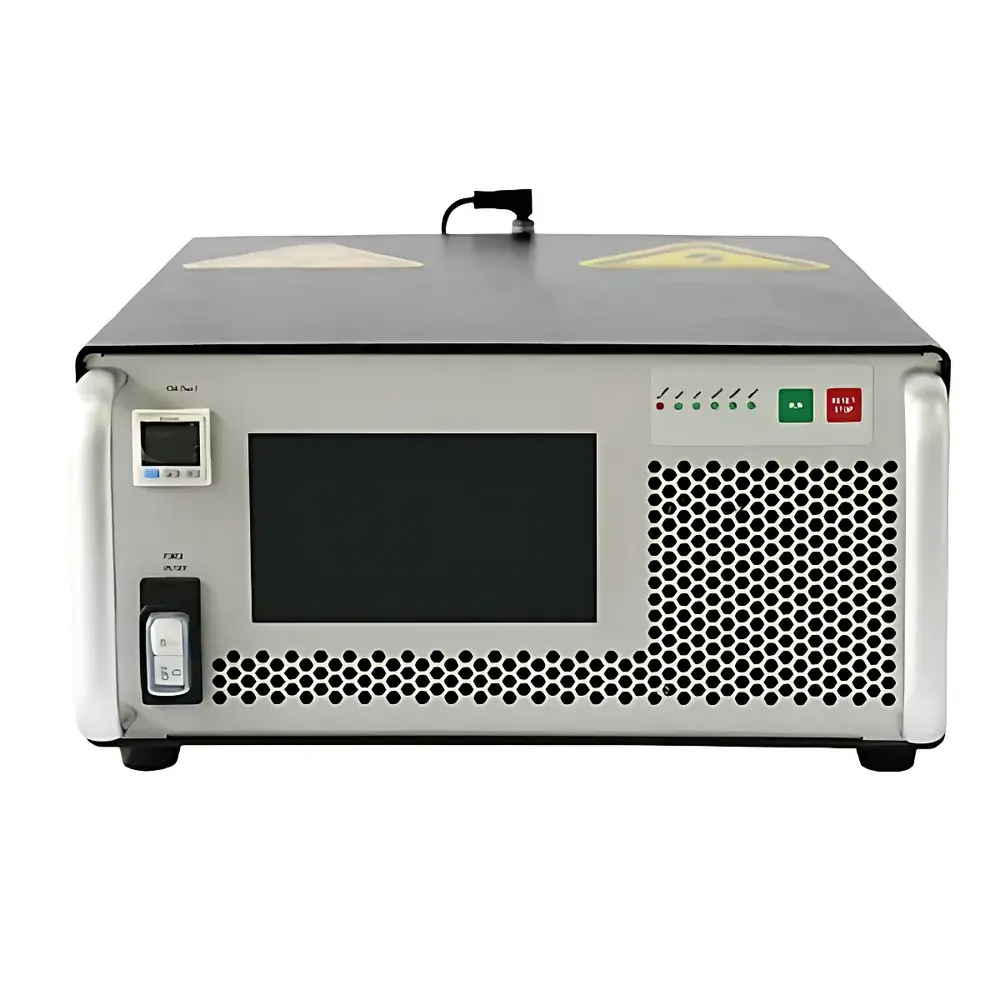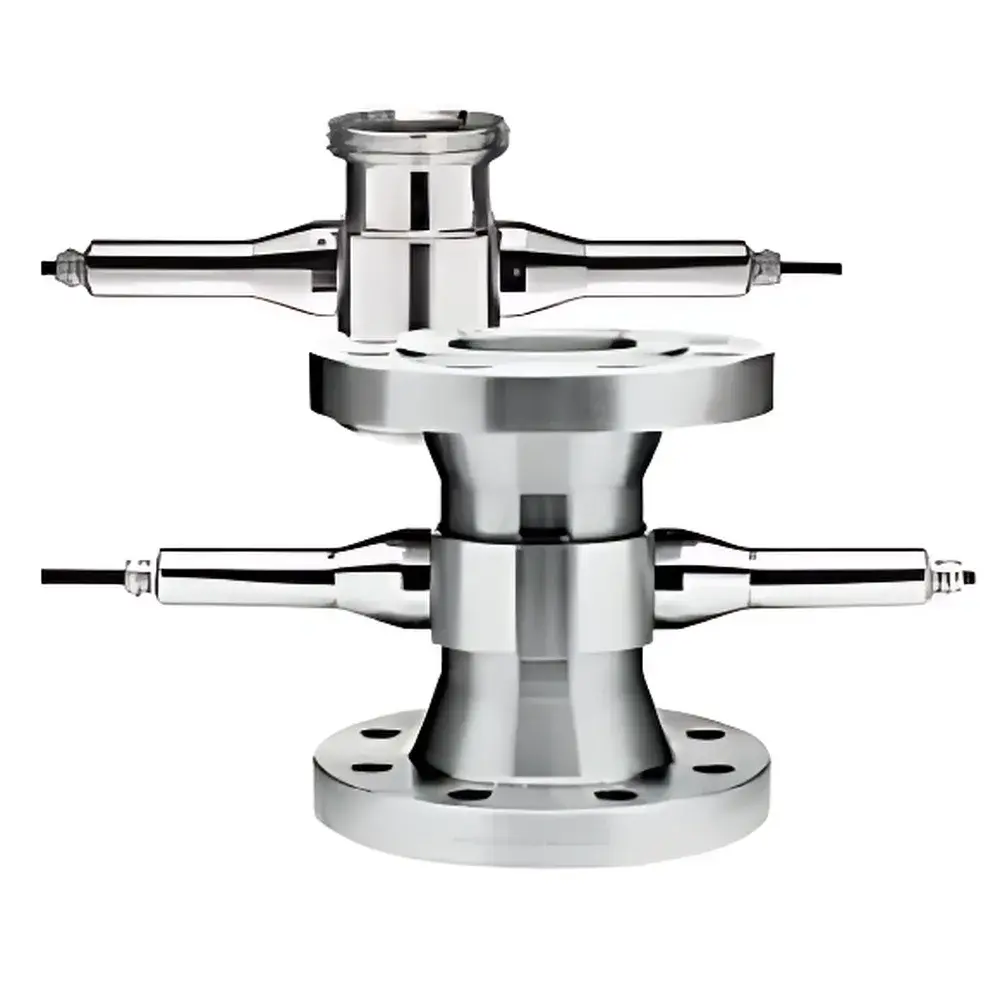
Monitek Oil-in-Water & Water-in-Oil Analyzer by Galvanic
| Brand | Galvanic |
|---|---|
| Origin | USA |
| Model | Monitek |
| Measurement Principle | 12° Forward Light Scattering |
| Detection Range | 0–0.5 mg/L to 0–8000 mg/L (oil or water phase) |
| Optical Wavelength | 380–1100 nm |
| Repeatability | ±1% |
| Flow Cell Material | 316L Stainless Steel (Ti/PTFE optional) |
| Window Material | Sapphire (Borosilicate/PMMA optional) |
| Seal Material | FKM (FFKM/EPDM/Silicone optional) |
| Process Connection | DIN/ANSI Flange, NPT |
| Max. Process Pressure | PN16 / ANSI Class 150 |
| Max. Process Temperature | 140 °C |
| IP Rating | IP65 / NEMA 4X |
| ATEX Certification | Ex d IIC T6 (Zone 1 & Zone 2) |
| Cleaning | CIP-compatible, optional spray nozzle |
| Calibration Interval | Up to 24 months (application-dependent) |
| Power Supply | 90–260 VAC, 50–60 Hz (24 VAC/DC optional) |
| Analog Outputs | Up to 4 × 4–20 mA (independent) |
| Digital Interface | RS-232C / RS-485 (Modbus RTU) |
| Relay Outputs | 4 programmable (48 V / 2 A) |
| Data Logger | 8,000-point internal memory with backup restore |
| Environmental Operating Range | −10 °C to +50 °C |
| Power Consumption | ≤50 VA |
Overview
The Monitek Oil-in-Water & Water-in-Oil Analyzer, engineered by Galvanic (USA), is a robust, in-line optical sensor system designed for continuous, real-time quantification of dispersed hydrocarbon phases in aqueous streams—and vice versa—across demanding industrial process environments. It operates on the principle of 12° forward light scattering: a collimated beam at wavelengths spanning 380–1100 nm is directed perpendicularly through the process stream; suspended droplets or particles scatter incident light, and a photodetector positioned precisely at a 12° angle relative to the incident beam captures the scattered intensity. Simultaneously, the transmitted light is measured by an opposing detector, enabling dual-signal normalization that compensates for turbidity, color, and optical path fouling. This differential measurement architecture ensures high specificity for oil/water emulsion detection—even in chemically aggressive, high-temperature (up to 140 °C), or high-pressure (PN16 / ANSI Class 150) applications—without requiring reagents, consumables, or sample extraction.
Key Features
- True in-situ measurement with no sample conditioning, bypass loops, or extraction pumps
- Optimized flow cell geometry minimizing dead volume, particle settling, and biofilm accumulation—reducing maintenance frequency and extending service intervals up to 24 months under typical operating conditions
- Hermetically sealed optical module with sapphire viewport (standard) and FKM sealing (FFKM/EPDM/silicone optional), rated IP65/NEMA 4X for harsh outdoor or washdown environments
- ATEX-certified explosion-proof housing (Ex d IIC T6) suitable for Zone 1 and Zone 2 hazardous areas
- Dual-channel signal processing: independent scattering and transmission detection enables automatic compensation for background interference from suspended solids or colored organics
- Integrated CIP compatibility with optional automated cleaning nozzles for fully unattended operation in food, pharmaceutical, or refinery applications
- Field-replaceable lamp assembly with nominal 2-year lifetime; no recalibration required after lamp replacement due to factory-traceable optical alignment
Sample Compatibility & Compliance
The Monitek analyzer accommodates a broad spectrum of industrial fluid matrices—including fuel oils (diesel, jet fuel, bunker C), lubricants, cooling emulsions, produced water, boiler feedwater, and wastewater effluents—where phase separation dynamics, droplet size distribution (sub-micron to >10 µm), and interfacial tension influence emulsion stability. Its material construction complies with ASME B31.4/B31.8 and PED 2014/68/EU requirements for pressure equipment. All wetted parts meet FDA 21 CFR Part 177 (for food contact where applicable) and EU Regulation (EC) No. 1935/2004. The device supports GLP/GMP-aligned operation via audit-trail-enabled configuration logs, timestamped calibration records, and user-access-controlled parameter locking—fully compatible with systems validated under ISO/IEC 17025 and ASTM D4052 (density), D93 (flash point), and D664 (acid number) workflows.
Software & Data Management
Configuration and diagnostics are performed via a menu-driven, context-sensitive interface accessible through local Ethernet, USB, or serial connection (RS-232C/RS-485 Modbus RTU). The embedded firmware supports full unit programmability—including PPM, mg/L, EBC, FTU, %TS, g/L, and custom scaling—enabling direct integration into DCS, SCADA, or MES platforms without external signal conditioning. Each of up to four connected sensors operates autonomously, with independent analog outputs (4–20 mA), relay logic (4 × 48 V / 2 A), and digital data streams. The onboard data logger stores up to 8,000 timestamped measurements per channel, with cyclic overwrite protection and CSV backup/restore functionality via SD card or PC upload. Firmware updates are signed and version-locked to ensure traceability during regulatory audits.
Applications
- Monitoring oil carryover in steam condensate return lines to prevent turbine fouling (ASTM D3427)
- Quantifying free and dispersed oil in refinery wastewater prior to biological treatment or discharge compliance (EPA 40 CFR Part 435)
- Verifying emulsion breakage efficiency in desalters and electrostatic treaters
- Controlling water content in aviation fuel (ASTM D6304, D3240) and marine distillate fuels (ISO 8217)
- Ensuring lubricant purity in hydraulic and turbine oil circulation systems (ISO 4406, NAS 1638)
- Validating CIP rinse efficacy in dairy and beverage processing lines (3-A SSI 3A 03-01)
FAQ
What measurement principle does the Monitek analyzer use, and why is 12° forward scattering preferred over nephelometry or turbidimetry?
The Monitek employs fixed-angle (12°) forward light scattering, which maximizes sensitivity to sub-10 µm oil droplets while minimizing interference from large particulates or air bubbles—unlike 90° nephelometry (prone to bubble artifacts) or 0° turbidimetry (insensitive to low-concentration emulsions).
Can the analyzer distinguish between free water and emulsified water in fuel oil?
Yes—the instrument responds differentially to droplet size distribution and refractive index contrast; combined with application-specific calibration curves, it reliably quantifies both free-phase and stable microemulsions within defined ranges (0–8000 mg/L).
Is the device compliant with FDA 21 CFR Part 11 for electronic records and signatures?
While the Monitek itself does not generate electronic signatures, its configuration log, calibration history, and data export functions support Part 11 compliance when deployed within a validated IT infrastructure featuring access controls, audit trails, and electronic record retention policies.
What is the maximum allowable process temperature and pressure for standard configurations?
Standard flow cells support continuous operation up to 140 °C and PN16 / ANSI Class 150 pressure ratings; custom variants with Inconel wetted parts or higher-pressure flanges are available upon request.
How often must the optical window be cleaned manually in high-fouling applications?
With optional CIP spray nozzles activated at user-defined intervals (e.g., every 4–12 hours), manual intervention is typically required only during scheduled preventive maintenance—every 6–12 months depending on fluid chemistry and particulate load.
Related Products