


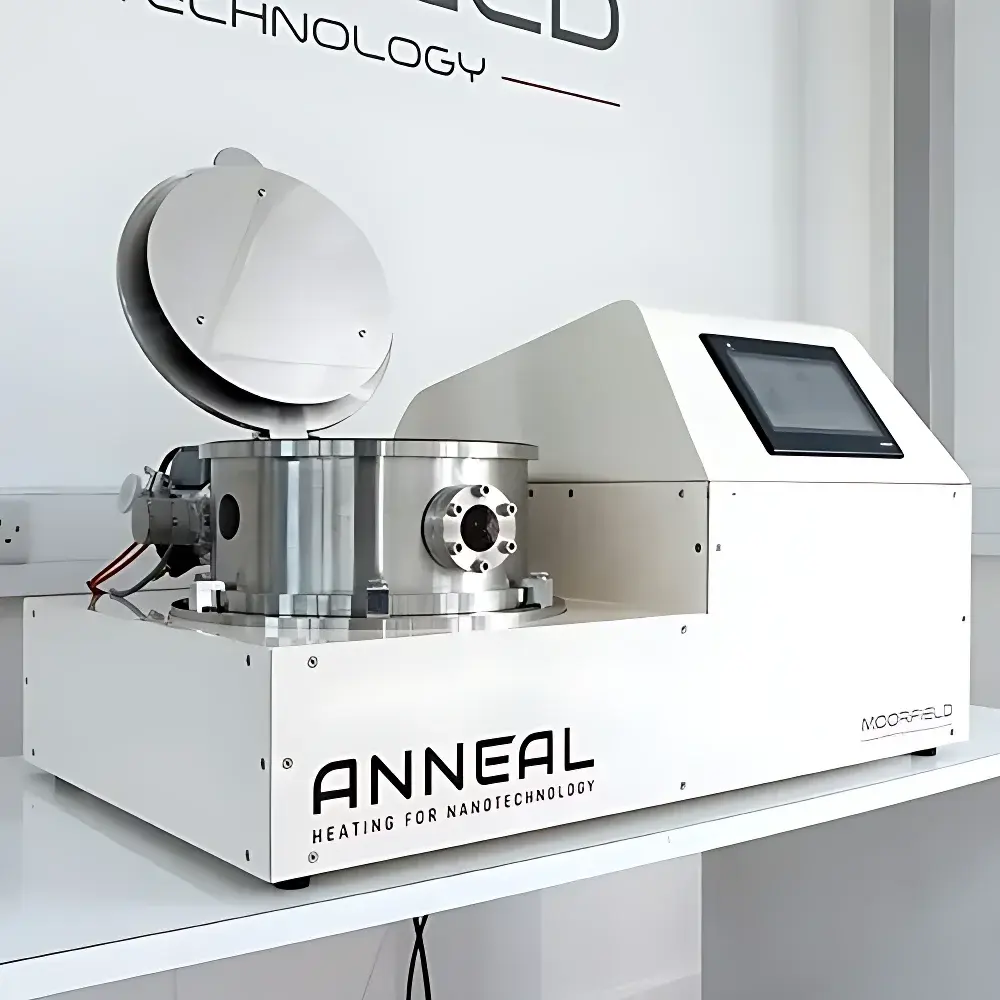
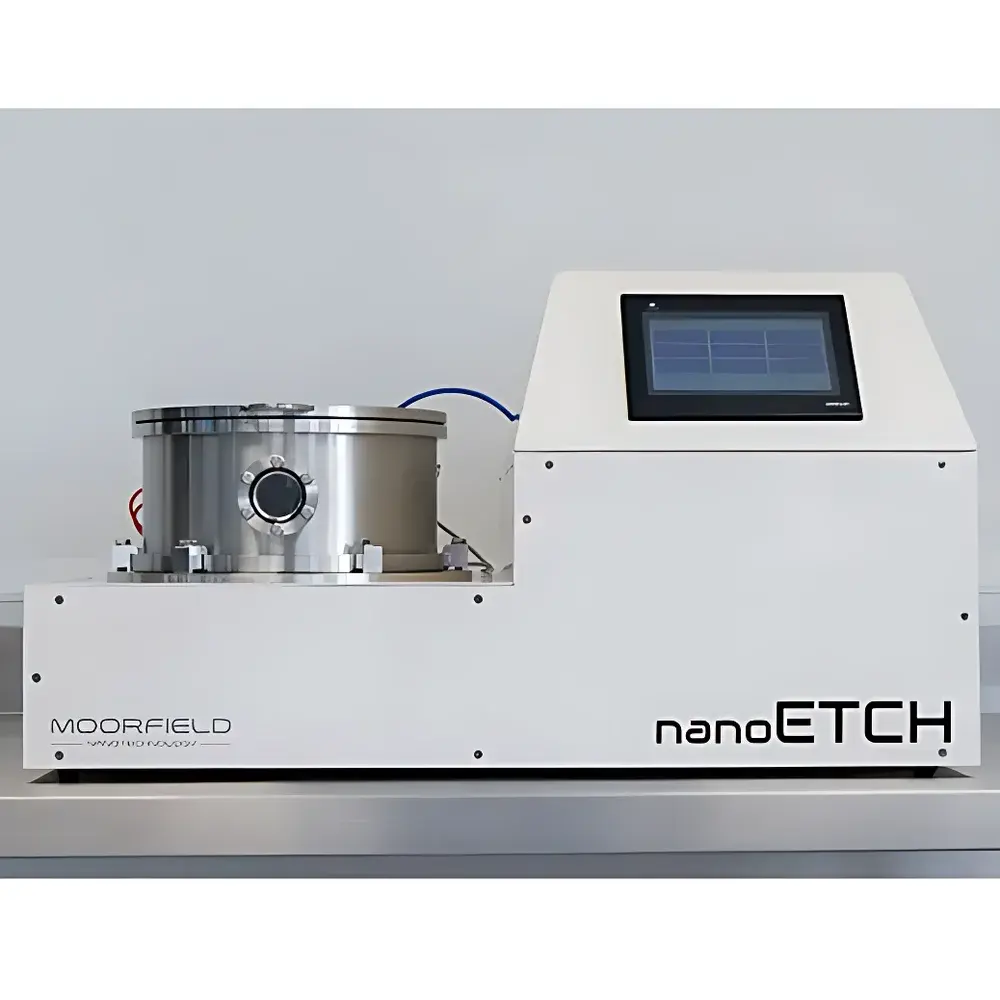
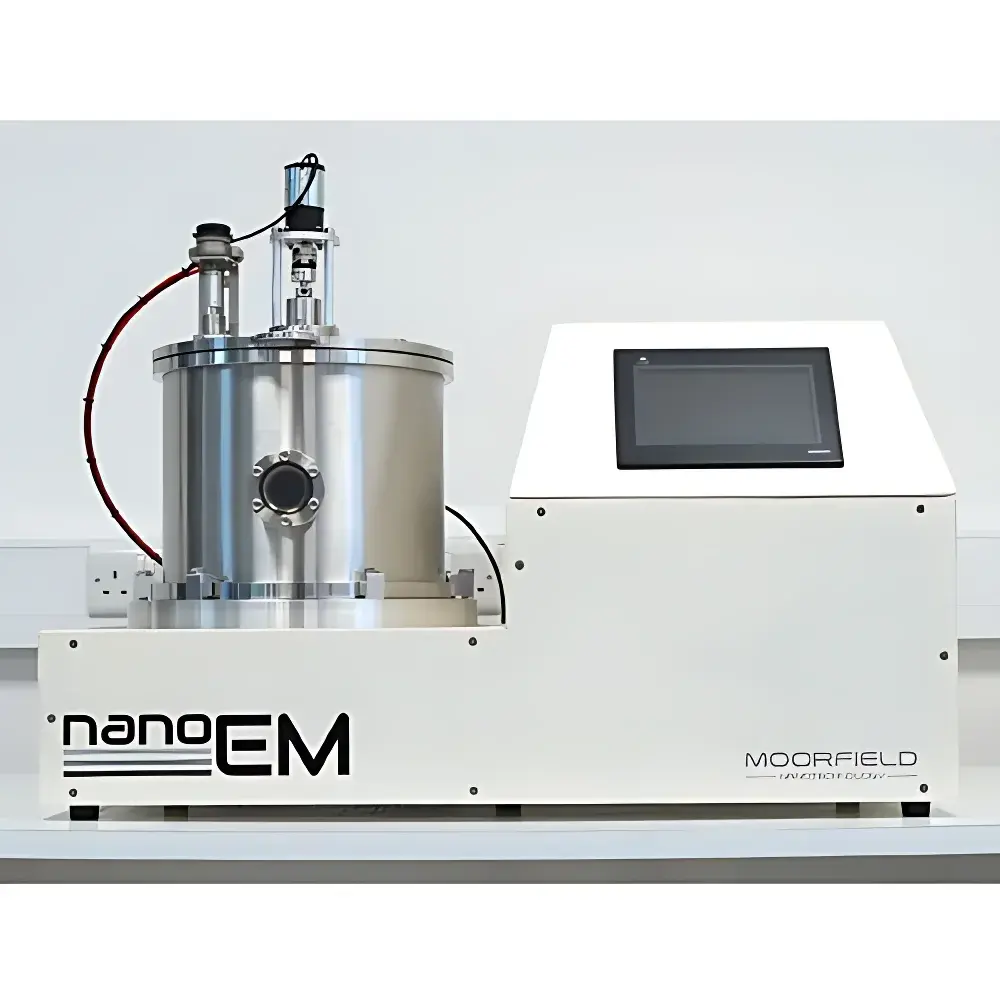
Moorfield Nanotechnology Desktop High-Precision Thin-Film Deposition and Processing System
| Brand | Moorfield |
|---|---|
| Origin | United Kingdom |
| Manufacturer Type | Authorized Distributor |
| Product Category | Imported Instrumentation |
| Model | Moorfield Desktop Series (oCVD, oPVD, oETCH, ANNEAL, oEM, MiniLab) |
| Pricing | Available Upon Request |
Overview
The Moorfield Nanotechnology Desktop High-Precision Thin-Film Deposition and Processing System is a modular, benchtop-scale platform engineered for reproducible, controlled synthesis and nanoscale modification of advanced functional materials. Built upon over 25 years of expertise in vacuum-based thin-film science, the system integrates core physical vapor deposition (PVD), chemical vapor deposition (CVD), plasma etching, thermal annealing, and sputter coating technologies within compact, laboratory-compatible footprints. Each subsystem operates on well-established solid-state physics principles: magnetron sputtering leverages plasma confinement and target bombardment to achieve stoichiometric transfer; thermal and electron-beam evaporation rely on Knudsen effusion and line-of-sight condensation under high vacuum (<1×10⁻⁶ mbar); low-power RF/DC plasma etching utilizes ion energy modulation in sub-watt regimes for atomic-layer precision; and programmable atmosphere-controlled annealing employs calibrated resistive heating with mass-flow-controlled gas delivery (N₂, Ar, H₂, forming gas) for defect engineering and phase transformation. Designed explicitly for academic and industrial R&D environments where space, operational simplicity, and protocol repeatability are critical constraints, the platform delivers performance metrics—such as film uniformity (<±2.5% across 50 mm substrates), deposition rate stability (±1.2% over 60 min), and process reproducibility (RSD <3.0% across 10 consecutive runs)—comparable to full-size production tools.
Key Features
- Modular architecture supporting seamless integration of oCVD (graphene/CNT growth), oPVD (magnetron sputtering & thermal/e-beam evaporation), oETCH (ultra-low-power plasma etching), ANNEAL (atmosphere- and pressure-regulated thermal processing), and oEM (high-resolution magnetron sputter coater for SEM/TEM sample prep)
- Benchtop footprint (<0.8 m²) with full vacuum compatibility (base pressure ≤5×10⁻⁷ mbar) and integrated turbomolecular pumping
- Programmable temperature control from ambient to 1100 °C (ANNEAL), with ramp rates up to 50 °C/min and ±0.5 °C stability at setpoint
- Plasma power resolution down to 10 mW (oETCH), enabling monolayer-selective etching of graphene, h-BN, MoS₂, and other 2D crystals
- Multi-source co-deposition capability (up to 4 independent targets or evaporation sources) with real-time thickness monitoring via quartz crystal microbalance (QCM)
- Integrated glovebox compatibility (e.g., MiniLab090 systems) for oxygen- and moisture-sensitive processing (<0.1 ppm O₂/H₂O)
- Full compliance with CE, RoHS, and IEC 61000-6-3 electromagnetic compatibility standards
Sample Compatibility & Compliance
The system accommodates standard substrate formats including Si/SiO₂ wafers (25–100 mm), TEM grids, SEM stubs, glass slides, flexible polymer foils, and custom fixtures. It supports deposition of metals (Au, Pt, Cr, Ti, Al), oxides (ITO, ZnO, TiO₂, NiO), nitrides (TiN, Si₃N₄), chalcogenides (MoS₂, WS₂), and carbon-based films (graphene, CNTs). All modules conform to ISO 9001:2015 quality management requirements and support GLP/GMP-aligned documentation workflows. Software logging meets FDA 21 CFR Part 11 criteria for electronic records and signatures when configured with audit-trail-enabled controllers. Process parameters—including chamber pressure, gas flow rates (MFC accuracy ±1% FS), substrate bias voltage, and RF power—are traceable to NIST-traceable calibration standards. The oETCH module satisfies ASTM F2791–18 guidelines for low-damage plasma processing of 2D materials.
Software & Data Management
Control is managed through Moorfield’s proprietary LabControl Suite v4.2—a Windows-based, multi-user interface with role-based access control (administrator, operator, technician). The software provides full recipe management with version history, parameter locking, and conditional logic scripting (e.g., “if pressure >5×10⁻⁵ mbar, pause deposition and initiate purge”). Real-time data acquisition logs all sensor outputs at 10 Hz resolution, exporting to CSV, HDF5, or direct SQL database ingestion. Integrated QCM feedback enables closed-loop thickness control with endpoint detection algorithms. Audit trails record user actions, timestamped parameter changes, and system events compliant with ALCOA+ principles (Attributable, Legible, Contemporaneous, Original, Accurate, Complete, Consistent, Enduring, Available). Remote monitoring and diagnostics are supported via secure TLS 1.3 VPN tunneling, enabling off-site troubleshooting without compromising network integrity.
Applications
- Graphene and transition metal dichalcogenide (TMD) device fabrication, including heterostructure assembly and edge-contact engineering
- High-efficiency perovskite solar cell development—metal electrode deposition (Ag, Cu, Ni), charge transport layer sputtering (NiOₓ, SnO₂), and interfacial passivation
- Quantum transport studies requiring atomically clean, low-defect films—e.g., observation of fractional quantum Hall effect in exfoliated/graphene-hBN stacks
- Biomedical sensor development: sputtered Au/Ag electrodes on flexible PET substrates; plasma-functionalized surfaces for antibody immobilization
- Microelectronics prototyping: thin-film resistor arrays, magnetic tunnel junction test structures, and MEMS-compatible metallization
- In-situ and operando sample preparation for TEM/STEM, including site-specific lift-out compatible metal capping and low-energy ion milling
FAQ
Is the system suitable for Class 100 cleanroom operation?
Yes—the entire platform is constructed from electropolished 316L stainless steel and anodized aluminum, with zero outgassing elastomers (Kalrez® 4079) and vacuum-compatible lubricants. Optional HEPA-filtered air purge kits are available for ISO 5 environments.
Can I upgrade my existing oPVD unit to include e-beam evaporation?
All oPVD models feature standardized flange interfaces (CF35/CF63) and modular power supply bays. Retrofitting with e-beam guns, crucibles, and high-voltage feedthroughs is supported under Moorfield’s certified field service program.
Does the ANNEAL system support rapid thermal processing (RTP) profiles?
While optimized for controlled ramp/soak protocols, the ANNEAL series supports programmable heating rates up to 50 °C/min and cooling via forced He backfill—enabling quasi-RTP sequences for dopant activation or stress relief.
How is plasma uniformity validated in the oETCH chamber?
Each oETCH unit undergoes Langmuir probe mapping during factory acceptance testing. Uniformity data (ion density variation <±8% across 50 mm diameter) is supplied with calibration certificate and referenced in the user manual.
Are OEM integration options available for automated wafer handling?
Yes—Moorfield offers SECS/GEM-compliant communication protocols and mechanical interface kits for integration with third-party robotic loaders and cluster tools. Custom end-effector design and vacuum interlock synchronization are provided under NDA.



