
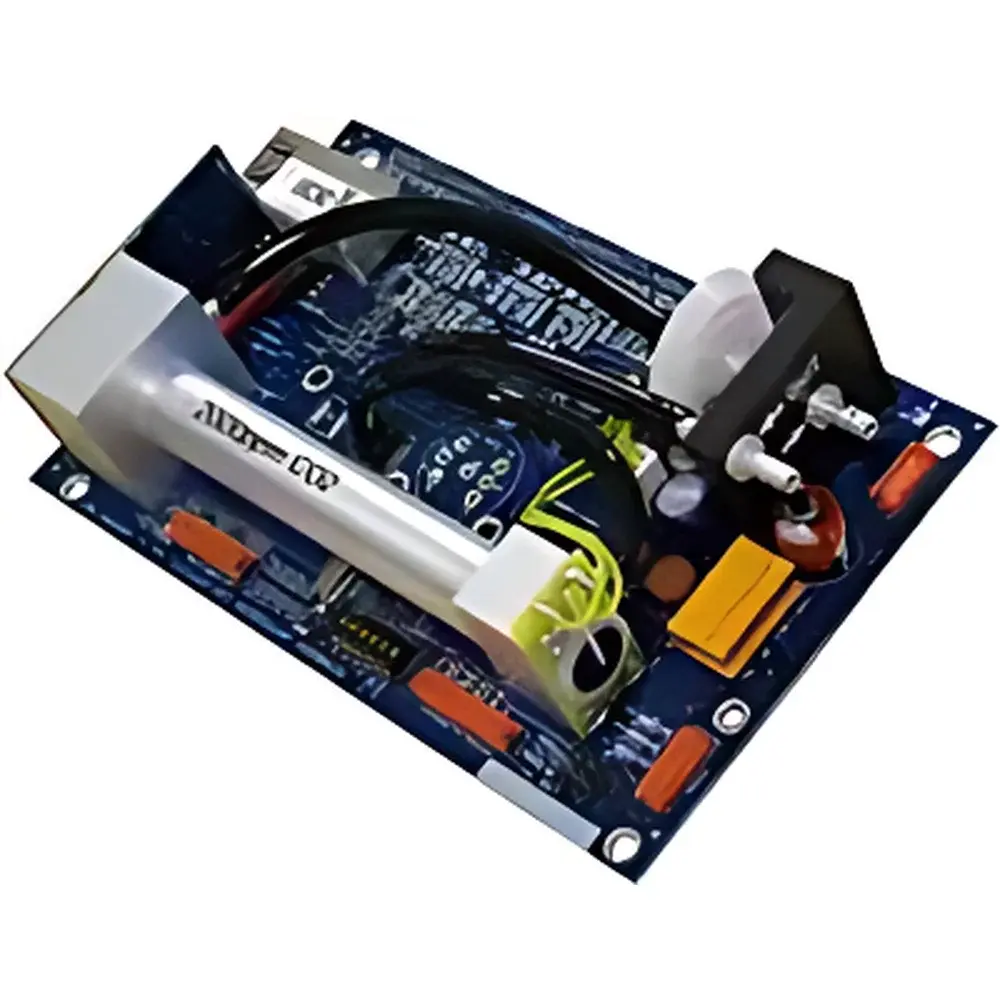
Moxtek GasCard NG OEM Infrared Gas Sensor
| Brand | Moxtek |
|---|---|
| Origin | USA |
| Manufacturer Type | Authorized Distributor |
| Product Origin | Imported |
| Model | GasCard NG |
| Price Range | USD 2,800 – 7,000 (FOB) |
| Detection Principle | Non-Dispersive Infrared (NDIR) Spectroscopy |
| Measurable Gases | CO₂, CH₄, N₂O, C₆H₁₄ |
| CO₂ Range Options | 0–500 ppm, 0–5,000 ppm, or 0–100% vol |
| CH₄ Range Options | 0–5% to 0–100% vol |
| N₂O Range | 0–1,000 ppm |
| C₆H₁₄ Range | 0–2,000 ppm |
| Output Interface | RS-232, RS-485, UART, Analog (0–5 V / 4–20 mA) |
| Operating Temperature | –10 °C to +50 °C |
| Humidity Range | 0–95% RH (non-condensing) |
| Warm-up Time | < 60 s |
| Long-term Drift | < 2% FS/year |
| Calibration | Factory-calibrated |
Overview
The Moxtek GasCard NG is a high-performance, OEM-integrated non-dispersive infrared (NDIR) gas sensor engineered for precision, stability, and seamless system integration in environmental monitoring, industrial safety, and process control applications. Unlike electrochemical or catalytic bead sensors, the GasCard NG leverages dual-beam, temperature-compensated NDIR spectroscopy — measuring gas concentration via absorption of specific infrared wavelengths unique to each target analyte. Its optical architecture features a thermopile detector, micro-machined IR source, and interference-filtered optical path, delivering high selectivity and immunity to cross-sensitivity from common background gases (e.g., H₂O vapor, CO, O₂). Designed explicitly for embedded use, the GasCard NG operates as a complete subsystem: it includes on-board signal conditioning, digital processing, temperature/humidity compensation algorithms, and configurable analog/digital outputs — eliminating the need for external signal conditioning or custom firmware development.
Key Features
- Multi-gas capability with field-selectable configurations for CO₂, CH₄, N₂O, and C₆H₁₄ — each optimized for spectral absorption bands between 2.7–13.5 µm
- Three calibrated CO₂ measurement ranges: ultra-low (0–500 ppm), mid-range (0–5,000 ppm), and high-concentration (0–100% vol), supporting HVAC IAQ, biogas purity, and controlled atmosphere applications
- CH₄ detection spanning 0–5% up to 0–100% vol — suitable for landfill gas monitoring, natural gas leak detection, and anaerobic digester control
- Integrated temperature and relative humidity compensation ensures ±2% accuracy across operating conditions (–10 °C to +50 °C, 0–95% RH non-condensing)
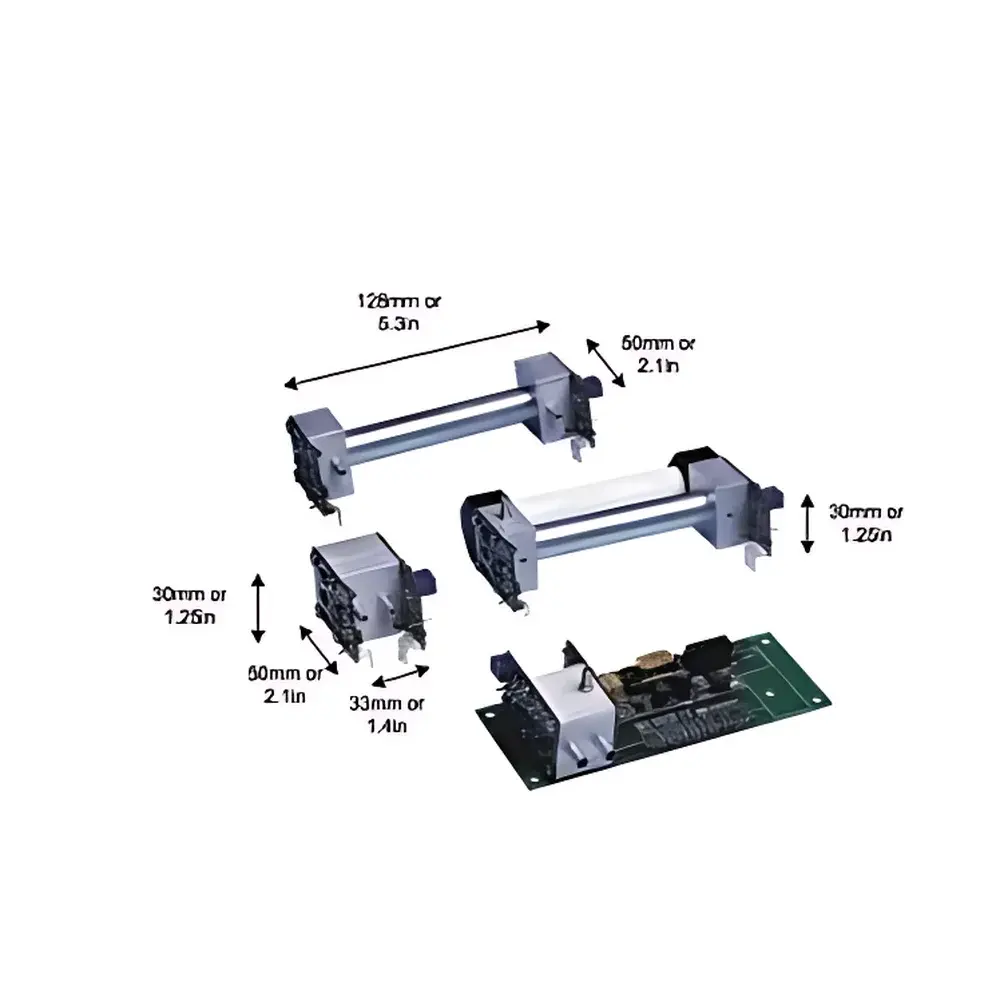
- Low power consumption (< 150 mW typical), compact footprint (76 × 54 × 25 mm), and robust PCB-level construction enable deployment in space-constrained enclosures and battery-powered nodes
- Compliant with RoHS 3 and REACH; CE-marked per EN 61326-1 (EMC) and EN 61000-6-3 (emissions); meets IEC 61000-4-2/4/6 immunity requirements
Sample Compatibility & Compliance
The GasCard NG is designed for continuous, real-time analysis of dry or moderately humid gas streams in ambient pressure environments. It requires no sample conditioning for standard air-based matrices but recommends particulate filtration (≤5 µm) and condensate trapping when deployed in high-humidity or dirty industrial exhausts. The sensor is compatible with sampling systems using 1/8″ OD PTFE or stainless-steel tubing and supports flow rates of 0.1–1.0 L/min. From a regulatory standpoint, its measurement methodology aligns with ISO 8573-1 (compressed air purity), ASTM D6245 (indoor CO₂ measurement), and EPA Method TO-11A (volatile organic compound screening support). While not certified as a standalone safety device per IEC 61508 or UL 2075, it serves as a compliant core sensing element within SIL-2-capable system architectures when integrated with redundant logic solvers and fail-safe output circuits.
Software & Data Management
The GasCard NG communicates via ASCII protocol over RS-232, RS-485, or UART interfaces, enabling plug-and-play integration with PLCs, SCADA systems, and embedded Linux/RTOS platforms. Moxtek provides the GasCard Configuration Utility (Windows/Linux), a GUI-based tool for range selection, alarm threshold setting, analog output scaling, and firmware updates. All configuration changes are stored in non-volatile memory with write-protection options. For traceability-critical deployments (e.g., GLP-compliant environmental reporting), the sensor supports time-stamped serial logging and can be paired with third-party data acquisition software that implements audit trails, electronic signatures, and 21 CFR Part 11–compliant data archiving — provided the host system fulfills required security controls.
Applications
- Indoor Air Quality (IAQ) monitoring in smart buildings and HVAC control systems
- Biogas composition analysis (CH₄/CO₂ ratio) in anaerobic digestion facilities
- N₂O emissions tracking in agricultural soil flux studies and wastewater treatment plants
- Hydrocarbon (C₆H₁₄) leak detection in petrochemical refineries and fuel storage terminals
- OEM integration into portable gas analyzers, drone-mounted environmental sensors, and IoT-enabled air quality stations
- Process gas verification in food packaging (modified atmosphere), pharmaceutical inerting, and semiconductor purge lines
FAQ
Is the GasCard NG suitable for hazardous area installation?
No — it is rated for Class I, Division 2 (non-incendive) environments only. For Zone 0/1 hazardous locations, an intrinsically safe barrier must be used between the sensor and host system.
Can the sensor be recalibrated in the field?
Yes — zero calibration is supported using certified nitrogen or synthetic air; span calibration requires certified gas standards traceable to NIST or equivalent national metrology institutes.
What is the expected service life under continuous operation?
The IR source and detector are rated for >15 years MTBF; performance validation is recommended annually per ISO/IEC 17025 guidelines for accredited laboratories.
Does the GasCard NG support Modbus RTU protocol?
Not natively — however, RS-485 communication can be adapted to Modbus via external protocol converter modules compliant with Modbus Application Protocol v1.1.
How does humidity affect measurement accuracy?
Built-in humidity compensation corrects for water vapor absorption interference in the IR path; residual error remains below ±0.5% of reading across 0–95% RH when operated within specified thermal limits.







