
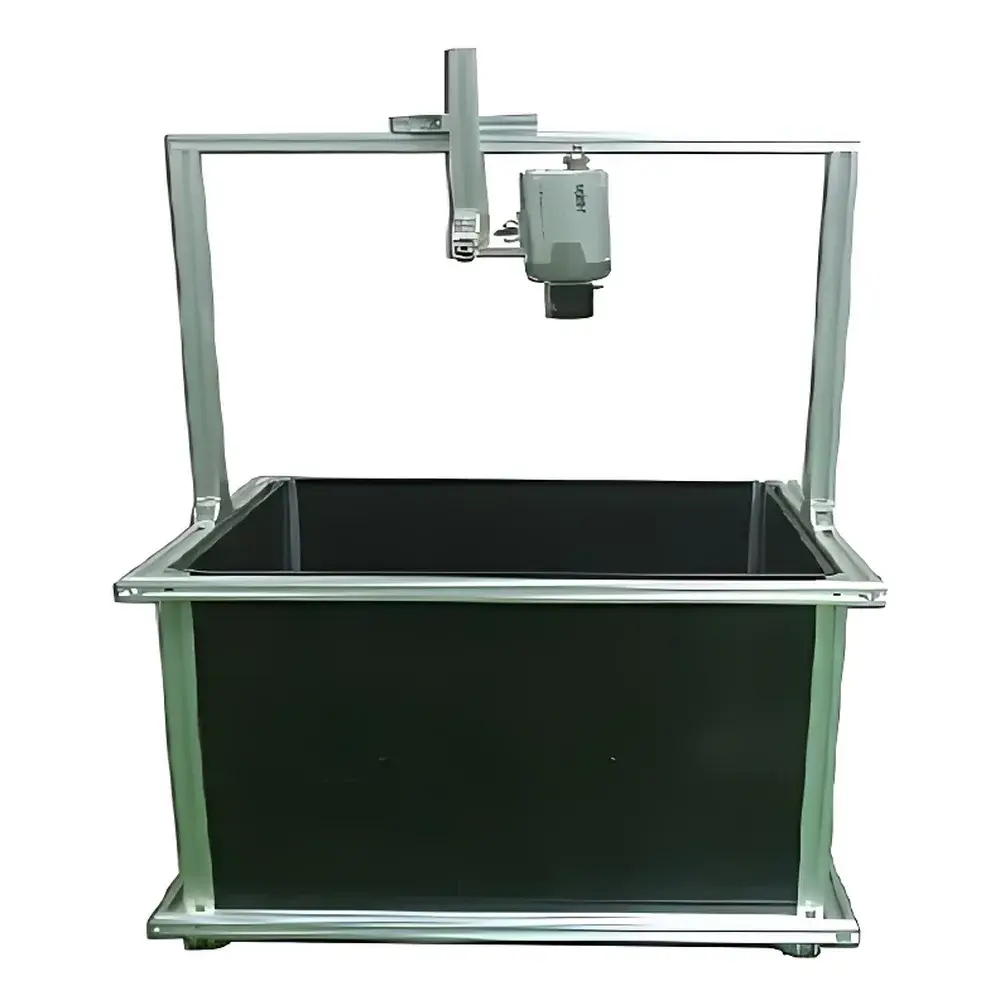
MTS-1 Rat and Mouse Step-Down Passive Avoidance Video Analysis System
| Origin | Sichuan, China |
|---|---|
| Manufacturer Type | Authorized Distributor |
| Origin Category | Domestic (China) |
| Model | MTS-1 |
| Pricing | Upon Request |
Overview
The MTS-1 Rat and Mouse Step-Down Passive Avoidance Video Analysis System is a purpose-built behavioral phenotyping platform engineered for quantitative assessment of learning and memory deficits in rodent models—primarily rats and mice—under pharmacological or genetic intervention. It implements the standardized step-down passive avoidance paradigm, a well-validated hippocampal-dependent associative learning assay rooted in classical fear conditioning. In this protocol, animals receive a mild foot shock upon stepping down from an elevated platform onto an electrified grid floor; subsequent latency to step down during retention testing serves as the primary endpoint for memory retention. Unlike manual scoring or infrared beam-based systems, the MTS-1 employs high-resolution video tracking with real-time pixel-based motion analysis, eliminating observer bias and enabling objective, timestamp-synchronized quantification of spatial-temporal behavior across multiple concurrent test chambers.
Key Features
- Multi-chamber scalability: Supports up to four identical test arenas simultaneously via a single host PC, enabling parallelized experimental throughput without compromising temporal resolution.
- Modular hardware architecture: Includes a 400 × 400 × 400 mm open-field acrylic chamber with integrated top-mounted HD camera, removable stainless-steel shock grid (0–1.5 mA adjustable), and a standardized 130 × 130 × 50 mm elevated platform.
- Color-agnostic tracking engine: Utilizes adaptive chromatic contrast algorithms—not requiring dye application or animal marking—to distinguish subject silhouette against customizable background substrates (e.g., black/white floor inserts), ensuring compatibility with albino, pigmented, and transgenic strains.
- Rigid structural design: Constructed from precision-machined aluminum extrusions with vibration-dampened mounting, ensuring mechanical stability during long-duration acquisition and reproducible environmental geometry across sessions.
- Comprehensive data capture: Records synchronized raw video, XY trajectory coordinates, event timestamps (shock onset, step-down, platform re-entry), and derived kinematic metrics—all stored in a relational database schema compliant with FAIR data principles.
- Dual-mode functionality: The shock grid can be fully removed to repurpose the chamber as an open-field locomotor activity monitor, supporting exploratory behavior assessment under non-aversive conditions.
Sample Compatibility & Compliance
The system is validated for use with adult Sprague-Dawley rats (200–300 g) and C57BL/6, ICR, or CD-1 mice (20–35 g). Chamber dimensions and platform height conform to published NIH and OECD guidelines for passive avoidance testing (OECD TG 426, US FDA Guidance on Nonclinical Learning and Memory Assessments). All electrical stimulation parameters adhere to IACUC-recommended current density limits (<0.3 mA/cm²) and comply with ISO 10993-1 biocompatibility standards for contact materials. Data export formats (CSV, XML, HDF5) support integration into institutional LIMS and regulatory submission workflows aligned with GLP-compliant study conduct.
Software & Data Management
The proprietary analysis software features a role-based access control interface with audit-trail logging per 21 CFR Part 11 requirements—including electronic signatures, session locking, and immutable metadata tagging. Trajectory reconstruction applies a sub-pixel centroid detection algorithm with Kalman filtering to suppress noise-induced jitter, while zone-based segmentation (center, periphery, corners, quadrants) is user-definable via drag-and-drop ROI editor. All raw videos are archived with embedded EXIF metadata (frame rate, exposure time, lens calibration), and analytical outputs include summary statistics, latency histograms, heatmaps, and path visualization overlays. Database queries support cross-experiment cohort comparisons, dose-response modeling, and automated report generation in PDF/HTML formats.
Applications
- Preclinical evaluation of nootropic, amnestic, or neuroprotective compounds in Alzheimer’s disease, vascular dementia, or age-related cognitive decline models.
- Functional validation of genetically modified rodent lines (e.g., APP/PS1, Tau P301L, BACE1 KO) for hippocampal-dependent memory encoding and retrieval deficits.
- Neurotoxicity screening of environmental agents or pharmaceutical metabolites affecting synaptic plasticity.
- Method development and validation for translational biomarker discovery—correlating behavioral endpoints with electrophysiological (LTP), histopathological (c-Fos, pCREB), or molecular (BDNF, Arc) readouts.
- Standardized training and inter-laboratory reproducibility studies within multi-site preclinical consortia (e.g., IMI-ADAPTED, EU-AD).
FAQ
What operating systems are supported?
Windows XP SP3 or later (32-bit and 64-bit); Windows 10 LTSB recommended for long-term deployment stability.
Is the system compatible with third-party stimulus delivery hardware?
Yes—the behavior controller provides TTL-compatible trigger outputs and accepts external synchronization pulses via opto-isolated inputs, enabling integration with auditory/visual cue generators or optogenetic systems.
Can trajectory data be exported for custom MATLAB or Python analysis?
Yes—raw XY coordinate time series, event logs, and configuration parameters are exportable in CSV and HDF5 formats with documented column headers and units.
How is calibration performed for spatial accuracy?
A one-time geometric calibration routine uses a printed checkerboard pattern placed at the chamber floor plane; the software computes lens distortion coefficients and maps pixel-to-mm conversion factors automatically.
Does the system meet GLP documentation requirements for regulatory submissions?
Yes—full audit trail, electronic signature capability, version-controlled software builds, and raw data immutability protocols satisfy FDA, EMA, and PMDA expectations for nonclinical study data integrity.





