
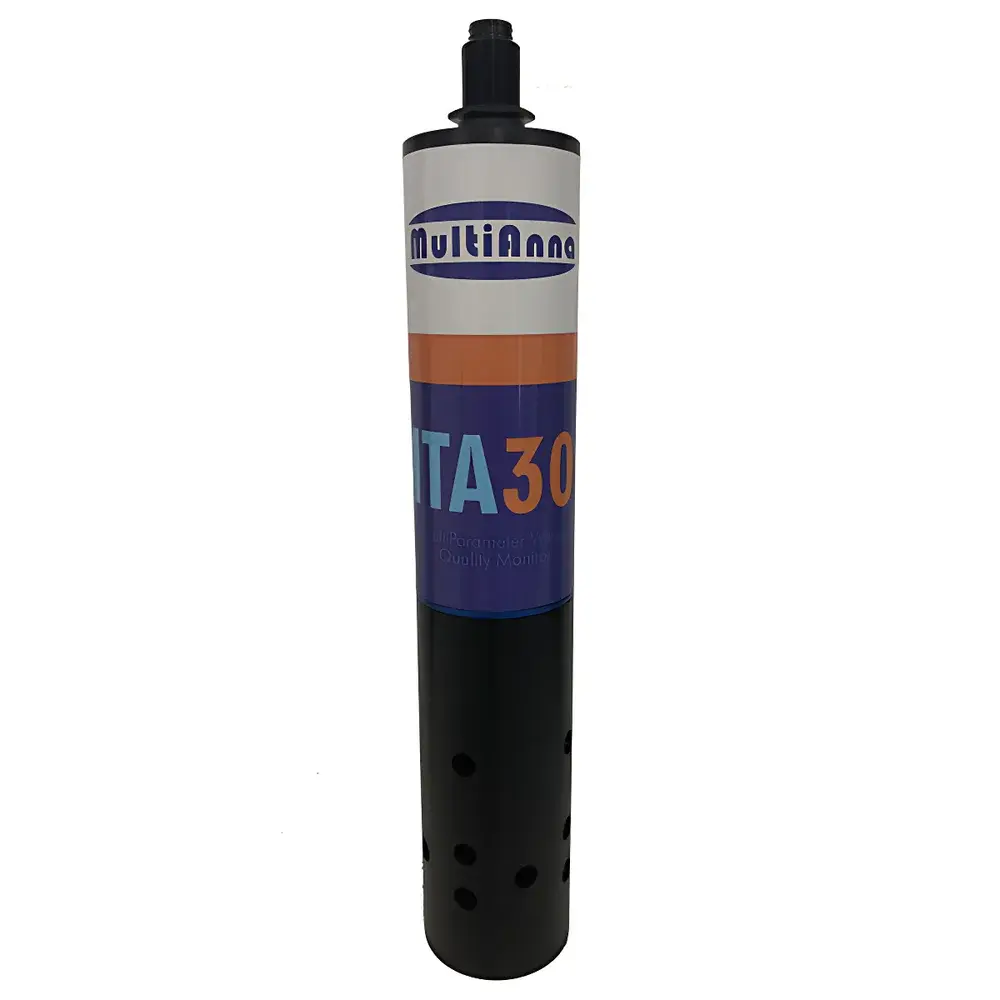
MultiAnna MTA300 Multi-Parameter Water Quality Analyzer
| Origin | UK |
|---|---|
| Manufacturer Type | Authorized Distributor |
| Origin Category | Imported |
| Model | MTA300 |
| Price Range | USD 27,000–68,000 |
| Instrument Type | Online Water Quality Analyzer |
| Measured Parameters | Water Temperature, Dissolved Oxygen (DO), Electrical Conductivity / Salinity / Total Dissolved Solids (TDS), Oxidation-Reduction Potential (ORP), Depth |
Overview
The MultiAnna MTA300 Multi-Parameter Water Quality Analyzer is an engineered field-deployable platform designed for continuous, high-stability monitoring of physicochemical and biological water quality parameters in diverse aquatic environments. Built upon a modular sensor architecture grounded in electrochemical, optical, and pressure-based measurement principles, the MTA300 delivers synchronized, time-aligned data streams from up to 11 concurrent sensors—including temperature (Pt1000), galvanic or optical dissolved oxygen, conductivity/salinity/TDS (4-electrode cell), ORP (Ag/AgCl reference), and depth (piezoresistive transducer). Its core design philosophy emphasizes long-term operational integrity under variable hydrodynamic, biofouling-prone, and chemically aggressive conditions—particularly relevant for coastal, estuarine, wastewater effluent, and groundwater monitoring applications where sensor drift and calibration stability are critical performance determinants.
Key Features
- Modular Sensor Architecture: Supports hot-swappable, independently calibrated probes—enabling flexible configuration across standard (temperature, DO, conductivity, salinity, ORP, TDS, depth) and optional optical/ISE sensors (turbidity, chlorophyll-a, phycocyanin, rhodamine WT, hydrocarbon fluorescence, ammonium, nitrate, chloride, fluoride).
- Integrated Dual-Brush Auto-Cleaning System: Mechanically actuated cleaning brushes operate on programmable intervals to mitigate biofilm accumulation across all optical and electrochemical sensing surfaces—extending maintenance intervals by up to 3× compared to non-cleaned deployments.
- Submersible Ruggedized Housing: Constructed from marine-grade POM (polyoxymethylene) or UV-stabilized PVC with IP68 ingress protection; rated for continuous operation at depths up to 200 m (static pressure rating), including full immersion in seawater without degradation of sealing integrity or material corrosion resistance.
- Low-Power Embedded Operation: Consumes ≤1.2 W in active measurement mode; supports internal rechargeable Li-ion battery (optional) for autonomous deployment up to 6 months (dependent on sampling frequency and sensor load), with external 12–24 V DC input compatibility.
- Standardized Digital Interface: RS485 physical layer with Modbus RTU protocol ensures seamless integration into SCADA, telemetry gateways, and third-party data acquisition systems—fully compliant with IEC 61158 and compatible with common industrial RTU firmware stacks.
Sample Compatibility & Compliance
The MTA300 is validated for use in freshwater, brackish water, seawater, treated wastewater, and groundwater matrices across temperature ranges from –5 °C to +50 °C and static pressures up to 20 bar. Sensor calibrations adhere to ISO 5667-22 (water quality — sampling — guidance on field instrumentation), ASTM D888 (dissolved oxygen in water), and ISO 7888 (electrical conductivity). The system supports audit-trail-enabled calibration logging and meets functional requirements for GLP-compliant environmental monitoring programs. While not certified as a medical or pharmaceutical device, its data output structure aligns with EPA Method 160.1 (field measurements) and EU WFD (Water Framework Directive) reporting conventions.
Software & Data Management
The included MultiAnna DataStudio software provides native support for configuration, real-time visualization, multi-sensor synchronization, and diagnostic trending. It enables two-point calibration validation with residual error reporting, automatic temperature compensation (NTC/Pt1000 selectable), and configurable alarm thresholds per parameter. Raw data exports comply with CSV, Excel (.xlsx), and standardized EN 14181-compliant XML formats. Optional cloud connectivity via MQTT or HTTP(S) POST enables secure transmission to platforms such as ThingSpeak, AWS IoT Core, or custom LIMS—supporting TLS 1.2 encryption and basic authentication. All calibration events, firmware updates, and sensor diagnostics are timestamped and stored locally with tamper-evident logging.
Applications
- Long-term unattended monitoring on buoys, moorings, and fixed-platform installations in lakes, rivers, estuaries, and offshore zones.
- Rapid-response field surveys using handheld deployment poles or boat-towed configurations for spatial profiling.
- Wastewater treatment plant influent/effluent monitoring with integrated ammonia/nitrate tracking for process control.
- Groundwater well networks requiring low-power, corrosion-resistant sensors operating in confined borehole geometries (77 mm diameter accommodates standard well casings).
- Regulatory compliance monitoring under national water quality standards (e.g., China’s GB 3838-2002, US EPA Clean Water Act Section 304, EU Directive 2000/60/EC).
FAQ
What is the maximum recommended deployment depth for continuous operation?
The MTA300 is rated for continuous submersion up to 100 m (standard configuration) and 200 m (high-pressure housing option), verified per ISO 9001-certified hydrostatic pressure testing.
Can optical sensors be calibrated in situ without retrieval?
Yes—chlorophyll-a, turbidity, and fluorescent dye sensors support zero-point and span calibration using built-in shutter mechanisms and factory-traceable reference standards; no wet-lab recalibration required between field cycles.
Is the system compatible with existing telemetry infrastructure?
Yes—Modbus RTU over RS485 allows direct integration with most industrial RTUs, PLCs, and cellular/NB-IoT gateways supporting standard register mapping (holding registers 40001–40120).
How often does the auto-cleaning system require maintenance?
Brush assemblies are rated for ≥10,000 actuation cycles; typical field replacement interval is 12–18 months depending on suspended solids concentration and deployment location.
Does the analyzer support FDA 21 CFR Part 11 compliance?
While not formally validated for Part 11, the system supports electronic signature-capable workflows when deployed with MultiAnna DataStudio v4.2+ and external identity management via LDAP/Active Directory integration.
Related Products







